
Blog
7 Things to Know About a Water Damage Repair Permit in Naples
Do you need a water damage repair permit in Naples? Learn what's permit-free, what isn't, and how flood-zone rules can change everything in 2026.
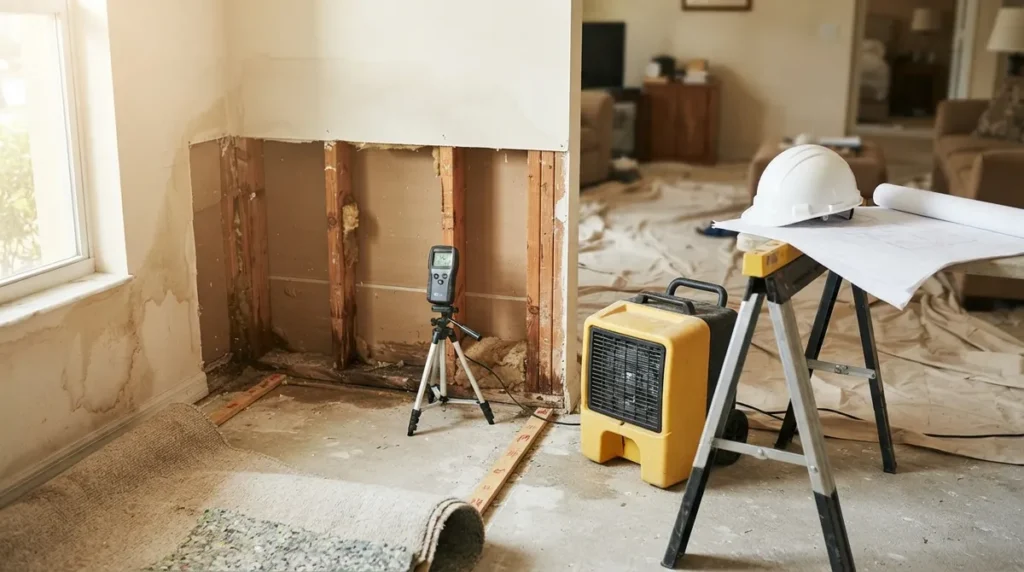
Key Takeaways
-
Confirm whether your property is in the City of Naples or unincorporated Collier County first, since each uses a different building department, portal, and process.
-
Cleanup such as water extraction, removing wet carpet, and minor drywall removal usually needs no permit, but rebuilding or replacing finishes typically does.
-
Repairs involving structural framing, electrical, plumbing, HVAC, or the roof that caused the leak generally require a building permit before work begins.
-
Opening walls to investigate hidden water damage requires a demolition permit in the City of Naples, often issued same day or within 24 hours, but it does not authorize repairs.
-
In Special Flood Hazard Areas, repairs costing 50% or more of pre-damage market value may trigger current flood-elevation requirements, and splitting work into phases won't avoid it.
-
After-hours emergency work can start immediately, but the permit application must be filed the next business day to avoid penalties.
Few phone calls are as stressful as the one that starts with, "Our place just flooded." Maybe it was a burst supply line, a roof leak after a summer storm, or a slow drip behind the wall that nobody noticed until the baseboards swelled. Now you are staring at wet drywall and wondering the same thing everyone wonders: do I need a water damage repair permit in Naples before anyone picks up a tool?
Here is the friendly, honest answer: it depends. Cleanup and repair are treated differently, and the rules change depending on whether your property sits inside the City of Naples or in unincorporated Collier County. Add a flood zone into the mix, and a 50% cost rule can come into play too.
In this guide, we walk through seven things every contractor, restoration crew, realtor, and homeowner should know in 2026. Take a breath. You can get this sorted out, and knowing the rules up front saves you from stop-work orders, fines, and messy closings later.
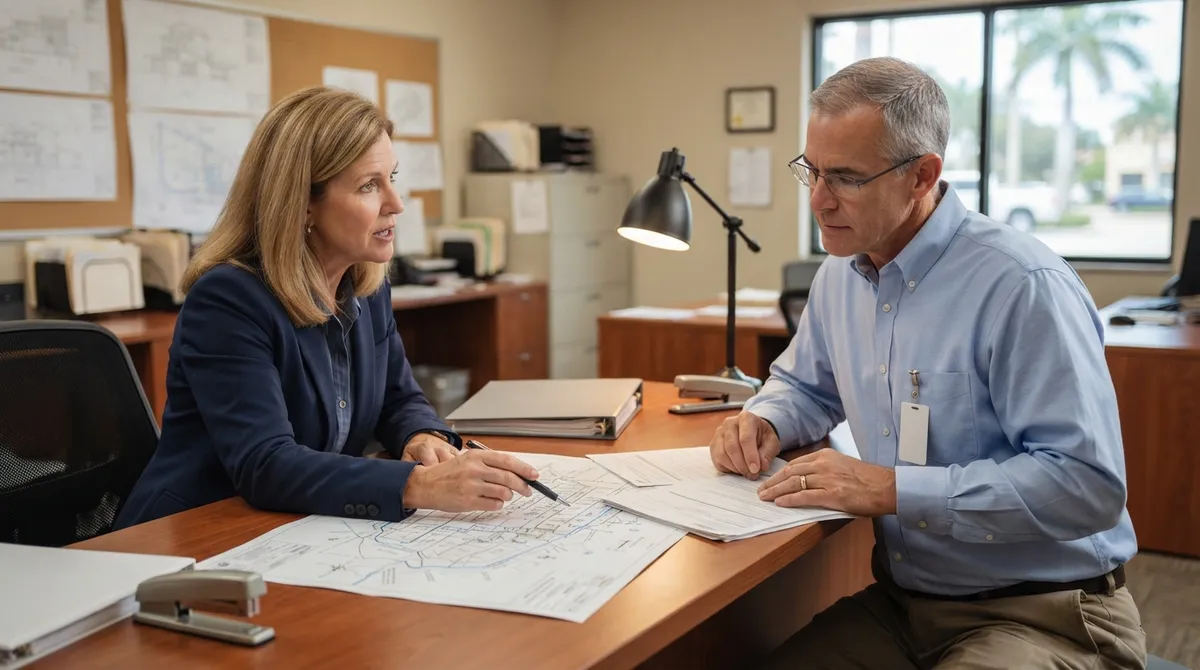
1. Confirm Your Jurisdiction First
Before you do anything else, figure out who actually controls your address. Naples is a little tricky because the city and Collier County run separate processes. The City of Naples Building Department handles properties inside city limits, while the Collier County Growth Management Department handles unincorporated areas.
Why does this matter? Because the forms, portals, and fine print are different. Applying with the wrong office wastes days you probably do not have when water is sitting in a structure.
A few quick ways to confirm your jurisdiction:
- Check your property tax bill or deed for the municipality listed.
- Look up the parcel on the county property appraiser site.
- Call the building department and confirm before you file.
- Ask a permitting pro, especially near city lines where addresses can be misleading.
Our building department lookup tool can also point you in the right direction, and our team works throughout Naples and all of Collier County every week.
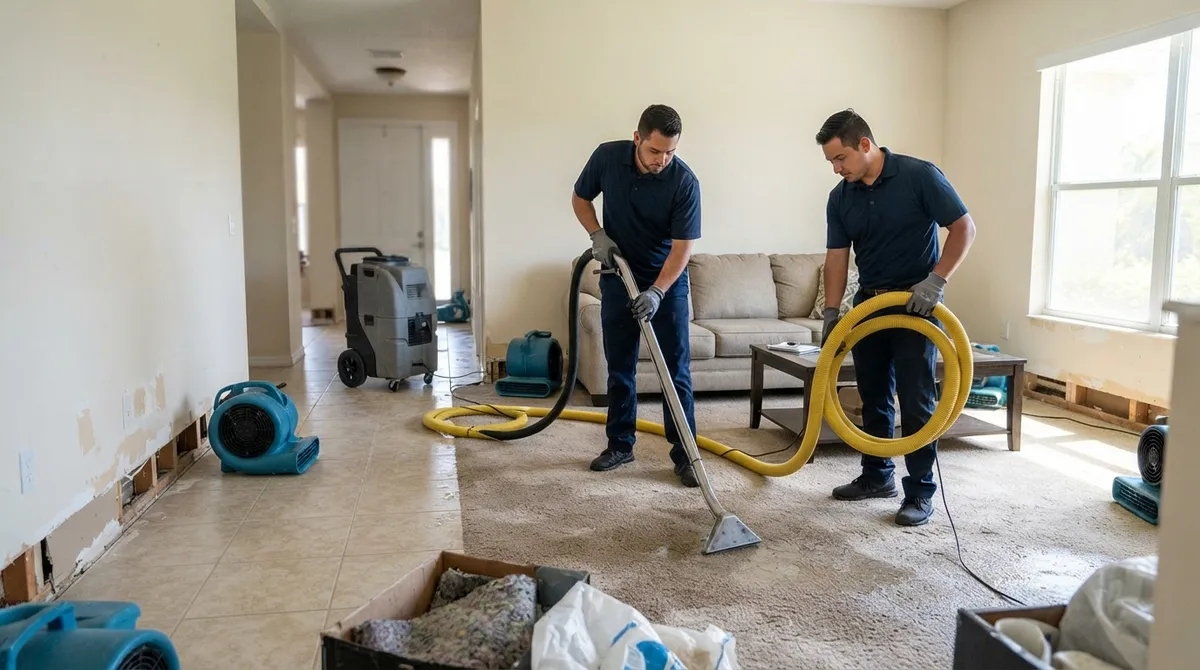
2. Cleanup Usually Does Not Need a Permit
Here is the good news. In most cases, the emergency cleanup phase does not require a building permit. That means you can get moving quickly to limit mold and further damage.
In the City of Naples, a licensed water-restoration company may remove standing water, damaged carpet, and minor drywall without a building permit. Collier County takes a similar approach in its post-hurricane guidance, noting that cleanup and removal of wet drywall, cabinets, carpet, and baseboards generally do not require permits.
Here is a quick snapshot of what typically falls into the "cleanup" bucket:
| Activity | Permit Usually Needed? | Notes |
|---|---|---|
| Water extraction | No | Licensed restoration company in the City of Naples |
| Removing wet carpet | No | Cleanup only |
| Removing minor damaged drywall | No | City limits it to minor removal |
| Removing wet cabinets and baseboards | Generally no | Per Collier County post-hurricane guidance |
| Rebuilding or replacing finishes | Often yes | Repair is not cleanup |
The key point is that this exemption is limited. It does not authorize reconstruction or other permitted repairs. Once you move from "tearing out" to "putting back," you have likely crossed into permit territory.
3. Repairs and Rebuilding Typically Do Need a Permit
This is where many well-meaning owners and crews get tripped up. Drying things out is one thing. Rebuilding is another.
Collier County states plainly that residential repair, replacement, and rebuilding work requires a building permit. For commercial and multifamily buildings, the county says permits are required for any work, and any work on life-safety systems requires a permit as well.
Common water-damage repairs that often trigger a permit include:
- Replacing structural framing, studs, or sheathing that rotted or was compromised
- Reinstalling drywall after substantial removal, depending on scope
- Replacing electrical wiring, panels, or devices that got wet
- Replacing plumbing lines, fixtures, or water heaters
- Replacing HVAC equipment or ductwork
- Roof repairs or replacement that caused the leak in the first place
When a roof leak is the source, you may also want to read our friendly breakdown on how to legalize an existing roof in Florida. And if a storm was involved, our guide on hurricane damage permits offers a helpful comparison from a nearby jurisdiction.
When in doubt, ask before you build. A quick call to the building department, or a conversation with a permitting specialist, can save you from tearing out finished work later.
4. Opening Walls to Investigate Hidden Damage
Sometimes the damage you can see is only the beginning. A stain on the ceiling might mean a slow leak inside a wall, and the only way to know is to open it up. This is where the City of Naples has a very specific process.
For exploratory or forensic opening of building elements, the city directs applicants to use its demolition permit application. According to the city, you should:
- Use the demolition permit application.
- Include a simple drawing of the affected area.
- Describe the work as an investigation for hidden water-leak damage.
- Schedule a final inspection once the investigation is complete.
The permit allows opening and removal for investigation only. It does not cover repairs. Think of it as permission to look, not permission to rebuild.
The good news is that the City of Naples says these exploratory permits are often issued over the counter or within 24 hours. That is quick enough to keep most investigations on schedule. If you want a refresher on that process, our demolition permits page explains how these applications work.
5. Emergency Work and After-Hours Situations
Water does not wait for business hours. A pipe can burst at 2 a.m. on a Saturday, and your crew needs to start right away. So what happens when permit-required emergency work must begin while the Building Department is closed?
The City of Naples says to contact the department and submit the permit application the next business day. The important detail is timing. Penalties may apply if the application is late, so do not let it slide.
Here is a simple emergency checklist to follow:
- Protect life and safety first, and shut off water and power where needed.
- Document everything with dated photos and videos for insurance.
- Start only the work that is truly urgent and necessary.
- Contact the Building Department as soon as you can.
- File the permit application on the next business day.
Restoration companies handle these moments often, and having a permitting partner on speed dial makes a big difference. We cover that in more detail in our article on how Florida restoration companies get emergency permits.
6. The 50% Rule in Flood Zones
Here is the part that surprises people the most. If your property is in a Special Flood Hazard Area, Collier County applies a substantial-damage and substantial-improvement review. This is where the famous 50% rule comes in.
If the cost to repair the structure equals or exceeds 50% of its pre-damage market value, the structure may have to meet current flood-elevation and code requirements. That can mean elevating a home or bringing the whole building up to modern standards, which changes the project dramatically.
| Scenario | What May Happen |
|---|---|
| Repair cost below 50% of pre-damage market value | Standard repair permit process |
| Repair cost at or above 50% in a flood hazard area | Structure may need to meet current flood-elevation and code rules |
| Splitting work into smaller phases | Not a workaround, since the county does not allow incremental projects to avoid the rule |
That last point matters. Collier County says owners cannot avoid the rule by dividing improvements into smaller projects. It is better to plan honestly from the start than to hit a surprise determination mid-job.
If you suspect you are close to that threshold, get a professional opinion early. Our guide on flood zone permitting in Florida is a helpful next read.
7. Codes, Licensing, and Who Can Do the Work
Finally, make sure the work itself is done the right way. A few quick facts help here.
The City of Naples states that permit applications submitted on or after December 31, 2023 must comply with the 8th Edition Florida Building Code. That is the code your plans and repairs need to follow in 2026.
Collier County directs applicants to its application-requirements pages and its online CityView portal. Permitted work must be performed by a properly licensed contractor or a qualifying owner-builder.
Here is how to prepare a smooth application:
- Confirm your jurisdiction, as covered above.
- Gather photos, scope of work, and contractor license details.
- Prepare any required drawings, which may include structural or MEP sheets for larger repairs.
- Submit through the correct portal or counter.
- Respond quickly to reviewer comments.
- Schedule and pass inspections through final approval.
If your project needs plans, our plans and engineering team drafts and seals drawings in house. If you are a contractor working in a new city, you may also need to register your contractor license in Naples before you can pull permits. Homeowners considering the owner-builder route can learn more on our owner-builder permits page.
What If Repairs Already Started Without a Permit?
It happens more often than you would think. A contractor swapped drywall, or an owner rewired an outlet, and nobody pulled a permit. Do not panic. There is a path forward.
Florida has well-established ways to bring work into compliance. Our guide on the steps to legalize unpermitted work in Florida walks through the process, and our article on open permit mistakes before closing in Naples is especially useful for sellers and realtors. If a stop-work order has already landed, see city vs. county stop work order help in Naples.
Ready to Get Your Repair Permit Moving?
Water damage is stressful enough without permit confusion piled on top. The short version is this: cleanup is often permit-free, repairs usually are not, exploratory openings have their own process, and flood-zone properties may face the 50% rule. Knowing which bucket you are in keeps your project moving and protects your investment.
At 1 Contractor Solutions, we act as Florida's outsourced permitting department. We confirm your jurisdiction, prepare the plans, file the application, track it, and work every reviewer comment through approval. We respond within 30 minutes, day or night. Ready to take the guesswork out of your repair? Get a free quote today, or if time is tight, check out our urgent permit rescue service.
You can also see what our customers say and read 1 Contractor Solutions reviews on Google, follow us on LinkedIn, and follow us on Facebook for more Florida permitting tips. Our website is proudly supported by Brain Buzz Marketing.
FAQs
Do I need a permit to repair water damage in Naples, Florida?
It depends on the scope. Basic cleanup like water extraction and removing wet carpet usually does not need a permit, but repair and rebuilding work often does. Always confirm whether you are in the City of Naples or unincorporated Collier County first.
Can I remove wet drywall, carpet, or cabinets without a permit in Naples or Collier County?
Generally, yes. Collier County says cleanup and removal of wet drywall, cabinets, carpet, and baseboards typically do not require permits, and the City of Naples allows a licensed restoration company to remove standing water, damaged carpet, and minor drywall. Putting everything back is a different story.
What permit do I need to open walls to investigate hidden water damage?
In the City of Naples, you use the demolition permit application, include a simple drawing, and describe the work as an investigation for hidden water-leak damage. These permits are often issued over the counter or within 24 hours, and they require a final inspection.
What is the 50% rule for flood-damaged homes in Collier County?
In a Special Flood Hazard Area, if repair costs reach or exceed 50% of the structure's pre-damage market value, the building may need to meet current flood-elevation and code requirements. The county does not allow owners to avoid this by splitting work into smaller projects.
Which Florida Building Code applies to water-damage repairs in Naples?
The City of Naples states that permit applications submitted on or after December 31, 2023 must comply with the 8th Edition Florida Building Code. That is the standard your repair plans should follow in 2026.
We do this work every day across all 67 Florida counties. Call (866) 314-6931 and we will tell you what your situation actually requires — including when you do not need us.
Related services
Permit Facilitation & Filing
You have a crew scheduled, a client asking for dates, and a permit sitting somewhere in a queue you cannot see. We file it, w…
See the servicePlan Review Coordination
A permit in plan review is not one queue. On a commercial project it can be six queues, each with its own reviewer, its own c…
See the serviceReady to get your permit moving?
One call tells you which jurisdiction controls your project, what it will take, and what it will cost. Most of the time we can scope it on the phone.