
Blog
7 Mistakes That Derail Legalizing Unpermitted Florida Work
Avoid the 7 costly mistakes Florida owners make when trying to legalize unpermitted construction, from concealed work surprises to fee shock.
Key Takeaways
-
Florida has no statewide amnesty program for unpermitted work; you must apply for an after-the-fact permit through your local building department, and approval is never guaranteed.
-
Each of Florida's 67 counties and hundreds of municipalities sets its own rules for after-the-fact permits—requirements for fees, documentation, and timelines vary significantly by jurisdiction.
-
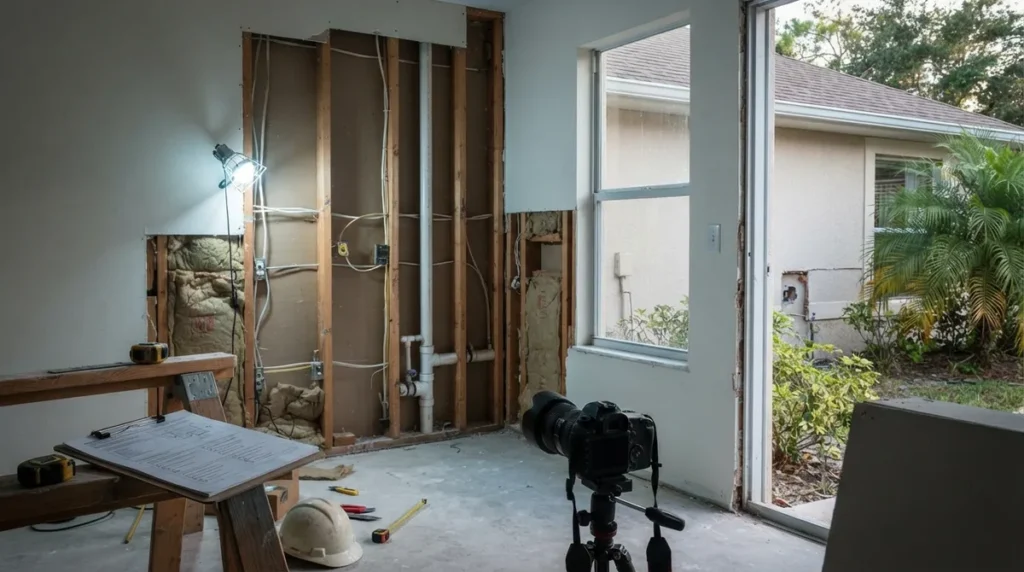
After-the-fact permits typically require concealed work inspections (opening walls, exposing framing) to verify electrical, plumbing, and structural compliance, with potential costly corrections if work fails code.
-
True costs for residential after-the-fact permits commonly range from $3,000 to $10,000 in engineering fees alone, plus investigation fees, penalties, and corrective construction—budget separately from standard permit fees.
-
The 2026 Florida statutory exemption for work under $7,500 at single-family dwellings applies only to future projects, not retroactively to unpermitted work already completed.
-
Procrastination on after-the-fact permits creates urgent problems during real estate closings, refinancing, or insurance claims—seek professional help early rather than waiting until a deadline forces rushed decisions.
Finding out your Florida property has unpermitted construction can feel like a punch to the gut. Maybe a home inspector flagged a converted garage, a realtor spotted an open permit at closing, or you inherited a house with a mystery addition nobody ever pulled paperwork for. Take a breath. You are far from alone, and this is fixable. But here's the honest truth: the path to legalizing unpermitted work in Florida is full of well-meaning missteps that turn a manageable project into a months-long headache.
At 1 Contractor Solutions, we have guided general contractors, solar installers, realtors, and homeowners through this exact process across all 67 Florida counties. We have seen what works and what backfires. So let's walk through the seven mistakes people make most often when trying to legalize unpermitted construction in Florida, and how you can sidestep every single one of them.
Understanding What "Legalize" Really Means in Florida
Before we get into the mistakes, let's set the record straight on something important. There is no statewide amnesty program that automatically legalizes work you already built without a permit. Florida Statutes §553.79(1)(a) makes it clear: covered construction, alteration, repair, or demolition requires a permit before the work begins, unless a specific exemption applies. If you skipped that step, the fix is applying for what's called an after-the-fact permit through your local building department.
This means the responsibility falls on you (or your after-the-fact permit specialist) to prove the work meets current code, or bring it up to code where it doesn't. Approval is never guaranteed, and every jurisdiction handles it a little differently.
Mistake 1: Assuming Every County Handles It the Same Way
Here's where a lot of good intentions go sideways fast. Florida has 67 counties and hundreds of municipalities, and each one sets its own rules for after-the-fact permits. What flies in one jurisdiction might get flatly rejected in another.
- Some counties require additional investigation fees on top of standard permit costs
- Others double the permit fee as a penalty, as seen in Seminole County's enforcement approach
- Documentation requirements can vary from a simple site plan to full sealed engineering drawings
- Timelines swing wildly depending on local building department workload
Before you assume anything, confirm the specific requirements with the building department for your property's exact location. Our building department lookup tool makes that first step painless, whether your property sits in Hillsborough County, Pinellas County, or Manatee County.
Mistake 2: Skipping the Permit History Search
You cannot fix what you don't fully understand. A shocking number of owners jump straight to filing paperwork without ever pulling the complete permit history on the property. That's a recipe for surprises down the road, like discovering there are actually two unpermitted additions instead of one, or that a prior owner already started (and abandoned) an after-the-fact application years ago.
Our open permit search tool helps uncover exactly what's on file, so nothing catches you off guard mid-process.
Mistake 3: Not Preparing for Concealed Work Inspections
This one surprises people every time. Inspectors reviewing an after-the-fact permit often need to verify what's hidden behind drywall, under flooring, or above ceilings. That can mean opening walls to check electrical runs, exposing framing to confirm structural connections, or removing finished surfaces to inspect plumbing.
If the work fails to meet Florida Building Code once exposed, you may be looking at corrections or, in worst-case scenarios, removal of the noncompliant construction. Going in with realistic expectations about this step saves a lot of frustration later.
| Type of Concealed Work | Typical Inspection Requirement | Possible Outcome if Noncompliant |
|---|---|---|
| Electrical wiring | Opening walls or panels for visual verification | Rewiring to current code |
| Structural framing | Exposing connections, trusses, or load points | Reinforcement or engineer-approved retrofit |
| Plumbing | Camera inspection or exposed pipe review | Repiping sections that fail pressure tests |
| HVAC/Mechanical | Ductwork and equipment verification | Replacement of undersized or unsafe systems |
Mistake 4: Trying to Handle Sealed Drawings Yourself
Depending on the scope of the unpermitted work, your application may require sealed architectural or structural documents from a licensed professional. This isn't a box you can check with a hand-drawn sketch. General contractors and homeowners alike often underestimate how quickly a reviewer will bounce an application that lacks proper engineering documentation.
This is exactly where having in-house structural engineering and architectural drafting pays off. When a reviewer flags something, having your own sealing engineer means fixes happen fast, not after weeks of back-and-forth with an outside consultant who has ten other clients ahead of you.
Mistake 5: Ignoring the Real Cost Range
A lot of owners budget for the standard permit fee and stop there. That's a mistake. Engineering or architectural fees for residential after-the-fact cases commonly run between $3,000 and $10,000, with timelines stretching anywhere from 4 to 12 weeks depending on scope and jurisdiction backlog. Add in potential investigation fees, corrective construction costs, and possible penalty multipliers, and the true number can look very different from your first estimate.
- Get a realistic scope assessment before you file anything
- Ask your building department about investigation or penalty fees upfront
- Budget separately for any structural corrections uncovered during inspection
- Factor in professional fees for sealed drawings if your project requires them
If you want a clearer number tailored to your specific property, our team can walk through the details and help you get a free quote before you commit to anything.
Mistake 6: Misreading the 2026 Statutory Exemption
There's been a lot of buzz around a Florida statutory change effective July 1, 2026, that introduces a limited exemption for certain work valued below $7,500 at a single-family dwelling. Here's the mistake: some owners assume this retroactively legalizes work they already completed years ago without a permit. It does not.
This exemption applies to qualifying future work under specific conditions, not a blanket amnesty for past construction. Always verify the enacted statutory text and how it applies to your situation directly with your local building department before assuming it covers your project. Our FAQ page covers more nuances like this one, and we update it as new guidance rolls in.
Mistake 7: Waiting Too Long to Get Professional Help
Procrastination is the silent killer of after-the-fact permits. The longer unpermitted work sits unresolved, the more it complicates real estate closings, insurance claims, and even refinancing. Realtors regularly run into this when a title search or inspection uncovers an open permit found at closing, and the deal grinds to a halt.
Solar companies face a similar squeeze when unpermitted mounting or electrical work delays interconnection approval. Waiting doesn't make the paperwork easier. It just adds pressure when a deadline (like a closing date) forces rushed decisions.
How the After-the-Fact Permit Process Typically Unfolds
While every jurisdiction has its own quirks, most after-the-fact permit applications in Florida follow a similar general sequence:
- Research the permit history and confirm the correct jurisdiction for the property
- Identify the scope of unpermitted work and gather existing documentation, photos, and product approvals
- Prepare plans, site drawings, or sealed engineering documents as required
- Submit the application along with applicable fees to the local building department
- Coordinate scheduled inspections, including any required exposure of concealed work
- Address reviewer comments and make corrections as needed
- Receive final approval and close out the permit, sometimes with an updated Certificate of Occupancy
A qualified permit facilitation and filing service can manage this entire sequence, tracking every reviewer comment and keeping the project moving instead of stalling in a queue.
Who Actually Needs This Service
Legalizing unpermitted work touches more corners of the Florida property world than most people realize.
- General contractors managing renovation projects who discover prior unpermitted work mid-job need accurate plan drafting and sealed engineering to keep the project on schedule
- Solar companies need code-compliant structural and electrical documentation when a prior installation or mounting system was never properly permitted
- Realtors and investors need fast permitting research and engineering support to clear title issues before a sale falls through
- Homeowners planning renovations often uncover a previous owner's unpermitted addition and need a clear roadmap to fix it
- Architects and design trade professionals sometimes need outsourced drafting support to handle after-the-fact documentation without overloading in-house staff
| Audience | Common Trigger | Recommended First Step |
|---|---|---|
| General Contractors | Uncovering unpermitted work during a remodel | Pull permit history, coordinate sealed plans |
| Solar Companies | Prior unpermitted mounting or electrical work | Structural review and electrical documentation |
| Realtors/Investors | Open permit or violation found before closing | Fast-track research and closing support |
| Homeowners | Inherited property with hidden additions | Full permit history and jurisdiction confirmation |
Why Local Expertise Matters So Much Here
Every county reviewer has their own personality, so to speak. What one reviewer in Miami-Dade County wants documented might look completely different from what a reviewer in Orange County expects. This is why working with a team that has filed in over 400 Florida municipalities matters so much. It's not just about knowing the code. It's about knowing the people and the process on the ground.
We serve property owners and professionals from Broward County to Duval County, and we track jurisdiction quirks so you don't have to learn them the hard way. If you want a sense of how satisfied clients feel after working with us, take a look at our client reviews, or see what people are saying when you Visit us on Google — 1 Contractor Solutions.
Building Trust Along the Way
For deeper background on the statutory framework governing permits statewide, the Florida Statutes §553.79 on Online Sunshine lays out the general permit requirement in plain legal language. It's worth a bookmark if you like reading the source material directly.
We also stay active on social channels where we share updates, client wins, and permitting tips. Feel free to follow us on LinkedIn or follow us on Facebook to keep up with Florida permitting news as it develops throughout 2026.
Bringing It All Together
Legalizing unpermitted construction in Florida is absolutely doable, but it rewards patience, accurate documentation, and a realistic understanding of what your specific jurisdiction requires. Rushing in without a permit history search, underestimating inspection requirements, or misunderstanding new statutory exemptions will only slow you down.
The good news? You don't have to untangle this alone. Whether you're a general contractor trying to keep a project on schedule, a solar company needing compliant documentation, a realtor racing a closing date, or a homeowner who just wants peace of mind, our team at 1 Contractor Solutions has walked this road thousands of times across Florida. We handle permit filing, tracking, plan review coordination, and in-house sealed engineering, so you don't have to juggle five different vendors to get one project across the finish line.
Ready to stop guessing and start making real progress on your unpermitted work? Reach out today and get a free quote from our team, and let's get your project properly legalized without the usual headaches.
FAQs
How do I legalize unpermitted construction in Florida?
You'll need to apply for an after-the-fact permit with your local building department, which typically involves submitting plans, documentation, and sometimes sealed engineering drawings. Every jurisdiction has its own quirks, so it really helps to have someone who knows the local process guide you through it.
Will an inspector make me open walls to check unpermitted work?
Quite possibly, yes! Inspectors often need to verify concealed electrical, plumbing, or structural work, which can mean opening drywall or exposing framing. It's not fun, but it's a normal part of making sure everything meets current Florida Building Code.
How much does it cost to legalize unpermitted work in Florida?
Costs vary widely, but engineering and architectural fees for residential after-the-fact permits commonly range from $3,000 to $10,000, with timelines of 4 to 12 weeks. Add in possible investigation fees or penalty multipliers depending on your county, so it's smart to get a full estimate upfront.
Does Florida's 2026 permit exemption legalize work I already completed?
Not automatically! The 2026 statutory exemption for certain work under $7,500 applies to qualifying future projects at single-family dwellings, not a blanket retroactive fix for past construction. Always double-check with your local building department before assuming it covers your specific situation.
Do Florida counties handle after-the-fact permits differently?
They sure do. Fees, documentation requirements, and enforcement approaches can vary significantly from one county or city to the next, so what works in one jurisdiction might not fly in another. That's exactly why local expertise matters so much when navigating this process.
We do this work every day across all 67 Florida counties. Call (866) 314-6931 and we will tell you what your situation actually requires — including when you do not need us.
Related services
Permit Facilitation & Filing
You have a crew scheduled, a client asking for dates, and a permit sitting somewhere in a queue you cannot see. We file it, w…
See the servicePlan Review Coordination
A permit in plan review is not one queue. On a commercial project it can be six queues, each with its own reviewer, its own c…
See the serviceReady to get your permit moving?
One call tells you which jurisdiction controls your project, what it will take, and what it will cost. Most of the time we can scope it on the phone.