
Blog
6 Steps to Clear Unpermitted Work With Florida Building Departments
Learn the 6 practical steps Florida property owners and contractors use to resolve unpermitted work with local building departments in 2026.
Key Takeaways
-
Florida Statutes §553.79 requires most construction work to be permitted before starting; unpermitted work can be legalized through an after-the-fact permit (ATFP) by submitting applications, documentation, and passing inspections with the local building department.
-
Contact your specific jurisdiction first using property address verification, as all 67 Florida counties operate independent building departments with different ATFP checklists, fee schedules, and documentation requirements that vary significantly.
-
Concealed work behind walls or flooring may require exposure for inspection, though some counties accept sealed reports from Florida-licensed engineers or architects instead, potentially saving weeks of renovation.
-
After-the-fact permit costs vary by county with no statewide penalty formula; fees include base permit charges, local surcharges, engineering reports, and possible testing costs that must be verified directly with your building department.
-
You must obtain final approval with a stamped, closed permit on record—not just submit an application; skipping final inspection or Certificate of Occupancy can stall refinances, sales, or rental authorization later.
-
Unpermitted work discovered during home inspections, sales, or refinances can delay closings and complicate insurance underwriting; resolving it early through proper channels with professional documentation guidance prevents costly complications.
Finding out your Florida building department has flagged unpermitted work can feel like a punch to the gut. Maybe a home inspection turned up a lanai enclosure nobody ever permitted. Maybe a neighbor complained about a shed that popped up overnight. Or maybe you bought a house and discovered the previous owner quietly finished the garage without telling a soul at the county. Whatever brought you here, take a breath. This is fixable, and thousands of Florida property owners work through it every year with the right guidance.
The good news is that Florida has a clear, if occasionally clunky, path forward. Under Florida Statutes §553.79, most covered construction, alteration, repair, or demolition work needs a permit from the local enforcing agency before it begins. When that step gets skipped, an after-the-fact permit (ATFP) becomes the tool your building department uses to review, verify, and hopefully legalize the work already completed. This article walks general contractors, solar installers, realtors, and homeowners alike through exactly how that process works, county by county, so you can move forward with confidence instead of confusion.
Understanding What Florida Building Departments Actually Require
Before diving into steps, it helps to understand the logic behind the system. Florida building departments aren't trying to punish you for existing work; they're trying to confirm it's safe. That means verifying structural integrity, electrical safety, plumbing code compliance, and sometimes zoning or floodplain rules too.
An after-the-fact permit does not automatically legalize anything. You still have to apply, submit documentation, pass inspections, and correct any deficiencies the reviewer identifies. Depending on your city or county, that process can look wildly different, which is why checking with the building department lookup for your exact jurisdiction matters so much.
Why Concealed Work Complicates Things
If the unpermitted work involves anything hidden behind drywall, under flooring, or inside a wall cavity, the building official may require it to be exposed for inspection. Some counties will accept a signed and sealed report from a Florida-licensed engineer or architect instead of opening everything up, but that decision belongs entirely to the local authority having jurisdiction. This is one reason working with a firm that keeps in-house sealed drawings and engineering, like 1 Contractor Solutions, can save weeks of back-and-forth with reviewers.
Step 1: Contact the Correct Building Department First
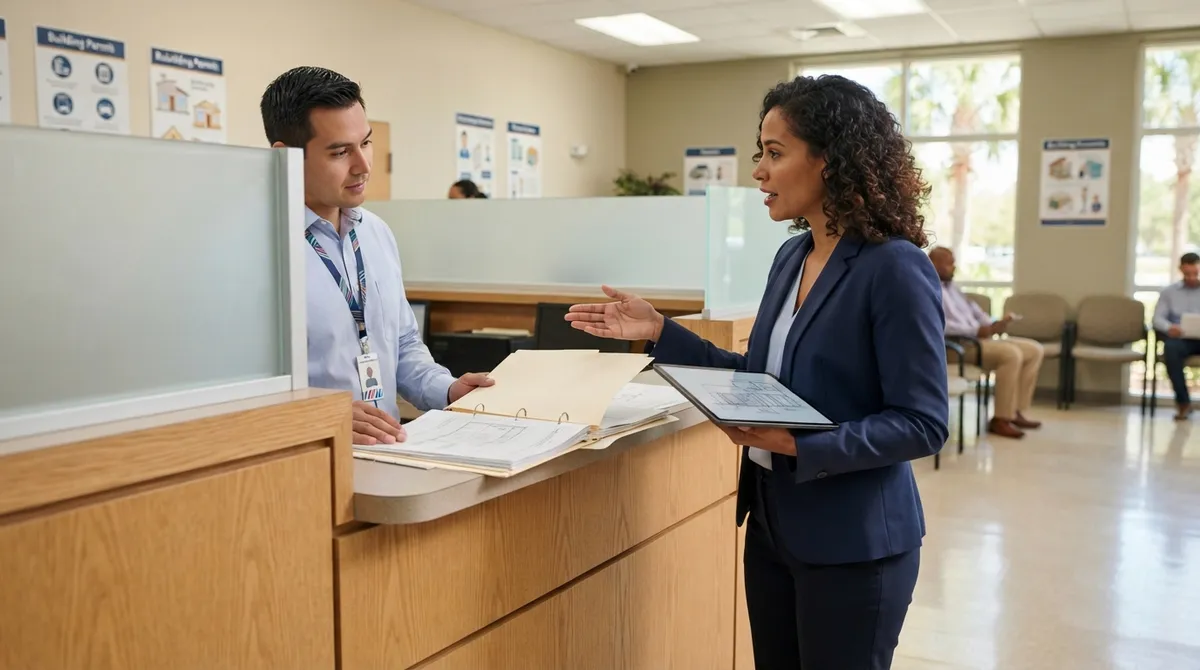
Every jurisdiction in Florida runs its own after-the-fact permit process, and guessing wrong wastes time. Use the property's exact address to confirm who has authority, disclose the work honestly, and ask for their current ATFP checklist and fee schedule. If you're unsure which county or city actually reviews your project, the jurisdiction lookup resource clears up confusion near city lines fast.
- Disclose the scope of work honestly, even if it feels uncomfortable
- Ask specifically for the after-the-fact permit checklist
- Request the current fee schedule, since it varies by county
- Avoid concealing or continuing any flagged work while under review
Step 2: Gather the Right Documentation
Indian River County's published after-the-fact procedure, for example, calls for a completed permit application, site or survey information, and, for concealed structural elements, inspection and certification by a Florida-licensed design professional. Other counties add their own wrinkles, like requiring a recorded Notice of Commencement before the first inspection if job value exceeds $2,500.
| Document Type | Typical Requirement | Who Provides It |
|---|---|---|
| Permit Application | Standard form for the scope of work | Owner or licensed contractor |
| Site or Survey Plan | Shows location of structure on lot | Surveyor or drafting service |
| Sealed Engineering Report | Verifies structural or MEP compliance | Florida-licensed engineer |
| Notice of Commencement | Required for jobs over $2,500 in some counties | Property owner, recorded at county |
A drafting and engineering team that already understands local formatting standards, such as those offered through engineering services and as-built drawings, tends to move through this stage far more smoothly than a DIY submission.
Step 3: Prepare for Possible Testing and Exposure
If your reviewer can't verify code compliance visually, expect a request to expose framing, plumbing, or wiring for inspection. Some jurisdictions will accept destructive or non-destructive testing paired with a sealed engineer's letter instead. This is where engineer letters become incredibly valuable, since they can sometimes replace the need to tear open finished walls entirely.
What Solar Companies Should Know Here
Solar installers dealing with unpermitted racking or electrical work face a similar dance, except speed matters even more because customers are waiting on interconnection approval. Having code-compliant structural and electrical documentation ready before you even walk into the building department dramatically shortens this stage. Teams juggling Florida solar permit timelines across multiple counties benefit from centralizing this documentation with one partner rather than reinventing the wheel for every jurisdiction.
Step 4: Understand the Fees and Potential Penalties
Here's where a lot of property owners get anxious, and understandably so. Florida Statutes §553.79 sets the general permitting requirement, but it does not establish one statewide after-the-fact penalty amount. Some counties add a surcharge on top of standard permit fees; others calculate penalties differently. There is no universal "double fee" rule you can rely on statewide, so always verify with the specific building department involved.
| Factor | Why It Varies |
|---|---|
| Base Permit Fee | Set locally, tied to project valuation |
| Penalty or Surcharge | Local ordinance, not a statewide formula |
| Engineering/Testing Costs | Depends on scope and whether concealment requires exposure |
| Additional Reviews | Zoning, floodplain, fire, or environmental approvals may apply |
Note that Chapter 553 of the Florida Statutes does reference an exemption for certain work valued under $7,500 on an owner's single-family dwelling, but exemptions carry conditions and local interpretation matters, so don't assume it applies without confirming first.
Step 5: Loop in the Right Professionals Early
Trying to navigate an after-the-fact permit alone is a bit like trying to file your own taxes for the first time during an audit. Technically possible, but stressful, and mistakes get expensive fast. A team that handles after-the-fact and expired permits daily already knows what each reviewer in Hillsborough, Pinellas, Broward, or Miami-Dade tends to flag.
- Determine whether your project needs structural, electrical, or plumbing certification
- Confirm which additional departments might weigh in, such as zoning or floodplain management
- Assemble sealed plans or as-built drawings that match what was actually constructed
- Submit through plan review coordination to track comments and avoid missed deadlines
- Respond quickly to any revision requests to keep momentum
- Schedule final inspections and close out the permit completely
Real estate professionals in particular run into this constantly. A buyer's inspection reveals unpermitted work, the closing gets held up, and everyone starts pointing fingers. If that sounds familiar, resources like realtor closing support exist specifically to untangle these situations before the deal falls apart.
Step 6: Follow Through Until You Get Final Approval
An after-the-fact permit isn't done until it's actually closed out with a passed final inspection. Skipping this last mile is one of the most common mistakes property owners make, assuming that submitting the application alone solves the problem. It doesn't. You need a stamped, closed permit on record, not just an open application sitting in a queue.
For jobs involving structural repairs or additions, confirm whether your project also needs a Certificate of Occupancy or Certificate of Use before the space can legally be used or rented. Skipping this step is a frequent reason deals or refinances stall out later.
Which Florida Counties Handle This Differently
Because Florida operates through dozens of independent building departments, expect real variation. Counties like Hillsborough, Pinellas, Manatee, Miami-Dade, and Broward each maintain their own after-the-fact procedures, fee tables, and documentation standards. A firm that already works across all 67 Florida counties can flag jurisdiction-specific quirks before they become expensive surprises.
A Quick Word for General Contractors and Design Professionals
If you're a general contractor managing multiple after-the-fact cases across different counties, standardizing your documentation process saves enormous time. Outsourcing drafting through a drafting-only service when you already have your own engineer, or leaning on a full private provider relationship for faster plan review, keeps projects moving instead of stacking up in a backlog.
Frequently Encountered Situations Worth Planning For
- A prior owner completed work without permits, and now it's your problem to solve
- A stop-work order landed mid-project and needs a clear path to resolution
- An expired permit needs to be reopened rather than treated as brand new unpermitted work
- A realtor discovers an open or missing permit right before closing
- A solar company needs fast turnaround on after-the-fact electrical documentation
Whatever your situation looks like, the building department wants a resolution, not a fight. Showing up prepared, honest, and organized goes a remarkably long way toward a smoother outcome. For a deeper walkthrough of the broader legalization process, our detailed guide on fixing a code violation for unpermitted work in Florida covers additional nuances worth reviewing.
Wrapping It Up: You Can Absolutely Get This Resolved
Unpermitted work sounds scarier than it usually turns out to be once you have the right team walking beside you. Florida building departments deal with after-the-fact permits constantly, and there's a well-worn path to get your project fully legalized, inspected, and closed out properly. You just need accurate plans, the right documentation, and someone who knows exactly what each local reviewer expects to see.
That's exactly the gap 1 Contractor Solutions fills every single day for general contractors, solar companies, realtors, and homeowners across the state. With in-house sealed drawings, structural and MEP engineering, and same-day response, our team handles the permit side so you can focus on the project itself. Curious what our clients say about working with us? Feel free to visit us on Google — 1 Contractor Solutions and see real feedback from Florida property owners we've helped. You can also follow us on LinkedIn or follow us on Facebook for ongoing permitting tips and county-specific updates.
If unpermitted work is holding up your project, your closing, or your peace of mind, don't wait for the notice to escalate. Reach out today and get a free quote and let's map out exactly what your property needs to get back into full compliance.
FAQs
How do I get an after-the-fact building permit in Florida?
You'll start by contacting the building department that actually has jurisdiction over your property, since procedures vary widely by city and county. From there, you'll typically submit a permit application, site plans, and sometimes a sealed engineering report before scheduling inspections. It's honestly a lot smoother when you have a team that already knows each county's quirks!
What happens if I did work without a permit in Florida?
Your local building department may require an after-the-fact permit application, inspections, corrections, and applicable fees before the work can be legalized. It's not the end of the world though, this happens more often than you'd think, and there's a clear process to make things right.
How much does an after-the-fact permit cost in Florida?
Costs vary quite a bit by jurisdiction since there's no statewide penalty formula, just local fee schedules and sometimes an added surcharge. The best move is always to confirm current pricing directly with the building department handling your specific address.
Can a Florida building department make me open walls for unpermitted work?
Yes, if the work is concealed, the building official may require exposure so inspectors can verify code compliance firsthand. Some counties will accept a sealed report from a licensed engineer instead, but that decision ultimately belongs to the local authority reviewing your case.
Will unpermitted work affect selling or insuring a Florida home?
Absolutely, unpermitted work can delay closings, complicate insurance underwriting, and sometimes scare off lenders entirely. The good news is that resolving it before listing your home, or quickly once it's discovered, keeps your sale moving forward without unnecessary drama.
We do this work every day across all 67 Florida counties. Call (866) 314-6931 and we will tell you what your situation actually requires — including when you do not need us.
Related services
Permit Facilitation & Filing
You have a crew scheduled, a client asking for dates, and a permit sitting somewhere in a queue you cannot see. We file it, w…
See the servicePlan Review Coordination
A permit in plan review is not one queue. On a commercial project it can be six queues, each with its own reviewer, its own c…
See the serviceReady to get your permit moving?
One call tells you which jurisdiction controls your project, what it will take, and what it will cost. Most of the time we can scope it on the phone.