
Blog
8 Steps to Fix a Code Violation Unpermitted Work Florida
Facing a code violation for unpermitted work in Florida? Follow these 8 practical steps to resolve it and protect your property.
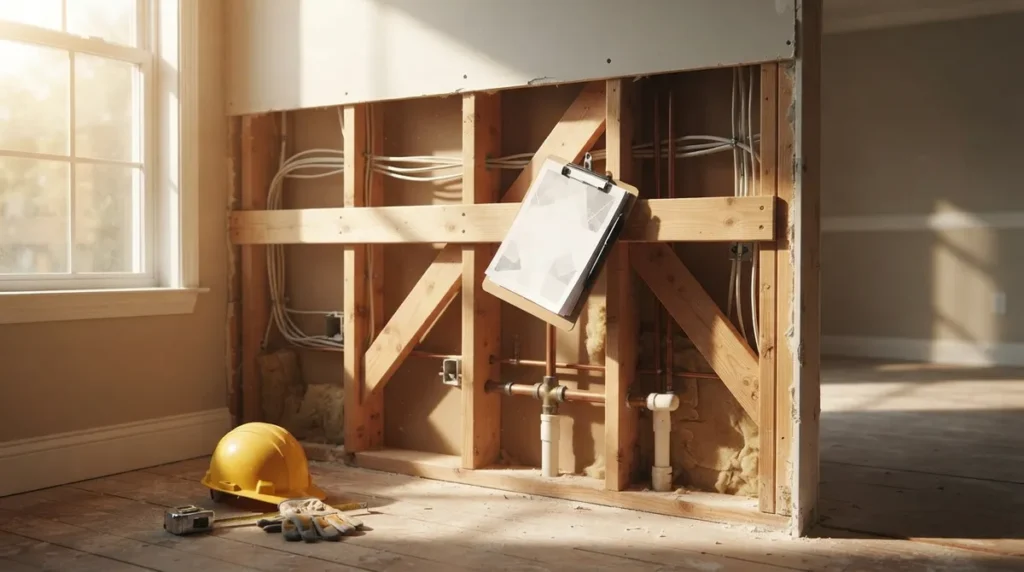
Key Takeaways
-
Stop work immediately and contact your local building department first—not a lawyer—since most Florida departments prefer working with cooperative homeowners over punishment, and concealing violations turns manageable fixes into legal problems.
-
Expect to pay standard permit fees plus penalties (often 2x the normal fee depending on jurisdiction) and prepare for inspections that may require opening walls to expose concealed work behind drywall and ceilings.
-
Document the complete scope of all unpermitted work upfront and submit an after-the-fact permit application with sealed plans and engineering documentation meeting current code standards to avoid partial confessions backfiring.
-
Property owners ultimately bear responsibility for code compliance regardless of who performed the work, even if a previous owner or contractor is responsible; unlicensed contractors face separate penalties under Florida Statutes Chapter 489.
-
Pull your complete permit history before submitting anything to identify open permits, prior owner permits, or unclosed permits that could complicate your after-the-fact application.
-
Always confirm permit requirements with your building department before starting projects and keep copies of all permits and inspection reports for the property's lifetime to prevent future violations during sales or refinancing.
So you just found out there's unpermitted work on your Florida property, and now there's a code violation notice sitting on your kitchen counter. Take a breath. You are not the first person this has happened to, and you absolutely will not be the last. Every week, our team at 1 Contractor Solutions talks to homeowners, real estate agents, and contractors across the state who are staring down this exact situation, wondering if their sale is dead, their fine is astronomical, or their whole addition is about to get bulldozed. Good news: most of the time, none of that happens. There's a process, and it works.
This guide walks you through exactly what a code violation for unpermitted work in Florida means, how the resolution process typically unfolds, and the eight practical steps that tend to move things forward instead of making them worse. Whether you're a homeowner in Bradenton, a general contractor juggling five open jobs in Tampa, or a realtor trying to save a closing in Sarasota, this is written for you.
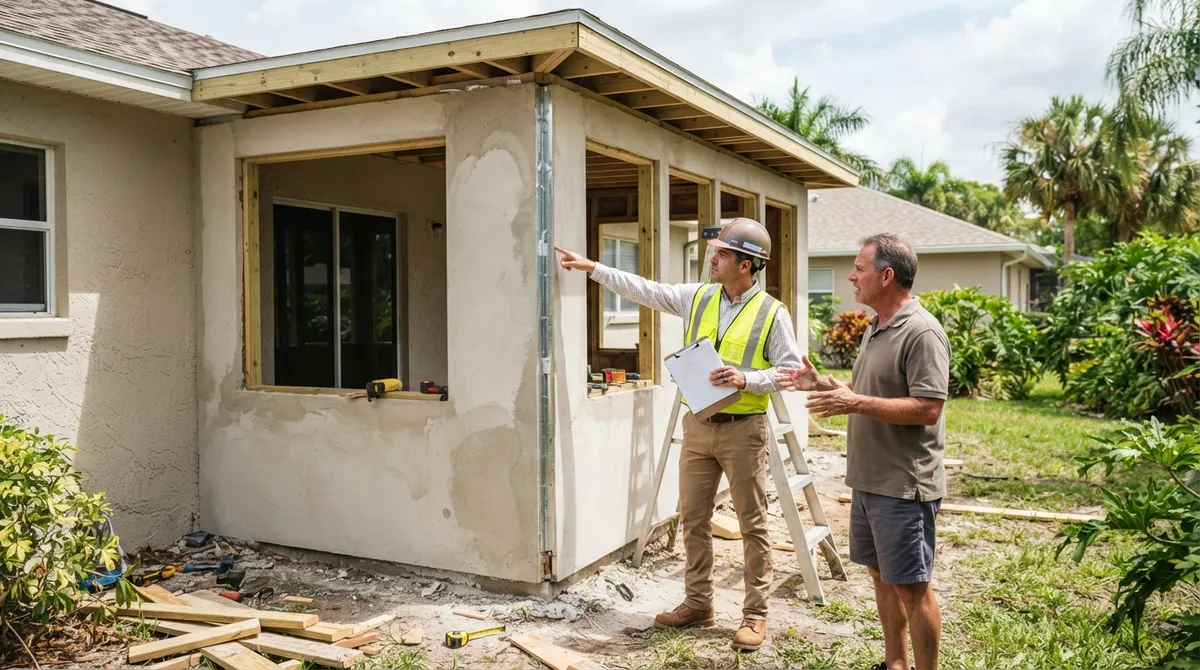
What Counts as Unpermitted Work in Florida?
Florida Statutes §553.79 requires a building permit before most construction, alteration, repair, or demolition work begins. The Florida Building Code and your local building department decide exactly what's covered and what's exempt, but generally speaking, if it touches structure, electrical, plumbing, mechanical systems, roofing, additions, room conversions, pools, or seawalls, it needs a permit.
A lot of homeowners assume small jobs slide under the radar. Sometimes they do. But we've seen plenty of "it's just a lanai enclosure" or "it's just a water heater swap" situations turn into full-blown violations because the scope crossed into permit-required territory. When in doubt, the local building department is the only authority that can make that call, not a contractor's gut feeling and not a home inspector's opinion.
Common Triggers for a Code Violation Notice
- A neighbor complaint about visible construction with no permit posted
- A home inspection during a real estate sale that flags mismatched square footage
- A routine code-enforcement drive-by that spots new construction
- An insurance inspection or claim that uncovers undocumented modifications
- A permit history search during refinancing or a title search
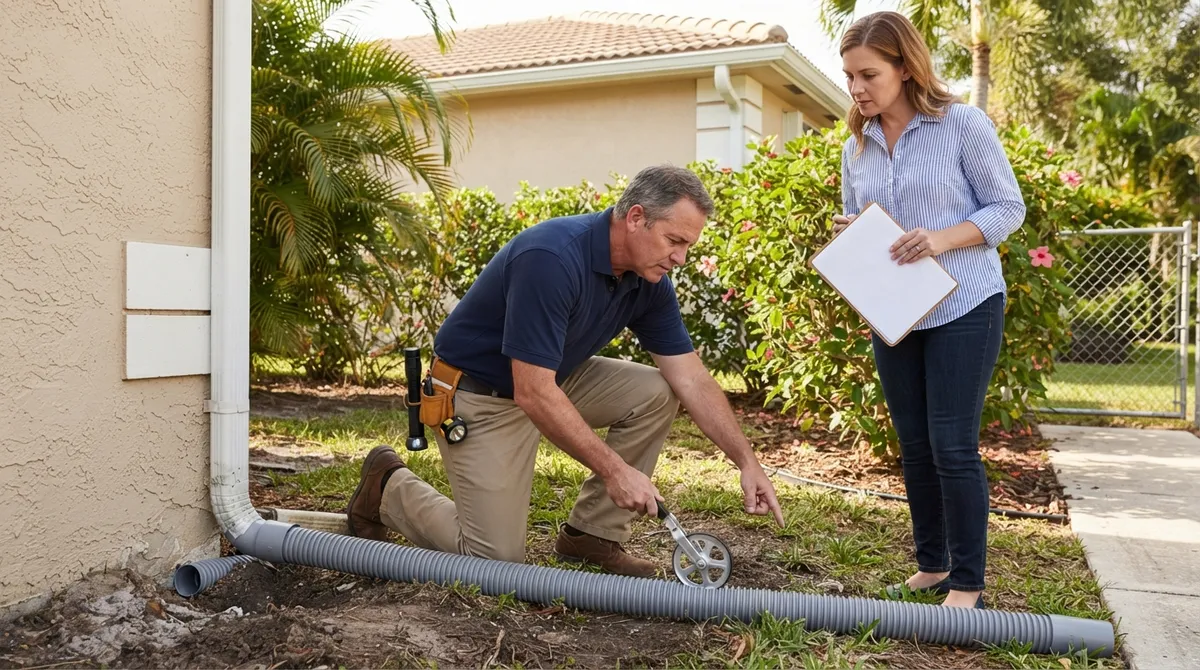
8 Steps to Resolve a Code Violation for Unpermitted Work
Here's the roadmap we walk clients through, step by step, regardless of whether it's a single-family home in Palmetto or a commercial retrofit in Fort Lauderdale.
1. Stop Work Immediately and Don't Touch Anything Further
If you're still mid-project, stop. Continuing work after a notice or stop-work order almost always escalates the situation and can add penalties. This applies whether the notice came from a building official or you simply discovered the issue yourself before anyone flagged it.
2. Contact the Local Building Department, Not a Lawyer First
It sounds counterintuitive, but most Florida building departments would rather work with you than punish you. Concealing unpermitted work or ignoring a notice is what turns a manageable fix into a legal mess. Reach out, be honest about the scope, and ask about the after-the-fact or corrective permit process for your jurisdiction. Not sure which department has authority over your address? Our building department lookup tool can point you in the right direction fast.
3. Pull Your Permit History Before You Do Anything Else
You need to know what's already on file. Are there open permits from a prior owner? Was a permit issued but never closed out? Our open permit search tool helps homeowners, realtors, and contractors get a clear snapshot before submitting anything new.
4. Document Every Scope of Unpermitted Work
Building officials want the full picture, not a partial confession. List every unpermitted item: the electrical panel upgrade, the enclosed patio, the water heater, all of it. Trying to permit one piece while hiding another almost always backfires during inspection.
5. Get Sealed Plans and Engineering Ready
Most after-the-fact permits require plans that meet the same standard as new construction, sometimes including structural or MEP engineering. This is where in-house drafting and engineering makes a real difference in timeline, since revisions can be turned around quickly instead of waiting on an outside consultant. Structural and MEP engineering documentation is often required, along with an engineer letter in cases where an inspector needs written verification of load-bearing conditions.
6. Submit the After-the-Fact Application and Pay the Fees
Expect to pay the standard permit fee plus a penalty. Penalty structures vary by jurisdiction. Orange City, for example, publicly states a penalty equal to two times the normal permit fee for work started without authorization. Confirm the exact multiplier with your specific building department before budgeting.
7. Prepare for Inspections, Including Possible Opened Walls
Inspectors may require exposing concealed work, meaning drywall, ceilings, or flooring might need to be opened so they can verify what's behind the finish. This is one of the more frustrating parts of the process for homeowners, but it's standard practice for anything the inspector can't visually confirm.
8. Close Out the Permit and Get Final Approval
Once inspections pass, the building official issues final approval or a certificate reflecting the legal status of the work. This is the finish line, and it's the document you'll want on hand for any future sale, refinance, or insurance claim.
Understanding the Penalties: What's Actually at Stake
Let's talk numbers, because vague warnings don't help anyone plan. Here's a breakdown of what Florida law and common local practice allow.
| Violation Type | Potential Consequence | Source |
|---|---|---|
| Unpermitted construction (general) | Stop-work order, corrective permit fees, possible removal of work | Local building department authority |
| Permit fee penalty | Often 2x standard fee (varies by jurisdiction) | Orange City Building Division guidance |
| Unlicensed contracting | Administrative fine up to $10,000 per violation | Fla. Stat. Chapter 489 |
| Code enforcement civil fine | Up to $250/day (first violation), up to $500/day (repeat) | Florida code enforcement framework |
These are maximum-authority figures, not automatic charges in every situation. A first-time, cooperative homeowner working proactively with the building department is treated very differently than someone who's been ignoring repeated notices for a year.
How This Plays Out for Different Florida Property Owners
General Contractors and Design Trade Professionals
If you inherited a project with legacy unpermitted work, or a client's previous contractor cut corners, the fastest path forward usually involves coordinating plan review coordination and getting revisions and resubmittals handled efficiently so reviewer comments don't stall the job for weeks. Contractors serving general contractors across Florida know that a single unresolved comment can hold up an entire crew schedule.
Solar Companies
Solar installers occasionally discover that the roof or electrical panel they're mounting to has unpermitted history. That discovery can derail an install date if it's not caught early. Working with a firm that understands both solar contractor permitting timelines and after-the-fact processes keeps projects from stalling.
Real Estate Professionals
An open permit or an unresolved violation found at closing can sink a deal. Our realtor and closing support service exists specifically for this scenario: research the permit history fast, identify the path to resolution, and give the buyer and seller a realistic timeline. Agents working in Miami-Dade County, Broward County, and beyond deal with this more often than they'd like.
Homeowners and Residential Property Owners
If you're a homeowner in Bradenton or Tampa facing this for the first time, know that you're not alone and it's rarely as catastrophic as it feels in the moment. Our homeowner permitting resources are built to walk you through exactly what documentation you'll need.
Who's Responsible: Homeowner or Contractor?
This is one of the most common questions we get, and the honest answer is: it depends on the situation, but the property owner ultimately bears responsibility for code compliance regardless of who performed the work. If a previous owner or a contractor who's since disappeared did the unpermitted work, the current owner is still the one who has to resolve it with the building department. That said, if unlicensed contracting was involved, Florida Statutes Chapter 489 gives the state separate enforcement authority against that contractor.
| Scenario | Who Typically Handles Resolution |
|---|---|
| Current owner did the work themselves | Current owner |
| Previous owner did the work | Current owner (inherits responsibility) |
| Licensed contractor skipped the permit | Owner resolves with building dept; contractor may face separate licensing action |
| Unlicensed person performed the work | Owner resolves permit; DBPR may pursue unlicensed contracting penalties separately |
How a Florida Permitting Service Fits Into the Process
A permitting service can't override the local building official's authority, and no reputable firm should ever promise guaranteed approval. What we can do is take the confusing parts off your plate: researching permit history, identifying the correct jurisdiction (which isn't always obvious near city lines), preparing sealed plans and engineering documents, filing the after-the-fact application, and managing every round of inspections and revisions until you get final closeout.
We've handled these files for clients dealing with code compliance violations in dozens of Florida counties, and we know the after-the-fact and expired permit process inside and out. If you're staring down a notice right now, our urgent permit rescue team responds within 30 minutes, day or night, because we know these situations rarely happen during business hours.
For a deeper walkthrough of the after-the-fact application itself, our earlier piece on what to do right now for an after-the-fact permit pairs well with this article.
Avoiding This in the Future
- Always confirm permit requirements with the building department before starting any project, no matter how small it seems.
- Verify a contractor's license status before hiring, since unlicensed work creates separate legal exposure under Chapter 489.
- Keep copies of every permit, inspection report, and certificate for the life of the property.
- Run a permit history check before buying or selling, especially on older homes.
- Use a contractor registration checklist if you're managing multiple trades on one job.
You can also see how the process has worked for others by reading 1 Contractor Solutions reviews, or check out what clients say directly by taking a look at our Google Business Profile for 1 Contractor Solutions. Staying connected with a resource like this also means you get updates on changing local requirements; you can follow us on LinkedIn or follow us on Facebook for ongoing Florida permitting news.
Final Thoughts: You Can Fix This
Here's the honest truth: a code violation for unpermitted work in Florida feels overwhelming at first, but it is genuinely fixable in the vast majority of cases. The building departments across this state, from St. Petersburg to Jacksonville, want compliant, safe structures. They're not out to get you. The process just requires patience, accurate documentation, and someone who knows how each jurisdiction handles these files.
If you're dealing with a notice right now, or you just discovered something during a home inspection, don't wait for it to get worse. Reach out and get a free quote from our team, and let's map out exactly what it will take to get your property back in good standing.
FAQs
What should I do if I discover unpermitted work on my Florida property?
First, don't panic and definitely don't try to hide it. Contact your local building department, pull your permit history, and start gathering documentation on the scope of work so you can begin the after-the-fact permit process on the right foot.
Can I get an after-the-fact permit for unpermitted work in Florida?
In most cases, yes, though approval isn't guaranteed and requirements vary by city and county. The building official will review the existing construction against current code, zoning, and floodplain rules before signing off.
How much does an after-the-fact permit cost in Florida?
You'll typically pay the standard permit fee plus a penalty, which some jurisdictions set at double the normal fee. The exact amount depends entirely on your local building department's fee schedule, so it's worth confirming directly.
Will Florida inspectors make me open walls to inspect unpermitted work?
It's possible, especially if the inspector can't visually verify what was done behind drywall, flooring, or ceilings. It's not fun, but it's a standard part of confirming that concealed work actually meets code.
What happens if I sell a Florida house with unpermitted work?
It can absolutely complicate or delay your closing, since buyers, lenders, and title companies often ask for proof that permits and violations are resolved. Getting ahead of it before listing saves everyone a lot of stress later.
We do this work every day across all 67 Florida counties. Call (866) 314-6931 and we will tell you what your situation actually requires — including when you do not need us.
Related services
Permit Facilitation & Filing
You have a crew scheduled, a client asking for dates, and a permit sitting somewhere in a queue you cannot see. We file it, w…
See the servicePlan Review Coordination
A permit in plan review is not one queue. On a commercial project it can be six queues, each with its own reviewer, its own c…
See the serviceReady to get your permit moving?
One call tells you which jurisdiction controls your project, what it will take, and what it will cost. Most of the time we can scope it on the phone.