
Blog
How to Qualify a Job After the Fact in Miami-Dade
Learn how to qualify a job after the fact in Miami-Dade, from jurisdiction rules and fees to inspections and licensed contractor requirements.
Key Takeaways
-
Miami-Dade County charges an additional 100% of the usual permit fee once a Notice of Violation is issued, while the City of Miami applies a 2x multiplier for homestead or 4x for non-homestead properties, making jurisdiction verification critical before submitting applications.
-
Concealed work like wiring, plumbing, and structural elements hidden behind drywall or slabs must be physically exposed for inspector verification during the after-the-fact permitting process, which is unavoidable and why this process is more involved than standard permitting.
-
Owner-builder permits in Miami-Dade are heavily restricted and cannot be used to legalize work when a Notice of Violation already exists—licensed contractors must handle permitting for properties with open violations regardless of ownership status.
-
Confirm whether a Notice of Violation has been issued before submitting any permits, as this significantly changes fee structures and may add enforcement steps like citations, liens, or civil fines that escalate over time if ignored.
-
Determine your property's exact jurisdiction (unincorporated Miami-Dade County versus an incorporated city like Miami) first, as each has different permitting rules, fee calculations, timelines, and owner-builder eligibility—this distinction is the most common source of costly errors.
-
Licensed contractors must be properly registered with the county for their specific trade; general contractors cannot automatically pull permits for specialty trades like electrical or plumbing unless explicitly authorized for that scope of work.
So you just found out there's unpermitted work sitting on a property in Miami-Dade, and now you're wondering how to make it right. Maybe you're a general contractor who inherited a half-finished addition. Maybe you're a homeowner who discovered your patio enclosure never had a permit pulled. Or maybe you're a realtor trying to close a deal that's stuck because of an open violation. Whatever brought you here, take a breath — you're in the right place, and this is completely fixable.
Learning how to qualify the job after the fact in Miami-Dade doesn't have to feel like navigating a maze blindfolded. It just means getting permits and inspections for construction that already happened without them. It's not a magic waiver, and it's not a special license that lets you skip code compliance. But with the right approach, it's a very manageable process. Let's walk through exactly what it involves, who needs to be involved, and how to avoid the most common pitfalls people run into along the way.
What Does It Mean to Qualify a Job After the Fact in Miami-Dade?
When people talk about qualifying a job after the fact in Miami-Dade, they're really talking about retroactive permitting — going back and getting the proper permits, plans, and inspections for work that was already completed without them. This could be anything from an unpermitted bathroom remodel to a converted garage, an addition, or electrical work done under the table years ago.
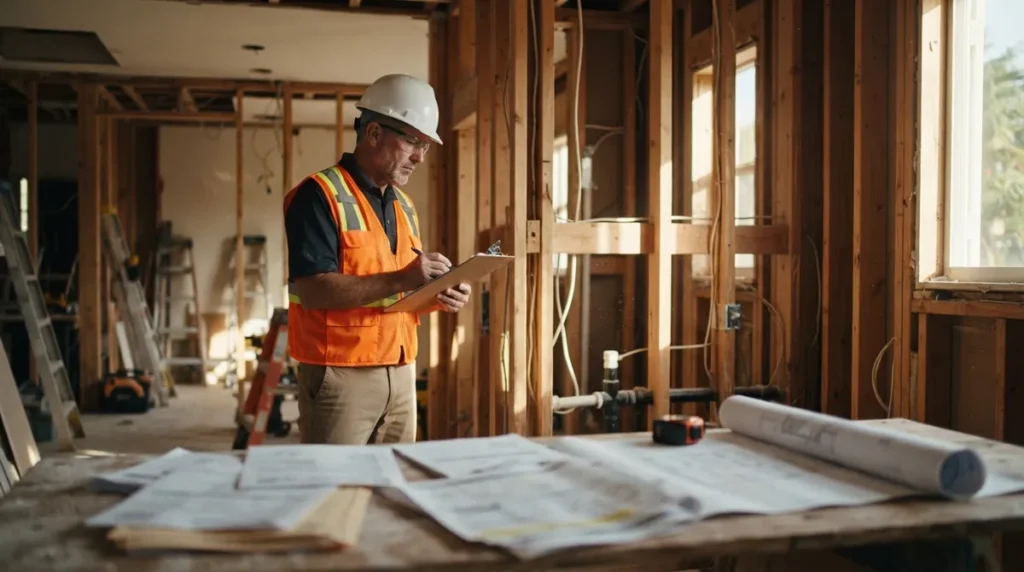
The county's building department has confirmed that permits and inspections can still be obtained for existing unpermitted construction. The process mirrors what you'd do for new work in many respects, but there's an important twist: concealed work, like wiring behind drywall or plumbing under a slab, may need to be exposed so an inspector can actually verify it meets code. That means opening up walls, ceilings, or floors in some cases, which is why this process tends to feel more involved than a standard permit application.

Step 1: Figure Out Who Actually Has Jurisdiction
Before you do anything else, you need to know exactly which authority governs the property. This trips up more people than you'd expect. Miami-Dade County handles unincorporated areas, but incorporated cities — including the City of Miami — run their own permitting departments with their own rules, fee structures, and timelines.
This distinction matters a lot. For example, City of Miami's published fee schedule includes a separate penalty multiplier for work started without a permit: two times the scheduled fee for homestead properties, and four times for non-homestead or commercial properties, on top of the base fee. Miami-Dade County's rule is different — it applies a flat additional 100% of the usual permit fee once a Notice of Violation has been issued. Same county, very different math depending on where the property sits.
If you're not sure whose rules apply to your property, our building department lookup tool is a great place to start narrowing things down.
Quick Jurisdiction Comparison
| Factor | Miami-Dade County (Unincorporated) | City of Miami |
|---|---|---|
| Permitting Authority | Miami-Dade County Building Department | City of Miami Building Department |
| Penalty After Violation Notice | Additional 100% of usual permit fee | 2x (homestead) or 4x (non-homestead/commercial) fee multiplier plus base fee |
| Owner-Builder Option | Limited, county-specific rules apply | Limited to owner-occupied 1-2 family homes; interview/test required |
| Permit Validity Window | Varies by scope | 180 days from issuance or last approved inspection |
Step 2: Confirm Whether There's an Open Notice of Violation
Before you submit anything, check whether a Notice of Violation has already been issued on the property. This changes the fee structure significantly and may add enforcement steps like citations, civil fines, or even liens if it's not addressed. Ignoring an open violation rarely makes it go away — it typically escalates.
If you're a realtor or investor evaluating a property, this is a step you absolutely cannot skip. Our open permit search tool can help you check a property's permit history before you get too far into a transaction. Discovering a violation after closing is a headache nobody wants, and it's one of the more common reasons deals get delayed.
Step 3: Assemble Your Documentation
Once you know your jurisdiction and violation status, it's time to gather everything you'll need. This typically includes:
- Plans showing the scope of the unpermitted work (existing conditions plus what was actually built)
- Photos documenting the current state of the construction
- Contractor license and registration information for whoever will pull the permit
- Proof of ownership, especially if pursuing an owner-builder route
- Any prior permit history or correspondence related to the violation
This is where working with a team that handles as-built drawings and architectural drafting in house really pays off. Instead of chasing down separate drafters and engineers, you get sealed, code-compliant plans prepared under one roof, which speeds everything up considerably.
Step 4: Confirm Who's Licensed to Pull the Permit
Here's a detail that trips up a lot of well-meaning property owners: not just anyone can pull a permit for this kind of work. Miami-Dade County code requires that contractors be properly certified or licensed for the specific trade involved, and registered with the county. A general contractor, for instance, can't automatically pull permits for specialty trades like electrical or plumbing unless they're authorized for that scope.
Owner-builder permits are also more limited than many people assume. The City of Miami explicitly states that owner-builder permits apply only to owner-occupied one- and two-family homes, require proof of ownership and occupancy, and involve an interview or test. Importantly, the city's guidance says a homeowner permit will not be issued to cover illegal work when a violation already exists — licensed contractors must handle that permitting instead.
If you're unsure whether your contractor is properly registered for the job, our contractor registration checklist is worth reviewing before you submit anything.
Step 5: Apply, Expose Work if Required, and Complete Inspections
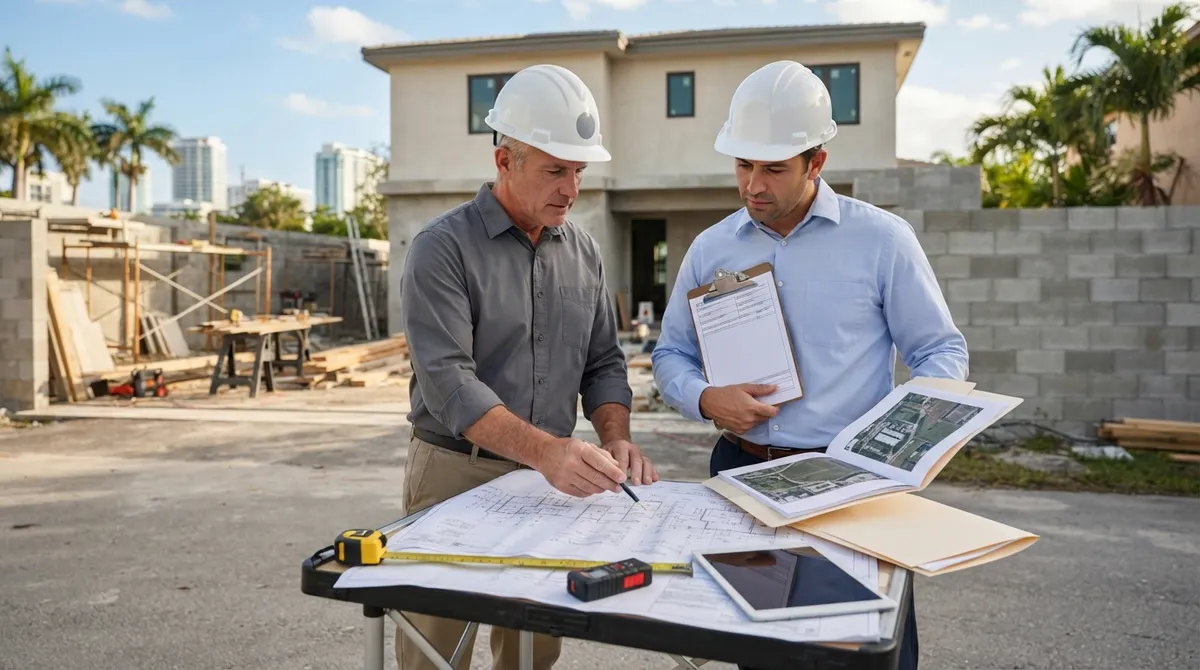
With your documentation and licensed contractor in place, you'll submit the after-the-fact permit application through the correct jurisdiction. From there, expect the following general sequence:
- Submit plans and application materials for review
- Respond to any reviewer comments or requests for additional documentation
- Expose concealed work if the inspector requires it (this is common for electrical, plumbing, or structural elements hidden behind finishes)
- Schedule and pass required inspections
- Complete any corrective work flagged during inspection
- Close out the permit and resolve any associated violation case
This is often the most stressful part for property owners, because opening up finished walls or ceilings feels like a step backward. But it's simply how inspectors verify that hidden work actually meets code — there's no shortcut around it once concealment is required.
What About Fees? Here's the Real Cost Picture
Nobody loves talking about penalty fees, but knowing what to expect helps you budget accurately and avoid surprises. Florida Statutes § 553.79 generally requires a permit before construction, alteration, repair, or demolition, with some narrow exceptions — including a limited exemption for certain single-family dwelling work valued under $7,500. That exemption excludes electrical, plumbing, structural, mechanical, or gas work, and it doesn't apply in flood hazard areas, so don't assume your project qualifies without checking first.
| Fee Type | What It Covers | Typical Impact |
|---|---|---|
| Standard Permit Fee | Base cost of the permit application itself | Varies by scope and jurisdiction |
| Notice of Violation Penalty (Miami-Dade County) | Additional charge once a violation has been formally issued | Additional 100% of usual permit fee |
| Work-Started-Without-Permit Fee (City of Miami) | Penalty multiplier based on property type | 2x fee (homestead) or 4x fee (non-homestead/commercial) |
| Additional Enforcement Costs | Citations, civil fines, or liens for unresolved violations | Case-dependent, can escalate over time |
Who Should Be Involved in This Process?
Depending on your role, the after-the-fact process looks a little different:
- General contractors managing a project with legacy unpermitted work often need coordinated plan review coordination to keep multiple trades and inspections moving without delays piling up.
- Solar companies occasionally inherit properties with unpermitted electrical modifications that complicate new installations — getting that resolved early prevents inspection failures down the line.
- Realtors and investors evaluating a property with an open violation need fast, accurate research before a closing date locks in, which is where realtor closing support becomes invaluable.
- Homeowners facing a violation notice for the first time often just need someone to translate the jargon and walk them through next steps calmly.
Whatever your role, the team at 1 Contractor Solutions handles this kind of work daily — including files that other providers have declined to touch. Our after-the-fact and expired permits service is built specifically for these situations, with in-house sealed drawings so revisions don't get stuck waiting on an outside engineer's callback.
Common Mistakes That Slow Down the Process
Over the years, a few patterns show up again and again when after-the-fact permits get delayed or denied:
- Applying in the wrong jurisdiction because the property sits near a city boundary
- Assuming a homeowner permit will cover work when a violation already exists
- Submitting incomplete plans that don't reflect the actual as-built conditions
- Using an unlicensed or improperly registered contractor for the specific trade
- Ignoring a Notice of Violation and letting fines accumulate
Avoiding these missteps from the start saves weeks, sometimes months, of back-and-forth with reviewers. If your project ever gets flagged mid-process, our urgent permit rescue service is designed to step in quickly and get things back on track.
Does the City of Miami Use the Same Rules as the County?
Not exactly, and this is worth repeating because it catches people off guard constantly. While both share the same general philosophy — permits and inspections can be obtained retroactively — the fee structures, owner-builder eligibility, and enforcement mechanisms differ. Always confirm the exact submittal checklist and fee calculation with the local building department handling your specific property before you start the process.
You can review general permitting guidance for Miami and the broader Miami-Dade County area to get a sense of jurisdiction-specific expectations before diving in.
Wrapping It Up: You Don't Have to Figure This Out Alone
Qualifying a job after the fact in Miami-Dade can feel overwhelming at first, especially when you're staring down fee multipliers, exposed walls, and jurisdiction questions all at once. But thousands of property owners, contractors, and realtors work through this exact process every year, and it almost always ends with a resolved violation and a property back in good standing.
The key is having accurate plans, the right licensed professionals, and someone tracking the process from filing to closeout. That's exactly what we do at 1 Contractor Solutions, with in-house sealed drawings and a team that answers 24/7 — because permit problems rarely wait for business hours. If you'd like to see how other property owners and contractors have felt about working with us, check out what our 1 Contractor Solutions customers say on Visit us on Google — 1 Contractor Solutions, or connect with us on follow us on LinkedIn and follow us on Facebook for more permitting insights across Florida.
If you're dealing with unpermitted work in Miami-Dade right now and want a clear path forward instead of guesswork, reach out and get a free quote — we'll help you sort out the jurisdiction, the paperwork, and the plan to get it done right.
FAQs
How do I get an after-the-fact permit in Miami-Dade County?
You'll want to start by confirming whether the property is in unincorporated Miami-Dade or an incorporated city, since the rules and fees differ. From there, you gather plans, photos, and licensed contractor information, then apply through the correct building department, expose concealed work if requested, and complete inspections before closing out the permit.
Can I get a permit for work that was already completed in Miami-Dade?
Yes, absolutely — Miami-Dade County allows permits and inspections to be obtained for existing unpermitted construction. It follows a process similar to new permitting, though inspectors may need concealed work like wiring or plumbing exposed so they can properly verify it against current code.
Does Miami-Dade charge double fees for work done without a permit?
Once a Notice of Violation has been issued, Miami-Dade County adds an additional 100% of the usual permit fee, which effectively doubles that cost. Keep in mind this is separate from any additional enforcement costs like citations or civil fines, so it's worth resolving violations sooner rather than later.
Do I need a licensed contractor to legalize unpermitted work in Miami-Dade?
In most cases, yes — county code requires contractors to be properly licensed and registered for the specific trade involved, whether that's electrical, plumbing, or structural work. A general contractor typically can't pull specialty trade permits unless they're authorized for that scope of work.
Can a homeowner pull an after-the-fact permit as an owner-builder?
It depends on the situation and jurisdiction, but owner-builder options are more limited than many people expect. The City of Miami, for example, restricts owner-builder permits to owner-occupied one- and two-family homes and won't issue one to cover illegal work when a violation already exists — a licensed contractor has to handle that instead.
We do this work every day across all 67 Florida counties. Call (866) 314-6931 and we will tell you what your situation actually requires — including when you do not need us.
Related services
Permit Facilitation & Filing
You have a crew scheduled, a client asking for dates, and a permit sitting somewhere in a queue you cannot see. We file it, w…
See the servicePlan Review Coordination
A permit in plan review is not one queue. On a commercial project it can be six queues, each with its own reviewer, its own c…
See the serviceReady to get your permit moving?
One call tells you which jurisdiction controls your project, what it will take, and what it will cost. Most of the time we can scope it on the phone.