
Blog
5 Steps to Get a Hurricane Shutter Permit in Port Charlotte
Learn the 5 steps to get a hurricane shutter permit in Port Charlotte, FL, from jurisdiction checks to fees, product approvals, and inspections.
Key Takeaways
-
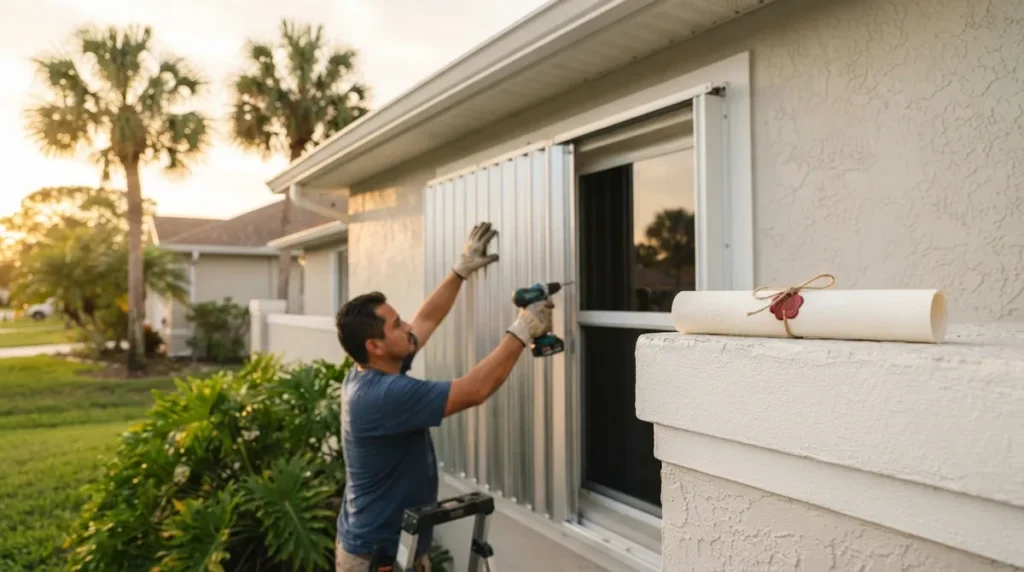
Confirm which authority issues your permit before filing, since a Port Charlotte mailing address does not guarantee jurisdiction. In unincorporated areas, Charlotte County requires permits for residential shutters, manual or electric.
-
Include the full Florida Product Approval number with the configuration after the decimal point, matching your exact product. An incomplete approval number is a common reason shutter permits get kicked back.
-
Charlotte County's residential application fee is $90, and a Notice of Commencement is required when the direct contract price exceeds $5,000, recorded before the first inspection.
-
Permits are void if work doesn't start or an approved inspection isn't received within 180 days; starting work before issuance can incur a penalty of up to four times the permit fee.
-
Unpermitted storm shutters generally must be removed within 30 days after hurricane season ends November 30, while permitted shutters are exempt from that rule.
-
Every plan should label each protected opening with its dimensions and address egress or rescue openings so occupied homes keep a safe escape route.
Hurricane season has a funny way of sneaking up on us. One minute you are enjoying a quiet Port Charlotte morning, and the next you are staring at the forecast cone wondering whether your windows can handle what is coming. If you have been thinking about protecting your home, you are in good company, and we are glad you are here.
Here is the part many homeowners and contractors miss: in most cases, you need a permit before shutters go up. Getting a hurricane shutter permit in Port Charlotte, FL is not complicated, but it does have a few details that can trip you up if you skip ahead. The right paperwork, product approval numbers, and jurisdiction check can save you weeks of back-and-forth.
In this friendly 2026 guide, we will walk through five clear steps to get your shutter permit approved. Whether you are a homeowner, general contractor, realtor, or installer, you will find practical, plain-English advice you can use today.
Step 1: Confirm Who Actually Issues Your Permit
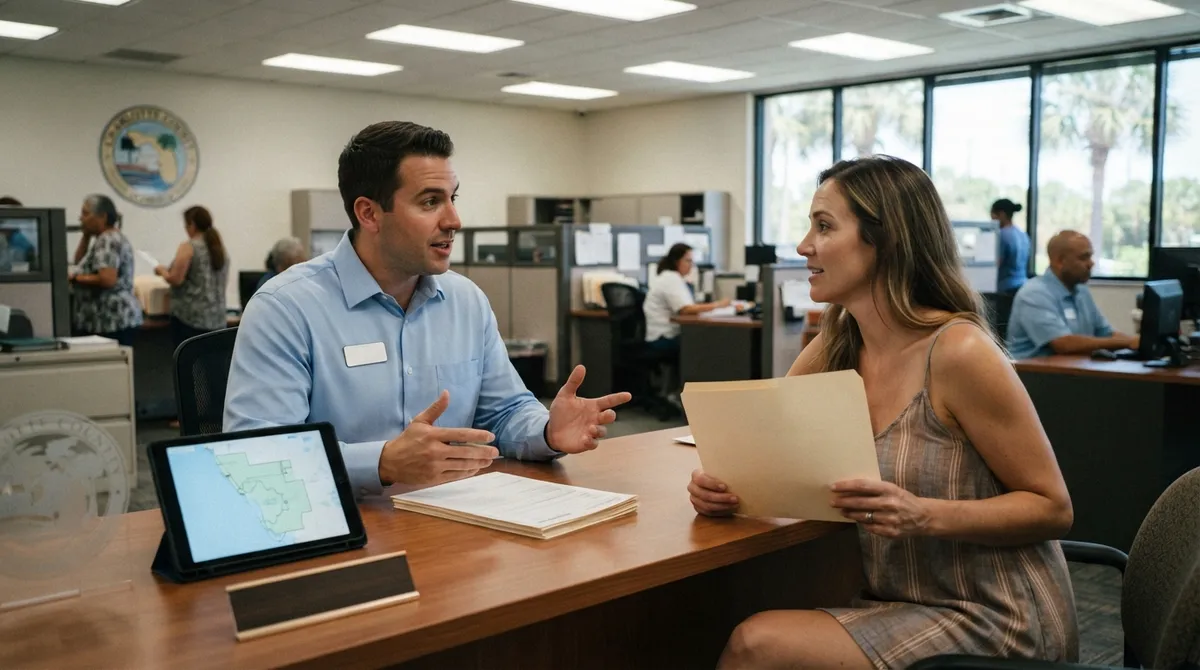
Before you fill out a single form, figure out which building authority controls your property. A Port Charlotte mailing address does not automatically tell you who handles permits. Some addresses sit in unincorporated Charlotte County, while others may fall under a different local authority.
In unincorporated Port Charlotte, Charlotte County lists residential hurricane shutter installation as permit-required work. That is true whether the shutters are manual or electric. If you apply to the wrong office, you lose time, so this first check really matters.
Quick ways to verify jurisdiction
- Look up your parcel on the county property appraiser site and note the listed jurisdiction.
- Check your tax bill for the taxing authority.
- Call the Charlotte County building department with your address and ask directly.
- Use our building department lookup tool to point you to the right office.
Not sure which office controls your address? Our team works across all 67 Florida counties and handles Charlotte County permitting every day, so we can confirm it quickly. If you want a deeper look at who can legally file, see our guide on who can pull a building permit in Port Charlotte.
Step 2: Gather Your Documents and Product Approvals
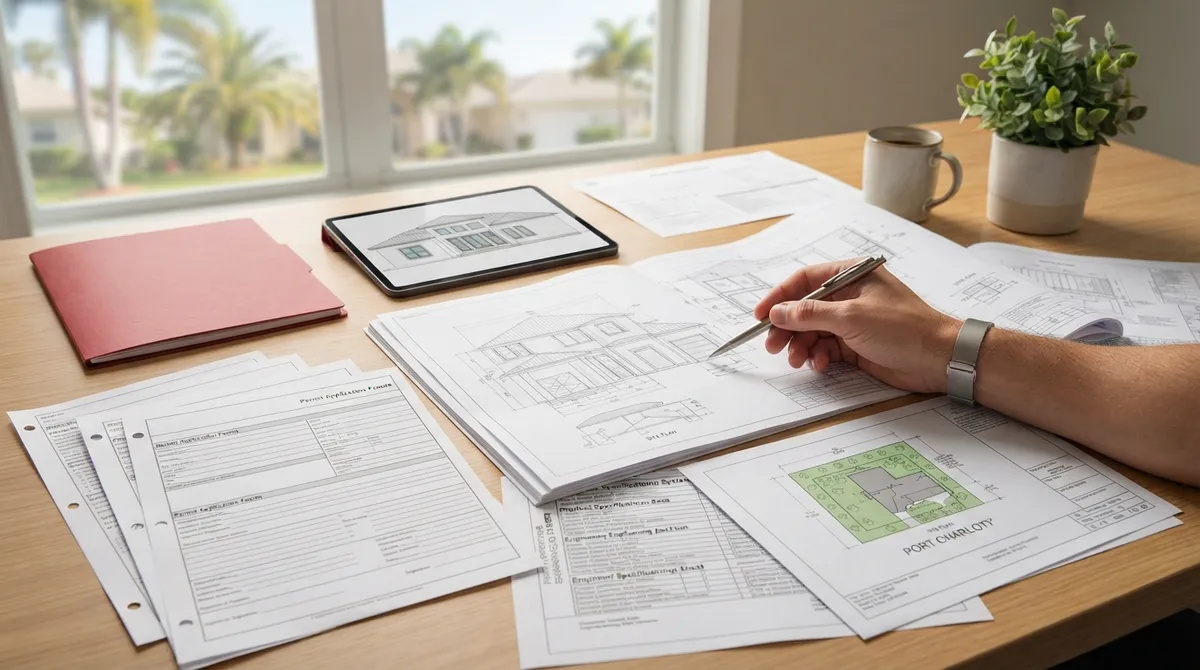
This is where most shutter permits stall. Charlotte County asks for a specific set of items, and missing one usually means a correction notice and a delay. Think of it like packing for a trip: it is far easier to pack everything the first time than to turn the car around.
What Charlotte County expects on a residential shutter application
- The county's Window/Door/Shutters permit application.
- Plans showing each protected opening and its size, including egress or rescue openings.
- Complete product specifications for the shutter system.
- The full Florida Product Approval number, including the configuration after the decimal point.
- A signed and recorded Notice of Commencement if the direct contract price is over $5,000.
That decimal detail is easy to overlook. A product approval number like FL12345 is not enough on its own. Reviewers want the specific configuration that matches what you are installing, because approvals only apply within their stated conditions and limitations.
Why product approval matters
Florida Statutes section 553.842 (2026) identifies shutters and impact-protection systems among product categories that need statewide approval. It also limits how products can be marketed as hurricane or windstorm protection without that approval. In plain terms, a shutter that looks sturdy but lacks the right approval will not pass review.
You can check approval status on the Florida Building Commission product approval system. If you are comparing approvals with other regions, our article on Miami-Dade NOA vs. Florida Product Approval explains the difference. Also, if your project involves impact windows rather than shutters, take a look at our impact window permit guide for Port Charlotte.
| Document | Why It Matters | Common Mistake |
|---|---|---|
| Permit application | Starts the review | Using an outdated form |
| Opening-by-opening plan | Shows what gets protected | Leaving out egress openings |
| Product specifications | Proves code compliance | Missing installation details |
| Full approval number | Confirms statewide approval | Omitting the decimal configuration |
| Notice of Commencement | Required above $5,000 | Not recording it before inspection |
Step 3: Understand the Review, Fees, and Timing
Once you submit, Charlotte County reviews the proposed work against Florida Building Code requirements. That review includes structural items such as wind and flood loads. Shutters must be installed within the conditions and limitations of their product approval, which is why accurate specs are so important.
Fees to expect
Charlotte County's residential page lists a $90 application flat fee. It also lists a building fee of 0.004 times the ICC valuation when the valuation is $50,000 or more, plus a surcharge of 2.5% of the building fee. Most standard shutter jobs fall below that valuation threshold, but larger whole-home projects can reach it.
Fees change from time to time, so please verify the current schedule with the county before you apply. We never want a surprise at the counter to ruin your day.
| Fee Item | Amount Listed by Charlotte County |
|---|---|
| Application flat fee | $90 |
| Building fee (valuation $50,000 or more) | 0.004 x ICC valuation |
| Surcharge | 2.5% of the building fee |
Timing rules worth knowing
- A permit is void if construction does not start, or an approved inspection is not received, within 180 days of issuance.
- An approved inspection extends the permit for another 180 days.
- Starting work before the permit is issued may result in a penalty of up to four times the permit fee.
That last point is a big one. Skipping the permit might feel like a shortcut, but it often turns into the long way around. If work already happened without approval, do not panic. Our guide on 7 steps to legalize unpermitted work in Florida walks through the fix.
Step 4: Build a Clean Submission and Avoid Common Delays
A tidy submission is the secret to a smooth approval. Reviewers are human, and they appreciate packets that are easy to follow. When your plans, specs, and approval numbers all line up, you tend to get approved faster.
Common reasons shutter permits get kicked back
- The product approval number is incomplete or does not match the product on the plans.
- The plan does not label every opening or its dimensions.
- Egress openings are not addressed, so the home could lose a safe escape route.
- The Notice of Commencement is missing on a job over $5,000.
- Installation details do not match the conditions of the product approval.
If a correction notice does land in your inbox, it is not the end of the world. Many are fixed with a clarified drawing or a corrected approval number. When things get stuck, our article on who can rescue a denied building permit in Florida explains your options, and you can learn more about resubmitting plans the right way.
Should you do it yourself or hire help?
Owner-builders can often handle simple permits, but shutters bring product approval details and drawing requirements that catch people off guard. Many contractors and homeowners choose to outsource the paperwork so installers can stay focused on installs. If you are a contractor juggling multiple jobs, a dedicated team handling permit facilitation and filing can keep crews on schedule. Homeowners exploring that route may also like our overview of owner-builder permits.
Step 5: Get Inspected, Close Out, and Follow Seasonal Rules
After installation, schedule your inspection. Charlotte County requires that a signed and recorded Notice of Commencement be submitted before the first inspection is scheduled when one applies, so do not let that step slip. Passing inspection keeps your permit active and gets the project properly closed out.
Closeout checklist
- Confirm the shutters match the approved plans and product configuration.
- Record the Notice of Commencement if required, and submit the signed copy.
- Schedule the inspection before the 180-day window runs out.
- Keep your approved plans, receipts, and inspection records together.
- Request final closeout so no open permit lingers on the property.
That last item is worth its weight in gold. Open permits can cause real headaches at resale. If you are buying or selling, read our guide on open permit mistakes to avoid before closing in Port Charlotte.
The 30-day rule after hurricane season
Charlotte County's storm-shutter ordinance generally prohibits leaving unpermitted storm shutters on a structure more than 30 days after hurricane season ends on November 30. Permitted shutters are exempt from that removal rule. That is one more good reason to pull the permit instead of relying on temporary panels.
Safety also matters here. Occupied homes must keep an accessible means of escape while shutters cover openings. Planning that egress up front, as we mentioned in Step 2, keeps your family safe and your inspector happy.
| Situation | Permit Status | What Happens After November 30 |
|---|---|---|
| Permitted shutters | Approved and inspected | May remain installed |
| Unpermitted storm shutters | No permit | Generally must be removed within 30 days |
| Work started before permit | Potential penalty | May face up to four times the permit fee |
When It Makes Sense to Bring in a Pro
Sometimes the smartest move is letting someone else carry the paperwork. At 1 Contractor Solutions, we act as Florida's outsourced permitting department. We confirm jurisdiction, review product approvals, prepare drawings, file the application, and track it through approval, with in-house drafting and engineering when sealed documents are needed. You can read what customers say about us when you visit us on Google — 1 Contractor Solutions.
We serve general contractors, solar companies, realtors, design professionals, and homeowners, and we respond fast, often the same day. If you are building a bigger project around your shutters, such as a re-roof or window replacement, you may also find our resource on hurricane damage permits in nearby North Port helpful. You can also stay connected with us and follow us on Facebook or follow us on LinkedIn for permitting tips as the season changes.
For businesses that want help getting the word out about their own services, Brain Buzz Marketing is a resource worth a look.
Final Thoughts
Getting a hurricane shutter permit in Port Charlotte comes down to five friendly steps: confirm your jurisdiction, gather complete documents and product approvals, understand the review and fees, submit a clean packet, and finish with inspection and closeout. Do those well, and your home is protected, your paperwork is clean, and you can sleep easier when the next storm heads our way.
Remember that fees, forms, and rules can change, so always confirm the latest requirements with Charlotte County or your local building department before you begin. If you would rather hand off the details, we would love to help. Ready to protect your home the right way? Get a free quote from our team today, and let us take the permit stress off your plate.
FAQs
Do I need a permit to install hurricane shutters in Port Charlotte, Florida?
In most cases, yes. In unincorporated Port Charlotte, Charlotte County lists residential hurricane shutter installation as permit-required work, even for electric models. Always confirm your property's jurisdiction first, since a Port Charlotte mailing address does not guarantee which authority issues your permit.
How much does a hurricane shutter permit cost in Charlotte County?
Charlotte County lists a $90 application flat fee for residential shutters. Larger projects with an ICC valuation of $50,000 or more may add a building fee of 0.004 times valuation plus a 2.5% surcharge. Fees can change, so check the current schedule before you apply.
Do I need a Notice of Commencement for shutter installation?
Yes, if the direct contract price is more than $5,000. Charlotte County asks for a signed and recorded copy before the first inspection is scheduled, so get it recorded early to keep things moving.
How long can storm shutters stay up after hurricane season?
Unpermitted storm shutters generally cannot remain more than 30 days after hurricane season ends on November 30. Permitted shutters are exempt from that removal rule, and occupied homes must still keep an accessible means of escape.
How can I check whether my shutters have Florida Product Approval?
Look up the manufacturer's approval number in the Florida Building Commission product approval system, and make sure you use the full number including the configuration after the decimal point. The approval must match your exact installation, so confirm the conditions and limitations before you buy.
We do this work every day across all 67 Florida counties. Call (866) 314-6931 and we will tell you what your situation actually requires — including when you do not need us.
Related services
Permit Facilitation & Filing
You have a crew scheduled, a client asking for dates, and a permit sitting somewhere in a queue you cannot see. We file it, w…
See the servicePlan Review Coordination
A permit in plan review is not one queue. On a commercial project it can be six queues, each with its own reviewer, its own c…
See the serviceReady to get your permit moving?
One call tells you which jurisdiction controls your project, what it will take, and what it will cost. Most of the time we can scope it on the phone.