
Blog
How to Handle a Condo Structural Inspection in Tampa
Learn how Tampa condo associations handle Florida's milestone inspection, from deadlines and phases to the permits that follow repair recommendations.
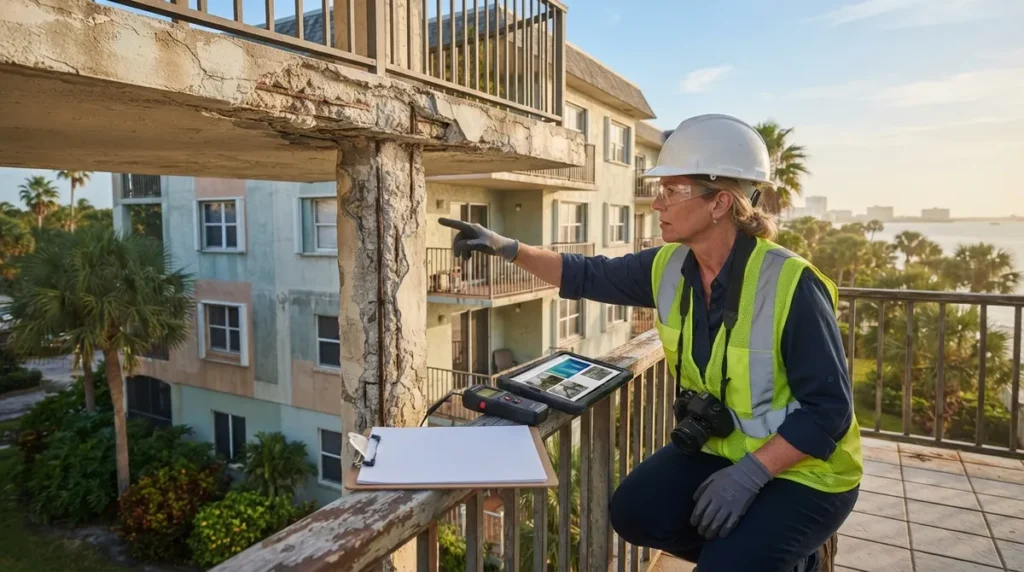
Key Takeaways
-
Florida's milestone inspection (Statute §553.899) is required for residential condo buildings three or more habitable stories tall, with the first inspection due by December 31 of the year the building turns 30.
-
Some local agencies may require inspections at 25 years due to conditions like salt-water proximity, so confirm which agency controls your building, since a Tampa address may be in unincorporated Hillsborough County or another municipality.
-
Track the notice deadlines immediately: the association must notify owners within 14 days of receiving the agency's notice, complete phase one within 180 days, and distribute the summary within 45 days of receiving the report.
-
Only a Florida-licensed architect or engineer can perform the milestone inspection; general contractors, handymen, and permitting consultants cannot substitute for this role.
-
Phase two deeper testing is required only if phase one finds substantial structural deterioration, so many buildings in good condition may only need the phase one visual examination until the next cycle.
-
The inspection report is not a permit: any structural repairs it recommends typically need sealed plans, permits, and inspections from the local building department before work begins.
If your Tampa condo association just got a letter mentioning a structural inspection, take a breath. You are not alone, and you are not in trouble. Since Florida tightened its building safety rules, thousands of condo boards have been asking the same questions: Does our building qualify? Who do we hire? What happens if something turns up?
A condo structural inspection in Tampa almost always means Florida's milestone inspection. It is a required, licensed-professional review of a building's structural condition. It is not a routine home inspection, and it is not a permit inspection. Think of it as a physical exam for the building itself.
The good news is that the process is manageable when you know the steps. In this guide, we walk through how to figure out whether your building needs one, how to schedule it, what the two phases involve, and how permits fit in if repairs follow. Whether you are a board member, a property manager, a contractor bidding on repair work, or a unit owner trying to understand what is coming, this roadmap is for you.
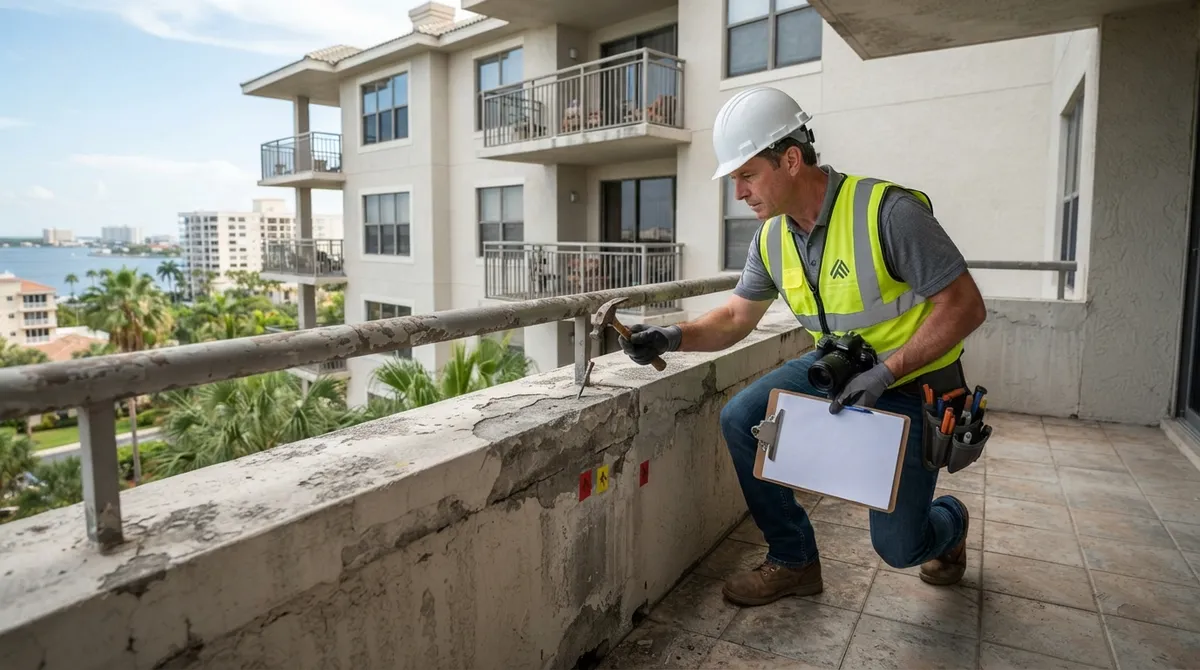
What a Condo Structural Inspection Means in Tampa
In Florida, the term most people mean by a condo structural inspection is the milestone inspection under Florida Statute §553.899. It applies to residential condominium and cooperative buildings that are three or more habitable stories tall. A Florida-licensed architect or engineer examines the building and reports on the condition of its major structural components.
It helps to separate three things that often get mixed up:
| Type of Inspection | Who Performs It | Purpose |
|---|---|---|
| Milestone inspection | Florida-licensed architect or engineer | Evaluate the structural condition of an aging condo building |
| Permit inspection | Local building inspector | Verify that permitted work meets code |
| Home or buyer inspection | Home inspector | Assess a unit's general condition for a sale |
Each one has a different goal, and one does not replace another. A milestone inspection report also does not authorize any construction. If it recommends repairs, the association still has to go through the local building department for plans, permits, and inspections.

Step 1: Find Out Whether Your Tampa Condo Needs One
The first step is simply confirming whether your building is covered. Two facts drive the answer: height and age.
- Check the height. The building must be three or more habitable stories.
- Find the certificate of occupancy (CO) date. Age is measured from the building's CO date, not from when the association was formed.
- Apply the schedule. The standard rule is an initial inspection by December 31 of the year the building turns 30, then every 10 years after that.
- Ask about the 25-year rule. A local enforcement agency may require inspections at 25 years because of local conditions, such as proximity to salt water. Confirm what applies to your building with the authority having jurisdiction.
Here is a quick reference:
| Question | Standard Answer |
|---|---|
| Minimum building height | Three or more habitable stories |
| First inspection due | By December 31 of the year the building turns 30 |
| Repeat inspections | Every 10 years |
| Possible local variation | 25 years, based on local conditions such as salt-water proximity |
| Who arranges it | The condominium association |
Not sure of your CO date? Your building department can usually confirm it, and our open permit search tool is a handy starting point for digging into a property's permit history.
Step 2: Confirm Your Jurisdiction Before You Plan Anything
Here is a Tampa-specific wrinkle that trips people up. A Tampa mailing address does not guarantee the property sits inside the City of Tampa. It might be in unincorporated Hillsborough County or in another municipality altogether, and each has its own building-enforcement process.
That matters because the local enforcement agency is the one that issues written notice, sets submission expectations, and handles any local inspection requirements. Before you hire anyone or set a calendar, confirm which agency controls your building.
Our building department lookup can help you narrow that down, and our Tampa permitting page explains how we work with local reviewers. If you want a deeper walkthrough of the process itself, see What Is a Milestone Inspection in Florida? 2026 Guide.
Step 3: Understand the Notice and Deadline Clock
Once the local enforcement agency sends written notice, a series of deadlines begins. Missing them is the single most avoidable mistake boards make, so put them on a shared calendar right away.
- Association notice to owners: within 14 days of receiving the agency's written notice.
- Phase one completion: within 180 days after the owner or owners receive that notice.
- Summary distribution: within 45 days after the association receives the inspector's report, the association must distribute the inspector-prepared summary to unit owners.
Distribution of the report and summary also goes to the local building official, so everyone is working from the same facts. If a deadline is already slipping, read What Happens If a Florida Condo Misses Its Milestone Deadline before you do anything else.
Step 4: Hire the Right Licensed Professional
This is a point worth being direct about. The inspection must be performed by a Florida-licensed architect or engineer. A general contractor, a handyman, or a permitting consultant cannot stand in for that role.
When you interview candidates, ask:
- Are you a Florida-licensed architect or engineer in good standing?
- Have you performed milestone inspections on buildings of similar age and construction type?
- Will you provide a sealed report and a separate summary of material findings?
- What is your timeline for phase one, and how do you handle phase two if it is triggered?
Sealing matters throughout Florida permitting. If you are curious how that works on the engineering side, Who Seals Structural Drawings for Florida Permits? explains the basics.
Step 5: Know What Phase One and Phase Two Involve
The inspection is built in two stages, and many buildings only ever need the first.
Phase One: The Visual Examination
In phase one, the architect or engineer performs a visual examination of habitable and nonhabitable areas, including major structural components. The result is a qualitative assessment of the building's structural condition. For a building in good shape, this may be the end of the road until the next 10-year cycle.
Phase Two: Deeper Testing
If phase one identifies substantial structural deterioration, phase two is required. It may include destructive or nondestructive testing to better understand what is going on inside walls, slabs, or other components. Our comparison, Phase 1 vs. Phase 2 Milestone Inspection in Florida (2026), goes into more detail.
| Feature | Phase One | Phase Two |
|---|---|---|
| Trigger | Required for all covered buildings | Only if substantial structural deterioration is found |
| Method | Visual examination | May include destructive or nondestructive testing |
| Output | Qualitative structural assessment | More detailed findings and recommendations |
Step 6: Plan for the Sealed Report and the Reserve Study
After the inspection, the architect or engineer submits a sealed report along with a separate summary of material findings and recommendations. These go to the association, any applicable non-condominium owner, and the local building official.
There is also a companion requirement worth knowing about. DBPR states that an association required to complete a milestone inspection by December 31, 2026, may complete its Structural Integrity Reserve Study (SIRS) at the same time, but the SIRS must be completed no later than December 31, 2026. DBPR also notes that a milestone inspection or similar local inspection completed within the prior five years may be used in place of the visual-inspection portion of a SIRS if it meets the SIRS requirements.
In plain language: coordinating the two can save your association time and money. Ask your inspector whether the work can be structured to satisfy both. For current guidance, check the DBPR condominium inspections page and the Florida Senate text of §553.899.
Step 7: Turn Recommendations Into Permitted Repairs
This is where permitting enters the picture, and where a lot of boards feel the most pressure. If the report recommends structural repairs, you cannot just call a crew and start. The inspection report is not a permit.
Here is the usual path from findings to finished repairs:
- Review the summary with your engineer. Make sure the board understands which items are urgent and which can be scheduled.
- Talk to the local building department early. Ask about required plans, permits, contractor qualifications, and inspections before work begins.
- Prepare plans. Repair scopes often need sealed structural drawings, and sometimes MEP coordination too.
- File and track the permit. Respond quickly to reviewer comments so the application does not stall.
- Complete permitted work and pass inspections. Then close out the permit properly.
This is the part where we at 1 Contractor Solutions often step in. We handle permit filing, tracking, plan review coordination, and in-house structural and MEP engineering with sealed drawings across all 67 Florida counties. If your report triggers repairs, our structural engineering and permit facilitation and filing teams can take that paperwork load off your plate. Our 40-year recertification and milestone inspection support page also outlines how we help associations stay organized.
Tips for Different Readers
Different people come to this topic with different worries. Here is how to approach it based on your role:
- Condo board members and property managers: Build a master timeline the day the notice arrives. Assign someone to track the 14-day, 180-day, and 45-day marks.
- General contractors: Expect repair work to require sealed plans and permit coordination. Confirm the jurisdiction before you bid. Our general contractor resources may help.
- Realtors and investors: Ask for the milestone inspection status and any summary before a purchase. Open findings can affect budgets and assessments.
- Unit owners and homeowners: Read the inspector-prepared summary when it arrives. It is written to help you understand material findings.
Common Mistakes to Avoid
After years of working across Florida jurisdictions, a few patterns stand out. Avoid these and you will be ahead of the curve:
- Waiting for a reminder. The clock starts when the notice is received, so do not sit on it.
- Assuming Tampa means City of Tampa. Confirm your actual jurisdiction first.
- Hiring the wrong professional. Only a Florida-licensed architect or engineer can perform the inspection.
- Starting repairs without permits. Unpermitted structural work creates bigger problems later. If you are already in that situation, 7 Steps to Legalize Unpermitted Work Florida (2026) is a good place to start.
- Treating the report as the finish line. The report is the starting point for repairs, not the end of the process.
Your Next Move
A condo structural inspection in Tampa does not have to feel overwhelming. Confirm your building's height and CO date, verify your jurisdiction, hire a licensed architect or engineer, watch the deadlines, and plan for permitted repairs if the report calls for them. Take it one step at a time and you will get there.
If you would like a friendly, knowledgeable partner for the permitting side, we are here. Get a free quote and we will tell you which jurisdiction controls your project and what it will take. You can also see what our customers say when you visit us on Google — 1 Contractor Solutions, and stay in the loop when you follow us on LinkedIn or follow us on Facebook. For marketing support, our friends at Brain Buzz Marketing are worth a look.
FAQs
Does my Tampa condo need a Florida milestone inspection?
Most likely, if your building is three or more habitable stories and is approaching or past 30 years from its certificate-of-occupancy date. Some local agencies may use a 25-year schedule, so it is worth confirming with the authority that controls your building. We would be happy to help you sort out which one that is!
Who is qualified to perform a Florida condo milestone inspection?
A Florida-licensed architect or engineer must perform it. A general contractor or permitting consultant cannot substitute, though a permitting team like ours can help once repairs and permits come into play.
Does a condo structural inspection require a building permit in Tampa?
The milestone inspection itself is a statutory evaluation, not a construction project, so it is separate from permit inspections. However, any structural repairs it recommends will typically need local plans, permits, and inspections, so check with your building department before work begins.
What should a condo association do if an inspection finds structural deterioration?
Phase two testing is required when substantial structural deterioration is found. From there, work with your engineer to understand the findings, then talk to the local building department about plans and permits before any repairs start.
How do I find the certificate-of-occupancy date and inspection deadline for a Tampa condo?
Start with the local building department, which can usually confirm the CO date and which agency has jurisdiction. Once the agency sends its written notice, your association's 14-day owner notice and 180-day phase-one deadlines begin.
We do this work every day across all 67 Florida counties. Call (866) 314-6931 and we will tell you what your situation actually requires — including when you do not need us.
Related services
Permit Facilitation & Filing
You have a crew scheduled, a client asking for dates, and a permit sitting somewhere in a queue you cannot see. We file it, w…
See the servicePlan Review Coordination
A permit in plan review is not one queue. On a commercial project it can be six queues, each with its own reviewer, its own c…
See the serviceReady to get your permit moving?
One call tells you which jurisdiction controls your project, what it will take, and what it will cost. Most of the time we can scope it on the phone.