
Blog
5 Steps to Fix Unpermitted Work in Tampa, Florida (2026)
Found unpermitted work in Tampa? Follow 5 friendly steps to confirm jurisdiction, pursue an after-the-fact permit, and get back on track.
Key Takeaways
-
Stop all unpermitted work immediately, since continuing can make resolution more costly; Hillsborough County warns of citations up to $500 per violation.
-
Confirm which authority controls your address first: City of Tampa, unincorporated Hillsborough County, or a city like Temple Terrace or Plant City.
-
Before panicking, verify whether the project was exempt; roof covering up to 500 sq ft and small non-structural county work under $7,500 may qualify, but electrical, plumbing, or structural work usually does not.
-
An after-the-fact permit does not automatically legalize work; expect plan review, possible inspections that require opening concealed walls, and corrections before final approval.
-
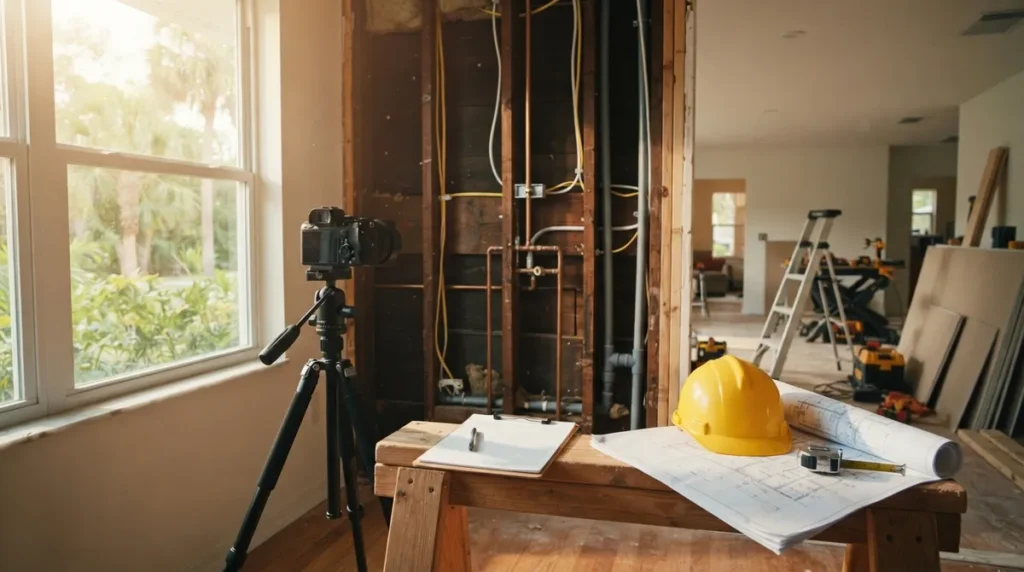
Photograph and document the work, and leave open walls, wiring, and plumbing uncovered until inspected, since exposed work is far easier to verify.
-
Owner-builder permits in Tampa and Hillsborough County carry a one-year sale restriction after completion, which matters if you plan to sell soon.
Let's start with some good news: finding unpermitted work on your Tampa property is a lot more common than you might think, and it is almost always fixable. Maybe you bought a house and discovered the previous owner enclosed a patio without paperwork. Maybe a contractor swapped out a water heater and never pulled a permit. Maybe a lender or an appraiser just flagged something you had no idea about. Take a breath. You are in good company.
Dealing with unpermitted work Tampa Florida property owners run into takes a clear head and a plan. The worst thing you can do is ignore it or keep building. The best thing you can do is work through a few practical steps in the right order, starting with figuring out which building department actually has authority over your address.
In this guide, we will walk through five friendly, actionable steps: stop work, confirm your jurisdiction, check what really needs a permit, understand what an after-the-fact permit involves, and decide who should help. We will also cover typical penalties, owner-builder rules, and what it means for a sale. Rules and fees change, so always confirm current requirements directly with the local building department before you rely on any general estimate.
Why Unpermitted Work in Tampa Is Such a Big Deal
Florida law generally requires a permit before construction, alteration, repair, or demolition covered by the Florida Building Code. The permit is not just red tape. It triggers plan review and inspections, which are the checkpoints that confirm the work is safe and code-compliant.
When work skips that process, a few things can happen:
- Stop-work orders or notices of violation: Tampa's municipal code authorizes these for work that is unsafe or contrary to code.
- Citations and fines: Penalties vary by jurisdiction and situation.
- Required corrections: Work done incorrectly must be fixed before an inspection can pass.
- Sale and financing headaches: Appraisers, lenders, and buyers may question work with no permit history.
- Insurance questions: Unpermitted improvements can complicate claims.
Tampa's municipal code actually defines construction that requires a permit but was performed without one as unpermitted construction, and it provides for abatement and other remedies. In plain English: the city has tools to address it, so a proactive approach beats waiting.
Step 1: Stop Work Right Away
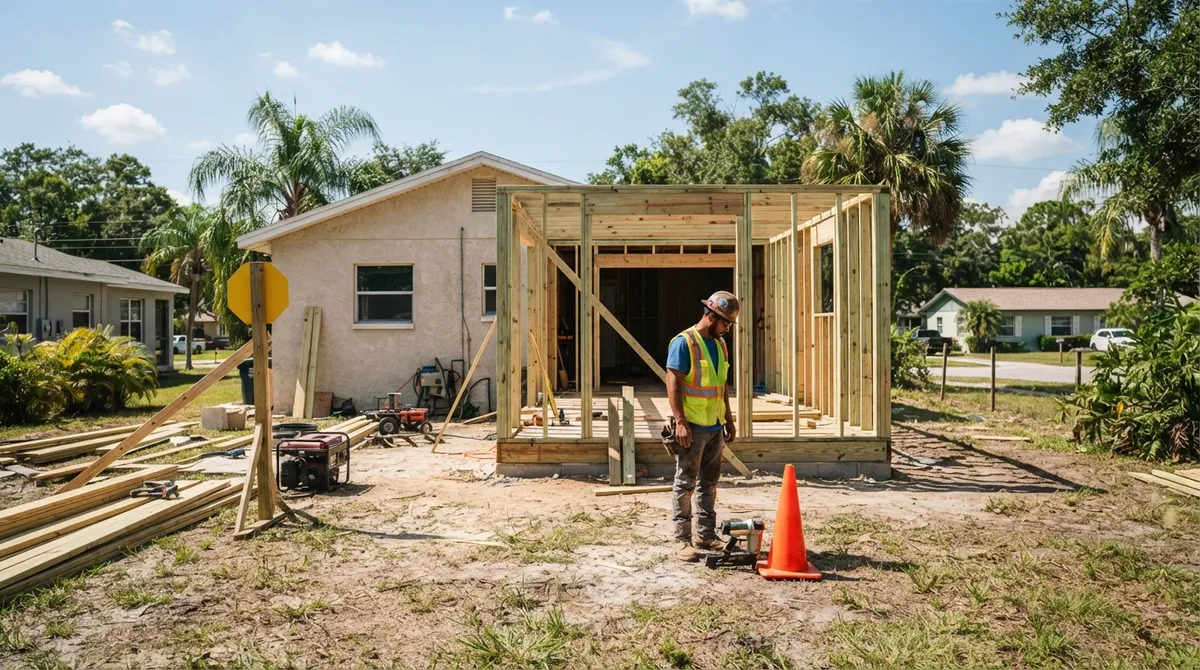
If work is still in progress, pause it today. This sounds obvious, but it is the step people most often skip because they are "almost done."
Hillsborough County is direct about this for unincorporated areas: owners should stop work and contact Building Services about an after-the-fact permit. The County warns that continuing work can make resolution more costly and may result in a citation of up to $500 per violation. That is a County warning rather than a universal Tampa penalty schedule, but the message applies everywhere: more work means more potential problems to unwind.
Here is what to do the moment you realize work is unpermitted:
- Stop all construction, including "finishing touches."
- Take dated photos of the current condition from several angles.
- Gather any contracts, invoices, receipts, and text messages with the contractor.
- Do not cover or close up walls, ceilings, or floors that are still open.
- Write down the dates the work was done, if you know them.
That fourth point matters more than you might expect. Open framing, wiring, and plumbing are far easier to inspect than finished walls. Leaving work exposed can save you a lot of time and money later.
Step 2: Confirm Which Jurisdiction Controls Your Property
Here is where Tampa gets tricky. An address that says "Tampa" is not always inside the City of Tampa. Many properties with Tampa mailing addresses sit in unincorporated Hillsborough County, and a few fall inside other municipalities like Temple Terrace or Plant City.
The enforcing agency depends on the property location:
| Property Location | Who Handles Permits | First Move |
|---|---|---|
| Inside City of Tampa limits | City of Tampa Construction Services | Contact the City about an after-the-fact permit |
| Unincorporated Hillsborough County | Hillsborough County Building Services | Stop work and contact the County |
| Temple Terrace or Plant City | That city's building department | Confirm with the local department |
Getting this wrong wastes time. You could prepare an entire application for the wrong office. Our building department lookup tool can help you identify the right authority, and our guide on which Florida jurisdiction reviews my project walks through the logic in more detail. You can also read more about local requirements on our Tampa and Hillsborough County pages.
Step 3: Check Whether the Work Actually Needed a Permit
Not every project requires a permit, and this is genuinely good news. Before you panic, verify whether your project was exempt.
Tampa lists examples of exempt work such as painting, floor coverings, wallpaper, cabinetry, furnishings, and shelving. Exemptions are limited, though, and exempt work must still comply with applicable codes.
Common Exemption Examples
Here are a few exemptions that came up in our research. Treat these as starting points, not guarantees, and verify current rules before assuming anything:
- Roof covering: Tampa's FAQ lists roof covering work of 500 square feet or less among its permit exemptions, subject to applicable code conditions.
- Small non-structural work: Hillsborough County lists an exemption for qualifying non-structural work on a single-family residence valued under $7,500, subject to conditions.
- Cosmetic updates: Painting, flooring, wallpaper, and similar finishes.
That County exemption has important limits. It does not apply when the property is in a flood hazard area or when the work includes electrical, plumbing, structural, mechanical, or gas work. So a quick "bathroom refresh" that touched the plumbing would not qualify.
Work That Almost Always Needs a Permit
| Project Type | Permit Likely Required? | Why It Matters |
|---|---|---|
| Room additions and enclosures | Yes | Structural and wind-load review |
| Electrical panel or wiring changes | Yes | Fire and shock safety |
| Plumbing relocation or new fixtures | Yes | Sanitary and water-supply code |
| HVAC replacement | Yes | Mechanical code and energy rules |
| Large roof replacements | Usually | Exemptions are size-limited |
| Pools, decks, and pool cages | Yes | Safety barriers and structural review |
| Painting and flooring only | Generally no | Typically exempt cosmetic work |
If you are unsure, a quick call to the permitting authority or a professional review can save a lot of guesswork. Our open permit search tool is also handy for checking what permit history already exists on your property.
Step 4: Understand What an After-the-Fact Permit Really Involves
An after-the-fact permit is exactly what it sounds like: you apply for a permit for work that has already been done. It is the standard path for bringing unpermitted work into the system.
Here is the important caveat, and we want to be upfront about it. An after-the-fact permit does not automatically legalize the work. The jurisdiction may require plans, documentation, inspections, exposure of concealed work, corrections, or even removal of work that cannot be shown to comply.
That is why the process feels more like an investigation than a form. The goal is to prove the work meets code.
The Typical After-the-Fact Process
- Contact the correct building department. Explain that you need an after-the-fact permit for work already completed.
- Prepare documentation. This often includes as-built drawings, photos, and a description of the scope. Our guide to as-built drawings explains what these look like.
- Add engineering if needed. Structural elements may require a sealed engineer letter or structural engineering review.
- Submit and pay fees. Costs vary by jurisdiction and project scope.
- Respond to plan review comments. Reviewers may request revisions or more information.
- Schedule inspections. Tampa notes that inspections cannot be scheduled until permits are obtained.
- Correct deficiencies. Work done incorrectly must be fixed before an inspection can pass.
- Receive final approval. Tampa says permit-required construction must be inspected and receive final approval.
Will Inspectors Make Me Open Walls?
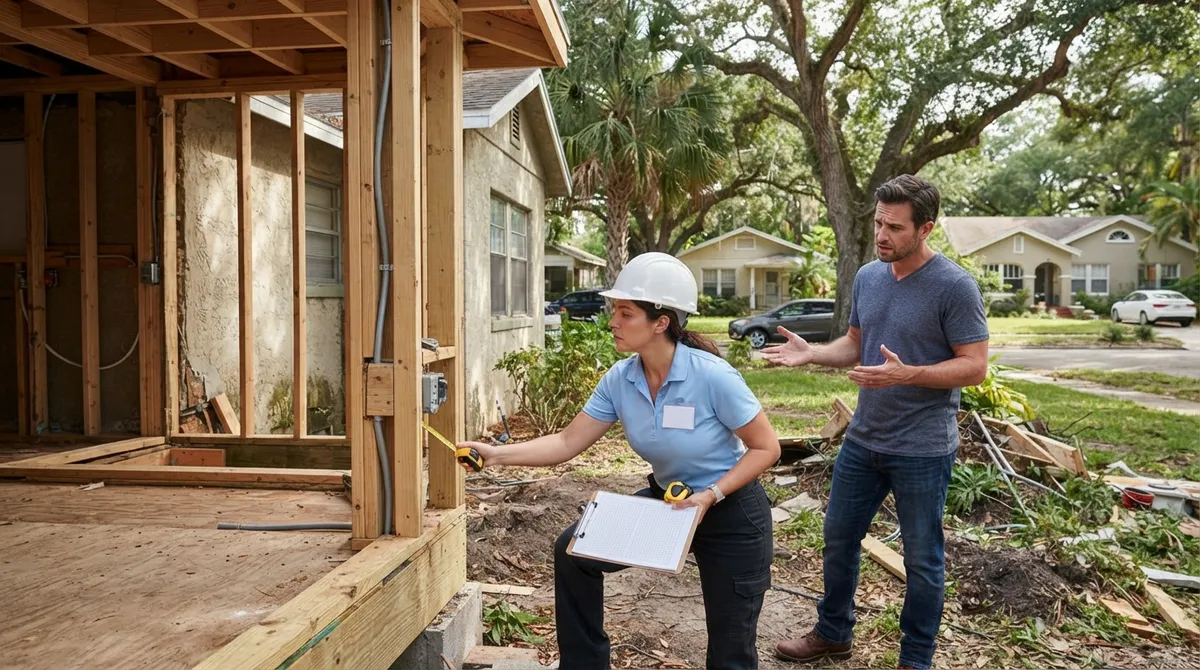
Sometimes, yes. If critical work is concealed, an inspector may ask to see what is behind finishes. That could mean opening a section of drywall to view framing, wiring, or plumbing connections. It is not meant as punishment. It is how the jurisdiction verifies safety when the normal inspection timeline was skipped.
For deeper reading, see our articles on how to legalize unpermitted work in Florida and getting an after-the-fact permit in Tampa. We also cover this service directly on our after-the-fact and expired permits page.
What Penalties Should You Expect?
Nobody loves talking about fines, but knowing the landscape helps you plan. The honest answer is that penalties depend on the jurisdiction, the type of work, and how the situation was discovered.
| Source | What It Says | Important Context |
|---|---|---|
| Hillsborough County | Citation for continuing work without proper permit may be up to $500 per violation | A County warning, not a universal Tampa penalty schedule |
| Tampa owner-builder form | Violating the owner-builder exemption can be a first-degree misdemeanor, up to one year in jail and a $1,000 fine | Applies to owner-builder exemption violations, plus possible civil penalties |
| Tampa municipal code | Authorizes stop-work orders, notices of violation, and abatement | Remedies vary by situation |
Those figures are the upper ranges and warnings, not a guarantee of what you will face. Many property owners who come forward voluntarily and work through the process cooperatively have a smoother experience than those who wait for a complaint. For a wider look at costs, check out our resources on penalties for building without a permit in Florida and after-the-fact permit costs.
Step 5: Decide Who Should Help You Fix It
You have a few options here, and the right one depends on your comfort level and the complexity of the work.
Can a Homeowner Pull Their Own Permit?
Possibly. Homeowners may qualify to act as owner-builders under Florida law, subject to restrictions and jurisdictional requirements. Both Tampa and Hillsborough County require owner-builder disclosures.
A few things to know:
- Hillsborough County says the property generally must be the owner's primary residence.
- The owner-builder exemption includes a one-year restriction on sale after completion.
- Tampa's acknowledgement form describes serious penalties for misusing the exemption.
That one-year sale restriction is a big deal if you are planning to sell soon. Review our owner-builder permits page and our explainer on who can pull a permit in Florida before you commit to this route.
When a Professional Makes Sense
Many owners find that hiring help saves time and stress, especially when the project involves structural, electrical, or plumbing elements. A Florida permitting service can help you:
- Identify the correct jurisdiction and confirm whether permits were required
- Assemble permit applications and supporting plans
- Coordinate licensed design professionals or contractors
- Handle plan review comments and resubmittals
- Arrange inspections and track progress
To be clear, a permitting service cannot guarantee approval, and it cannot replace required licensed trade work. What it can do is keep the process organized and moving. At 1 Contractor Solutions, our team handles permit facilitation and filing, in-house plans and engineering, and plan review coordination across all 67 Florida counties, so you are not bouncing between multiple vendors.
What This Means for Buyers, Sellers, and Contractors
Unpermitted work does not only affect the person who ordered it. It touches everyone in the chain.
If You Bought a House With Unpermitted Work
Do not blame yourself. Start with permit history research, then talk to the right department about an after-the-fact permit. Our article on what to do if a prior owner skipped permits is a good companion read.
If You Are Selling in Tampa
Can you sell a house with unpermitted work? Often yes, but it can complicate appraisals, financing, and negotiations. Buyers and lenders may ask for permits to be closed out first, or they may negotiate a price reduction or escrow. Resolving the issue before listing usually gives you more control. Our realtor closing support page and our guide on clearing a Tampa permit hold before closing are worth a look.
If You Are a Contractor or Solar Company
Missed permits on a job can create liability and relationship problems fast. Cleaning up past work through after-the-fact filings, and building a reliable permit workflow going forward, protects your license and your reputation. Our resources for general contractors and solar contractors outline how we support high-volume permitting.
If You Are an Investor or Property Manager
Permitting research before purchase is one of the smartest due diligence steps you can take. Unpermitted additions or conversions can quietly erode a deal's value. Looking at permit records early helps you price repairs and legalization into your numbers.
A Quick Checklist Before You Call Anyone
Gathering a few things up front makes every conversation faster:
- Property address and parcel number
- A short description of the unpermitted work
- Approximate dates the work was done
- Photos of the work, inside and out
- Any contractor contracts, invoices, or messages
- Existing plans, surveys, or closing documents
- Notices from the city or county, if any
If you have received a notice, treat it as time-sensitive. Our guides on code compliance violations and urgent permit rescue cover what to do when deadlines are close.
You Can Get This Sorted Out
Unpermitted work in Tampa feels stressful, but the path forward is clear: stop work, confirm your jurisdiction, check exemptions, pursue an after-the-fact permit if needed, and bring in the right help. Many property owners come out the other side with a clean permit record and a lot more peace of mind. Just remember that requirements and penalties vary, so verify current rules with the City of Tampa or Hillsborough County before acting.
If you would like a friendly hand, we are here. See what our customers say when you visit us on Google — 1 Contractor Solutions, and when you are ready to move forward, get a free quote and we will help you figure out your next step. You can also follow us on LinkedIn or follow us on Facebook for more Florida permitting tips.
FAQs
How do I get an after-the-fact permit for unpermitted work in Tampa, Florida?
First, stop work and confirm whether your property is inside City of Tampa limits or unincorporated Hillsborough County. Then contact that building department, prepare documentation such as as-built drawings and photos, and be ready for plan review, inspections, and possible corrections. An after-the-fact permit does not automatically legalize the work, so expect the jurisdiction to verify code compliance.
Can I sell a house in Tampa with unpermitted work?
Often you can, but it may complicate appraisals, financing, and negotiations. Buyers and lenders may ask for the work to be permitted first, or they may request a price reduction or escrow. Resolving it before listing generally gives you more control over the timeline and outcome.
How much are the fines for unpermitted construction in Tampa or Hillsborough County?
It depends on the jurisdiction and situation. Hillsborough County warns that a citation for continuing work without the proper permit may be up to $500 per violation, and Tampa's owner-builder form describes misdemeanor penalties for misusing the owner-builder exemption. Always confirm current penalties directly with the local building department.
Can a homeowner pull their own permit to legalize work in Tampa?
Possibly, under Florida's owner-builder rules, though restrictions apply. Hillsborough County generally requires the property to be the owner's primary residence, and the owner-builder exemption includes a one-year restriction on sale after completion. Tampa and Hillsborough County both require owner-builder disclosures.
Will inspectors make me open walls to inspect unpermitted work?
Sometimes. If key work like framing, wiring, or plumbing is concealed, an inspector may ask you to expose it so it can be verified. Leaving work open while it is still in progress can make the process much easier.
We do this work every day across all 67 Florida counties. Call (866) 314-6931 and we will tell you what your situation actually requires — including when you do not need us.
Related services
Permit Facilitation & Filing
You have a crew scheduled, a client asking for dates, and a permit sitting somewhere in a queue you cannot see. We file it, w…
See the servicePlan Review Coordination
A permit in plan review is not one queue. On a commercial project it can be six queues, each with its own reviewer, its own c…
See the serviceReady to get your permit moving?
One call tells you which jurisdiction controls your project, what it will take, and what it will cost. Most of the time we can scope it on the phone.