
Blog
5 Facts About a Citation for Unpermitted Work Florida
Learn how a citation for unpermitted work in Florida works, what penalties apply, and how to resolve it fast with expert permitting help.
Key Takeaways
-
Paying a citation fine does not legalize unpermitted work—you must still apply for an after-the-fact permit, submit plans, and pass inspections to comply with Florida Building Code.
-
You have only 10 business days from receiving a citation to request an administrative hearing; missing this deadline significantly limits your ability to contest the violation.
-
Penalties escalate quickly: initial citations up to $2,000, daily fines up to $2,500 after hearing, and unlicensed contracting fines up to $10,000, with local jurisdictions adding reinspection fees.
-
Unresolved citations can be recorded as liens against your property and cause cascading problems: failed inspections, refinancing denial, sale delays, and insurance claim rejection.
-
Most citations resolve within 2-8 weeks using after-the-fact permits with proper documentation; acting quickly prevents compound penalties and preserves your ability to gather original project records.
-
Common citation triggers include unpermitted roof replacements, electrical work, plumbing changes, screened enclosures, and HVAC replacements—check your permit history before they're discovered during inspection or sale.
Getting a knock on the door from a code enforcement officer is never fun, and if you're reading this because you just received a citation for unpermitted work in Florida, take a breath. You are not alone, and this is more common than you'd think, especially with all the renovations, roof replacements, and additions happening across the Sunshine State. The good news is that a citation is not a life sentence for your property. It's a starting point, and with the right guidance, most situations can be resolved. Let's walk through exactly what's happening, why it happens, and what your realistic next steps look like.
Whether you're a homeowner in Bradenton who just found out that patio enclosure never got permitted, a real estate agent trying to close a deal in Tampa, or a general contractor managing a portfolio of projects, this guide breaks down the five most important facts you need to know about a citation for unpermitted work in Florida. We'll also cover the penalties, the process, and how a Florida permitting service can help you get back in good standing quickly.
What Triggers a Citation for Unpermitted Work in Florida
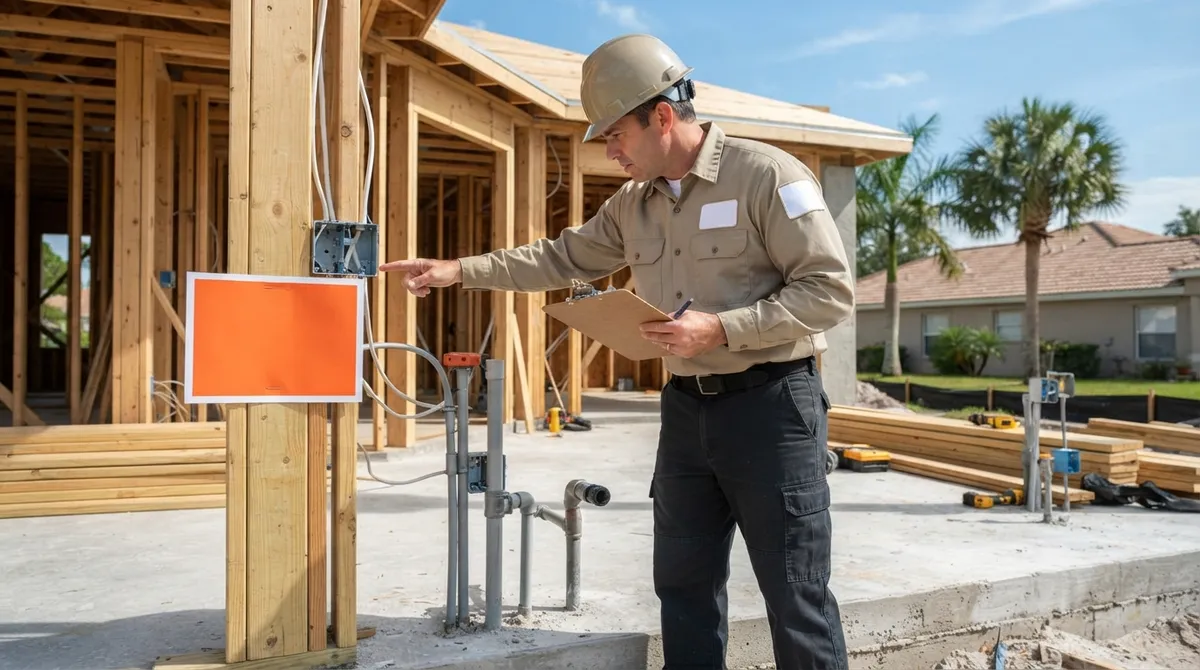
Florida law is pretty clear on this one. Under Florida Statutes section 553.79, you generally cannot construct, alter, repair, or demolish a structure without first securing the required permit from the local building department. This applies whether you're a licensed contractor swinging a hammer or a homeowner tackling a weekend project.
Citations usually show up after one of these triggers:
- A neighbor or passerby reports visible construction activity without a posted permit
- A home inspection during a sale uncovers work that doesn't match permit records
- An insurance adjuster or appraiser flags mismatched square footage or additions
- A code enforcement officer notices work during a routine drive-by inspection
- A contractor pulls a permit for one scope but performs additional unpermitted work
Once a local code-enforcement officer establishes reasonable grounds that a violation occurred, they'll issue a formal citation. This is a local process, so the exact form and procedure will vary depending on whether you're dealing with Pinellas County, Hillsborough County, or a smaller municipality. That's part of why knowing your specific jurisdiction matters so much, and it's exactly the kind of research a permitting specialist handles daily.
Fact 1: A Citation Doesn't Legalize the Work
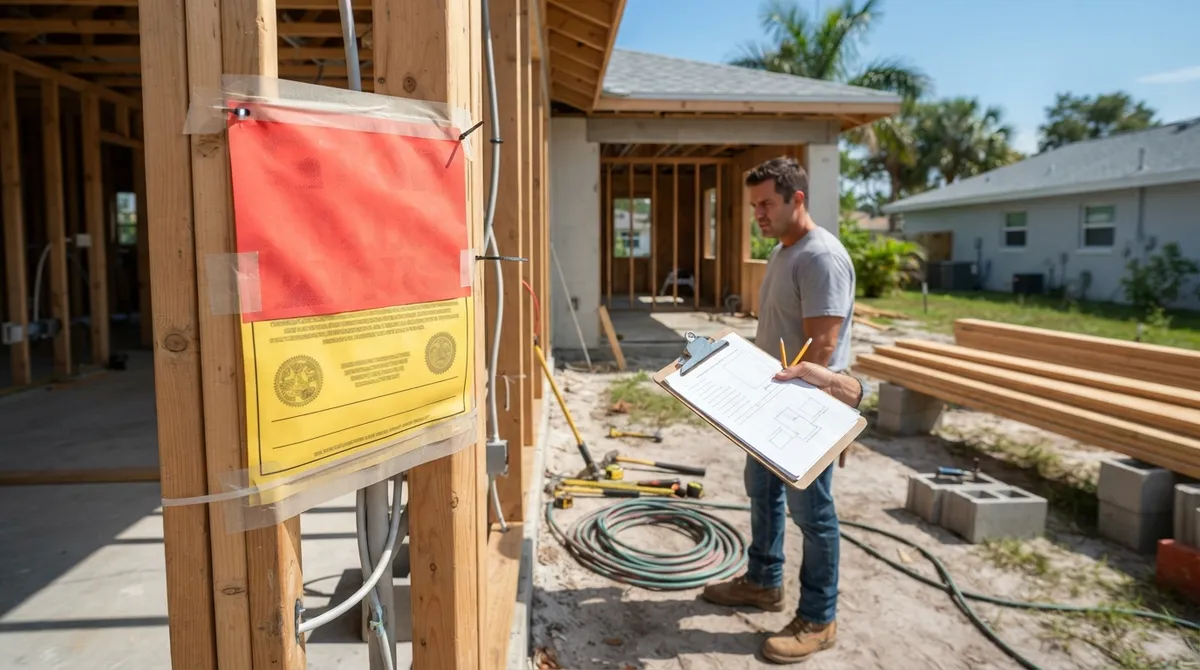
This one surprises a lot of people. Receiving a citation and paying the fine does not automatically make your unpermitted work legitimate. You'll typically still need to:
- Stop any active construction immediately
- Apply for an after-the-fact permit with the appropriate building department
- Submit plans, drawings, or documentation showing the work meets the Florida Building Code
- Schedule and pass all required inspections
- Correct or remove any portion of the work that doesn't comply
Skipping this step is one of the biggest mistakes property owners make. Paying a fine feels like closure, but if the underlying permit issue isn't resolved, the problem resurfaces at the worst possible time, usually during a home sale or refinance. This is where after-the-fact and expired permit services become essential, especially for older additions or renovations that have been sitting unpermitted for years.
Fact 2: Penalties Can Add Up Fast
Florida takes unpermitted work seriously, and the penalty structure has real teeth. Here's a breakdown based on current statutory authority:
| Violation Type | Statutory Basis | Maximum Penalty |
|---|---|---|
| Local citation before hearing | Fla. Stat. § 489.127 | Up to $2,000 civil penalty |
| Civil penalty after administrative hearing | Fla. Stat. § 489.127 | Up to $2,500 per day, per violation |
| Unlicensed contracting fine | Fla. Stat. § 489.13 | Up to $10,000, plus investigative costs |
| Material building code violation | Fla. Stat. Ch. 553 | $500 to $5,000 per violation |
These figures come from the statewide statutes, but remember that local jurisdictions often set their own initial citation amounts and reinspection fees on top of these. Always verify current numbers with the issuing county or city, since penalties for building without a permit in Florida can vary significantly between jurisdictions.
Fact 3: You Have a Limited Window to Respond
Time matters here more than people realize. Under the process summarized in Florida Statutes section 489.127, you generally have 10 days, excluding weekends and legal holidays, to request an administrative hearing after you receive a citation. Miss that window, and you may lose your chance to contest it.
Your basic options after receiving a citation are:
- Correct the violation and pay the stated civil penalty
- Request an administrative hearing to contest the citation
- Begin the after-the-fact permitting process immediately to demonstrate good faith
Local notices should always be read carefully, since procedures can differ between counties like Broward, Miami-Dade, and Lee. If you're unsure which office actually has jurisdiction over your property, tools like a building department lookup or an open permit search can save you hours of phone tag.
Fact 4: Liens and Property Records Can Be Affected
Here's something that catches a lot of property owners off guard. Florida law allows a civil penalty order against an uncertified contractor to be recorded in public records, and it can become a lien against the violator's property. That means an unresolved citation isn't just a paperwork headache, it can follow the property.
Unpermitted work tends to cause a ripple effect beyond the citation itself, including:
- Failed inspections during future renovations
- Trouble selling or refinancing the property
- Insurance claim denials tied to unpermitted alterations
- Delayed closings while buyers or lenders wait for resolution
- Recorded liens that complicate title transfers
This is especially relevant for real estate professionals. If you're representing a buyer or seller and an open permit is found at closing, the transaction can stall for weeks. Our realtor and closing support services exist specifically to untangle these situations before they blow up a deal.
Fact 5: A Permitting Specialist Can Fast-Track Resolution
Here's the part where the story gets better. You don't have to navigate this alone, and honestly, you shouldn't try to. Florida's permitting landscape spans 67 counties and hundreds of municipalities, each with its own quirks, forms, and review timelines. A dedicated permitting service can:
- Identify the exact jurisdiction and department with authority over your property
- Pull permit history to understand what's already on file
- Prepare after-the-fact permit applications with sealed drawings when required
- Coordinate licensed engineers or architects for structural and MEP documentation
- Schedule and manage required inspections
- Communicate directly with code enforcement to resolve outstanding citations
At 1 Contractor Solutions, this is essentially our whole job. We're not a construction contractor, we're the outsourced permitting department that contractors, solar companies, realtors, and homeowners call when the permit itself is the obstacle. Our in-house drafting and engineering team means when a reviewer flags an issue, we fix it ourselves instead of waiting on an outside consultant. We're also a licensed private provider, so in many cases we can perform plan review directly instead of sitting in a county queue.
How the Process Typically Works
Every jurisdiction handles things slightly differently, but the general flow for resolving a citation usually looks like this:
| Step | What Happens | Typical Timeframe |
|---|---|---|
| 1. Citation Received | Code enforcement issues formal notice | Day 1 |
| 2. Response Window | Correct violation or request hearing | 10 business days |
| 3. Permit Application | Submit after-the-fact permit with plans | 1-3 weeks to prepare |
| 4. Plan Review | Jurisdiction or private provider reviews submission | 2-8 weeks, varies by county |
| 5. Inspections & Closeout | Pass required inspections, close permit | 2-4 weeks |
These timelines can shift dramatically depending on the complexity of the work and the backlog at your local building department. Counties like Hillsborough County, Pinellas County, and Manatee County each have their own review speeds and documentation requirements, which is exactly why local expertise matters so much when you're trying to resolve a citation quickly.
Common Types of Work That Trigger Citations
Not every renovation needs a permit, but more do than most homeowners assume. Some of the most frequent culprits include:
- Roof replacements or repairs done without pulling a roofing permit
- Electrical panel upgrades or rewiring completed by unlicensed workers
- Plumbing changes tied to kitchen or bathroom remodels
- Screened enclosures, patios, or pergolas added without review
- HVAC system replacements that skip mechanical permitting
- Interior structural changes like removing load-bearing walls
If any of this sounds familiar, it's worth checking your permit history sooner rather than later. Solar installers in particular need to be careful here, since solar contractors face their own set of structural and electrical documentation requirements that differ from general construction work.
Why Acting Quickly Matters
We get it, dealing with government paperwork isn't anyone's favorite way to spend an afternoon. But procrastinating on a citation almost always makes things worse. Fines can compound daily after a hearing, liens can attach to your property records, and the longer unpermitted work sits unresolved, the harder it becomes to gather the original documentation needed to legalize it.
The encouraging news is that most citations are entirely resolvable with the right approach. Thousands of Florida property owners work through this process every year, and plenty of them come out the other side with a clean permit history and a property that's ready to sell, refinance, or renovate further. If you'd like a team in your corner who handles this exact scenario every single day, you can get a free quote and let us map out your fastest path to compliance.
Wrapping It Up
A citation for unpermitted work in Florida can feel overwhelming at first glance, but it's far from unsolvable. Understanding that the citation itself doesn't legalize anything, knowing the penalty structure, respecting your response deadline, watching out for liens, and bringing in the right permitting expertise will put you in a strong position to resolve things efficiently. Whether you're managing this for your own home in Sarasota, a client's property in Miami, or a portfolio of jobs across multiple counties, the path forward is the same: get accurate information, move quickly, and lean on people who do this for a living.
If you're facing an active citation, an old permit that never got closed out, or you simply want peace of mind before listing a property, our team at 1 Contractor Solutions is ready to help. We serve all 67 Florida counties, we answer around the clock, and se habla español. Feel free to check out what our clients are saying by visiting us on Google — 1 Contractor Solutions, or connect with us on LinkedIn and Facebook to see the latest on Florida permitting updates. And when you're ready to tackle that citation head-on, don't hesitate to get a free quote and let us handle the heavy lifting.
FAQs
What is the penalty for unpermitted work in Florida?
Penalties vary by jurisdiction, but statewide rules allow up to $2,000 for an initial citation, up to $2,500 per day after an administrative hearing, and up to $10,000 for unlicensed contracting under Florida Statutes. Local counties and cities often add their own fees on top, so it's always smart to check with the specific building department involved.
Can I get a permit after construction has already been completed in Florida?
Yes, in most cases you can pursue what's called an after-the-fact permit, which allows you to legalize completed work by submitting plans and passing inspections. It's not always simple, especially for older projects, but it's absolutely doable with the right documentation and a little patience.
Who issues a citation for unpermitted construction in Florida?
Citations are typically issued by a local code-enforcement officer or building department official after they've established reasonable grounds that a violation occurred. The exact process depends on your city or county, since Florida leaves a lot of the citation procedure up to local governments.
How long do I have to respond to a Florida code-enforcement citation?
Generally, you have 10 days, excluding weekends and legal holidays, to request an administrative hearing after receiving a citation under the process described in Florida Statutes section 489.127. Don't let that deadline sneak up on you, because missing it can limit your options for contesting the violation.
Can unpermitted work result in a lien against my Florida property?
It certainly can. Florida law allows civil penalty orders against uncertified contractors to be recorded in public records, which can turn into a lien against the property. That's one more reason to resolve citations promptly rather than letting them linger.
We do this work every day across all 67 Florida counties. Call (866) 314-6931 and we will tell you what your situation actually requires — including when you do not need us.
Related services
Permit Facilitation & Filing
You have a crew scheduled, a client asking for dates, and a permit sitting somewhere in a queue you cannot see. We file it, w…
See the servicePlan Review Coordination
A permit in plan review is not one queue. On a commercial project it can be six queues, each with its own reviewer, its own c…
See the serviceReady to get your permit moving?
One call tells you which jurisdiction controls your project, what it will take, and what it will cost. Most of the time we can scope it on the phone.