
Blog
3 After the Fact Construction Permit Florida Mistakes
Avoid 3 costly mistakes with an after the fact construction permit in Florida. Learn the process, local cost factors, and how to get compliant in 2026.
Key Takeaways
-
Applying for an after-the-fact permit does not automatically legalize completed work; the building department still reviews whether it meets code, and approval is not guaranteed.
-
Inspectors may require photos, plans, engineering documents, or opening finished walls to verify concealed structural, electrical, plumbing, or mechanical work.
-
A permit application alone does not resolve a notice of violation or stop-work order; confirm enforcement deadlines and required steps with the issuing agency to avoid fines.
-
Costs vary by city or county since each sets its own fees and penalties; be wary of anyone quoting a flat price before reviewing your specific project and jurisdiction.
-
Gathering photos, receipts, original documents, and as-built drawings early, and budgeting time for corrections, makes the review process faster and smoother.
-
Resolve unpermitted work before a sale or refinance closing, since title companies, lenders, and buyer inspectors often flag missing permits mid-transaction.
Here's a story we hear more often than you'd think. A homeowner buys a lovely Florida house, enjoys the screened lanai for two years, and then a buyer's inspector asks one innocent question: "Was this permitted?" Suddenly, a happy sale turns into a scramble. Take a deep breath, because you're not alone, and there's a path forward.
An after the fact construction permit Florida property owners can pursue is the local process for getting work reviewed when it was finished before a required permit was pulled. It's not a magic eraser, and it isn't automatic. But it's also not the end of the world. Plenty of owners, contractors, solar companies, and investors have walked this road successfully in 2026.
The catch? A few common missteps can turn a manageable fix into a costly headache. In this guide, we'll walk through the three biggest mistakes, what the process actually looks like, and how to set yourself up for a smooth outcome. Whether you're a general contractor cleaning up a job, a realtor facing a stalled closing, or a homeowner who just found out about unpermitted work, you'll leave with a clear plan.

What an After the Fact Construction Permit Actually Is
Let's start with the basics, because the name causes a lot of confusion. Florida Statutes §553.79 generally requires a permit from the appropriate enforcing agency before covered construction, alteration, repair, or demolition begins. When work happens without one, the local building department can review it after the fact.
Here's the important part: the statute doesn't set one statewide price or penalty for this. Your city or county building department sets reasonable fees and runs the process. That means your neighbor two counties over might have a very different experience than you do.
An after-the-fact permit application is essentially a request to have already-completed work reviewed. Applying does not automatically legalize the work, and it doesn't guarantee approval. The work still has to meet applicable building, zoning, floodplain, fire, and other requirements.
If you want a deeper walkthrough of how this fits into the bigger picture, our guide on what after-the-fact permitting in Florida really means is a great companion read.
Who Typically Needs One?
- Homeowners who discover a prior owner skipped permits on an addition, pool cage, or remodel
- General contractors inheriting a job where a previous crew cut corners
- Solar companies cleaning up installs that went in without proper filing
- Real estate investors and agents facing permit surprises before closing
- Design and trade professionals who need drawings to document what's already built
Mistake #1: Assuming Applying Means Automatic Approval
This is the big one, and it trips up even savvy folks. Many owners think, "I'll just pay a fee, get the permit, and be done." Wouldn't that be nice?
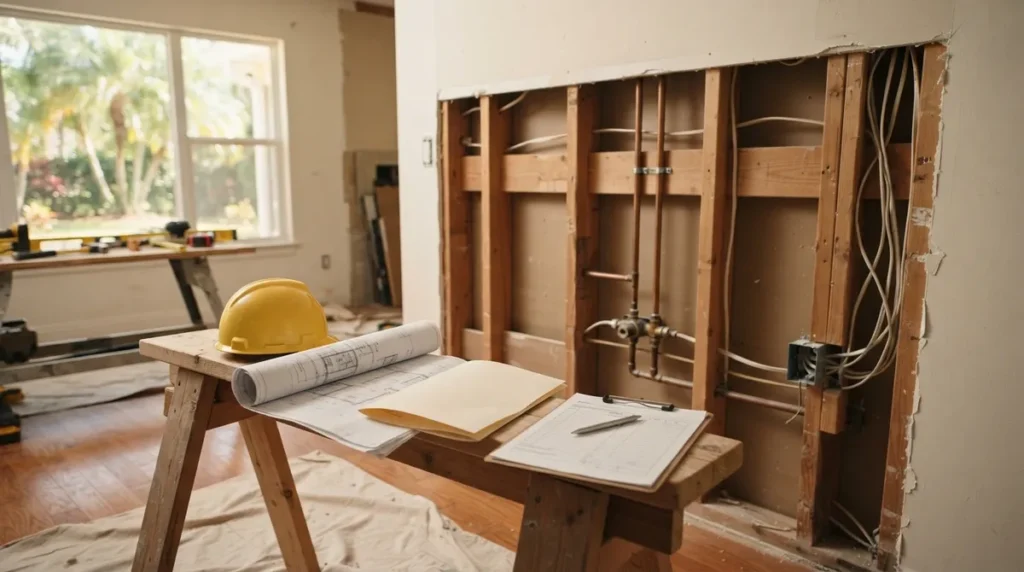
In reality, the building department is evaluating whether the finished work meets code. The review depends on the type of work and on what can actually be seen. Inspectors may ask for plans, photographs, contractor information, engineering documents, and sometimes the opening or removal of finishes so they can check concealed structural, electrical, plumbing, or mechanical work.
So that beautiful finished drywall? It might need a few strategic holes. That's not the department being difficult; it's how they verify work they never got to see during construction.
What If the Work Doesn't Comply?
If something doesn't meet code, you may face one of three outcomes:
- Corrective construction to bring the work up to standard
- Additional documentation, such as engineering analysis or sealed letters
- Removal and reconstruction in the more serious cases
The good news is that many projects land in the first two categories, especially when documented well. A sealed engineer letter or a set of as-built drawings can go a long way. Our team handles both through our engineer letters and as-built drawings services, with in-house sealed work so you're not waiting on an outside consultant.
How to Avoid This Mistake
- Treat the application as the start of a review, not the finish line
- Gather photos, receipts, and any original documentation up front
- Be ready for the possibility of exposing concealed work
- Budget time and money for potential corrections
Mistake #2: Ignoring a Notice of Violation While You Apply
Here's another trap. Some owners receive a code-enforcement notice or stop-work order, submit an after-the-fact application, and then breathe easy. Unfortunately, a permit application alone does not resolve a notice of violation or stop-work order.
Enforcement cases run on their own timelines, with their own deadlines and required steps. If you miss those dates while waiting on permit review, fines or additional penalties can pile up. Always confirm the specific deadlines and required actions directly with the agency that issued the notice.
If you're in this spot right now, our resources on code compliance violations can help you sort out the order of operations. And if a stop-work order has you stuck, check out 8 steps after a stop work order in Broward for a practical framework that applies well beyond one county.
A Simple Order of Operations
- Read the notice carefully and note every deadline
- Contact the issuing agency to confirm what they require
- Identify which jurisdiction actually controls your property
- Prepare the application package and supporting drawings
- Coordinate inspections and respond to every review comment
- Request closure of the enforcement case once the permit is finalized
That fourth step matters more than people realize. Near city lines, it isn't always obvious which agency has authority. Our building department lookup tool can help you start in the right place.
Mistake #3: Assuming the Cost Is the Same Everywhere
"How much will this cost?" is the first question almost everyone asks, and the honest answer is: it depends on where you live. Fees and penalties are local. There is no single Florida price tag.
Here's a real-world example. Pinellas County published a hurricane-repair program that temporarily waives penalties for certain after-the-fact permits in unincorporated floodplains through June 30, 2026, while standard permit fees still apply. The county notes that its usual after-the-fact charge is normally double the regular permit fee. But that program is limited by location, damage circumstances, and eligibility, and it is not a statewide rule.
| Factor | Why It Changes Your Cost |
|---|---|
| Jurisdiction | Each city or county sets its own fee schedule and penalty structure |
| Scope of work | A roof, a pool, and a full addition carry very different review fees |
| Concealed conditions | Opening walls or exposing structure adds labor and repair costs |
| Engineering needs | Sealed letters, structural analysis, or MEP documentation add professional fees |
| Corrections required | Bringing work into compliance may involve additional construction |
Because so many variables are in play, be cautious of anyone quoting a flat number before they understand your project. For more on the topic, see our breakdown of after-the-fact permit costs in Florida.
What the Process Looks Like Step by Step
Now that we've covered the pitfalls, let's talk about how a smooth after-the-fact permit usually unfolds. Specific requirements vary by jurisdiction, but the general rhythm looks like this.
- Identify the authority having jurisdiction. Confirm which city or county building department governs the property and whether a code-enforcement case is open.
- Document what exists. Gather photos, measurements, and any records of the original work. This often means preparing as-built drawings.
- Assess compliance. A licensed design professional may need to evaluate structural, electrical, plumbing, or mechanical elements.
- File the application. Submit the permit application along with plans, disclosures, and required documents.
- Work the review comments. Respond to reviewer questions and resubmit as needed.
- Complete inspections. Schedule required inspections, including any exposure of concealed work.
- Close out. Obtain final approval and, where applicable, a certificate of completion or occupancy.
That last step connects to a lot of real-world needs. If you're selling or refinancing, our certificate of occupancy support can help you cross the finish line.
Do You Need a Licensed Professional?
Sometimes, yes. Depending on the work, the building department may require sealed drawings or an engineer letter. A permitting service can help identify the authority having jurisdiction, assemble application materials, coordinate licensed design professionals when needed, and track reviews and inspections. What it can't do is guarantee approval or replace the building official's decision, so always verify licensing and scope of service before you hire anyone.
Special Situations Worth Knowing About
Selling or Refinancing With Unpermitted Work
Closings are where many unpermitted-work discoveries surface. Title companies, lenders, and buyer inspectors increasingly ask about open or missing permits. If you're in this position, resolving the issue before the closing date is usually smoother than scrambling mid-transaction. Realtors may find our realtor closing support especially useful, and this article on whether a permit hold can delay a Florida closing explains the timing risks.
Roofs, Solar, and Storm Repairs
Roofing and solar installs are among the most common after-the-fact scenarios, especially after hurricane season. Contractors handling volume should look at our roof permit services and the dedicated resources for solar contractors.
Expired Permits Are a Cousin, Not a Twin
An expired permit and an after-the-fact permit are related but different. One covers work that started under a permit that later lapsed; the other covers work done with no permit at all. If you're not sure which applies, our page on after-the-fact and expired permits breaks down the distinction.
Helpful Questions to Ask Before You Start
- Which agency has jurisdiction over my exact address?
- Is there an open code-enforcement case or stop-work order?
- What documents does this department require for an after-the-fact application?
- Will I need sealed drawings or an engineer letter?
- Could concealed work need to be exposed for inspection?
- What are the local fees and any penalty multipliers?
Writing down these answers before you file saves a surprising amount of time. And remember: the more complete your first submission, the fewer review rounds you'll face.
Getting Support Without the Stress
If this all feels like a lot, that's completely understandable. Navigating a building department when you're already behind is stressful, and it's easy to feel like you're speaking a different language than the reviewer on the other end.
That's where 1 Contractor Solutions comes in. We act as Florida's outsourced permitting department, handling filing, tracking, plan review coordination, revisions, and closeout across all 67 counties. Our drafting and engineering are in-house, and our own engineer signs and seals the work, so when a reviewer flags something, we fix it directly rather than chasing an outside consultant. You can read what clients say on our reviews page, or Visit us on Google — 1 Contractor Solutions to see feedback from real customers.
We also keep an eye on federal and state guidance. For context on floodplain-related rules that often intersect with after-the-fact work, FEMA offers helpful floodplain management resources, and the Florida Building Commission is a solid reference for Florida Building Code information. For the statute itself, you can read Florida Statutes §553.79 directly.
Your Next Step
Unpermitted work doesn't have to define your property or your project. Avoid the three big mistakes: don't assume approval is automatic, don't ignore an open violation, and don't assume costs match from county to county. Do that, and you've already put yourself ahead of most people facing this situation.
Ready to untangle your situation with a team that does this every day? Get a free quote and tell us your address and what's going on. We respond within 30 minutes, day or night, and we'll point you toward the clearest path to a closed-out, compliant property. You can also follow us on LinkedIn or follow us on Facebook for more practical Florida permitting tips.
FAQs
What is an after-the-fact construction permit in Florida?
It's a local building-department process for reviewing work that was completed before a required permit was obtained. Applying doesn't automatically legalize the work, though. The finished construction still has to meet applicable codes and local requirements.
Will I have to open walls or remove finishes for an inspection?
Possibly! If structural, electrical, plumbing, or mechanical work is hidden behind finishes, the building department may ask you to expose it so it can be verified. Requirements vary by jurisdiction and project, so it's smart to confirm with your local agency early.
How much does an after-the-fact permit cost in Florida?
There's no single statewide price, since each city or county sets its own fees and penalties. As one local example, Pinellas County says its usual after-the-fact charge is normally double, though it has run a limited hurricane-repair program waiving penalties through June 30, 2026 for eligible cases.
Does an after-the-fact permit application stop a code-enforcement case?
Not by itself. A permit application doesn't resolve a notice of violation or stop-work order, so you'll want to confirm deadlines and required steps with the agency that issued the notice and follow them closely.
Can I sell or refinance a Florida home with unpermitted work?
It's sometimes possible, but unpermitted work often complicates closings because lenders, title companies, and buyer inspectors may flag it. Resolving it before the closing date usually makes the transaction much smoother.
We do this work every day across all 67 Florida counties. Call (866) 314-6931 and we will tell you what your situation actually requires — including when you do not need us.
Related services
Permit Facilitation & Filing
You have a crew scheduled, a client asking for dates, and a permit sitting somewhere in a queue you cannot see. We file it, w…
See the servicePlan Review Coordination
A permit in plan review is not one queue. On a commercial project it can be six queues, each with its own reviewer, its own c…
See the serviceReady to get your permit moving?
One call tells you which jurisdiction controls your project, what it will take, and what it will cost. Most of the time we can scope it on the phone.