
Blog
13 Facts About Unpermitted Work in Florida (2026)
Learn 13 key facts about unpermitted work in Florida, from §553.79 rules to after-the-fact permits, inspections, and fixing issues before a sale.
Key Takeaways
-
Florida has no statewide amnesty for unpermitted work; each local building department decides how to handle after-the-fact permits, and approval requires the work to meet current Florida Building Code and local requirements.
-
Unpermitted work can surface during home sales, refinancing, or insurance claims, potentially delaying closings or triggering extra scrutiny; addressing it proactively before triggering a deadline gives you control over timing and solutions.
-
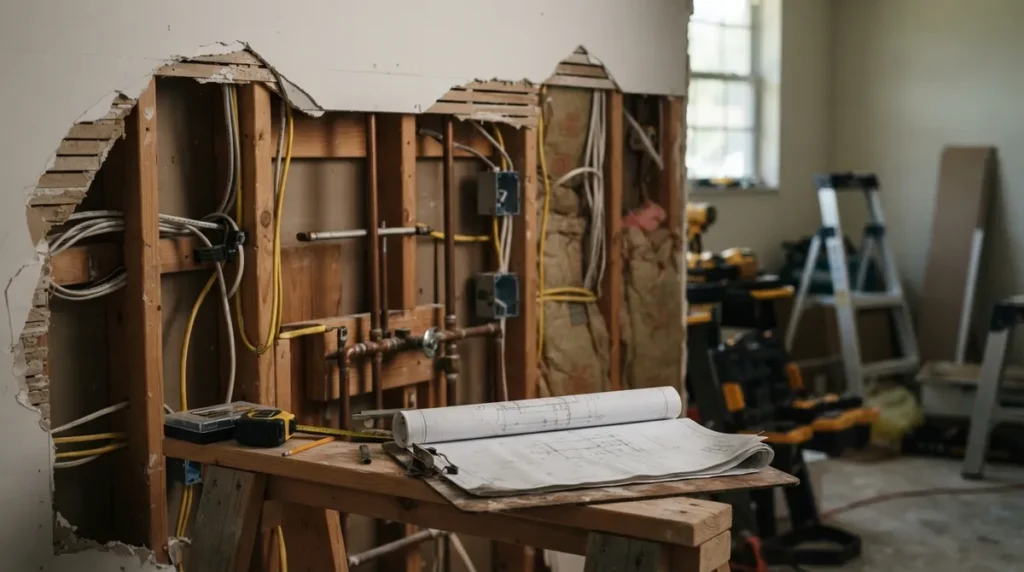
Inspectors may require opening walls, ceilings, or finished areas to verify compliance with concealed work like framing, wiring, and plumbing; solid as-built drawings and engineering documentation can limit the exposure needed.
-
Permit fees, penalty multipliers, processing timelines, and required documentation vary by jurisdiction; always confirm the correct local building department authority for your address and request their specific checklist and fee schedule before proceeding.
Let's be honest: most people don't set out to skip a permit. Maybe a prior owner finished the patio enclosure before you bought the place. Maybe a contractor said, "Don't worry, I'll pull it," and then quietly never did. Or maybe a weekend project grew a little bigger than planned. However it happened, unpermitted work in Florida is far more common than most people think, and it can surface at the worst possible moment.
The good news? You're not stuck. In most cases, there is a path to get the work reviewed, corrected if needed, inspected, and closed out. The path just looks different depending on the city or county that controls your property.
This guide walks through 13 practical facts about unpermitted work in Florida. You'll learn what the law says, what inspectors look for, how it can affect a sale or a loan, and how to fix it step by step. Whether you're a general contractor, a solar installer, a realtor, or a homeowner, you'll find something useful here. Let's dig in.
1. Florida Law Requires Permits Before Work Begins
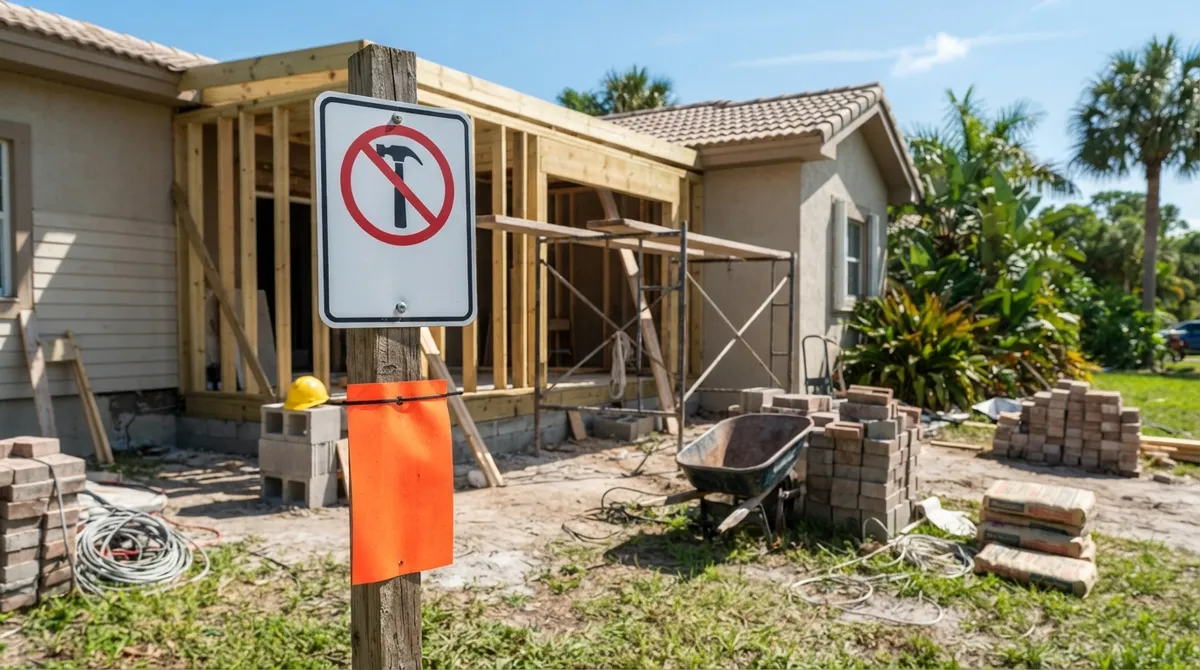
Under Florida Statutes §553.79, most covered building construction, alteration, repair, modification, and demolition must be permitted before work starts. The permit comes from the local enforcing agency, which is usually a city or county building department.
Not every small task needs one. Exemptions exist, and they depend on the type of work and the local rules. When in doubt, ask the building department that has jurisdiction over the property before you pick up a tool.
2. There Is No Statewide Amnesty
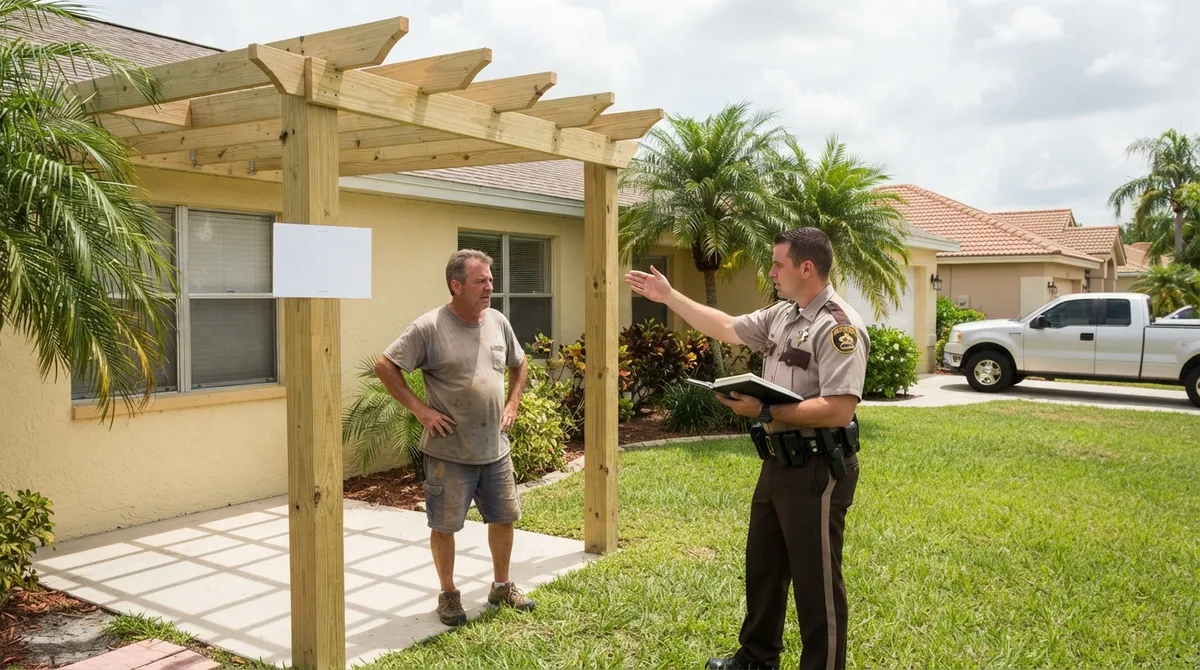
Here's a myth worth clearing up. Florida has no blanket statewide program that automatically legalizes completed unpermitted work. No grandfathering switch gets flipped after a certain number of years.
Instead, each local agency decides how to handle it. Many accept an after-the-fact or corrective permit application. Approval is never automatic, though, and the work must meet the applicable code and local requirements. For a deeper look at the process, see our guide on how to legalize unpermitted work in Florida.
3. The Right Office Isn't Always the County
Florida has 67 counties, but permitting authority doesn't always sit at the county level. Many municipalities run their own building departments. A home with a Tampa mailing address, for example, may fall under a different authority than one just across the line.
Always confirm the authority having jurisdiction for the exact property address. Our building department lookup tool can help you find the right office, and you can read more in which Florida jurisdiction reviews my project.
4. Common Types of Unpermitted Work
Unpermitted work shows up in every corner of a property. Some of the most frequent examples we see include:
- Room additions, garage conversions, and enclosed patios
- Roof replacements and structural roof changes
- Electrical panel upgrades and added circuits
- Plumbing relocations and water heater swaps
- HVAC replacements and duct changes
- Pool cages, fences, retaining walls, and decks
- Solar panel installations
- Kitchen and bathroom remodels that moved walls or utilities
If your project falls on this list and no permit was pulled, it's worth a closer look.
5. Inspectors May Ask to See Concealed Work
This is the part that makes people nervous. During a corrective-permit review, inspectors can't sign off on what they can't see. If compliance can't be verified, you may be asked to open walls, ceilings, or finished areas so they can check framing, wiring, plumbing, or connections.
That doesn't mean every project ends with a wrecking ball. Often, a targeted inspection opening is enough. Planning ahead with the right drawings and engineering support can limit how much has to be exposed.
6. A Corrective Permit Usually Needs a Solid Document Package
Requirements vary by jurisdiction and by scope, but a typical after-the-fact application may include:
- A completed permit application and project description
- Plans or as-built drawings showing what exists today
- Contractor or owner-builder information
- Supporting engineering documents for structural, electrical, plumbing, or mechanical work
- Any required surveys, product approvals, or energy calculations
Clean, accurate drawings make a big difference. Our team prepares as-built drawings and engineer letters in house, so reviewers get what they need the first time.
7. Fees and Timelines Aren't Uniform
People always ask, "How much will this cost?" The honest answer is that it depends. Florida Statutes §553.79 sets the general permit requirement, but it does not set one statewide after-the-fact fee or processing timeline.
Each building department publishes its own fee schedule. Some charge a penalty multiplier on top of the standard permit fee. Others apply flat investigation fees. Ask the department for its current checklist and fee schedule, then plan your budget around that. Our breakdown of after-the-fact permit costs in Florida can help you set expectations.
| Cost Factor | What Drives It | Who Sets It |
|---|---|---|
| Permit fee | Scope and valuation of work | Local building department |
| Penalty or investigation fee | Work done before permit issued | Local building department |
| Drawings and engineering | Complexity of structural, MEP, or site work | Design and engineering provider |
| Corrections or reconstruction | Whether work meets current code | Inspector findings and contractor pricing |
8. Work That Doesn't Meet Code Must Be Corrected
A permit application alone doesn't resolve a violation. If the work doesn't comply with the Florida Building Code or local requirements, the agency can require corrections. In some cases, removal or reconstruction may be necessary.
The goal is simple: get the work to a code-compliant state, pass the required inspections, and receive final approval. Learn more about this in will you really have to demolish unpermitted work?
9. It Can Complicate Selling Your Home
Unpermitted work has a funny way of appearing right when you're trying to close. A buyer's inspector notices something odd. An appraiser questions a square-footage number. A title or permit search turns up an open permit.
Consequences depend on the facts, local rules, and the parties involved. Some deals pause, some get renegotiated, and some close with a plan to fix things. Realtors can find helpful context in can a home sale close with unpermitted work in Florida? and our realtor and closing support services.
10. Insurance and Lenders May Take Notice
Insurers and lenders care about permit history because it speaks to safety and code compliance. A claim related to unpermitted work may face extra scrutiny, and refinancing or a HELOC may stall if a lender spots an issue.
How much impact it has depends on the specific insurer, lender, and situation. Still, it's smart to address problems before you need a claim or a loan. For more, read expired permits and insurance claims in Florida.
11. Open and Expired Permits Are a Cousin of the Problem
Not all permit trouble involves work that never had a permit. Sometimes a permit was pulled, then abandoned, and later expired without a final inspection. Buyers and lenders often treat that much like unpermitted work.
The fix may be reopening, renewing, or reapplying, depending on local rules. You can check for open records with our open permit search tool, and learn about solutions through our after-the-fact and expired permits service.
12. Different Pros Play Different Roles
Fixing unpermitted work is a team effort. Here's a quick look at who typically helps:
| Audience | Common Situation | What Helps Most |
|---|---|---|
| General contractors | Inherited or abandoned permit on a job | Permit filing, tracking, and sealed drawings |
| Solar companies | Install done before approval | Structural and electrical documentation |
| Realtors and investors | Closing delayed by permit issue | Permit research and fast corrective plans |
| Homeowners | Prior owner skipped permits | As-builts, engineer letters, and inspection coordination |
One partner who can handle drafting, engineering, and filing under one roof keeps things moving. That's the idea behind 1 Contractor Solutions, which acts as an outsourced permitting department across all 67 Florida counties. You can visit us on Google — 1 Contractor Solutions to see what customers say.
13. There Is a Clear Path Forward
Here's the reassuring part. You can usually work through this in logical steps. Think of it as a checklist:
- Stop any ongoing work that requires a permit.
- Identify the authority having jurisdiction for the property address.
- Check permit and violation records for open permits or code cases.
- Request the after-the-fact checklist and fee schedule from the department.
- Gather drawings and engineering, including as-builts and sealed letters where needed.
- File the application and respond promptly to reviewer comments.
- Complete inspections, make corrections, and obtain final approval.
If you've already received a notice, our guide to responding to a Florida unpermitted work notice and our code compliance violation help are great next stops. In a time crunch, urgent permit rescue can help with stop work orders and held-up closings.
Why Acting Early Saves Stress
Unpermitted work rarely gets simpler with time. Records change, inspectors turn over, and code editions update. A small issue today can become a bigger one when a sale, a refinance, or a storm claim lands on your calendar.
Addressing it early gives you control. You pick the timing, the team, and the plan, instead of reacting to a deadline someone else set.
Ready to Get Your Property Back on Track?
You don't have to untangle this alone. If you're dealing with unpermitted work in Florida, we're happy to look at your situation, tell you which jurisdiction controls it, and map out the fastest compliant route. When you're ready, get a free quote and let's get your project moving again. You can also follow us on LinkedIn or follow us on Facebook for more Florida permitting tips.
FAQs
What work requires a building permit in Florida?
Under Florida Statutes §553.79, most covered building construction, alteration, repair, modification, and demolition needs a permit before work begins. Some exemptions exist, so check with the building department that has jurisdiction over your property before you start.
Can unpermitted work be legalized in Florida?
Often, yes, through a local after-the-fact or corrective permit process. There's no statewide amnesty, though, so the building department decides what documents, fees, inspections, and corrections are required. Approval depends on the work meeting applicable code.
Will an inspector make me open walls to check unpermitted work?
Possibly. If an inspector can't verify compliance with concealed work, you may need to open walls or ceilings, make corrections, and pass the required inspections. Good drawings and engineering documentation can help limit how much has to be exposed.
Can I sell a Florida home with unpermitted work?
Sometimes, but it can complicate things. Buyers, lenders, and insurers may question permit history, and outcomes depend on the facts and the parties involved. Many sellers choose to resolve the issue before listing to keep the closing smooth.
How do I find out if a property has open permits or code violations?
Start by identifying the correct city or county building department for the address, then search its permit and code enforcement records. You can also use an open permit search tool, or ask a permitting service to research the property for you.
We do this work every day across all 67 Florida counties. Call (866) 314-6931 and we will tell you what your situation actually requires — including when you do not need us.
Related services
Permit Facilitation & Filing
You have a crew scheduled, a client asking for dates, and a permit sitting somewhere in a queue you cannot see. We file it, w…
See the servicePlan Review Coordination
A permit in plan review is not one queue. On a commercial project it can be six queues, each with its own reviewer, its own c…
See the serviceReady to get your permit moving?
One call tells you which jurisdiction controls your project, what it will take, and what it will cost. Most of the time we can scope it on the phone.