
Blog
12 Things to Know About Multi County After the Fact Permitting Florida
Managing unpermitted work across Florida counties? Learn 12 key steps for multi county after the fact permitting in Florida, from jurisdiction checks to closeout.

Key Takeaways
-
Florida has no statewide after-the-fact permit; each of the 67 counties and hundreds of municipalities handles its own process independently with separate applications, fees, and requirements.
-
Verify jurisdiction first for each property, as addresses near city lines may fall under county or municipal control—filing with the wrong office wastes weeks.
-
After-the-fact fees vary widely by jurisdiction and paying the fee does not legalize noncompliant work; the project must still pass inspection and meet Florida Building Code standards.
-
One unpermitted project often requires multiple permits (building, electrical, plumbing, mechanical, gas), each needing separate documentation and approval from trade-specific reviewers.
-
Complete inspections are still required for after-the-fact permits; concealed work may require openings for inspector access, and deficiencies may need corrective work before approval.
-
Building approval alone does not resolve all issues—zoning, setbacks, floodplain, environmental, and septic requirements may still apply and must be verified with other agencies.
Picture this: you own, manage, or are about to buy properties in two, three, or maybe six Florida counties. Then you discover that work was done at several of them without permits. Maybe a prior owner added a patio enclosure in one county, a roof was replaced in another, and a rental unit was remodeled in a third. Suddenly you are juggling multiple building departments, multiple fee schedules, and a lot of questions. Take a breath, because this is more common than you might think, and it is very fixable.
Multi county after the fact permitting Florida work is not about getting one magic statewide permit. It is about coordinating separate local applications for work already completed, with each property handled by the authority that has jurisdiction over it. In this friendly guide, we will walk through 12 things that help you do it right in 2026. Whether you are a general contractor, solar company, realtor, investor, or homeowner, you will find practical steps, helpful tables, and straight talk. Let's get you from stressed to organized!
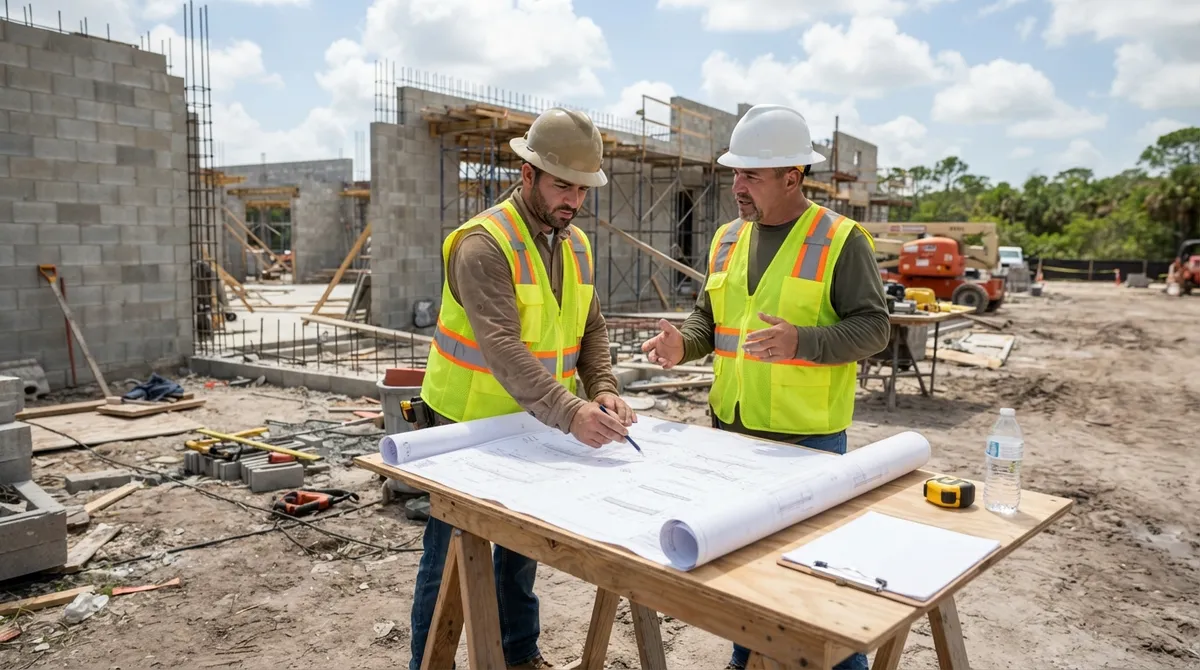
1. There Is No Single Statewide After-the-Fact Permit
Here is the first thing to understand, and it surprises many people. Florida does not have one statewide after-the-fact permit application, and there is no automatic amnesty program. Each county or municipality, known as the authority having jurisdiction, decides its own process.
Florida's 67 counties, along with hundreds of municipalities, each run their own permitting offices. So a project that touches several counties means several separate applications, plan reviews, inspections, and approvals. A service provider can coordinate all of this for you, but each authority makes its own decisions.
2. What "After the Fact" Actually Means
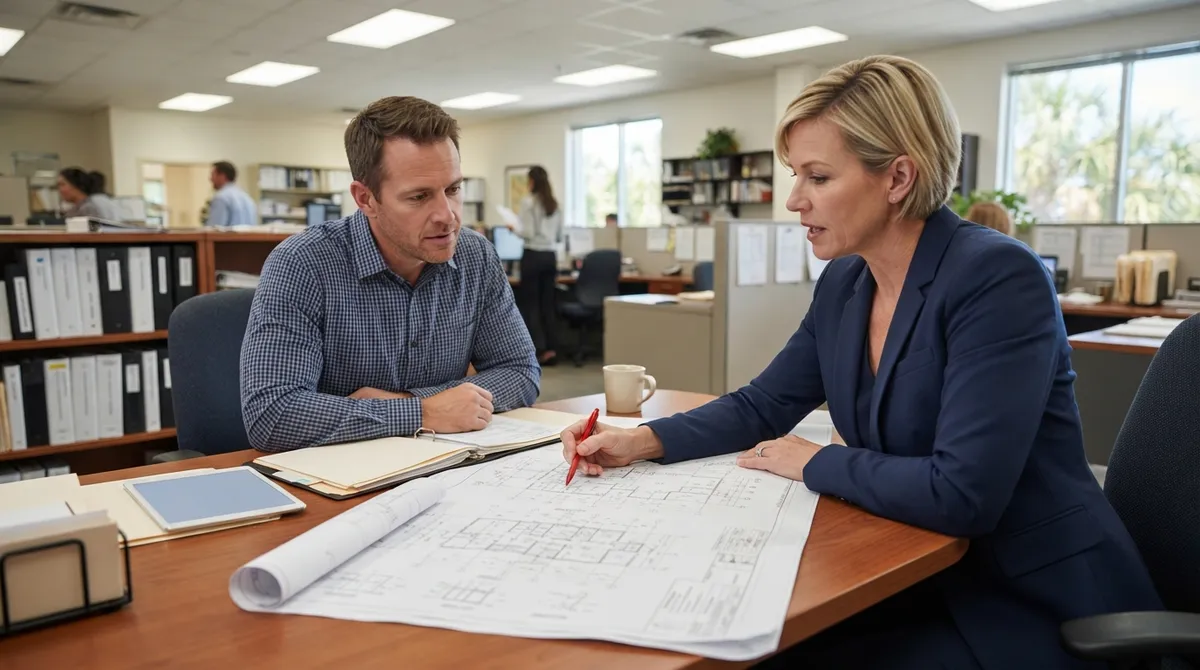
After-the-fact permitting generally means applying to the local building department for permits that cover work already completed without the required permits. The Florida Building Code (section 105.1) generally requires a permit before regulated construction, alteration, repair, or installation of building systems begins. When that step gets skipped, the after-the-fact route is how owners work toward compliance.
If you want a deeper primer on the basics, our guide on what after-the-fact permitting is in Florida covers the fundamentals. For hands-on help, our after-the-fact and expired permits service handles the files many others decline.
3. Verify the Jurisdiction First (It Is Not Always Obvious)
Before anything gets filed, you need to know exactly who controls each property. Near city lines, an address that sounds like it belongs to one city might actually fall under the county, or vice versa. Filing with the wrong office wastes weeks.
That is why the first step in any multi-county workflow is confirming jurisdiction for every site. Our building department lookup tool is a handy starting point, and this article explains which Florida jurisdiction reviews your project.
4. Check Permit History and Code Enforcement Status
Next, research what is already on record. Are there open permits, expired permits, or active code-enforcement cases tied to the address? Surprises here can change your whole strategy.
- Pull permit history for each property
- Look for open or expired permits that need closing
- Check for code-enforcement cases or violation notices
- Note any liens, holds, or pending closings
You can start with our open permit search tool. If something is expired, see how to close an expired permit in Florida.
5. Local Fees and Penalties Vary Widely
Fees are one of the biggest unknowns, and honestly, there is no reliable statewide number. Florida Building Code section 109.4 allows a local building official to assess an additional fee for work started before a permit is issued. Beyond that, each jurisdiction sets its own fee schedule, investigation charges, and penalties.
One important note: paying a fee does not legalize noncompliant work. Pasco County's ordinance, for example, expressly addresses after-the-fact permits and states that paying the fee is not a defense to prosecution for beginning permit-required work without first obtaining a permit. For cost expectations, read our breakdown of after-the-fact permit costs in Florida.
| Item | Is It Statewide? | Who Decides |
|---|---|---|
| Permit requirement | Yes (Florida Building Code) | State code, enforced locally |
| Application forms | No | Local building department |
| Fees and penalties | No | County or municipality |
| Plan review timelines | No | Local department |
| Inspections | Required everywhere | Local inspectors |
| Final approval | No single approval | Each jurisdiction |
6. Document the Work As Built
Since the work is already done, reviewers want to see what actually exists. Think of it as telling the story of the project after the fact. Depending on scope and local rules, you may need:
- As-built plans or drawings
- Photographs of completed and visible work
- Product information and approvals
- Contractor details and license information
- Engineering or design-professional documents where required
This is where in-house drafting really pays off. Our team prepares as-built drawings and issues engineer letters backed by our own sealed work, so you are not chasing an outside consultant.
7. Don't Forget the Separate Trade Permits
Many owners are surprised to learn that one project can need several permits. If electrical, plumbing, mechanical, or gas work was completed without permits, each trade may need its own after-the-fact permit alongside the main building permit.
For example, an unpermitted kitchen remodel could involve building, electrical, plumbing, and mechanical permits all at once. Our MEP engineering and structural engineering teams can prepare the documentation each trade reviewer expects.
8. Inspections Are Still Required (Yes, Even After the Fact)
Completed work still has to be inspected. If work is concealed behind walls or finishes, the building official may require openings or other access so inspectors can verify compliance. That can sound scary, but it is a normal part of the process.
If deficiencies turn up, you may need corrective work, redesign, or in some cases removal before approval. The good news is that many projects pass with minor fixes. Read about what happens during a Florida ATF site inspection so you know what to expect, and see whether you will really have to demolish unpermitted work.
9. A Practical Multi-County Workflow
When you are managing several properties, a repeatable process keeps everything from spiraling. Here is a workflow that works well:
- Identify the exact jurisdiction for every property
- Check permit history and code-enforcement status at each site
- Document existing conditions with photos, measurements, and as-builts
- Confirm each jurisdiction's submittal and fee requirements
- File separate applications as needed for each property
- Respond to plan-review comments promptly
- Schedule and pass required inspections
- Obtain final approval and permit closeout for each site
Our permit facilitation and filing and plan review coordination services follow this exact approach, so nothing slips through the cracks.
10. How Requirements Compare Across Counties
Although every jurisdiction differs, it helps to know what is commonly requested. Here is a general snapshot. Always verify the current rules with each local building department, because requirements change.
| Area | Typical Focus | Good to Know |
|---|---|---|
| Polk County | Application, construction documents, plan review, pre-issuance documents | Official guidance outlines a step-by-step permit process |
| Pasco County | Ordinance addresses after-the-fact permits directly | Fee payment is not a defense to prosecution |
| Hillsborough County | Local submittal and inspection requirements | Verify current local fee schedule |
| Miami-Dade County | Local product approval standards apply | See NOA versus Florida product approval notes |
No reliable statewide statistic on after-the-fact fees or processing times exists, so treat any claim of a "standard" cost or timeline with caution.
11. Building Approval Is Not the Whole Story
Getting the building department's blessing does not automatically resolve everything. Zoning, land-use, floodplain, environmental, septic, and other agency requirements may still apply. A beautiful patio enclosure that passes building inspection could still have a setback problem with zoning.
Check with the relevant local departments and any state or federal agencies in addition to the building department. For environmental questions, see our FDEP and environmental permits service, and if code enforcement is involved, our code compliance violation help can guide you.
12. Who Benefits Most From Coordinated Help
Different readers feel this pain in different ways, and coordinated support helps all of them:
- General contractors: Juggling several job sites with different departments is exactly where a single point of coordination saves time. See our page for general contractors.
- Solar companies: Installs spread across counties often surface unpermitted or expired work. Explore our solar contractor support.
- Realtors and investors: Open permits and unpermitted work can derail closings. Our realtor and closing support helps keep deals moving.
- Homeowners: Whether you inherited a problem or bought one unknowingly, we make the process less intimidating. Visit our homeowner resources.
If a deadline is looming, our urgent permit rescue team steps in for denials, stop work orders, and closings held up by permit issues.
Why Choose a Team That Works Statewide
Here is a fun truth: the paperwork is rarely the hardest part. The hard part is knowing each jurisdiction's quirks. 1 Contractor Solutions works in all 67 Florida counties and has filed in more than 400 municipalities, with in-house drafting and sealed engineering so reviewer comments get fixed fast. You can visit us on Google — 1 Contractor Solutions to see what customers say, and you can follow us on LinkedIn or follow us on Facebook for more Florida permitting tips.
For the underlying code rules, the Florida Legislature publishes the statutes online, including Florida Statutes section 553.79 on building permits, which is worth a skim if you like to read the source material.
Ready to Get Your Properties Back on Track?
Multi county after the fact permitting in Florida does not have to feel like spinning plates. With jurisdiction verified, history checked, work documented, and each application filed and tracked, you can move property by property toward clean closeouts. You are not alone in this, and a little organization goes a long way.
Have properties in several counties and not sure where to begin? Reach out today to get a free quote. We answer 24/7, respond within 30 minutes day or night, and se habla español. Permits approved. Projects moving.
FAQs
How do I get an after-the-fact building permit in Florida?
You apply to the local building department that has jurisdiction over the property, usually with as-built documentation and any required engineering. The work is then reviewed, inspected, and either approved or sent back for corrections. Each county and municipality sets its own forms and fees, so it is smart to confirm requirements first.
Can I apply for after-the-fact permits in multiple Florida counties at once?
Yes, you can work on several counties at the same time, but each property needs its own application filed with its own jurisdiction. A permitting service can coordinate and track all of them together, though every authority still makes its own decisions.
Will inspectors make me open walls for an after-the-fact permit?
Possibly. If work is concealed, the building official may require openings or other access so inspectors can verify compliance. Good photos and engineering documentation can sometimes reduce how much needs to be opened up.
Does paying the after-the-fact fee make my unpermitted work legal?
Not by itself. Fees are tied to the process, but the work still has to meet the Florida Building Code and pass inspection. Some local rules, like Pasco County's ordinance, state that paying the fee is not a defense to prosecution.
Can I sell a Florida property with unpermitted work or an open code-enforcement case?
It can be done, but it often complicates closings, financing, and insurance. Many sellers choose to resolve the permit issues first so the sale goes smoothly. A permitting team can help clear holds before closing.
We do this work every day across all 67 Florida counties. Call (866) 314-6931 and we will tell you what your situation actually requires — including when you do not need us.
Related services
Permit Facilitation & Filing
You have a crew scheduled, a client asking for dates, and a permit sitting somewhere in a queue you cannot see. We file it, w…
See the servicePlan Review Coordination
A permit in plan review is not one queue. On a commercial project it can be six queues, each with its own reviewer, its own c…
See the serviceReady to get your permit moving?
One call tells you which jurisdiction controls your project, what it will take, and what it will cost. Most of the time we can scope it on the phone.