
Blog
Why Is Your Florida Closing Delayed by an After-the-Fact Permit?
Closing delayed by an after-the-fact permit in Florida? Learn why it happens, what ATF permits require, and the steps to get your deal moving again.
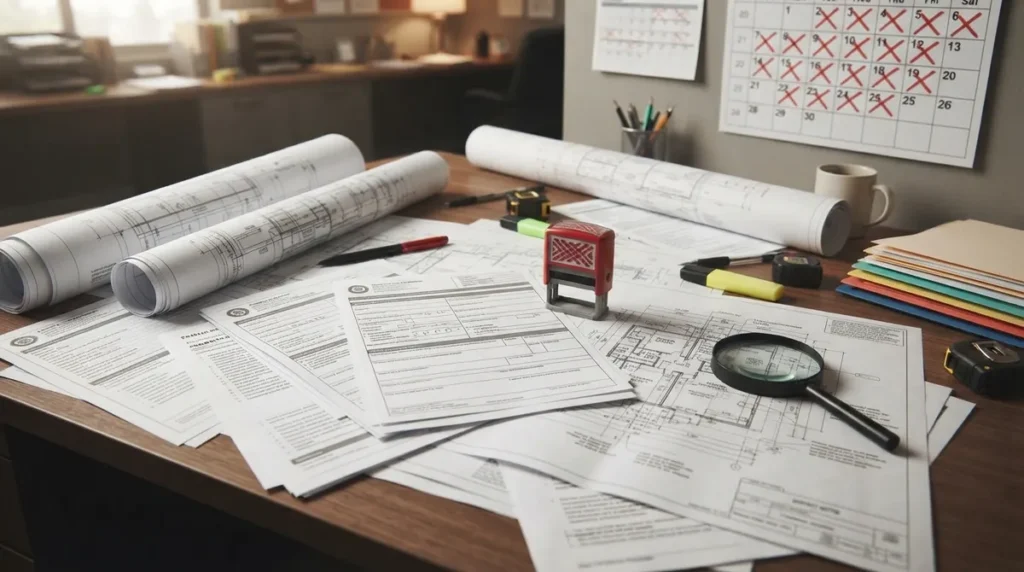
Key Takeaways
-
Identify whether you have an open permit, expired permit, or unpermitted work before taking action, as each requires a different remedy and timeline to resolve.
-
Start the after-the-fact permit process immediately when a permit issue surfaces during closing, as delays compound and local review timelines vary significantly by jurisdiction.
-
Submit complete, accurate documentation including as-built drawings, site plans, and photos on the first application to avoid rejections that add multiple review cycles.
-
Confirm the specific city or county building department that controls your property and verify current fee schedules and requirements, as rules vary across Florida's 67 counties.
-
Ensure the permit is fully closed out with final inspection approval, not just submitted, because lenders and title companies require proof of final closeout before releasing funds.
-
Communicate early and transparently with all parties—buyer, lender, title company, and agent—about the permit issue and your resolution plan to prevent deal collapse.
You found the perfect buyer, the inspection went smoothly, and the closing date is circled on the calendar. Then the call comes in: a permit problem has surfaced, and now everything is on hold. If you are dealing with a closing delayed by after the fact permit Florida issues, take a deep breath. You are far from alone, and this is a problem that can be solved.
Florida real estate deals hit permit snags all the time. A buyer's inspector spots a patio enclosure with no permit on file. A lender's appraiser notices an addition that does not match county records. A title company finds an open permit that was never finalized. Each of these can stall a closing, but each also has a clear path forward.
In this guide, we will walk through why these delays happen, what an after-the-fact (ATF) permit actually is, and the steps that get a deal moving again. Whether you are a homeowner, a realtor, an investor, or a contractor, you will leave with a practical plan. And if you want a team to carry the load, our realtor and closing support exists for exactly this moment.
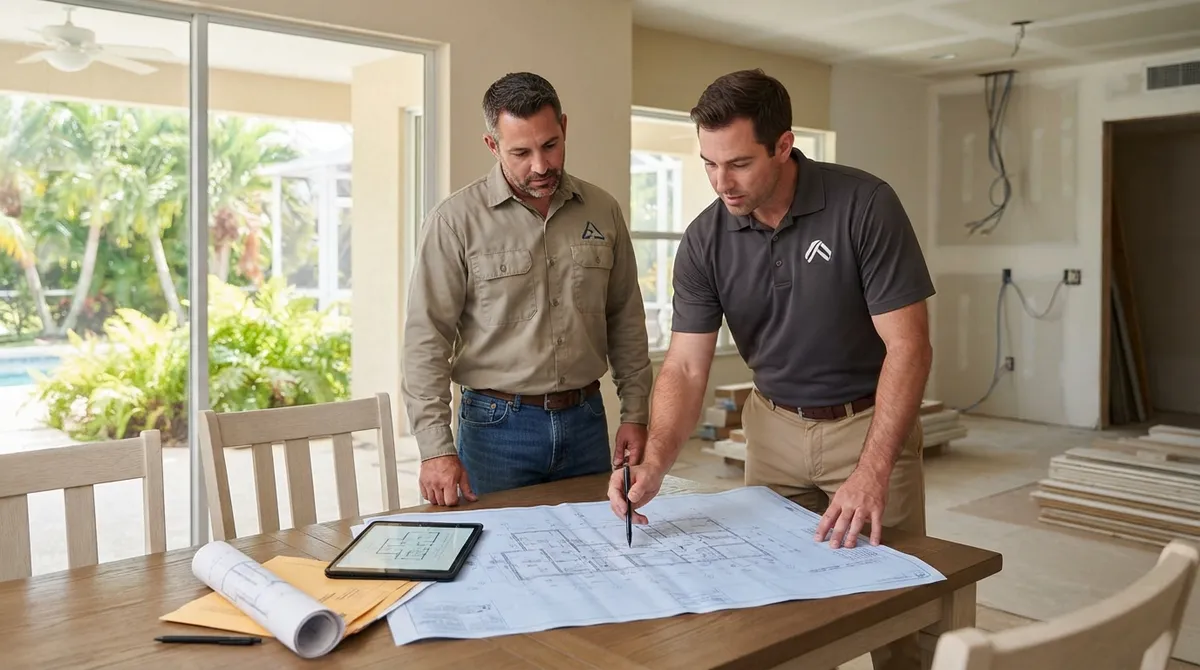
What Is an After-the-Fact Permit in Florida?
An after-the-fact permit is a local building permit application for work that was already started or finished without the required permit. Think of it as a corrective process. It is not automatic approval, and it is not a waiver of code requirements.
Florida Statutes §553.79 generally requires a permit before covered construction, alteration, repair, modification, or demolition begins. The city or county building department acts as the local enforcing agency and handles permits and inspections. So when work skipped that step, the fix runs through the same local office.
The good news is that Florida building departments see this situation often. They have a process for it. If you want a deeper look at the mechanics, our guide on what after-the-fact permitting in Florida involves covers the basics step by step.
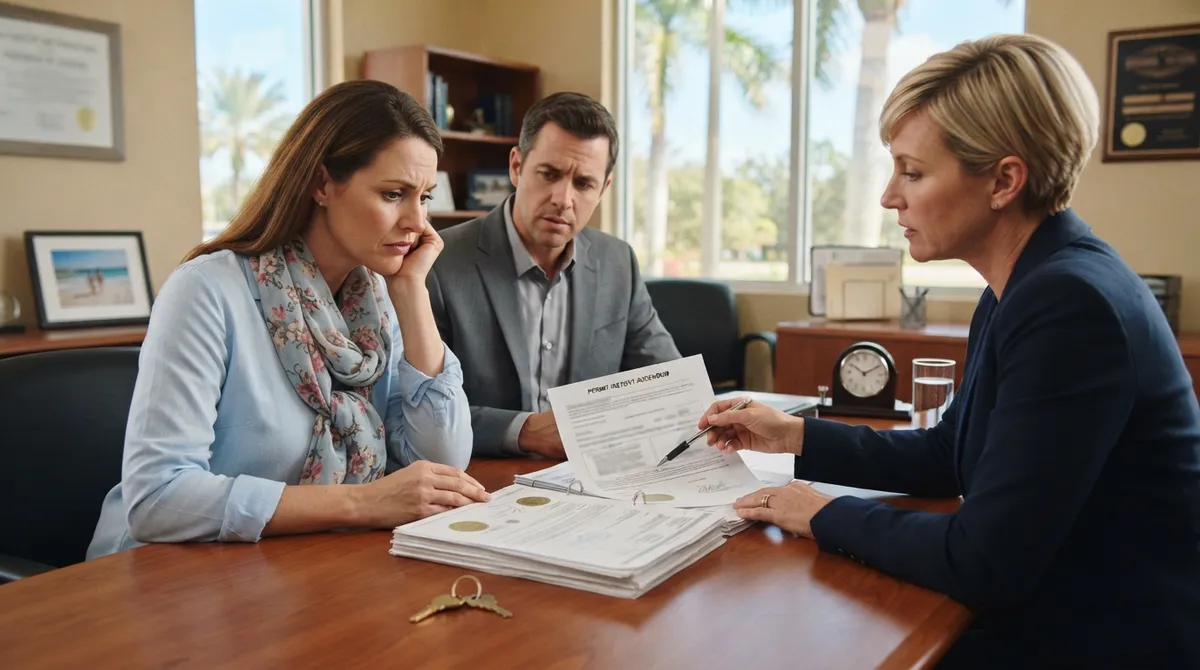
Why Do Permit Issues Delay a Florida Closing?
Here is something that surprises many sellers: there is generally no automatic statewide rule that blocks you from selling a home with permit problems. The delay is usually a transaction issue. Someone in the deal raises a concern, and the closing pauses until it is addressed.
The most common sources of delay include:
- The buyer's inspector notices work that does not match the permit history.
- The lender or appraiser questions unpermitted square footage or structures.
- The title company finds an open or expired permit on the property record.
- Code enforcement has an active violation tied to the address.
- The buyer's attorney or agent requests resolution before moving forward.
Each party has a different comfort level. Some buyers will accept a repair credit. Others want the permit closed out before they sign. Lenders are often the strictest, because they need the property to be insurable and properly documented.
Open Permit vs. Unpermitted Work: Know Which One You Have
Before you do anything else, figure out which problem you actually face. These two situations sound similar, but the fixes are different.
| Situation | What It Means | Typical Remedy |
|---|---|---|
| Open permit | A permit was issued but never finalized or closed out | Complete outstanding corrections and pass final inspection |
| Expired permit | A permit was issued, then lapsed before completion | Reinstate, renew, or reapply depending on local rules |
| Unpermitted work | Work was done with no permit at all | Submit an after-the-fact application, documentation, and inspections |
If a permit was issued but never closed, the remedy may be as simple as scheduling a final inspection or finishing the open corrections. If no permit exists, you generally need an ATF application and a full review.
You can check your property's history with our open permit search tool. It is a friendly first step that tells you what you are dealing with before you pick up the phone. For more on this exact scenario, see what to do when an open permit is found at closing.
How Do You Fix a Closing Delayed by an After-the-Fact Permit in Florida?
Because the process is administered locally, the details vary by city and county. Still, the overall path looks similar everywhere. Here is the general roadmap:
- Pull the permit history. Get the full record for the address, including any violations or open cases.
- Identify the exact problem. Decide whether you have an open permit, an expired permit, or unpermitted work.
- Contact the right building department. Confirm which jurisdiction actually controls the property, since city lines can be tricky.
- Gather documentation. Collect plans, as-built drawings, photos, surveys, and contractor details.
- Submit the ATF application. File with the required drawings and any engineering documentation.
- Complete inspections and corrections. Pass review, fix anything flagged, and schedule inspections.
- Obtain final closeout. The issue is only resolved once the permit is finalized.
Notice the last step. Submitting an application alone does not resolve the issue. The permit must be reviewed, inspected, and closed. That is the document a lender or title company wants to see.
Not sure which office you need? Our building department lookup helps you find the right authority quickly.
What Documents and Inspections Will the Building Department Want?
Requirements depend on the jurisdiction and the scope of work. That said, most departments ask for some combination of the following:
- A completed application for the after-the-fact permit
- Plans or as-built drawings showing what exists today
- A site plan or survey
- Photographs of the completed work
- Contractor information, if a contractor did the work
- Structural, electrical, plumbing, or mechanical documentation
Structural or concealed work often needs extra attention. The department may require a licensed design professional to document the work. In some cases, they may ask you to expose walls, ceilings, or footings so an inspector can verify what is behind them.
That is where in-house drafting and engineering makes a real difference. When a sealed drawing or an engineer letter is needed, having that capability under one roof keeps your timeline from stalling while you wait on an outside consultant.
How Long Does an After-the-Fact Permit Take in Florida?
Everyone wants a number here, and we wish we could hand you a single one. The honest answer is that no reliable statewide average exists. Timelines depend on the jurisdiction, the type of work, how complete your documentation is, and whether inspections pass the first time.
Here is what generally drives the timeline:
| Factor | Faster Outcome | Slower Outcome |
|---|---|---|
| Documentation | Complete, accurate drawings on first submission | Missing or incorrect plans causing rejections |
| Scope of work | Minor, non-structural work | Structural, concealed, or multi-trade work |
| Inspection results | Passes on first visit | Failed items requiring corrections |
| Department workload | Lighter review queue | Backlogged plan review |
Because timing is so variable, it helps to plan around the closing date early. If you want to speed things along, ask about private provider plan review, which can bypass the county queue where it is allowed. You can also read about how long a building permit takes in Florida for a broader look at timing.
What Does an After-the-Fact Permit Cost?
Fees and enforcement consequences are local and case-specific. Many jurisdictions charge higher fees for after-the-fact work than for a standard permit, and some add penalties or investigation fees. However, there is no single statewide fixed penalty, so avoid assuming a number you read elsewhere applies to your property.
The best move is to confirm the current fee schedule with the specific city or county. Also check for any code enforcement orders on the property, since those can carry their own costs. For a closer look at budgeting, our breakdown of after-the-fact permit costs in Florida can help you plan.
What Happens If the Work Fails Inspection?
This is the question that keeps sellers up at night, so let us address it directly. If the work cannot be shown to comply with applicable code, the local authority may require corrections. In more serious cases, they may require removal or reconstruction.
That said, most issues are fixable with targeted corrections. A missing fastener schedule, a wiring detail, or a clearance problem can usually be addressed without tearing anything out. The key is to find out early what the inspector will want. Documenting the work properly and having an engineer review it before inspection reduces surprises.
If you are worried about the worst case, our article on whether you will really have to demolish unpermitted work offers reassurance and realistic expectations.
Practical Tips for Each Person in the Deal
A delayed closing affects everyone differently. Here is how to approach it depending on your role.
If You Are the Seller or Homeowner
Act quickly and communicate openly. Disclose known material issues, document any agreed plan for resolution, and keep your agent in the loop. Consider speaking with a real estate attorney about disclosure and contract language. Our resources for Florida homeowners walk through the process in plain language.
If You Are a Realtor or Investor
Pull permit records early in the listing process, not after you are under contract. Catching issues before the buyer's inspector does gives you control of the narrative and the timeline. Our support for realtors and title companies is built around keeping deals alive.
If You Are a Contractor
If a project you completed never got closed out, expect the call. Working with a team that knows the local requirements helps you resolve it fast and protect your reputation. See how we support general contractors across Florida.
Common Mistakes That Make Delays Worse
A few missteps can turn a manageable problem into a deal-killer. Watch out for these:
- Waiting too long. Permit work takes time, so start the moment the issue surfaces.
- Guessing the jurisdiction. Filing with the wrong office wastes weeks.
- Submitting incomplete drawings. Rejections add review cycles.
- Ignoring the lender and title company. They need to approve the resolution, not just you.
- Assuming a statewide timeline or fee. Local rules control the outcome.
Avoiding these keeps your closing on a realistic track. If your deal is already in trouble, our urgent permit rescue service is designed for closings that are held up and clocks that are running.
Why Local Knowledge Matters Across Florida
Florida has 67 counties and hundreds of municipalities, and each one has its own habits. Review times, document checklists, and inspection practices differ from place to place. A process that works smoothly in one county may need a different approach in the next.
For example, requirements in Hillsborough County can differ from those in Sarasota County or Miami-Dade County. Having a partner who has filed across the state, and who knows which jurisdiction actually controls an address, saves real time. Browse our Florida county coverage to see where we work.
Our team handles filing, tracking, reviewer comments, revisions, and closeout, backed by in-house drafting and sealed engineering. You can learn more about who we are and how we operate. We also invite you to follow us on LinkedIn and follow us on Facebook for Florida permitting updates.
The Bottom Line
A closing delayed by an after-the-fact permit in Florida feels stressful, but it is a solvable problem. Identify whether you have an open permit or unpermitted work, contact the right building department, document the work properly, pass inspections, and get that final closeout. Keep every party in the transaction informed along the way.
You do not have to figure it out alone. Many clients tell us the biggest relief is simply having someone take over the paperwork and the phone calls. See what our customers say, and visit us on Google — 1 Contractor Solutions to read their experiences.
Ready to get your deal back on track? Reach out today to get a free quote, and let us help you turn a stalled closing into a signed one.
FAQs
Can a Florida home sale close with an open permit or unpermitted work?
Sometimes it can, but it depends on the buyer, lender, and title company. There is generally no automatic statewide ban on selling, yet many lenders and buyers want the issue resolved or addressed in the contract first. The friendliest approach is to find out early and agree on a plan.
How do I get an after-the-fact permit in Florida?
Start by pulling the permit history and contacting the local building department that controls your property. Then submit an ATF application with the required drawings and documentation, pass the review and inspections, and obtain final closeout. A permitting team can handle each step for you.
Are after-the-fact permit fees the same across Florida?
No, fees and penalties are set locally and can vary by city, county, and the type of work. There is no single statewide fee or timeline, so always confirm the current schedule with your jurisdiction before budgeting.
What is the difference between an open permit and unpermitted work?
An open permit was issued but never finalized, so the fix is often completing corrections and passing a final inspection. Unpermitted work had no permit at all, which generally means filing an after-the-fact application and going through review and inspections.
Who should I contact when a Florida closing is delayed over a permit issue?
Contact the local building department for the permit record, then loop in your real estate agent, lender, and title company. A Florida permitting service like 1 Contractor Solutions can coordinate the filing, drawings, and inspections so you can focus on closing.
We do this work every day across all 67 Florida counties. Call (866) 314-6931 and we will tell you what your situation actually requires — including when you do not need us.
Related services
Permit Facilitation & Filing
You have a crew scheduled, a client asking for dates, and a permit sitting somewhere in a queue you cannot see. We file it, w…
See the servicePlan Review Coordination
A permit in plan review is not one queue. On a commercial project it can be six queues, each with its own reviewer, its own c…
See the serviceReady to get your permit moving?
One call tells you which jurisdiction controls your project, what it will take, and what it will cost. Most of the time we can scope it on the phone.