
Blog
Why Do So Many Florida Homes Hide Unpermitted Additions?
Learn how unpermitted additions in Florida get legalized, what documents are required, and why local rules vary so much across counties.
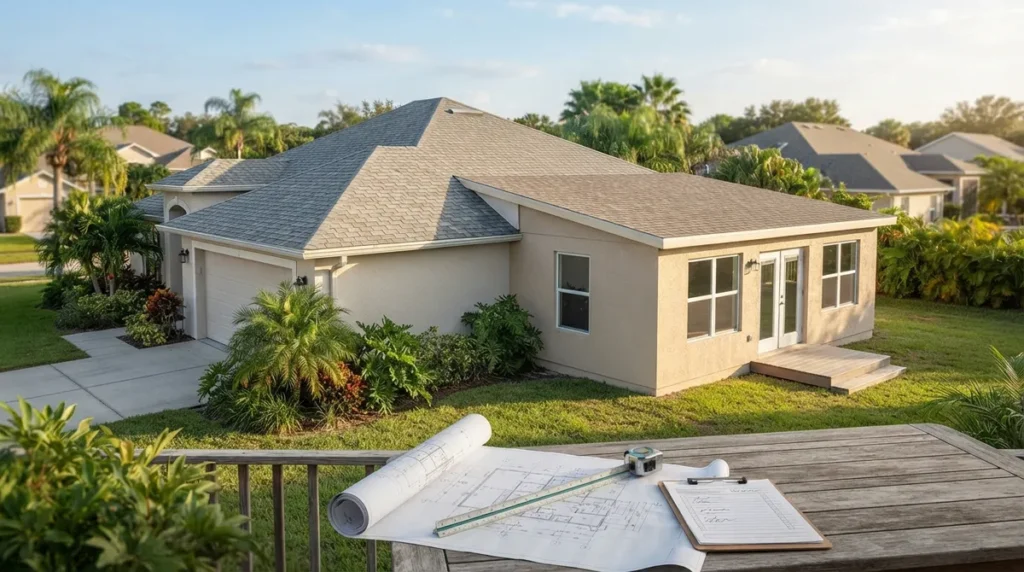
Key Takeaways
-
Most unpermitted additions in Florida can be legalized through after-the-fact permits by gathering proper documentation, obtaining signed sealed plans from a licensed engineer, and passing required inspections—removal is rarely necessary.
-
Unpermitted additions can block home sales, trigger insurance claim denials, create property tax discrepancies, and result in doubled permit fees plus civil penalties up to $500, making early legalization critical.
-
Zoning approval is separate from building code approval; an addition can be structurally compliant yet violate setback requirements, lot coverage limits, or floodplain rules, requiring both reviews during legalization.
-
Permitting rules vary significantly across Florida's 67 counties—confirm jurisdiction-specific requirements, fees, and penalty structures directly with your local building department before filing an after-the-fact permit.
-
The legalization process requires identifying the correct jurisdiction, checking permit history, gathering property documents, submitting the application with fees, exposing concealed work for inspection, and passing all required inspections.
-
Real estate transactions commonly stall due to unpermitted additions; agents and buyers should compare physical structures against official permit databases early to avoid financing delays, title issues, or price renegotiations at closing.
If you've ever fallen in love with a Florida home that has a sunroom, extra bedroom, or expanded garage that just doesn't quite match the county records, you're not alone. Unpermitted additions are one of the most common surprises in Florida real estate, renovation, and construction — and honestly, we get it. Life happens. Maybe a previous owner wanted to save time, maybe a handyman said "don't worry about it," or maybe nobody realized a permit was ever required in the first place. Whatever the reason, you're here because you want answers, and we're genuinely glad you found us.
At 1 Contractor Solutions, we spend our days helping homeowners, real estate professionals, and contractors across all 67 Florida counties untangle exactly this kind of situation. This guide will walk you through what an unpermitted addition really means under Florida law, why it matters more than you might think, and how the legalization process actually works. Grab a coffee, get comfortable, and let's work through this together.
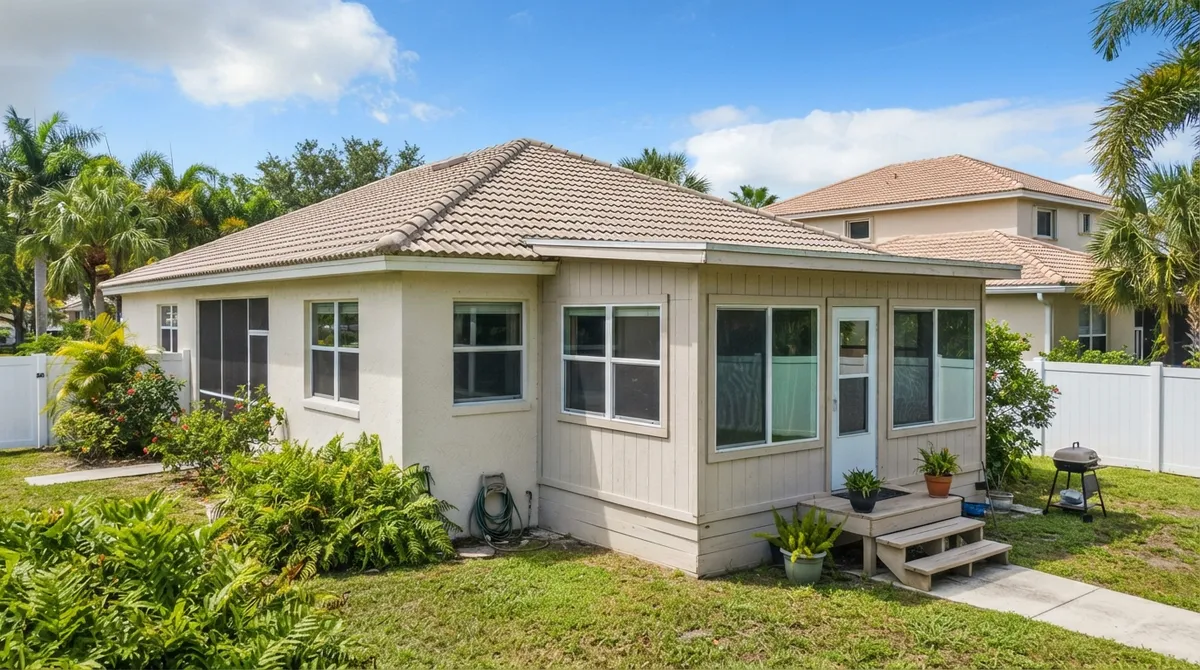
What Counts as an Unpermitted Addition in Florida
An unpermitted addition is any construction — a new room, an enclosed patio, a garage conversion, a second story, or even a substantial structural change — that was built without first obtaining approval from the local building department. Florida Statutes §553.79 is pretty clear on this: you generally cannot construct, alter, modify, or repair a building without a permit from the appropriate enforcing agency. A room addition almost always falls under that requirement.
Here's the part that trips people up: permitting in Florida isn't handled by one central office. It's administered locally, which means the rules, fees, and paperwork can look completely different depending on whether you're in Hillsborough County, Pinellas County, or Manatee County. That's why so many owners get confused about who to even call first.
Common Examples of Unpermitted Additions
- Enclosed lanais or patios converted into livable square footage
- Garage conversions turned into bedrooms, offices, or in-law suites
- Second-story additions built without engineering review
- Extended kitchens or bathrooms that involved plumbing or electrical work
- Detached structures like sheds, workshops, or guest houses over the size threshold
- Carports or covered parking areas enclosed without updated plans
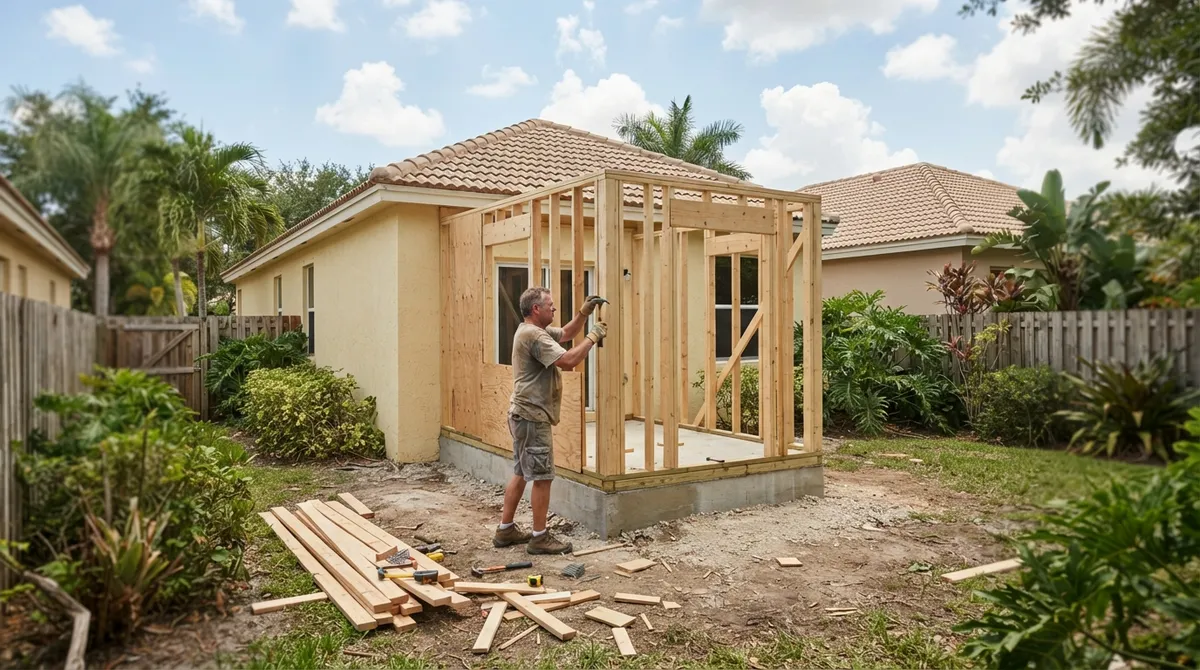
Why Unpermitted Work Happens So Often in Florida
Florida's warm climate, active DIY culture, and steady stream of property turnover create the perfect conditions for skipped permits. Some owners assume small additions don't need approval. Others hire a contractor who quietly skips the paperwork to save time. And in older homes, additions built decades ago sometimes predate current digital permit records entirely, making them appear "unpermitted" even if approvals once existed on paper.
Whatever the backstory, the fix usually comes down to the same process: research, documentation, design review, and inspection. That's exactly where a dedicated permitting partner becomes valuable, especially one that already understands the quirks of your specific Florida jurisdiction.
The Real Risks of Leaving an Addition Unpermitted
We're not here to scare you, but we do want to be honest, because that's how good relationships work. An unpermitted addition can quietly cause problems long after construction wraps up.
Impacts You Might Not Expect
| Area Affected | Potential Consequence |
|---|---|
| Home Sale or Closing | Buyers or lenders may require the addition to be legalized before closing |
| Homeowners Insurance | Claims tied to unpermitted square footage may be denied or reduced |
| Property Taxes | Assessed value may not reflect the addition, creating discrepancies later |
| Future Renovations | New permit applications may be held up until old violations are resolved |
| Code Enforcement | Local authorities may issue fines or require corrective work |
According to the Florida Building Code, Section 109.4 allows enforcing authorities to charge an additional fee for work started before a permit was obtained — and while there's no single statewide amount, many jurisdictions commonly charge double the standard permit fee. Some cities go further: Orange City's building division notes that unpermitted work in progress may be stopped immediately, and Miramar's code compliance page states that starting work without an application can bring a civil penalty of up to $500 locally. The bottom line? Local rules really do vary, and confirming details with the correct building department matters.
How to Legalize an Unpermitted Addition Step by Step
The good news is that most unpermitted additions can be legalized through what's called an after-the-fact permit, sometimes referred to as a retroactive or legalization permit. It's not always simple, but it is very doable with the right documentation and guidance.
- Identify the correct jurisdiction. Confirm whether your property falls under a city building department or the county's permitting office. Our Building Department Lookup tool is a great starting point.
- Check the permit history. Use an Open Permit Search to see what's already on file, since sometimes an addition was partially permitted and just never closed out.
- Gather property documents. Most jurisdictions want a site plan or survey, dimensioned drawings, and proof of ownership.
- Get signed and sealed plans. Hillsborough County guidance, for example, states that additions generally require plans signed and sealed by a Florida-licensed architect or engineer — something our in-house Engineering team handles daily.
- Submit the after-the-fact application. This includes paying standard permit fees plus any applicable penalty fees.
- Expose or verify concealed work. Inspectors may need to see behind walls or under flooring to confirm structural, electrical, plumbing, and mechanical compliance.
- Pass all required inspections. Once everything checks out, the permit is closed and your property record is finally accurate.
Documents You'll Likely Need
- Property survey or site plan showing setbacks and easements
- Dimensioned construction drawings of the addition
- Structural details, especially for load-bearing changes
- Proof of flood zone compliance, if applicable
- Utility information for electrical, plumbing, or HVAC work
- Proof of property ownership
If any of this sounds overwhelming, take a breath — this is exactly the kind of process our team walks clients through every single week, whether it's a home in Tampa, a condo near St. Petersburg, or a family property in Bradenton.
Zoning Approval vs. Building Code Approval
Here's something many homeowners don't realize until it's already a problem: passing building code doesn't automatically mean you're in the clear. Zoning approval is a completely separate hurdle. An addition can be structurally perfect and still violate setback requirements, lot coverage limits, floodplain rules, or historic district restrictions.
This is why a proper after-the-fact permit application often includes both a building review and a zoning review. Skipping this step is one of the most common reasons legalization attempts stall out midway through the process.
Will You Have to Remove or Rebuild Part of the Addition
This is usually the question that keeps people up at night, so let's address it directly. If concealed work — like framing, wiring, or plumbing — can't be verified without opening up walls, the local building official may require it to be exposed for inspection. If the work doesn't meet current structural, electrical, fire-safety, or energy code requirements, corrective construction may be necessary. In rare cases, if the addition truly cannot be brought into compliance, removal может be required.
The encouraging news is that most additions can be corrected without full demolition. It usually comes down to updating specific components, adding proper documentation, or making minor adjustments identified during inspection.
How Unpermitted Additions Affect Real Estate Transactions
If you're a real estate agent, investor, or buyer, this section is especially for you. An unpermitted addition can absolutely affect a sale. Lenders may pause financing, title companies may flag it during closing, and buyers may request price adjustments or repairs. We regularly support agents through Realtor Closing Support, helping identify permit gaps early so deals don't fall apart at the finish line.
It's smart practice to compare the physical structure against the official permit database before listing or purchasing a property. Catching an unpermitted addition early — rather than during underwriting — saves everyone time, money, and stress.
Who Should Handle Your After-the-Fact Permit
You technically can attempt this process yourself, but most owners find it faster and far less stressful to bring in professionals who do this daily. A qualified permitting partner can pull the permit history, coordinate a licensed engineer, prepare sealed drawings, file the after-the-fact application, and manage every round of reviewer comments until final approval.
Why In-House Engineering Matters
When a reviewer flags an issue with your after-the-fact submission, you don't want to be stuck waiting on a third-party consultant to call back. Because our engineering and drafting teams work in house, corrections happen quickly, keeping your project moving instead of stuck in a queue. This is especially valuable for Structural Engineering reviews tied to additions, where load calculations and framing details are heavily scrutinized.
For contractors managing multiple properties or solar companies coordinating structural documentation for rooftop systems, having one team handle both drafting and filing significantly reduces back-and-forth delays. If you'd like a clearer picture of your options, we invite you to get a free quote and talk through your specific situation.
A Quick Look at Local Variation
| Jurisdiction Example | Notable Detail |
|---|---|
| Hillsborough County | Notice of Commencement typically required for projects valued at $2,500+ |
| Miramar | Civil penalty up to $500 for starting work without a permit |
| Orange City | Work may be stopped immediately; penalty often twice the permit fee |
Because every city and county sets its own specifics, it's always worth confirming current requirements directly with the local building official — or letting a permitting team that already works across Broward County, Miami-Dade County, and dozens of other jurisdictions handle that legwork for you.
Bringing Your Florida Property Back Into Compliance
Legalizing an unpermitted addition isn't about punishment — it's about protecting your investment, your safety, and your peace of mind. Whether you're a homeowner who just discovered a surprise during a refinance, a realtor trying to save a closing, or a contractor picking up where someone else left off, there's a clear path forward.
We've helped thousands of Florida property owners work through exactly this process, and we'd genuinely love to help you too. You can also visit us on Google — 1 Contractor Solutions to see how we've supported homeowners and contractors across the state. Feel free to follow us on LinkedIn or follow us on Facebook for updates on Florida permitting rules as they evolve.
Ready to Legalize Your Addition
Unpermitted additions don't have to feel overwhelming, and you don't have to figure this out alone. Our team handles everything from research and design to filing and final inspection, so you can move forward with confidence instead of confusion. When you're ready to take the next step, get a free quote and let's get your Florida property properly, permanently permitted.
FAQs
How do I legalize an unpermitted room addition in Florida?
You'll typically need to research your permit history, gather site plans and construction drawings, get signed and sealed plans from a licensed engineer, and file an after-the-fact permit application with your local building department. Once fees are paid and inspections pass, the addition becomes officially legalized — and we're always happy to guide you through each step!
Can I sell a Florida house with an unpermitted addition?
You can technically sell it, but many lenders, title companies, and buyers will ask for the issue to be resolved before closing. Getting ahead of it early with an after-the-fact permit often saves the sale from last-minute delays or price renegotiations.
How much does an after-the-fact permit cost in Florida?
Costs vary by jurisdiction, but many areas charge double the standard permit fee as a penalty, per Florida Building Code Section 109.4. Some cities have their own separate civil penalties too, so it's best to confirm exact numbers with your local building department or a permitting professional.
Will I have to remove an unpermitted addition if it fails inspection?
Not necessarily! Most additions can be corrected through updates to specific structural, electrical, or plumbing components rather than full removal. Removal is typically only required when the work truly can't be brought into compliance, which is less common than people fear.
What documents are required to permit an existing addition in Florida?
You'll generally need a site plan or survey, dimensioned drawings, structural details, proof of ownership, and sometimes flood zone or utility information. Requirements shift slightly by county, so double-checking with your local office (or a permitting partner who already knows the rules) makes life much easier.
We do this work every day across all 67 Florida counties. Call (866) 314-6931 and we will tell you what your situation actually requires — including when you do not need us.
Related services
Permit Facilitation & Filing
You have a crew scheduled, a client asking for dates, and a permit sitting somewhere in a queue you cannot see. We file it, w…
See the servicePlan Review Coordination
A permit in plan review is not one queue. On a commercial project it can be six queues, each with its own reviewer, its own c…
See the serviceReady to get your permit moving?
One call tells you which jurisdiction controls your project, what it will take, and what it will cost. Most of the time we can scope it on the phone.