
Blog
Where Can I Get After-the-Fact Permitting in Florida?
Wondering where to get after-the-fact permitting in Florida? Learn who issues it, how the process works, and how a permitting service can help in 2026.
Key Takeaways
-
After-the-fact permits in Florida are issued by the local city or county building department with jurisdiction over your property, not by a single statewide office.
-
Confirm which jurisdiction covers your address first by checking your property tax or parcel record, since neighbors near city lines can fall under different authorities.
-
An after-the-fact application does not automatically legalize work; the local authority may approve it, require corrections or engineering documents, or require removal.
-
Paying a fee alone will not resolve unpermitted work, because inspections, corrections, or documentation may still be required before approval.
-
A permitting service can prepare, file, and track your application, but only the local building official can approve the permit or guarantee the outcome.
-
Submitting a complete package the first time, including as-built drawings and sealed engineering when structural compliance must be shown, is the best way to avoid stalled reviews.
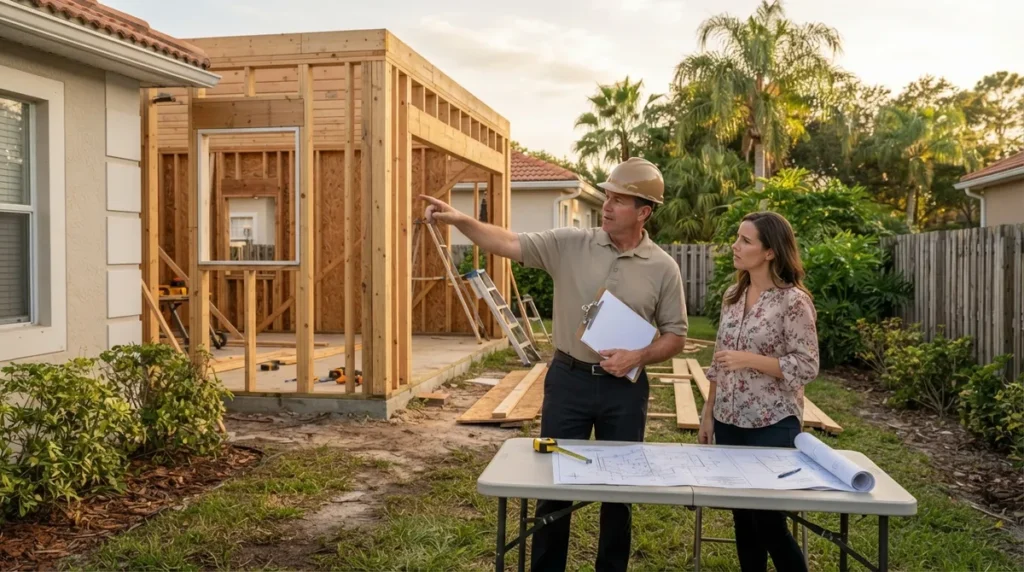
So you just found out that a deck, a roof, a remodel, or a solar array on your Florida property was never permitted. First, take a breath. You are far from alone, and there is a clear path forward. The big question most people ask is simple: where can I get after the fact permitting in Florida?
Here is the short answer. After-the-fact permitting comes from the local building department that has jurisdiction over your property. That might be a city or a county, depending on the address. There is no single statewide office that issues these permits. A Florida permitting service can manage the process for you, but only the local building official can approve it.
In this guide, we will walk through who handles it, how to confirm your jurisdiction, what the process usually looks like, and how to avoid the mistakes that slow people down. Whether you are a homeowner, a general contractor, a solar installer, or a real estate professional, you will find practical, friendly guidance here.
The Short Answer: Your Local Building Department
In Florida, building permits are administered locally. That means an after-the-fact permit request goes to the city or county building department (or code-enforcement agency) with authority over the property. Florida Building Code section 105.1 generally requires a permit before regulated construction, alteration, repair, demolition, or installation of regulated building systems. When that step was skipped, the local authority is the one who reviews the finished work and decides what happens next.
It helps to know that an after-the-fact application does not automatically legalize anything. The local authority reviews the completed work against the applicable code. Depending on what they find, they may approve it, require corrections, ask for engineering documentation, or require removal.
City or County: Who Actually Has Jurisdiction?
This is where many people get tripped up. Two neighbors on the same street can sometimes fall under different jurisdictions, especially near city lines. Before you apply anywhere, confirm who controls your address.
- Check your property tax record or parcel information for the municipality listed.
- Call the city and county building departments and ask which one covers your address.
- Use a lookup tool, like our building department lookup, to narrow it down quickly.
- Ask a permitting professional who files in that area regularly.
If you want a deeper explanation, our article on which Florida jurisdiction reviews my project breaks it down in plain language.
Where to Get After-the-Fact Permitting: Your Main Options
There are really three paths people take. Each one starts at the same place, the local authority, but the level of help differs.
| Option | What It Means | Best For |
|---|---|---|
| Apply directly with the local building department | You contact the city or county, submit the application, plans, and documents yourself | Simple, small jobs where you are comfortable with the paperwork |
| Hire a licensed contractor | A Florida-licensed contractor files and stands behind the work | Projects where licensed trade work is required |
| Use a Florida permitting service | A team identifies the jurisdiction, prepares plans, files, tracks, and handles reviewer comments | Complex, urgent, or multi-county projects |
Applying Directly
You can absolutely walk into (or log into) your local building department's portal and start the process. Expect to disclose that the work is already complete. The department will tell you what it needs. It is a fair route when the scope is small and the work is easy to verify.
Working Through a Permitting Service
A permitting service does not issue permits. What it does is take the heavy lifting off your plate. That includes finding the authority having jurisdiction, assembling and submitting applications and plans, coordinating licensed contractors or design professionals, and tracking inspections. Think of it as hiring a guide who knows the trail.
At 1 Contractor Solutions, we handle after-the-fact and expired permits across all 67 Florida counties, with drafting and engineering done in house so reviewer comments get fixed quickly.
How the After-the-Fact Process Usually Works
Every jurisdiction has its own procedures, but most follow a similar rhythm. Here is a typical flow:
- Confirm jurisdiction. Identify whether the city or county permits your address.
- Gather facts about the work. Document what was built, when, and by whom, if known.
- Prepare plans and documentation. This often includes as-built drawings and, when needed, engineer letters.
- Submit the application. File with the local building department and disclose that the work is already complete.
- Respond to plan review comments. Reviewers may ask for more detail or corrections.
- Schedule inspections. Inspectors verify the completed work, which can sometimes require opening finishes to see concealed components.
- Correct or remove noncompliant work. If something does not meet code, it must be fixed or removed.
- Close out the permit. Final approval closes the file.
For example, the City of Sunny Isles Beach states that owners must obtain an after-the-fact permit for unpermitted work. If plans and construction comply, the permit and inspections proceed. Noncompliant work must be corrected or removed under the applicable process. Other jurisdictions have their own wording, so always check locally.
What Documents Will You Likely Need?
The building department determines the exact submittal list, but most after-the-fact applications involve a familiar set of items.
- The jurisdiction's permit application
- Plans or drawings showing the existing work, often as-built drawings
- Contractor information, where applicable
- Engineering documentation or an engineer letter when structural or system compliance must be shown
- Site plans or surveys for exterior additions, fences, pools, or enclosures
- Product approvals for items like windows, doors, or roofing materials
If your project involves structural elements, a sealed document from a licensed professional is often the difference between a smooth review and a stalled one. You can learn more in our guide on whether a sealed drawing is required for after-the-fact permits.
Does Paying a Fee Make the Problem Go Away?
Not quite, and this is a common misunderstanding. Do not assume a permit can be issued solely by paying a fee. The local authority may require inspections of the finished work, corrections, engineering or other documentation, or removal of work that cannot be shown to comply.
Fees, penalties, and enforcement consequences are set and administered locally, so they vary by jurisdiction and circumstances. The available public sources do not establish one statewide after-the-fact fee, penalty amount, or approval rate. The best move is to contact the building department directly for its current fee schedule and any code-enforcement case requirements. Our breakdown of after-the-fact permit costs in Florida can help you plan a realistic budget.
What Can Go Differently Depending on Your Situation
Different readers face different challenges. Here is how it often plays out.
| If You Are A... | Common Situation | Helpful Next Step |
|---|---|---|
| Homeowner | Bought a home with an unpermitted addition or pool cage | Confirm jurisdiction, gather documents, request local requirements |
| General contractor | Inherited a job where a prior trade skipped permits | Coordinate plans, engineering, and inspections under your license |
| Solar company | Installed systems without a final permit | Prepare code-compliant structural and electrical documentation |
| Real estate professional | Closing delayed by an open or missing permit | Research permit history and clear holds before the closing date |
If a closing is on the line, our guide on how to clear a permit hold before closing shows how timing and documentation work together. For a quick look at open items on a property, try the open permit search tool.
Do You Need a Licensed Contractor or Engineer?
Sometimes yes. Whether the work requires a Florida-licensed contractor or design professional depends on the scope and the jurisdiction. Electrical, plumbing, mechanical, roofing, and structural work often carries licensing requirements. If concealed work cannot be verified by looking at it, an inspector may ask for destructive testing or for finishes to be opened.
When structural questions come up, an in-house engineering team helps a lot. Our structural engineering and MEP engineering departments prepare sealed documents so you are not waiting on an outside consultant to call someone back.
How to Choose a Florida Permitting Service Wisely
Not every service is the same, so ask a few questions before you hire anyone.
- What exactly is included in the scope of work?
- Do they hold the right licenses, or work with licensed professionals?
- Do they understand the jurisdiction where your property sits?
- Can they handle drafting and engineering, or will they outsource it?
- How do they communicate while the file is under review?
Remember that a permitting service cannot issue the permit or guarantee approval. The local building official makes those decisions. A good partner will be upfront about that and focus on preparing a clean, complete submittal. If you want to compare approaches, see who to hire to legalize an after-the-fact permit.
Timing: How Long Will It Take?
Timelines depend on the jurisdiction, the complexity of the work, and how complete your submittal is. Florida Statutes section 553.792 sets application-processing timelines for specified permit applications, including a notice about missing information within five business days for certain applications. Whether that framework applies depends on the application and statutory conditions, so confirm with the local department.
The best way to save time is to submit a complete package the first time. Missing documents, unclear drawings, and unanswered reviewer comments are the usual reasons files stall. For a general sense of timing, read how long a building permit takes in Florida.
Local Knowledge Matters Across Florida
Procedures in Tampa are not identical to those in Miami, Orlando, or Jacksonville. If your project sits in a larger metro, local experience pays off. We regularly work in places like Hillsborough County, Miami-Dade County, Broward County, and Orange County, and we have filed in more than 400 municipalities statewide.
You can also see what other clients have shared. Feel free to visit us on Google — 1 Contractor Solutions to read reviews, and follow us on LinkedIn or follow us on Facebook for Florida permitting updates. For official background on state building requirements, the 2026 Florida Statutes, section 553.79 is a good place to start.
A Friendly Reminder About Staying Ahead of Problems
If you received a notice of violation or a stop work order, speed matters. Responding promptly and professionally often keeps a small issue from becoming a bigger one. Our urgent permit rescue team handles denials, stop work orders, and closings held up by permit problems. If you are dealing with a violation, our code compliance violations page explains how we help.
Ready to Get Started?
Finding out where to get after-the-fact permitting in Florida really comes down to one thing: identifying the right local building department and presenting a complete, code-focused submittal. You do not have to figure it all out alone. If you would like a team that responds within 30 minutes, answers 24/7, and keeps drafting and engineering in house, we would love to help.
Reach out today and get a free quote for your after-the-fact permit project anywhere in Florida.
FAQs
Where do I apply for an after-the-fact building permit in Florida?
You apply with the city or county building department that has jurisdiction over your property. There is no single statewide office, so confirm your jurisdiction first. A Florida permitting service can help you find the right authority and file the application.
Can unpermitted work pass inspection without being opened up?
Sometimes, but not always. If work is concealed, the inspector may ask for finishes to be opened so they can verify compliance. Each building department decides what it needs to see.
What happens if the unpermitted work does not meet the Florida Building Code?
The local authority can require corrections, additional engineering or documentation, or removal of the work. An after-the-fact permit does not automatically legalize noncompliant construction. Working with a team that has engineering in house can help you find the fastest compliant fix.
Can a Florida permitting service apply for an after-the-fact permit on my behalf?
Yes, a permitting service can prepare, submit, and track the application and coordinate plans and inspections. It cannot issue the permit or guarantee approval, because only the local building official can do that. Always confirm the scope and licensing before you hire.
How much does an after-the-fact permit cost in Florida?
There is no single statewide fee or penalty amount. Fees and enforcement consequences are set locally and vary by jurisdiction and circumstances. Contact your building department for its current after-the-fact fee schedule.
We do this work every day across all 67 Florida counties. Call (866) 314-6931 and we will tell you what your situation actually requires — including when you do not need us.
Related services
Permit Facilitation & Filing
You have a crew scheduled, a client asking for dates, and a permit sitting somewhere in a queue you cannot see. We file it, w…
See the servicePlan Review Coordination
A permit in plan review is not one queue. On a commercial project it can be six queues, each with its own reviewer, its own c…
See the serviceReady to get your permit moving?
One call tells you which jurisdiction controls your project, what it will take, and what it will cost. Most of the time we can scope it on the phone.