
Blog
What Should Florida Homeowners Know About After-the-Fact Permits?
Found unpermitted work on your Florida home? Learn how after-the-fact permitting works, what it costs, and how to get approved with less stress.
Key Takeaways
-
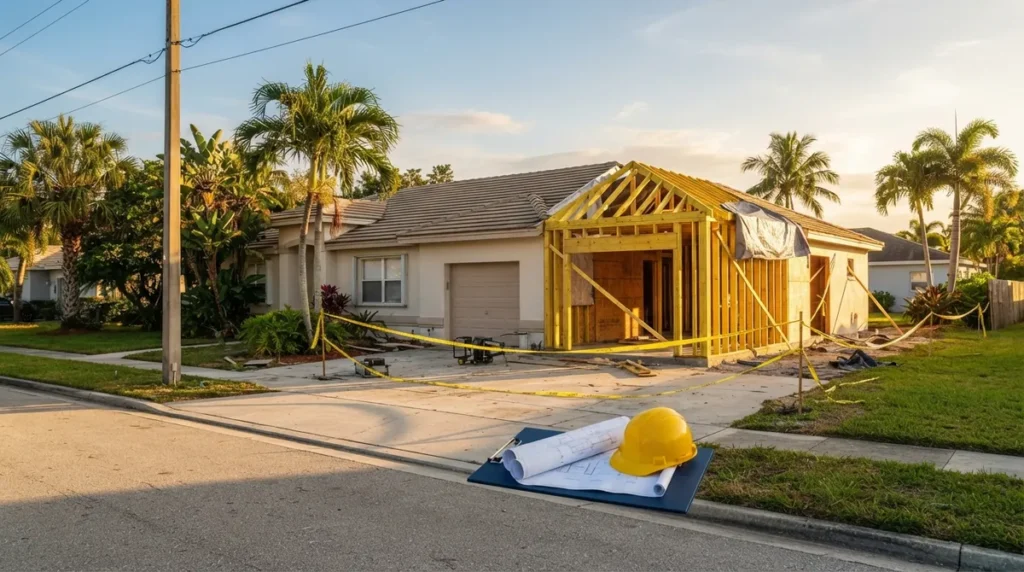
Stop any ongoing unpermitted work immediately, since continuing can raise costs and invite citations; Hillsborough County cites fines of up to $500 per violation for continued work.
-
Filing an after-the-fact permit does not guarantee approval; the building department still requires proof the work meets the Florida Building Code, which may include plans, inspections, and corrections.
-
Confirm which jurisdiction controls your property (city, county, or other agency) before filing, since filing with the wrong office is a common cause of delays, especially near city lines.
-
Prepare a complete first submittal with as-built drawings, product approvals, contractor information, and engineering where needed, since incomplete packages often bounce back with reviewer comments.
-
Costs vary by locality: some jurisdictions, like Miami, charge two times the permit fee plus a base fee for work started without a permit, so check your local fee schedule early.
-
Resolve unpermitted work before closing a sale, refinancing, or filing an insurance claim, since buyers, lenders, and insurers commonly flag missing permits and it is smoother to address upfront.
Picture this: you're selling your home, and the buyer's inspector spots a patio enclosure, a bathroom remodel, or a new roof that has no permit on file. Or maybe a neighbor mentioned it to the city. Or perhaps you simply bought the house and inherited somebody else's shortcut. Your stomach drops, and you start wondering what happens next.
Take a breath. You are far from alone, and there is a path forward. After the fact permitting for homeowners in Florida is the process of applying for a permit once work has already started or been completed without one. It is not a magic eraser, and it is not automatic approval. But it is a well-worn road, and homeowners walk it every single day across all 67 counties.
In this guide, we'll walk through what an after-the-fact permit actually is, how the process works, what it can cost, and how to avoid the mistakes that slow people down. We'll keep it friendly and practical, because this situation is stressful enough already.
What Is an After-the-Fact Permit in Florida?
An after-the-fact permit (often shortened to ATF) is a permit application filed after construction, alteration, or repair work has begun or finished without the required permit. Under Florida Statutes §553.79, covered building work generally must be permitted before it begins. When that step gets skipped, the local building department typically requires the owner to bring the work into the system.
Here is the part many homeowners miss: getting the permit does not mean the work is automatically accepted. The building department still needs proof that the work meets the Florida Building Code. That can mean plans, as-built documentation, inspections, and sometimes corrections.
Why does the permit matter if the work looks fine?
A permit is the paper trail showing that a qualified inspector confirmed the work is safe and code-compliant. Without it, nobody can verify what is behind the walls, under the slab, or above the ceiling. That uncertainty is exactly what buyers, lenders, and insurers worry about.
Why Unpermitted Work Becomes a Problem
Unpermitted work tends to stay quiet for years, then surface at the worst moment. Common triggers include:
- A home sale or closing when a buyer's inspector or title review finds missing permits
- An insurance claim where the carrier asks for permit records
- Refinancing or a HELOC where the lender or appraiser notices an addition
- A code enforcement complaint from a neighbor or an inspector driving by
- A new permit application that reveals earlier unpermitted work on the same property
- Flood insurance compliance in floodplain areas after storm repairs
Pinellas County, for example, has noted that after-the-fact permits may be needed for completed storm repairs in certain floodplain areas, tying compliance to eligibility for flood-related benefits. Details like that vary by property and program, which is why checking locally matters.
Step-by-Step: How After-the-Fact Permitting Works
Every jurisdiction does things a little differently, but the general flow looks like this:
- Stop any ongoing work. Hillsborough County, for instance, tells owners to stop work and contact Building Services about an after-the-fact permit, warning that continued work can raise costs and lead to citations.
- Identify the right building department. Your property's location decides whether the city, the county, or another agency has authority. Near city lines this is not always obvious, so confirm before you file. Our building department lookup tool can help you sort it out.
- Gather the facts. The agency will want to know what was built, when, who did it, and whether the work is still visible and accessible.
- Prepare the submittal. Depending on the project, this may include an application, plans or as-built drawings, product approvals, contractor information, engineering, and trade permits.
- Review and corrections. The plan reviewer may issue comments that need answers or revisions.
- Inspections. Inspectors verify the work. If it is covered, they may require exposure or other evidence.
- Corrections, if needed. Anything that does not meet code must be fixed before approval.
- Final approval and closeout. Once inspections pass, the permit can be finaled, and you have your paper trail.
What Documents Will You Likely Need?
The local agency decides the actual requirements, but here is what commonly comes up:
| Document | Why It's Requested | Typical Projects |
|---|---|---|
| Permit application | Opens the official record for the work | All projects |
| As-built drawings or plans | Shows what was actually built and where | Additions, enclosures, remodels |
| Engineer letter or sealed drawings | Verifies structural or system compliance | Additions, roofs, walls, pool cages |
| Site plan or survey | Confirms setbacks and placement | Sheds, additions, walls, pools |
| Product approvals | Confirms windows, doors, or roofing meet Florida requirements | Roofs, impact windows, doors |
| Contractor information | Identifies who performed or will correct the work | Most projects |
| Trade permits | Covers electrical, plumbing, or mechanical portions | Remodels, additions, generators |
If you are not sure what applies to your situation, our engineer letter services and structural engineering team can tell you before you spend a dollar on the wrong paperwork.
Will an Inspector Make You Open Up Walls?
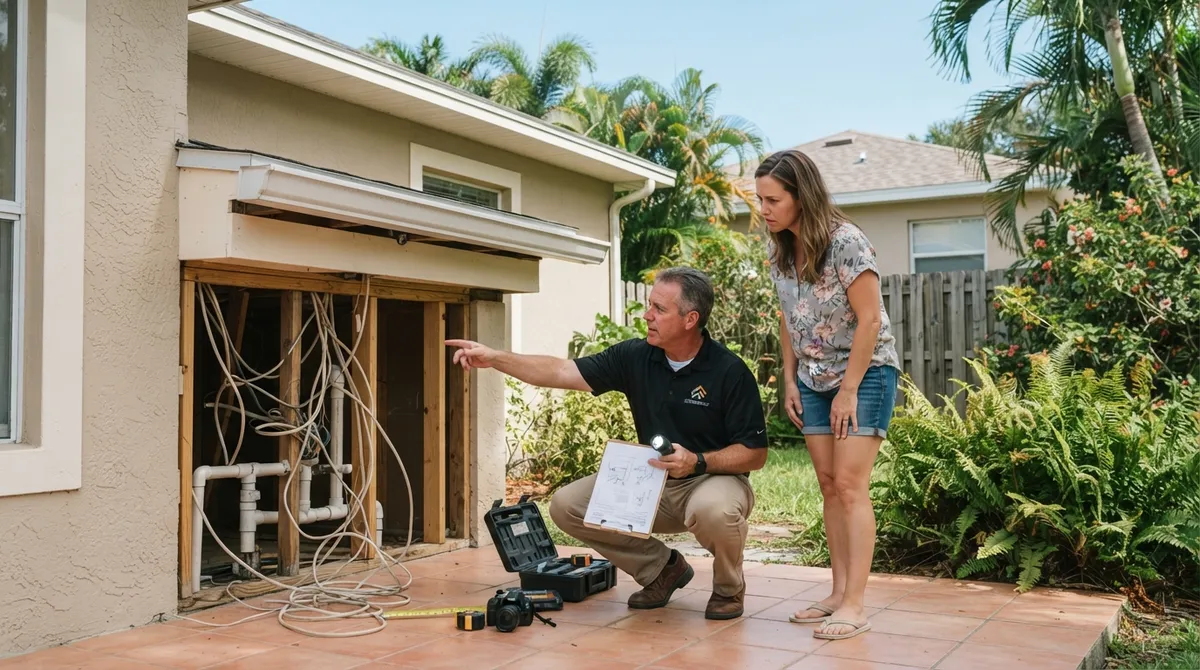
This is the question that keeps homeowners up at night, so let's address it honestly. Work hidden behind drywall, ceilings, flooring, or other finishes is hard to verify. An inspector may ask for finishes to be opened or for other evidence, such as photos, engineering documentation, or testing. If the work does not meet code, you may need to correct or rebuild it before approval.
That sounds scary, but many projects never need major demolition. A good file with clear photos, accurate drawings, and an engineer's evaluation often answers the inspector's questions without tearing anything apart. Every jurisdiction and every project is different, though, so no one can promise an outcome in advance.
How Much Do After-the-Fact Permits Cost?
There is no single statewide price. Costs and penalties are set locally, and they can include:
- Standard permit fees based on the project's scope or value
- Additional or multiplied fees for work started without a permit
- Plan preparation, drafting, or engineering costs
- Corrective construction if the work fails inspection
- Separate code enforcement penalties in some cases
Here are a few real examples of how much this varies:
| Jurisdiction Example | What Is Published | Important Note |
|---|---|---|
| Hillsborough County | Continued unpermitted work may draw a citation of up to $500 per violation | County-specific, not a statewide fine |
| Miami | Fee schedule lists two times the permit fee plus a base fee for work started without permits on homestead properties | Different treatment for non-homestead and commercial properties |
| Statewide | No single after-the-fact rate | Each city or county sets its own fees and enforcement |
For a deeper look at pricing, see our breakdown of after-the-fact permit costs in Florida.
Can You Pull the Permit Yourself as an Owner-Builder?
Sometimes, yes. Florida law allows owners to act as owner-builders in qualifying circumstances. Hillsborough County, for example, generally requires the property to be the owner's primary residence and an Owner Builder Disclosure Statement, and it notes a one-year restriction on selling after the work is completed. Eligibility and obligations vary, so confirm with your agency before assuming this route works for you.
If you are weighing it, read about who can pull a permit in Florida and our owner-builder permit services.
What about the small-project exemption?
The Florida Statutes describe a permit exemption for certain work valued under $7,500 on an owner's single-family dwelling, subject to conditions that include a written request and supporting documentation. Please do not treat this as a blanket pass. Verify the current statute, whether your project qualifies, and your local process before relying on it.
Common Projects That End Up in the After-the-Fact Process
Some projects show up again and again. If yours is on this list, you are in good company:
- Roof replacements, especially after storm seasons (see our guide to unpermitted roofs in Florida)
- Screen enclosures, lanais, and patio covers
- Garage conversions and room additions
- Kitchen and bathroom remodels with electrical or plumbing changes
- Pools, pool cages, and retaining walls
- Impact windows and doors
- Generators and solar installations
- Sheds, fences, and accessory structures
Selling, Refinancing, or Insuring a Home With Unpermitted Work
Unpermitted work can complicate property sales, insurance, refinancing, and flood-insurance compliance. These consequences depend on the property, the work, and the lender or carrier involved.
If you are mid-sale, timing is everything. Resolving a permit issue before closing is usually smoother than negotiating around it at the table. Our realtor and closing support exists for exactly this moment, and our urgent permit rescue service handles closings that are held up.
How Long Will It Take?
Honest answer: it depends. Florida Statutes §553.792 sets review timeframes for complete and sufficient applications, including five business days for specified permits on existing single-family dwellings when the work is valued below $15,000 and the local government performs the review. But those are application-review timeframes, not a guarantee that an after-the-fact project will be approved in that window.
What really drives your timeline:
- How complete and accurate your first submittal is
- Whether the work is accessible for inspection
- Whether corrections are needed
- How busy your local building department is
- Whether engineering or revised drawings are required
A clean, well-prepared package is the single best way to shorten the process. You may also find our overview of how long a building permit takes in Florida helpful.
Mistakes That Slow Homeowners Down
- Continuing the work after realizing there is no permit, which can raise costs and invite citations.
- Filing with the wrong agency because of city-line confusion.
- Submitting incomplete drawings that bounce back with comments.
- Assuming a small project is exempt without checking the statute and local rules.
- Ignoring a code enforcement notice and letting a hearing date arrive unprepared.
- Hiding the issue from a buyer, lender, or insurer instead of resolving it.
Getting Help With Your After-the-Fact Permit
You can absolutely work through this on your own, but it is a lot of moving parts: finding the right jurisdiction, preparing drawings, answering reviewer comments, scheduling inspections, and keeping everything moving. That is where an outsourced permitting department earns its keep.
1 Contractor Solutions handles after-the-fact and expired permits across all 67 Florida counties, and we take the files other people decline. We can prepare as-built drawings, provide in-house sealed engineering, file the application, track it, work every reviewer comment, and carry it through approval and closeout. We answer around the clock, and se habla español.
Want to see how we work with homeowners? Visit our homeowner page, read what customers say on Google, or follow us on Facebook and LinkedIn for Florida permitting tips. For official statute language, you can review Florida Statutes §553.79 directly.
Final Thoughts
Discovering unpermitted work is unsettling, but it is rarely the end of the world. The homeowners who do best are the ones who act early, stop any ongoing work, contact the right building department, and bring organized documentation. Costs and procedures vary by city and county, so local guidance always comes first.
If you would rather hand the paperwork, drawings, and back-and-forth to a team that does this every day, we are ready to help. Reach out to get a free quote and let us tell you which jurisdiction controls your property and what it will take to get permitted.
FAQs
What is an after-the-fact building permit in Florida?
It's a permit application filed after work has started or been completed without the required permit. It isn't automatic approval, so the building department may still require plans, inspections, and corrections before accepting the work.
Can a Florida building inspector make me open walls or remove finishes?
Yes, it's possible when work is hidden and can't otherwise be verified. Often a good file with photos, accurate drawings, and an engineer's evaluation can answer the inspector's questions, but requirements vary by project and jurisdiction.
How much does an after-the-fact permit cost in Florida?
There's no single statewide price, since fees and penalties are set locally. Some jurisdictions charge additional or multiplied permit fees, and you may also have drafting, engineering, or correction costs depending on the work.
Can I sell my Florida home if it has unpermitted work?
It's possible, but unpermitted work can complicate sales, financing, and insurance. Resolving the permit before closing is usually the smoother path, and a permitting team can help you move quickly.
Which Florida building department should I contact?
It depends on where your property sits, since a home may fall under a city, a county, or another local agency. Confirm the correct jurisdiction first, especially near city lines, so you don't file with the wrong office.
We do this work every day across all 67 Florida counties. Call (866) 314-6931 and we will tell you what your situation actually requires — including when you do not need us.
Related services
Permit Facilitation & Filing
You have a crew scheduled, a client asking for dates, and a permit sitting somewhere in a queue you cannot see. We file it, w…
See the servicePlan Review Coordination
A permit in plan review is not one queue. On a commercial project it can be six queues, each with its own reviewer, its own c…
See the serviceReady to get your permit moving?
One call tells you which jurisdiction controls your project, what it will take, and what it will cost. Most of the time we can scope it on the phone.