
Blog
Restaurant Permit in Port Charlotte, FL: 2026 Guide
Opening a restaurant in Port Charlotte takes county permits and a DBPR license. Learn the steps, order, and mistakes to avoid in 2026.
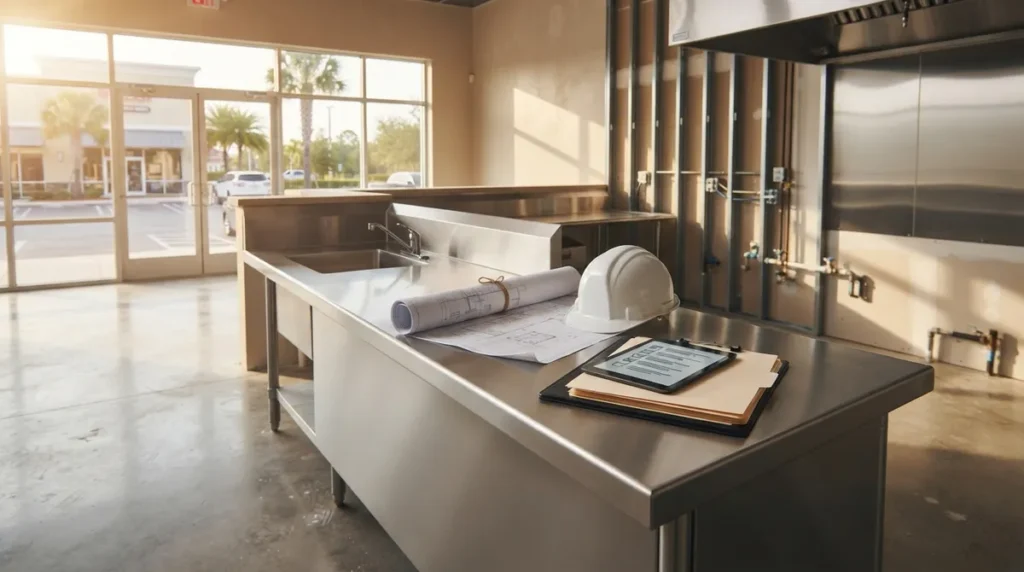
Key Takeaways
-
Restaurant opening in Port Charlotte requires two parallel tracks: Charlotte County approvals for zoning, building, and construction, and a Florida DBPR public food service license. Satisfying one does not replace the other.
-
Verify zoning, permit history, and open violations before signing a lease, since a restaurant use problem discovered after signing is expensive to fix.
-
DBPR generally requires plan review for newly built, converted, remodeled, or reopened food-service establishments closed 18+ months, and recommends approval before construction begins.
-
A takeover is not automatically paperwork-free: closure length, remodeling, menu, equipment, or concept changes can trigger DBPR plan review, and a new owner must obtain their own license.
-
DBPR licensing follows four steps: create an online account, complete plan review if required, apply and pay the fee, then schedule and pass the licensing inspection with building, electrical, fire, and plumbing approvals ready.
-
Submit complete drawings (scaled floor plan, proposed menu, sinks, hood suppression, extinguishers, dumpster location) and expect a 30-day online plan review target, leaving schedule buffer for comments.
Dreaming of a bustling dining room in Port Charlotte? Maybe it is a cozy bistro near the harbor, a taco counter off Tamiami Trail, or a family-style spot that locals fill every Friday night. Whatever the concept, there is one unglamorous truth every owner hits early: you cannot serve a single plate until the paperwork lines up. And the paperwork is not one permit. It is a small family of approvals handled by different agencies.
Getting a restaurant permit in Port Charlotte, FL usually means two tracks running side by side. The first is local: Charlotte County zoning, building, and construction approvals for the space itself. The second is state-level: a public food service license from the Florida Department of Business and Professional Regulation (DBPR), Division of Hotels and Restaurants. Miss one, and the other will not save you.
The good news? Once you see how the pieces fit, the process is very manageable. In this friendly 2026 guide, we will walk through who approves what, the order that saves you money, the documents to gather, and the mistakes that quietly add weeks to a timeline. Grab a coffee, and let's get you from lease to ribbon-cutting.
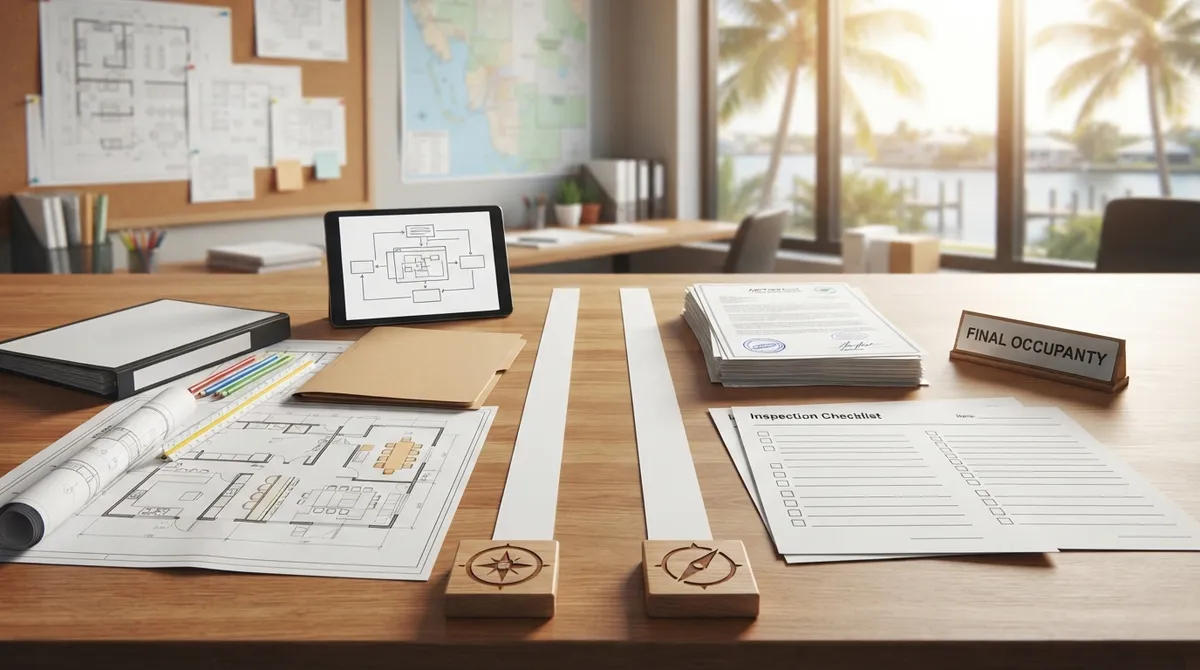
The Two Tracks of a Restaurant Permit in Port Charlotte, FL
Think of opening a restaurant like building and then licensing a small, very busy machine. The county cares whether the building is safe, properly zoned, and code compliant. The state cares whether the food operation is sanitary and set up correctly. They talk to each other, but neither one replaces the other.
DBPR itself makes this point clearly: plan approval from the state is not a substitute for local permits or other agency approvals. That is why DBPR advises applicants to contact local zoning, building, and occupational-license authorities before committing to a lease or starting construction.
| Track | Who Handles It | What It Covers |
|---|---|---|
| Local site and construction | Charlotte County Community Development | Zoning and land use, building permits, Florida Building Code compliance, trade permits |
| State food-service licensing | Florida DBPR, Division of Hotels and Restaurants | Plan review (when required), license application, licensing inspection |
| Other approvals (as applicable) | Fire, wastewater, local business tax offices | Fire safety, wastewater and plumbing, occupational or business tax receipts |
Because the requirements shift with zoning, scope of work, and your menu, confirm the current rules with Charlotte County and DBPR before you sign anything. A quick phone call now can save a painful change order later.
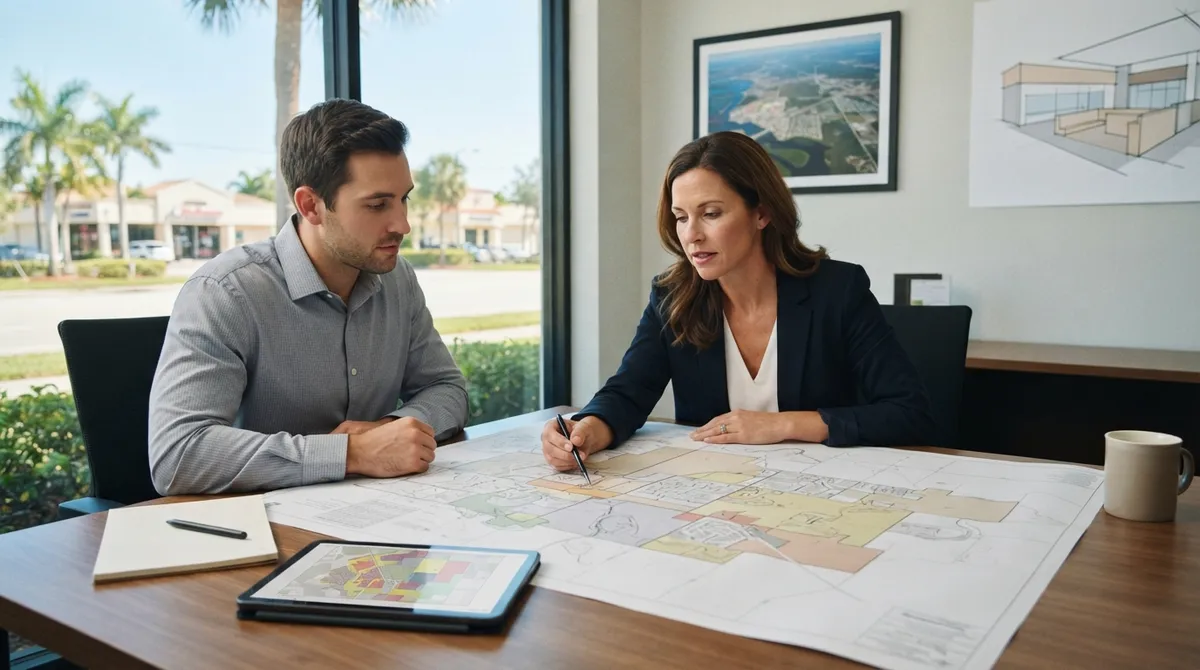
Step One: Check Zoning and Site Rules Before You Sign a Lease
Here is the friendliest advice in this entire article: verify the property first. A beautiful former retail space can still be the wrong spot if zoning does not allow restaurant use, or if parking, grease handling, or occupancy rules create surprises.
Charlotte County Community Development administers the county's land-development and building-construction regulations, along with the Florida Building Code. Its published contact is 941-743-1200, and the Port Charlotte office is at 18500 Murdock Circle, Port Charlotte, FL 33948.
Before committing to a space, ask these questions:
- Does the property's zoning allow a restaurant or food-service use?
- Was the space ever a restaurant, and if so, how long has it been closed?
- Will your plan require a change of use or a remodel?
- Are there open permits or past violations tied to the address?
- What utilities, wastewater, and fire protection are already in place?
That last open-permit question matters more than most owners expect. If you want a deeper look at how to research a property's permit history, our guide on how to do permit due diligence in Port Charlotte, FL walks through it step by step.
Step Two: Understand When DBPR Plan Review Is Required
Plan review is the state's chance to look at your layout before you build it. DBPR generally requires plan review for a food-service establishment that is newly built, converted from another use, remodeled, or reopened after being closed for at least 18 months. DBPR recommends getting plan approval before construction begins, because changing a finished kitchen is far costlier than changing a drawing.
Taking over an existing restaurant does not automatically wipe the slate clean, either. DBPR draws a distinction between a simple change of owner at an existing licensed location and a new or substantially changed establishment. Plan review may still apply depending on:
- How long the location has been closed
- Whether you are remodeling
- Changes to the menu or equipment
- A change in the operational concept
In other words, buying a turnkey spot is easier, but it is not always paperwork-free. When in doubt, ask DBPR directly before you finalize a purchase.
What a Plan-Review Submission Typically Includes
A clean submission is the fastest path through review. According to DBPR guidance, a typical package includes a scaled floor plan and a proposed menu. The application packet also calls for details such as sinks, fire extinguishers and any hood suppression system, and dumpster location. Always confirm the current checklist with DBPR and your local authorities.
| Item | Why Reviewers Want It |
|---|---|
| Scaled floor plan | Shows rooms, kitchen equipment, plumbing fixtures, and exits |
| Proposed menu | Determines food-handling needs and equipment |
| Sink and plumbing details | Confirms handwashing, prep, and warewashing capability |
| Fire extinguishers and hood suppression | Verifies fire-safety planning over cooking equipment |
| Dumpster location | Addresses sanitation and waste handling |
Here is a stat worth remembering: DBPR states that online plan-review applications can be expected to be reviewed within 30 days. That is a stated review expectation, not a promise about your total project timeline, so build a cushion into your schedule.
Step Three: Pull the Right Charlotte County Permits
With state plan review underway or approved, your construction scope drives the county permits. A simple cosmetic refresh looks very different from converting a retail shell into a full commercial kitchen. Depending on the work, you may need:
- A building permit for tenant improvements or a remodel
- Electrical permits for new panels, circuits, or equipment hookups
- Plumbing permits for grease interceptors, sinks, and fixtures
- Mechanical permits for hoods, exhaust, and HVAC
- Fire-related approvals for suppression and alarm systems
- Wastewater review, where applicable
Commercial kitchens add real complexity. Hoods, grease traps, gas lines, and dedicated electrical loads all need coordinated drawings. Our article on MEP engineering for permits in Port Charlotte covers the most common drawing mistakes that trigger reviewer comments.
Not sure how a permit service fits into the picture? Here is a helpful overview of what a building permit service in Port Charlotte does.
Step Four: Follow the DBPR Licensing Sequence
Once your plans and construction are on track, the state licensing path is pleasantly straightforward. DBPR's permanent food-service guide identifies four main steps.
- Create an online account with DBPR.
- Complete plan review when it is required for your situation.
- Apply for the license and pay the fee through the online system.
- Schedule and pass the licensing inspection.
A new owner of an existing restaurant must also obtain the required license before operating. Do not assume the previous owner's license transfers automatically with the keys.
When you are ready for the inspection, have proof of your applicable building, electrical, fire, and plumbing approvals available. DBPR specifically advises this, and showing up organized makes the whole day smoother.
The Smart Order of Operations
One of the biggest money-savers is simply doing things in the right sequence. Here is the order that tends to protect your budget and your sanity:
- Verify zoning and permit history before signing the lease.
- Confirm whether DBPR plan review applies to your space and scope.
- Prepare a scaled floor plan, equipment layout, and proposed menu.
- Submit for DBPR plan review and Charlotte County permit review in parallel where possible.
- Address reviewer comments quickly and completely.
- Build out under approved plans and keep inspections moving.
- Apply for your DBPR license, then schedule and pass the licensing inspection.
- Handle any local business tax or occupational requirements and your certificate-related approvals.
Speaking of certificates, many new restaurants also need a Certificate of Use or Certificate of Occupancy before opening. For the Port Charlotte side of that, read how to get a Certificate of Occupancy in Port Charlotte, and for the broader business-opening picture, see whether you need a Certificate of Use to open a business in Florida.
Common Mistakes That Delay a Restaurant Opening
After seeing plenty of restaurant projects, a few patterns show up again and again. The good news is that every one of them is avoidable.
- Signing the lease first. Zoning or use problems discovered after signing are expensive to fix.
- Skipping DBPR plan review. Building first and asking later can force costly rework.
- Assuming a takeover means no review. Closure length, remodeling, and menu changes can all trigger plan review.
- Incomplete drawings. Missing sinks, hood details, or exits invite comment letters and resubmittals.
- Forgetting the trades. Fire, plumbing, electrical, and wastewater approvals often run on their own tracks.
- Unpermitted remodel work. Past work done without permits can surface at inspection.
That last one deserves a gentle warning. If a prior tenant skipped permits on a kitchen buildout, it can become your problem fast. Our walkthrough on how to fix an unpermitted restaurant remodel in Florida explains the recovery path, and 9 mistakes to avoid with a Florida restaurant remodel can help you sidestep trouble before it starts.
Quick Reference: Key Contacts and Facts
| Topic | Detail |
|---|---|
| County office | Charlotte County Community Development, 18500 Murdock Circle, Port Charlotte, FL 33948 |
| County phone | 941-743-1200 |
| State agency | Florida DBPR, Division of Hotels and Restaurants |
| Plan review triggers | New build, conversion, remodel, or reopening after 18+ months closed |
| Stated online plan review expectation | Within 30 days |
| Licensing steps | Account, plan review if required, application and fee, licensing inspection |
For official forms and the most current requirements, review the DBPR guide to permanent food service licensing and the DBPR plan review page, and check in with Charlotte County Community Development for local requirements.
Where a Permitting Partner Helps
Here is the honest part. Plenty of owners do this on their own and succeed. But a restaurant project touches architecture, structural, and MEP drawings, two government systems, and a tight calendar where every week of delay costs rent. That is where a permitting partner earns their keep.
1 Contractor Solutions works as Florida's outsourced permitting department, and that includes Charlotte County. Our in-house drafting and engineering team prepares and reviews the plan sets, files the applications, tracks them, works every reviewer comment, and carries the project through approval and closeout. Because the drawings and engineering are handled in house, a reviewer's comment gets fixed instead of waiting on an outside consultant to call someone back. Our team can also handle small business CO, CU, and permitting and plan review coordination so nothing falls through the cracks.
Contractors, realtors, and owners across the region lean on us, and you can see what customers say when you visit us on Google — 1 Contractor Solutions. Our team also shares permitting updates when you follow us on LinkedIn, and our website marketing partner, Brain Buzz Marketing, helps keep our resources easy to find.
Ready to Open Your Doors?
Opening a restaurant is equal parts passion and paperwork, and you only need to bring the passion. Verify the property, understand when DBPR plan review applies, line up your Charlotte County permits, and follow the four-step licensing sequence. Do it in the right order and you will save money, avoid rework, and get to opening day sooner.
If you would rather hand the permit maze to people who live in it every day, we would love to help. Reach out and get a free quote for your Port Charlotte restaurant project, and let's get that open sign lit.
FAQs
What permits do I need to open a restaurant in Port Charlotte, Florida?
Most restaurants need Charlotte County zoning and building approvals for the space, plus a public food service license from Florida DBPR. Depending on your scope, you may also need fire, plumbing, electrical, wastewater, and local business tax approvals, so it is smart to confirm everything with the county and DBPR early.
When is DBPR plan review required for a Port Charlotte restaurant?
DBPR generally requires plan review when a food-service establishment is newly built, converted from another use, remodeled, or reopened after being closed for at least 18 months. Menu, equipment, or concept changes at an existing location can also trigger it, and getting approval before construction helps you avoid costly changes.
How do I apply for a Florida DBPR restaurant license?
The process has four main steps: create an online DBPR account, complete plan review if it applies, apply and pay for the license, then schedule and pass the licensing inspection. Keep your building, electrical, fire, and plumbing approvals handy for inspection day.
Do I need plan review if I am buying an existing restaurant?
Not always, but you should not assume it is waived. DBPR separates a simple change of owner at a licensed location from a new or substantially changed operation, and closure length, remodeling, or menu and equipment changes may require plan review. A new owner must also obtain the required license before operating.
How long does Florida restaurant plan review take?
DBPR states that online plan-review applications can be expected to be reviewed within 30 days. That is a review expectation rather than a guarantee for your whole project, so apply early and leave room for comments and resubmittals.
We do this work every day across all 67 Florida counties. Call (866) 314-6931 and we will tell you what your situation actually requires — including when you do not need us.
Related services
Permit Facilitation & Filing
You have a crew scheduled, a client asking for dates, and a permit sitting somewhere in a queue you cannot see. We file it, w…
See the servicePlan Review Coordination
A permit in plan review is not one queue. On a commercial project it can be six queues, each with its own reviewer, its own c…
See the serviceReady to get your permit moving?
One call tells you which jurisdiction controls your project, what it will take, and what it will cost. Most of the time we can scope it on the phone.