
Blog
Restaurant Permit in Naples, FL: 2026 Step-by-Step Guide
Opening a restaurant in Naples? Learn the zoning, DBPR, building, and business tax steps for a smooth, on-time opening in 2026.
Key Takeaways
-
Confirm whether your address is in the City of Naples or unincorporated Collier County before spending on drawings, since a Naples mailing address doesn't determine jurisdiction or which offices you file with.
-
Verify in writing that restaurant use is allowed at the site before signing a lease, since former retail or salon spaces may not automatically permit restaurant use.
-
Submit scaled plans to Florida DBPR for plan review before construction when a space is newly built, converted, remodeled, or reopened after being closed for a year or more.
-
State DBPR approval does not replace local building, fire, and utility permits, which are handled by separate departments and must be secured for any build-out.
-
Obtain the City of Naples annual business tax receipt before commencing business, plus a separate take-out receipt if applicable; indoor seat count sets the tax amount.
-
Check add-ons early: live entertainment may need a separate City Council-reviewed permit, and signs and outdoor dining often carry their own approvals.
Dreaming of serving your first plate of stone crab or fresh grouper in Naples? That's exciting, and we're cheering for you! But before the doors open, there's a stack of approvals to line up. A restaurant permit in Naples, FL isn't one single piece of paper. It's a handful of state, county, and city steps that all have to fit together.
The good news is that the path is very doable once you know the order. The trouble starts when owners sign a lease first, build second, and ask questions last. That's how a sweet little cafe turns into a pile of rejected plans and a delayed opening.
In this guide, we'll walk through each approval in plain language. You'll learn how to confirm your jurisdiction, what Florida's food-service regulator expects, which local permits may apply, and how to avoid the mistakes we see most often. Grab a coffee, and let's get you from empty space to open sign.
Why a Restaurant Permit in Naples, FL Takes More Than One Approval
Think of opening a restaurant like building a three-legged stool. If one leg is missing, the whole thing wobbles. In Naples, those legs are:
- Land use and zoning: Is a restaurant allowed at that address?
- Construction and safety: Do the build-out, fire, and utility approvals pass local review?
- State food-service licensing: Does Florida's regulator approve your layout and license your operation?
On top of that, a business tax receipt and a few add-ons (like live entertainment) may apply. Requirements and fees vary by location and project, so always verify current forms and charges with each agency before you file.
Step 1: Confirm Whether You're in the City of Naples or Collier County
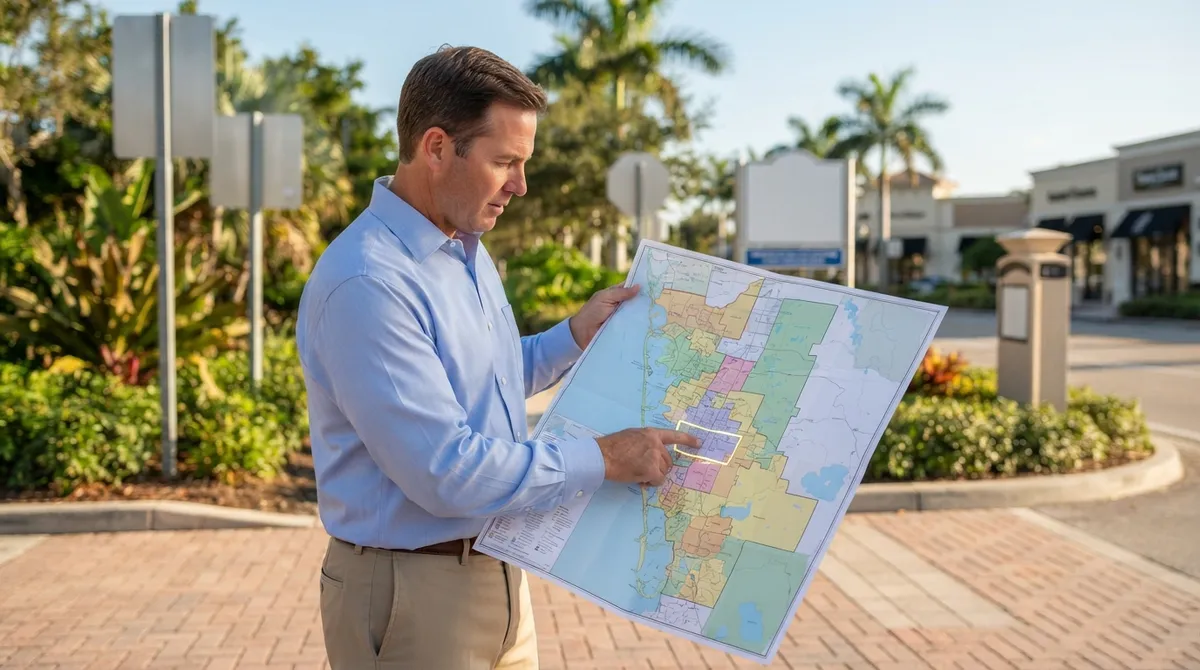
Here's a surprise that trips up plenty of new owners: "Naples, FL" can mean two different jurisdictions. Your address might sit inside the incorporated City of Naples, or it might be in unincorporated Collier County with a Naples mailing address.
Why does it matter? Because the permitting authority, zoning rules, and local requirements all depend on the parcel's actual jurisdiction. A mailing address can't tell you that. Confirm it first, before you spend a dime on drawings.
| Question | City of Naples | Unincorporated Collier County |
|---|---|---|
| Who confirms zoning? | City Planning Department | County planning and zoning staff |
| Local business tax receipt? | Annual City business tax receipt required | Verify county requirements for your parcel |
| Construction permits? | City building permitting | County building permitting |
| State food-service license? | Florida DBPR | Florida DBPR |
If you're unsure which side of the line you're on, that's a great moment to ask for help. Our team works across all 67 Florida counties and knows which jurisdiction actually controls a parcel, which isn't always obvious near city limits. You can also browse our Naples permitting page for local context.
Step 2: Verify Restaurant Use Is Allowed Before You Sign a Lease
This one deserves a big flashing sign: check zoning before you sign the lease. The City of Naples directs applicants to its Planning Department to confirm that restaurant use is allowed at a given site. Collier County sites need the same kind of check with county staff.
A space that used to be a retail shop or a salon might not automatically allow a restaurant. Parking counts, seating, outdoor dining, and even takeout can all come into play. Getting a written answer up front can save you months and thousands of dollars.
If you've already signed and discovered a problem, don't panic. It's fixable in many cases, and early conversations with the planning office go a long way. For commercial spaces, our Certificate of Use support can help you work through the use question the right way.
Step 3: Understand Florida DBPR Licensing and Plan Review
Florida's Department of Business and Professional Regulation (DBPR), Division of Hotels and Restaurants, licenses most restaurants and regulates restaurant food service. Collier County's health department directs restaurant operators to DBPR for these permits, so this is your state-level home base.
When DBPR Plan Review Is Required
A DBPR plan review is required when a food-service establishment is:
- Newly built
- Converted from another use
- Remodeled
- Reopened after being closed for at least one year
The state recommends submitting plans before construction or remodeling begins. That timing matters, because finding out your hand sink is in the wrong spot after the tile is down is nobody's idea of fun.
What DBPR Plan Materials Generally Include
Expect to provide scaled drawings that identify:
- Dining and kitchen areas
- Equipment layout
- Sinks, including handwashing and prep sinks
- Exits
- Fire-safety equipment
- Waste and grease arrangements
Clean, accurate drawings make review smoother. If you need them prepared, our architectural drafting team produces permit-ready sets, and sealed work comes from our in-house engineer.
A Quick Word on Fees and Timing
DBPR's food-service application instructions list a $50 application processing fee and a $150 plan-review fee, in addition to the applicable license fee. DBPR also recommends applying for a food-service license at least 30 days before beginning operations when plan review and licensing are filed separately. That's agency guidance, not a guaranteed processing time, and fees can change, so verify current forms and amounts before you file.
Step 4: Don't Forget Local Building, Fire, and Utility Approvals
Here's a point that catches people off guard: state plan approval does not replace local approvals. DBPR looks at food safety. Your local building department looks at construction. Those are two different conversations.
Depending on your scope, you may need:
- A commercial building permit for the build-out or renovation
- Electrical, plumbing, and mechanical permits
- Fire-safety review (suppression, hood systems, exits)
- Utility approvals, such as grease interceptor coordination
- Inspections at various stages of construction
The available guidance doesn't establish one universal permit list or a single processing time for every Naples-area project. Your scope, your building, and your jurisdiction drive the answer. That's why confirming requirements with the applicable building department before starting work is so important.
This is where a permit facilitator earns their keep. We handle permit facilitation and filing, track every application, and work through reviewer comments so you aren't stuck guessing what "see comment 14" means. Many projects also need coordinated MEP engineering for the kitchen's electrical, plumbing, and mechanical systems.
Step 5: Get Your Business Tax Receipt in the City of Naples
If you operate within City of Naples limits, you must obtain an annual City business tax receipt before commencing business. The city advises applicants to confirm zoning first and, where applicable, obtain required state credentials before applying.
City of Naples Restaurant Business Tax Amounts
The City lists restaurant business-tax amounts based on indoor seating:
| Indoor Seats | Listed Annual Business Tax |
|---|---|
| 1 to 50 | $57.89 |
| 51 to 100 | $86.82 |
| 101 to 200 | $115.76 |
| 201 or more | $144.70 |
Most restaurants also need a separate take-out-food business tax receipt. The City's published amounts are based on employee count:
| Employees | Listed Take-Out Food Tax |
|---|---|
| 1 to 15 | $57.89 |
| 16 to 30 | $86.82 |
| More than 30 | $115.76 |
Please remember these are business-tax charges, not the full cost of opening a restaurant. They don't include DBPR fees, building permit fees, or engineering costs. Rates can change, so confirm current figures with the city before applying.
Step 6: Check for Add-Ons Like Entertainment, Signs, and Outdoor Dining
Once the core approvals are mapped out, look at the extras that make your restaurant special:
- Live entertainment: In the City of Naples, restaurants offering live entertainment may need a separate entertainment permit. The city describes an application and City Council review process, so check with the Planning Department early.
- Signage: Exterior signs usually have their own permit and design rules.
- Outdoor dining: Patios and sidewalk seating can trigger zoning, building, and DBPR considerations.
- Takeout: As noted above, this often brings the separate business tax receipt.
- Grand opening events: Tents and special events may need their own approvals. See our event permit services for help.
The Restaurant Permit Process in Naples at a Glance
Here's the recommended order of operations, boiled down:
- Confirm jurisdiction: City of Naples or unincorporated Collier County.
- Verify zoning: Get written confirmation that restaurant use is allowed.
- Prepare plans: Scaled drawings showing kitchen, dining, equipment, sinks, exits, fire safety, and waste.
- Submit to DBPR: Plan review before construction, plus the food-service license application.
- Secure local permits: Building, fire, utility, and trade permits for the build-out.
- Complete inspections: Pass construction and fire inspections.
- Obtain business tax receipts: City receipts (and take-out receipt, if applicable).
- Add specialty permits: Entertainment, signs, outdoor dining as needed.
Notice how many of these steps happen before you ever pour a drink. Starting early and in the right order is the single best way to protect your opening date.
Common Mistakes That Delay a Naples Restaurant Opening
After helping owners across Florida, we see the same stumbling blocks again and again. Here are the big ones:
- Signing the lease before checking zoning. Use restrictions can stop a project cold.
- Assuming a Naples mailing address means City of Naples. The wrong jurisdiction means the wrong forms.
- Starting construction before DBPR plan review. Fixes after the build cost far more than fixes on paper.
- Treating state approval as the finish line. Local building and fire approvals are separate.
- Incomplete or unscaled drawings. Reviewers send these back, and each round adds time.
- Skipping the business tax receipt. It's required before you commence business in the city.
Already did some work without a permit? Take a breath. It happens more than you'd think, and there are ways to make it right. Our guide on how to fix an unpermitted restaurant remodel in Florida walks through the process, and our article on restaurant remodel mistakes can help you avoid the trouble in the first place.
Who Benefits From Professional Permitting Help?
Different people come to the table with different needs, and that's perfectly fine:
- General contractors juggling a tight build schedule benefit from reliable filing, tracking, and reviewer-comment handling.
- Architects, designers, and trades can outsource drafting, MEP and structural engineering, and permit administration without adding staff.
- Real estate professionals and investors use permitting research before buying a commercial space, so zoning surprises don't wreck a deal.
- First-time restaurateurs and property owners get a clear roadmap and a team who knows which office to call.
If you're a contractor, our page for general contractors explains how we plug into your workflow. If you're weighing a space for a client or an investment, our open permit search tool is a handy starting point for spotting issues before closing.
How 1 Contractor Solutions Helps With a Restaurant Permit in Naples, FL
We like to call ourselves Florida's outsourced permitting department. We're not a construction contractor. We're the team you call when the permit stands between you and a scheduled crew.
Here's what that looks like for a Naples restaurant project:
- We tell you which jurisdiction controls your address and what it will take.
- We prepare or review plans, with drafting and sealed engineering handled in-house by our own engineer.
- We file applications, track them, and work every reviewer comment through revisions and resubmittals.
- We can serve as a licensed private provider for plan review, so you aren't stuck waiting in a queue.
- We respond within 30 minutes, day or night, and se habla español.
You can also see what other owners say when you visit us on Google — 1 Contractor Solutions. If you prefer to keep up with project tips and Florida permitting news, follow us on LinkedIn or follow us on Facebook.
Ready to Open Your Naples Restaurant?
Getting a restaurant permit in Naples, FL comes down to doing the right things in the right order: confirm your jurisdiction, verify zoning, submit plans to DBPR, secure local building and fire approvals, and file your business tax receipt. None of it is magic, but it does have a lot of moving parts, and a missed step can cost weeks.
You don't have to untangle it alone. If you'd like a clear plan, a realistic timeline, and a team that handles the paperwork while you focus on the menu, get a free quote and tell us about your space. We'd love to help you get that open sign glowing.
FAQs
What permits do I need to open a restaurant in Naples, Florida?
Most restaurants need zoning confirmation, a DBPR food-service license with plan review, and local building, fire, and utility approvals for any construction. Restaurants inside City of Naples limits also need an annual City business tax receipt, and often a separate take-out-food receipt. Requirements vary by property and scope, so verify with each agency.
How do I know if my restaurant is in the City of Naples or unincorporated Collier County?
A Naples mailing address doesn't settle it, because both areas share the name. Confirm the parcel's actual jurisdiction first, since that decides which permitting office, zoning rules, and business tax requirements apply. If it's unclear, we can look it up for you before you invest in plans.
When do I need to submit restaurant plans to Florida DBPR?
DBPR plan review is required for a food-service establishment that is newly built, converted from another use, remodeled, or reopened after being closed for at least one year. The state recommends submitting plans before construction or remodeling begins, which helps you catch layout problems while they're still cheap to fix.
How much is a City of Naples restaurant business tax receipt?
The city lists $57.89 for 1 to 50 indoor seats, $86.82 for 51 to 100, $115.76 for 101 to 200, and $144.70 for 201 or more. Most restaurants also need a take-out-food receipt priced by employee count. These are business-tax charges only, not total permitting costs, so confirm current rates with the city.
Do I need a separate permit for live entertainment at my Naples restaurant?
In the City of Naples, restaurants offering live entertainment may need a separate entertainment permit. The city describes an application and City Council review process, so check with the Planning Department early. Signs and outdoor dining can also carry their own approvals.
We do this work every day across all 67 Florida counties. Call (866) 314-6931 and we will tell you what your situation actually requires — including when you do not need us.
Related services
Permit Facilitation & Filing
You have a crew scheduled, a client asking for dates, and a permit sitting somewhere in a queue you cannot see. We file it, w…
See the servicePlan Review Coordination
A permit in plan review is not one queue. On a commercial project it can be six queues, each with its own reviewer, its own c…
See the serviceReady to get your permit moving?
One call tells you which jurisdiction controls your project, what it will take, and what it will cost. Most of the time we can scope it on the phone.