
Blog
How to Know If FHA Will Require an After-the-Fact Permit
Will FHA require after the fact permits in Florida? Learn how lenders, appraisers, and building departments interact and how to resolve unpermitted work.
Key Takeaways
-
FHA has no blanket rule requiring after-the-fact permits for every Florida home with unpermitted work, but the lender can still require resolution if an appraiser flags safety, structural, or value concerns.
-
The FHA lender decides loan eligibility, while the local city or county building department alone decides whether work needed a permit and what it takes to legalize it.
-
Florida has no statewide after-the-fact permit process or fee schedule, so confirm which city or county controls the property before filing anything.
-
Common appraisal red flags include square footage mismatches, enclosed lanais or garage conversions, new roofs or pool cages with no permit history, and added bedrooms or bathrooms.
-
Applying for an after-the-fact permit does not guarantee approval; reviewers may require as-built plans, sealed engineering, inspections, opening concealed work, or corrections.
-
Ask the lender in writing whether a pending permit is acceptable or whether a passed final inspection is required before funding, since requirements vary by lender.
Picture this: you've found a great Florida home, your FHA loan is moving along, and then the appraiser notices a bonus room, a screened lanai, or a newer roof that doesn't seem to match anything in the county records. Suddenly everyone is asking the same question: will FHA require after the fact permits in Florida? It's a stressful moment, but take a breath. You're in good company, and there's a clear way to work through it.
Here's the short version. FHA does not have a blanket rule that every Florida home with past unpermitted work must get a retroactive permit. But your lender and appraiser can still raise concerns about safety, structure, value, or code compliance, and Florida's local building department makes its own, separate call about permits. Those are two different conversations, and understanding both is the secret to a smooth closing.
In this guide, we'll walk through how FHA review works, how Florida permitting works, and exactly what steps to take. Whether you're a buyer, seller, agent, or contractor, you'll leave knowing what to do next.
The Short Answer: What FHA Does (and Doesn't) Require
FHA does not appear to impose a universal requirement that every property with unpermitted work obtain an after-the-fact permit. What FHA does care about is the property's value, safety, soundness, and security, along with compliance with HUD's Minimum Property Requirements.
Under HUD's Single Family Housing Policy Handbook (HUD Handbook 4000.1), the lender (called the mortgagee) is responsible for obtaining an appraisal that verifies value and property condition. The lender makes the final eligibility decision based on the appraisal and the full loan file.
So when someone asks, "will FHA require after the fact permits in Florida," the honest answer is: not automatically, but it can come up. If an appraiser flags an addition or alteration that affects safety, structural integrity, use, or marketability, the lender may ask for documentation, repairs, inspections, or other resolution before closing.
Two Separate Questions, Two Separate Decision-Makers
This is the part that trips up most people. Keep these straight and you'll save yourself a lot of confusion:
| Question | Who Decides | What They Look At |
|---|---|---|
| Is the property eligible for the FHA loan? | The lender (using the FHA appraisal) | Value, safety, soundness, compliance with HUD requirements |
| Did the work legally require a permit? | The local city or county building department | Florida Statutes §553.79, local code, and the type of work done |
| What does it take to legalize the work? | The local building official | Plans, inspections, engineering, fees, corrections |
Notice that FHA is not the permitting authority. The building department is. A lender may ask for permit records, but only the local jurisdiction can issue, approve, or close a permit.
How an FHA Appraisal Can Trigger Permit Questions
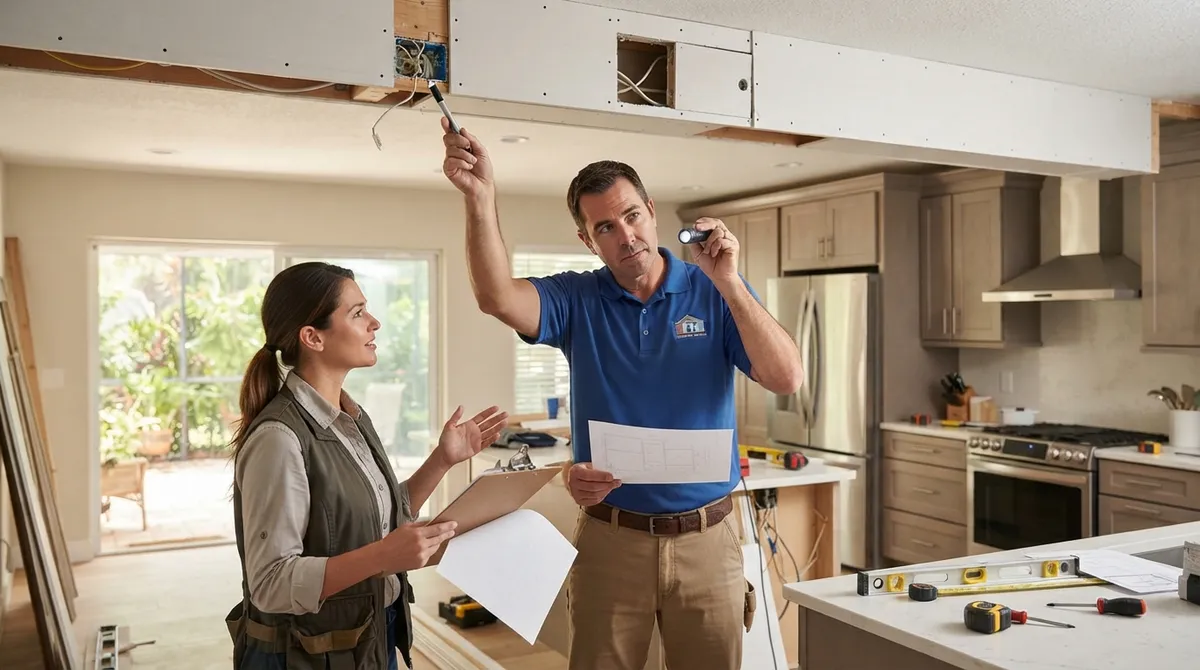
FHA appraisers aren't permit inspectors, but they are trained to notice red flags. Here are common things that can prompt questions during an FHA appraisal in Florida:
- Square footage that doesn't match public records, such as a converted garage or enclosed porch
- Additions or enclosed lanais that don't appear on the county property record
- Visible structural or electrical concerns in finished or altered spaces
- A new roof, windows, or pool cage with no obvious permit history
- Bedrooms or bathrooms added without any documentation
When an appraiser flags something, the lender decides what happens next. They might request permit records, proof of a final inspection, a code-compliance letter, or repairs. Requirements depend on the facts and the lender's underwriting, so there's no one-size-fits-all outcome.
Why Florida Permit Rules Matter Even Without an FHA Mandate
Even when FHA doesn't spell out a requirement, Florida law still matters. Florida Statutes §553.79 generally requires a permit before covered construction, alteration, repair, or demolition. The statute contains exceptions, so whether a specific project needed a permit depends on the work and the circumstances.
Here's what many people don't realize: Florida has no single statewide after-the-fact permit application or fee schedule. Each city or county sets its own process. That means a retroactive permit in one jurisdiction can look very different from the same request in another.
If you're not sure which office controls your address, our building department lookup tool is a quick place to start. Boundary lines near cities can be surprising, and filing with the wrong office is a classic time-waster.
An After-the-Fact Permit Is Not Automatic Approval
It's worth saying gently but clearly: applying for a retroactive permit doesn't guarantee approval. The local building official may require:
- Plans or as-built documentation showing what was actually constructed
- Engineering evidence, such as a sealed engineer letter
- Inspections of the completed work
- Exposure of concealed work, like opening a wall so an inspector can see wiring or framing
- Corrections to bring the work up to the current code
- In rare cases where compliance can't be shown, removal or reconstruction
The good news? In most situations, careful documentation and a smart strategy get work legalized without drama. You can read more about the process in our guide on how to get an after-the-fact permit in Florida.
Step-by-Step: What to Do When Unpermitted Work Meets an FHA Loan
Whether you're the buyer, the seller, or the agent in the middle, here's a practical roadmap. Follow these steps in order and you'll avoid the most common closing delays.
- Ask the lender exactly what they need. Get the specific condition in writing. Is it permit records, a final inspection, an engineer's letter, or something else? Vague worries become manageable tasks once they're specific.
- Identify the building department with jurisdiction. Confirm whether the property sits in a city or unincorporated county. Our open permit search tool can help you check for open or expired permits.
- Compare the permit history to the work you see. Pull the records and match them against the home as it stands today. Gaps tell you what needs attention.
- Call the building department and ask about the process. Ask how they handle retroactive permits, what documents they want, and whether inspections can be scheduled quickly.
- Gather plans, as-builts, and engineering as needed. Many jurisdictions want drawings that show the work as built. Our team creates as-built drawings and engineer letters for exactly this purpose.
- File the application and schedule inspections. Track the review closely and respond to comments right away.
- Send proof of resolution to the lender. A passed final inspection or closed permit is often the document underwriting wants to see.
Can an FHA Loan Close While an After-the-Fact Permit Is Pending?
This is one of the most common questions, and the answer depends on the lender. Some lenders will want the permit closed with a passed final inspection before they fund. Others may consider alternatives when the issue is minor and doesn't affect safety or value.
Because requirements vary, don't assume that simply applying for the permit resolves the lender's concern. Ask directly whether a pending permit is acceptable or whether a final sign-off is required. Timing matters, too, because review and inspection schedules vary by jurisdiction. If your closing date is tight, our urgent permit rescue service is built for exactly this situation.
For more on how permit issues interact with closing timelines, see our article on whether a permit hold can delay a Florida real estate closing.
Common Unpermitted Work Scenarios and How They Play Out
Every property is different, but these patterns come up again and again in Florida. This table shows how each might be viewed. Treat it as a general guide, since the local building department and lender have the final say.
| Scenario | Why It Can Raise Questions | Typical Path Forward |
|---|---|---|
| Enclosed lanai or garage conversion | Changes living area, egress, and structure | As-built plans, possible engineering, inspections |
| Roof replacement with no permit | Wind-resistance and product approval concerns | Roof permit, inspection, or engineer letter |
| Added bathroom or kitchen remodel | Plumbing and electrical safety | Trade permits and inspections, possibly opening walls |
| Pool or pool cage without permit | Barrier safety and structural loads | Plans, engineering, and final inspection |
| Expired permit never closed | Shows as open or incomplete in records | Reopen or close the permit through final inspection |
If your situation looks like the last row, you may be dealing with an expired or open permit rather than unpermitted work. We cover that path in how to close an expired permit in Florida.
Who Should Care Most: Tips for Each Role in the Transaction
Different people carry different pieces of this puzzle. Here's how to think about it based on where you sit.
Homebuyers and Homeowners
If you're buying with an FHA loan, ask for the permit history early and request seller disclosures about any work done. If you're a homeowner who inherited unpermitted work from a prior owner, you're not alone. It happens constantly in Florida, and it can usually be resolved with the right documentation. Our homeowner services are designed for this.
Real Estate Professionals
Agents and investors do best when they research permit history before listing or making an offer. Catching a gap early gives sellers time to fix it, rather than scrambling with a closing date looming. Our realtor and closing support can help you stay ahead of surprises.
Contractors and Design Professionals
If a client's loan is stalled by work you or a prior contractor performed, getting properly sealed drawings and a clear permit path is the fastest route to the finish line. Our general contractor support covers filing, tracking, and revisions so you can keep your crews moving.
How a Florida Permitting Professional Can Help
A permitting professional can't guarantee that a local jurisdiction will approve your work or that a lender will accept your loan file. Anyone who promises that isn't being straight with you. What a good one can do is take the legwork off your plate and improve your odds of a clean outcome.
At 1 Contractor Solutions, we act as Florida's outsourced permitting department across all 67 counties. For a situation like this, that typically means:
- Figuring out which jurisdiction actually controls your property
- Reviewing permit history against the work that exists
- Preparing as-built drawings and sealed engineering in house
- Filing the after-the-fact permit and tracking it through review
- Coordinating inspections and working reviewer comments
- Providing documents the lender can use to move forward
Because our drafting and engineering teams are in house, when a reviewer flags something, we fix it directly rather than waiting on an outside consultant. If you'd like to see what other clients say, you can visit us on Google — 1 Contractor Solutions and read their experiences.
Mistakes That Slow Down FHA Closings
A little foresight goes a long way. Here are the pitfalls we see most often, so you can steer around them:
- Waiting until the appraisal to look at permit history. Research early so there are no surprises.
- Assuming a pending application satisfies the lender. Always confirm what the underwriter requires.
- Hiding or ignoring the issue. Disclosure problems can create bigger headaches than the permit itself.
- Filing with the wrong jurisdiction. City and county lines near boundaries can be confusing.
- Skipping engineering. Many retroactive permits need sealed evidence that the work meets code.
For a broader look at avoidable errors, check out our list of 10 unpermitted work Florida mistakes to avoid in 2026. And if you want the bigger picture on legalizing work, our guide to unpermitted work in Florida and how to legalize it is a great companion read.
Where to Find Official Guidance
It's smart to verify the rules yourself. You can review the statute directly in Florida Statutes Section 553.79, which covers when permits are generally required. For FHA's property standards and appraisal policy, see the FHA Single Family Housing Policy Handbook. Reading the source material gives you confidence when you talk to your lender and your local building department.
Wrapping Up: Your Next Move
So, will FHA require after the fact permits in Florida? Not as a blanket rule, but your lender may require resolution of unpermitted work if it touches safety, structure, value, or compliance, and your local building department decides what legalizing that work actually takes. Keep those two tracks separate, ask specific questions early, and build a clean paper trail.
The best time to start is right now, before a closing date gets tight. If you're facing this situation, we'd love to help you sort it out. Get a free quote and let our team review your property, identify the right jurisdiction, and map the fastest path to a closing-ready file. You can also follow us on LinkedIn or follow us on Facebook for more Florida permitting tips. Permits approved. Projects moving.
FAQs
Will FHA approve a home with unpermitted work in Florida?
It can, but it isn't guaranteed. FHA focuses on value, safety, and soundness, and the lender makes the final call based on the appraisal. If the unpermitted work raises safety or structural concerns, the lender may ask for documentation or repairs before closing.
Does FHA require an after-the-fact permit for an unpermitted addition?
FHA doesn't appear to have a blanket rule requiring one in every case. That said, an addition often prompts lender questions, and your local building department separately decides whether a retroactive permit is needed under Florida law.
Who decides whether unpermitted work must be permitted, the FHA lender or the building department?
They each decide something different. The lender decides whether the loan can move forward, while the local city or county building department decides whether work needed a permit and what it takes to legalize it. Keeping those two tracks separate makes the process much easier to manage.
Can an FHA loan close while an after-the-fact permit is pending?
That depends on the lender and the nature of the issue. Some require a closed permit with a passed final inspection, while others may consider alternatives for minor items. Always ask your lender what they'll accept in writing.
How do I get an after-the-fact permit in Florida?
Start by identifying the building department with jurisdiction, then ask about its retroactive permit process. You'll typically need plans or as-built drawings, possible engineering, inspections, and any required corrections. A Florida permitting professional can coordinate the whole process for you.
We do this work every day across all 67 Florida counties. Call (866) 314-6931 and we will tell you what your situation actually requires — including when you do not need us.
Related services
Permit Facilitation & Filing
You have a crew scheduled, a client asking for dates, and a permit sitting somewhere in a queue you cannot see. We file it, w…
See the servicePlan Review Coordination
A permit in plan review is not one queue. On a commercial project it can be six queues, each with its own reviewer, its own c…
See the serviceReady to get your permit moving?
One call tells you which jurisdiction controls your project, what it will take, and what it will cost. Most of the time we can scope it on the phone.