
Blog
What Is a Milestone Inspection in Florida? 2026 Guide
Learn what a Florida milestone inspection is, which buildings need one, key deadlines, the two phases, and how repair permits fit in for 2026.
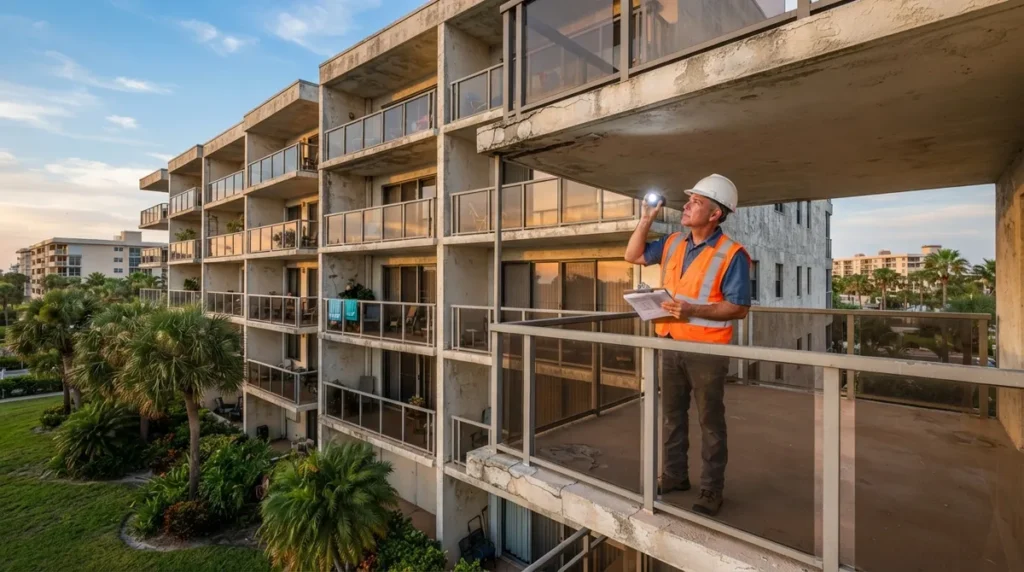
Key Takeaways
-
Florida milestone inspections apply to residential condo or co-op buildings three or more habitable stories tall, with age measured from the certificate of occupancy date, not renovation or sale dates.
-
The standard initial inspection is due by December 31 of the year the building turns 30, but local agencies can set it at 25 years (e.g., coastal buildings), so confirm your local deadline.
-
The association must notify unit owners within 14 days of receiving the local agency's written notice, and phase one must be completed within 180 days of that notice.
-
Phase one is a visual exam by a Florida-licensed architect or engineer; phase two, with possible testing, is triggered only if substantial structural deterioration is found.
-
A milestone inspection documents conditions but is not a permit or repair approval; repairs require local permits, design drawings, licensed contractors, and inspections, with deadlines that vary by county.
-
Associations with milestone inspections due on or before December 31, 2026 may complete the SIRS alongside the inspection, but the SIRS must still be finished by December 31, 2026.
If you own a unit in an older Florida condo, you have probably heard the phrase "milestone inspection" tossed around at board meetings, in emails from your association, or in a worried hallway conversation with a neighbor. Take a deep breath. It sounds intimidating, but it is really just a structural check-up for aging buildings, and understanding it makes everything feel a lot more manageable.
So, what is a milestone inspection in Florida? It is a legally required structural evaluation of certain older residential condominium and cooperative buildings, designed to spot substantial structural deterioration before it becomes a bigger (and costlier) problem. In this guide, we will walk through which buildings qualify, when inspections are due, how the two phases work, and what happens next, including the permitting side that many people forget about until repairs are on the table.
What a Florida Milestone Inspection Actually Is
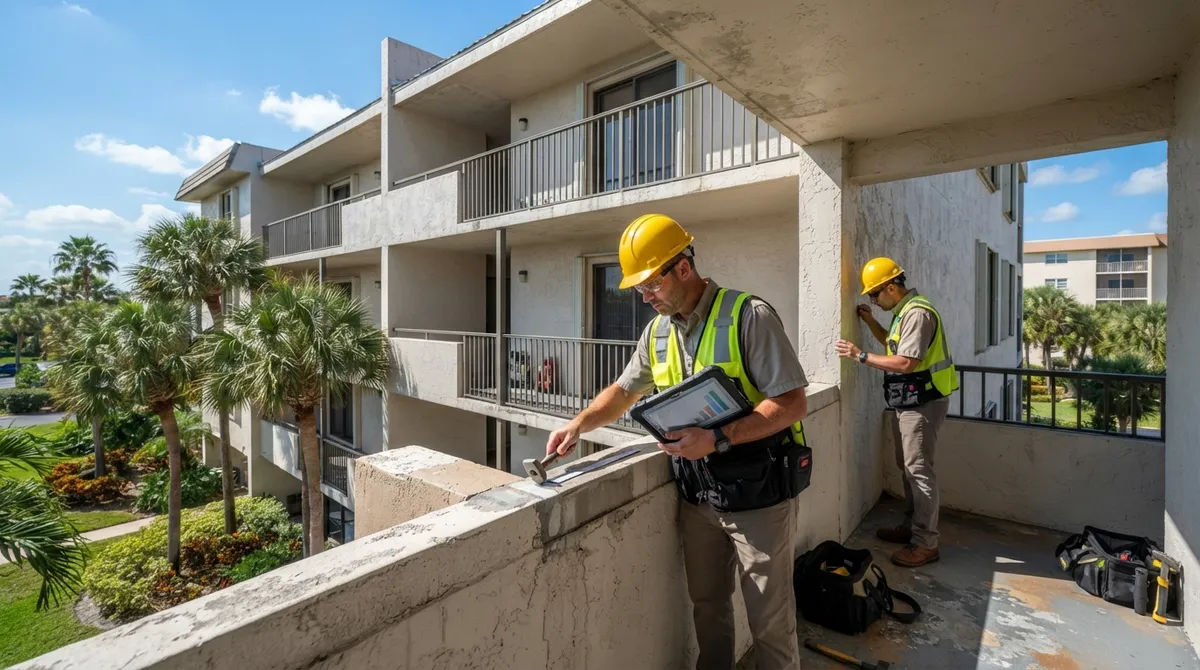
A milestone inspection is a statutory structural assessment required under Florida Statute § 553.899. Its job is narrow and specific: identify and document substantial structural deterioration in qualifying buildings. It is not a replacement for routine maintenance inspections, and it does not certify every aspect of a building's safety.
Think of it like a deep structural physical for your building. A licensed professional examines the major structural components and systems, then reports what they find. If nothing alarming turns up, great. If something does, the process moves to a more detailed phase and, eventually, to repairs.
Which Buildings Need a Milestone Inspection?
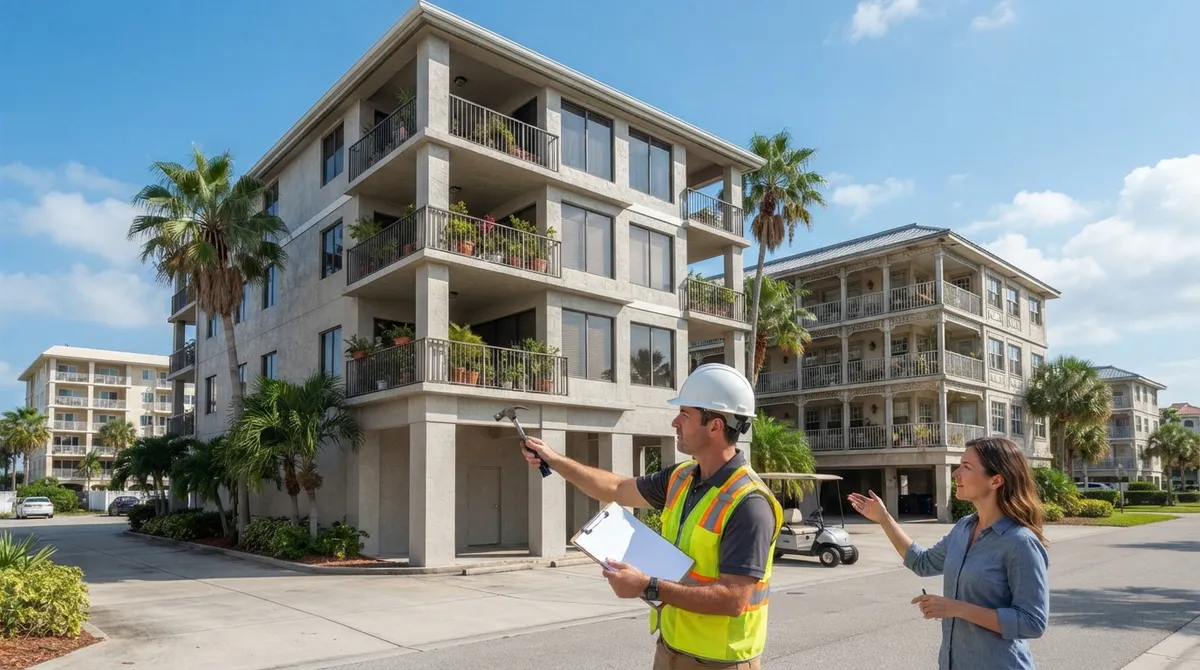
Not every building falls under this rule. The requirement generally applies to buildings that meet these criteria:
- Three or more habitable stories tall
- Wholly or partly under residential condominium or cooperative ownership
- Old enough to hit the inspection age threshold, measured from the date the certificate of occupancy was issued
That last point matters. Age is counted from the certificate of occupancy date, not from when a unit was last renovated or sold. If you are unsure about a building's certificate of occupancy history, our Certificate of Occupancy services can help track down the records.
When Is a Milestone Inspection Due?
The standard schedule is straightforward: the initial inspection is due by December 31 of the year the building reaches 30 years of age, and then every 10 years after that.
There is a local twist, though. A local enforcement agency may set the initial inspection age at 25 years based on local circumstances, such as a building's proximity to salt water. After that first inspection, the 10-year cycle applies.
| Scenario | Initial Inspection Due | Repeat Cycle |
|---|---|---|
| Standard rule | Dec. 31 of the year the building turns 30 | Every 10 years |
| Local agency sets earlier age (e.g., coastal) | Dec. 31 of the year the building turns 25 | Every 10 years |
| Reached 30 before July 1, 2022 (certain buildings) | Dec. 31, 2024 | Every 10 years |
| Reached 30 between July 1, 2022 and Dec. 31, 2024 | Dec. 31, 2025 | Every 10 years |
Because local rules can differ, always confirm your building's specific deadline with the local enforcement agency, which is usually the city or county building department. Our Building Department Lookup tool can point you toward the right office.
Who Is Responsible for Getting It Done?
The condominium or cooperative association arranges the inspection. Responsibility for compliance rests with the association and any owner of a portion of the building that sits outside the condominium or cooperative ownership.
Once the local enforcement agency sends written notice, here is how the clock starts ticking:
- The association receives written notice from the local enforcement agency.
- Within 14 days, the association must notify unit owners and state the inspection deadline.
- Phase one must be completed within 180 days after the building owner or owners receive the agency's written notice.
That 180-day window is not especially long once you factor in hiring a qualified professional and scheduling access to the building. Starting early is one of the kindest things a board can do for its residents.
Who Performs the Inspection?
A Florida-licensed architect or engineer conducts the inspection. This is not a task for a general handyman or a standard home inspector. The inspector examines the structure, documents conditions, and submits reports to the local enforcement agency.
If you are a design professional who wants dependable backup on drawings and structural documentation, our team offers structural engineering and engineering services with in-house sealed drawings.
Phase One vs. Phase Two: How the Inspection Works
The inspection happens in up to two phases. Here is a quick side-by-side look:
| Feature | Phase One | Phase Two |
|---|---|---|
| Type of review | Visual examination | Detailed evaluation, possibly with testing |
| Scope | Habitable and nonhabitable areas, major structural components and systems | Further evaluation of identified deterioration |
| Triggered when | Always required | Phase one finds substantial structural deterioration |
| Outcome | Phase-one report submitted | Report on extent, urgency, and recommended repairs |
Phase One: The Visual Examination
In phase one, the architect or engineer visually examines the building, including both habitable areas and nonhabitable areas like parking structures, roof areas, and mechanical spaces. They look at the major structural components and systems.
If no substantial structural deterioration is found, the inspector submits a phase-one report and the building is on its way until the next 10-year cycle.
Phase Two: The Deeper Dive
If phase one does identify substantial structural deterioration, a more detailed phase-two inspection is required. This phase may involve destructive or nondestructive testing, along with further evaluation to determine how extensive and how urgent the deterioration is. The inspector then recommends repairs.
The inspector submits the report to the local enforcement agency. The association must distribute the inspector-prepared summary to unit owners and make required records available as provided by law.
What Happens If Deterioration Is Found?
Here is where the permitting world enters the picture. A milestone inspection is not a building permit, and it is not a repair approval. It identifies and documents conditions. Fixing them is a separate process that must follow local permitting, design, and construction requirements.
Typically, that means:
- Engaging qualified design professionals to prepare repair drawings
- Hiring licensed contractors to perform the work
- Filing for the applicable building permits with the local jurisdiction
- Passing required inspections through closeout
Deadlines vary by location. For example, Collier County guidance says a permit application is due within 150 days when repairs are necessary, and notes that repairs for substantial structural deterioration must commence within 365 days after the building official receives the phase-two report. Palm Beach County similarly says repairs or modifications must commence within 365 days after the local agency receives the phase-two report. Always check your local agency's current instructions.
This is exactly where an experienced permitting partner earns their keep. Handling permit facilitation and filing, plan review coordination, and revisions and resubmittals keeps repairs from stalling in a county queue.
Milestone Inspection vs. Structural Integrity Reserve Study (SIRS)
These two get mixed up constantly, so let us clear it up. They are related to building safety, but they are different requirements with different purposes.
| Item | Milestone Inspection | Structural Integrity Reserve Study (SIRS) |
|---|---|---|
| Purpose | Assess substantial structural deterioration | Plan and fund reserves for major building components |
| Governing focus | Structural condition and safety | Reserve funding and component life |
| 2026 deadline note | Per building schedule | Must be completed by Dec. 31, 2026 |
According to DBPR guidance, associations whose milestone inspection is due on or before December 31, 2026, may complete the SIRS at the same time as the milestone inspection, but the SIRS must still be completed by December 31, 2026. Check the current statute and your local enforcement agency's instructions for your building's exact deadline and process.
Milestone Inspections vs. 40-Year Recertification
If you have lived in Florida for a while, you may remember the traditional 40-year building recertification, which is still part of the conversation in some South Florida jurisdictions. The milestone inspection requirement is a statewide statutory framework for residential condominium and cooperative buildings, while local recertification programs can have their own rules and timelines. If your building sits in a jurisdiction with its own program, our 40-year recertification and milestone inspection support can help you sort out what applies.
Practical Tips for Associations and Unit Owners
Whether you serve on a board or simply own a unit, a little preparation goes a long way:
- Confirm your building's age and deadline early. Check the certificate of occupancy date and ask the local enforcement agency about its age threshold.
- Do not wait for the 180-day window to feel tight. Line up a qualified architect or engineer as soon as notice arrives.
- Gather your records. Original plans, past repair permits, and prior inspection reports speed up the inspector's work.
- Check for open or expired permits. Old paperwork problems can complicate repairs, and our Open Permit Search tool is a handy starting point.
- Budget realistically. If phase two reveals significant repairs, owners may face assessments, so honest early communication helps everyone.
How This Affects Realtors, Buyers, and Investors
Milestone inspection status is increasingly part of the conversation in condo sales. Buyers and agents want to know whether an inspection has been completed, what it found, and whether repairs are planned or underway. If you work in real estate, our realtor and closing support services can help you research permit history and keep deals moving when paperwork questions pop up.
Where to Find Official Guidance
The authoritative sources are worth bookmarking. The full text of Florida Statute § 553.899 lays out the legal requirements, and the Florida Department of Business and Professional Regulation (DBPR) publishes helpful condominium resources, including a condominium FAQ page and a timeline of requirements. For building-level questions, always follow up with your local enforcement agency, because procedures and deadlines can differ by jurisdiction.
Why Work With a Florida Permitting Partner
The milestone inspection itself is performed by a licensed architect or engineer, but the work that follows is a permitting and construction journey. Repairs need drawings, filings, reviewer responses, and inspections, often across tight timelines and busy building departments.
1 Contractor Solutions acts as Florida's outsourced permitting department, serving all 67 counties with same-day response and in-house sealed drawings. Whether your association needs help coordinating repair permits, a contractor needs plan review support, or an owner just wants straight answers, we are here to help. You can also visit us on Google — 1 Contractor Solutions to see what customers say, or follow us on LinkedIn and follow us on Facebook for Florida permitting updates.
Final Thoughts
A Florida milestone inspection is, at its heart, about keeping residents safe and buildings sound. It follows a clear path: a visual phase one, a deeper phase two if needed, and then repairs carried out through proper permitting. The earlier an association starts, the smoother that path tends to be.
If your building is approaching an inspection deadline or you are staring down repairs after a phase-two report, you do not have to figure it out alone. Get a free quote and let our team help you move from report to approved permit with confidence.
FAQs
Which Florida buildings are required to have a milestone inspection?
Generally, buildings that are at least three habitable stories tall and wholly or partly under residential condominium or cooperative ownership. The building also has to reach the inspection age, which is measured from its certificate of occupancy date.
At what age is a Florida condo milestone inspection due?
The standard rule is by December 31 of the year the building turns 30, then every 10 years after that. A local enforcement agency can set the first inspection at 25 years, for example for buildings near salt water, so it is smart to confirm your local rule.
What happens during phase one and phase two of a milestone inspection?
Phase one is a visual examination by a Florida-licensed architect or engineer of the building's major structural components and systems. If substantial structural deterioration is found, phase two adds a more detailed evaluation, which may include destructive or nondestructive testing, plus repair recommendations.
Do milestone inspection repairs require building permits in Florida?
Yes, repairs generally need to follow applicable local permitting, design, and construction requirements. The inspection only documents conditions, so associations typically need qualified design professionals, licensed contractors, and permits, with deadlines that vary by jurisdiction.
How is a milestone inspection different from a Structural Integrity Reserve Study (SIRS)?
A milestone inspection evaluates structural deterioration, while a SIRS plans and funds reserves for major building components. Associations with a milestone inspection due on or before December 31, 2026, may coordinate the two, but the SIRS must still be completed by December 31, 2026.
We do this work every day across all 67 Florida counties. Call (866) 314-6931 and we will tell you what your situation actually requires — including when you do not need us.
Related services
Permit Facilitation & Filing
You have a crew scheduled, a client asking for dates, and a permit sitting somewhere in a queue you cannot see. We file it, w…
See the servicePlan Review Coordination
A permit in plan review is not one queue. On a commercial project it can be six queues, each with its own reviewer, its own c…
See the serviceReady to get your permit moving?
One call tells you which jurisdiction controls your project, what it will take, and what it will cost. Most of the time we can scope it on the phone.