
Blog
How to Get Florida After the Fact Permitting Done Right
Learn how Florida after the fact permitting works, what it costs, which documents you need, and how to legalize unpermitted work step by step.
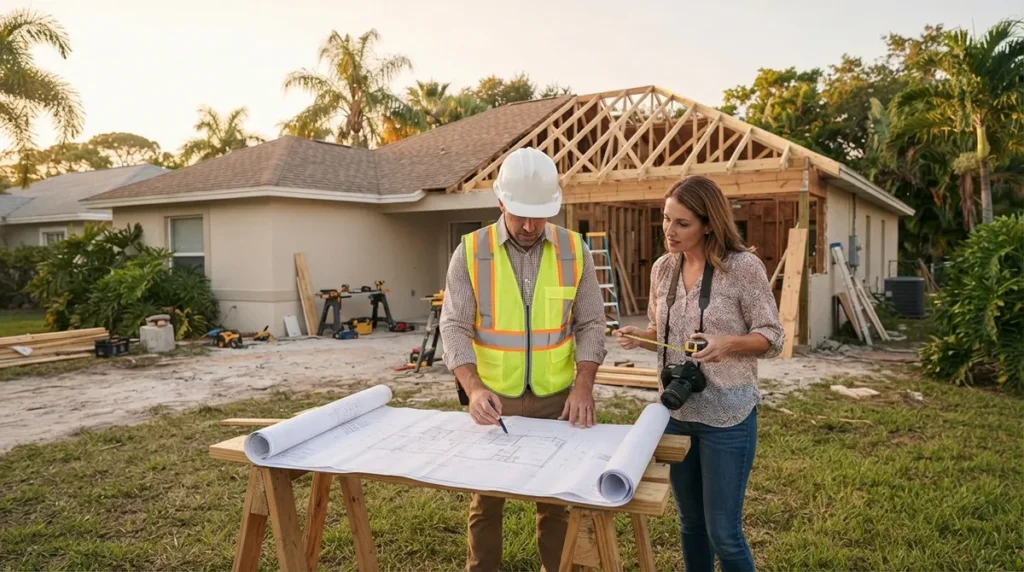
Key Takeaways
-
Florida after-the-fact permitting has no statewide process; each city and county sets its own application process, fees, penalties, and inspection rules, so confirm with the local building department first.
-
Applying late does not automatically legalize work; the building official must confirm compliance with the Florida Building Code, which may require plans, engineering, inspections, or opening hidden work.
-
Fees vary widely: Pembroke Pines charges double permit fees, Miami Beach adds a penalty equal to 100% of the permit fee, and there is no single statewide multiplier.
-
Document existing conditions with photos, measurements, and as-built plans, and involve an engineer for structural work like roofs, trusses, or wind loads to avoid correction notices.
-
Leaving unpermitted work unaddressed can trigger code enforcement fines, insurance disputes, financing problems, and sale delays, so resolving it early protects both property and closings.
-
Submit a complete package the first time, label the application as after-the-fact, and respond quickly to plan-review comments to avoid delays and prevent files from expiring.
Let's be honest: finding out that a project was built without a permit feels awful. Maybe you bought a home with a sunroom that nobody ever permitted. Maybe a crew skipped the paperwork on your roof. Or maybe a code officer just left a notice on your door. Take a breath. This happens to Floridians every single day, and there is a clear path forward.
Florida after the fact permitting is the process of asking your local building department to approve work that required a permit but was started or finished without one. It is not a special statewide permit. Each city and county runs its own process, fees, and inspection rules. That is exactly why people get stuck, and also why a little guidance goes a long way.
In this friendly how-to guide, we will walk you through what an after-the-fact permit really is, what it costs, which documents you need, and how to move from "uh-oh" to a closed permit. Whether you are a homeowner, a general contractor, a solar company, or a real estate pro, you will find practical steps you can use today.
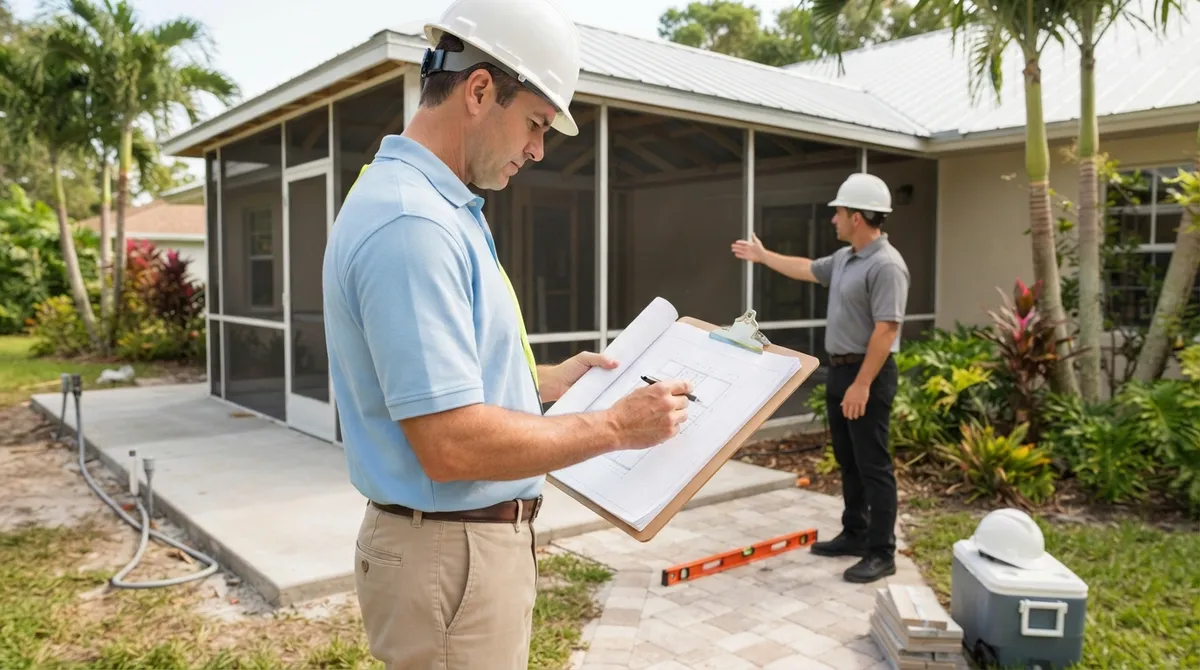
What Florida After the Fact Permitting Actually Means
An after-the-fact permit is a standard local building permit application for work already underway or already done. Florida Statutes §553.79 generally makes it unlawful to construct, alter, repair, or demolish a building without first getting the required permit from the enforcing agency. So when that step gets skipped, the fix is to apply late and prove the work meets code.
Here is the part that surprises people: applying after the fact does not automatically legalize anything. The building official still has to be satisfied that the work complies with the Florida Building Code and local rules. That may mean plans, engineering, inspections, and sometimes opening finished surfaces so inspectors can see what is hidden.
The good news? Most unpermitted work can be brought into compliance. If you want a deeper explainer, our guide on what is after-the-fact permitting in Florida covers the basics, and our after-the-fact and expired permits service page shows how we handle these files from start to finish.
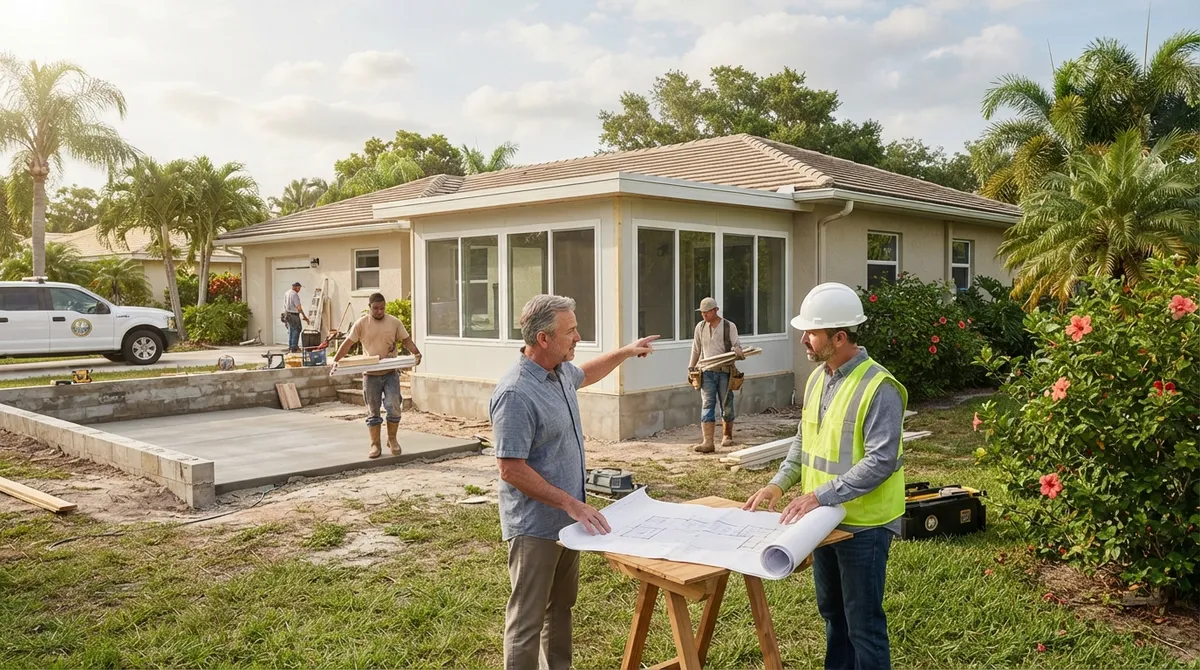
Who Typically Needs an After-the-Fact Permit?
Unpermitted work shows up in every corner of the Florida market. Here are the most common situations we see:
- Homeowners who inherited a prior owner's unpermitted addition, patio enclosure, or garage conversion
- Buyers and investors whose home inspection or appraisal flagged work with no permit history
- General contractors who took over a job where a previous trade skipped permits
- Solar companies with installs that went live before the permit was finalized
- Real estate agents facing a closing delayed by a permit hold
- Property owners who received a code enforcement notice or stop-work order
No matter which group you are in, the path looks similar. You identify the right jurisdiction, document what was built, prove it is safe and code-compliant, and pass inspections.
How to Get an After-the-Fact Permit in Florida: Step by Step
Every jurisdiction differs, but this sequence works as a reliable roadmap.
- Confirm which jurisdiction controls the property. Properties near city lines can surprise you. A quick check with the building department lookup tool can save you from filing in the wrong place.
- Search for open or expired permits. Sometimes a permit was pulled years ago and never closed. Our open permit search is a helpful starting point.
- Document the existing conditions. Take photos, measure the work, and note materials, framing, electrical, plumbing, and mechanical components.
- Prepare as-built plans and engineering. Most departments want drawings that show what actually exists. See our guide on as-built drawings for what these typically include.
- Identify the application as "after the fact." Many departments require you to label it clearly. Some require a licensed contractor to apply in ordinary cases.
- Submit the application and pay fees. Expect penalty fees in many jurisdictions (more on that below).
- Respond to plan-review comments. Reviewers often ask for clarifications or corrections. Quick, precise answers keep things moving.
- Schedule and pass inspections. Inspectors verify the work meets code, including any concealed elements.
- Close the permit. Final approval, and a certificate of completion or occupancy where applicable, officially resolves the issue.
What Documents Do You Usually Need?
Exact requirements depend on the project and the building department, so always confirm before you file. That said, most applications call for a similar set of items.
| Document | Why It Matters | Common Project Types |
|---|---|---|
| Completed permit application (marked after-the-fact) | Tells the department this is late work needing review | All projects |
| Property and ownership information | Confirms who is responsible for the property | All projects |
| Contractor details and license information | Many jurisdictions require a licensed contractor of record | Roofs, additions, electrical, plumbing, HVAC |
| As-built plans or survey | Shows what was actually built and where | Additions, enclosures, pools, structures |
| Engineering letters or sealed drawings | Verifies structural or system compliance | Roofs, trusses, walls, screen enclosures, solar |
| Product approvals | Confirms products meet Florida requirements | Windows, doors, roofing, shutters |
If your project involves structure, an engineer's involvement is often the difference between a smooth approval and a pile of correction notices. Learn more about engineer letters and structural engineering support.
How Much Does an After-the-Fact Permit Cost in Florida?
There is no single statewide price. Fees and penalties are set locally, and they can look quite different from one city to the next. Florida Statutes §553.79 sets the general permit requirement, but it does not establish one statewide after-the-fact fee multiplier.
Here are a few published local examples to show how much it can vary:
| Jurisdiction | Published Approach |
|---|---|
| Pembroke Pines | After-the-fact permits are subject to double permit fees; limited exception described for buyers who document that the work predated their purchase |
| Miami Beach | Penalty equal to 100% of the required permit fee, in addition to the permit fee, with added penalties for additional offenses |
| Miami Springs | Published fee material describes a $100 charge plus a double permit fee for work begun before obtaining a permit |
Please treat these as examples only, not statewide rates. Your total will also include costs beyond the permit itself, such as drafting, engineering, corrections, and re-inspections. For a closer look at budgeting, check out our breakdown of after-the-fact permit costs in Florida.
Will Inspectors Make You Open Walls or Remove Finished Work?
This is the question that keeps people up at night, so let's talk about it honestly. Inspectors need to verify what they cannot see. If framing, wiring, plumbing, or fasteners are hidden behind finished surfaces, the building official may require exposure of that work.
That does not mean every wall comes down. Often, targeted openings, photos taken during the original construction, engineer observations, or other documentation can satisfy the reviewer. Each department makes its own call, and the amount of exposure depends on the type of work and the risk involved.
If the work does not meet code, you may need to correct it. In rare cases, parts may need to be removed and rebuilt. Our article on whether you will really have to demolish unpermitted work explains when that actually happens.
Risks of Leaving Unpermitted Work Alone
It can be tempting to hope nobody notices. Unfortunately, unpermitted work has a habit of surfacing at the worst moment. Here is what can happen:
- Code enforcement action, including notices, stop-work orders, and fines
- Insurance complications, since claims on unpermitted work can be disputed
- Financing trouble, as lenders and appraisers may flag permit gaps
- Sale delays, especially when a title or permit search reveals open items
- Contractor consequences, because Florida Statutes §489.127 identifies performing work that requires a permit without an effective permit as prohibited conduct in covered circumstances
For buyers and sellers, this can derail a closing quickly. Our guides on open permits found at closing and realtor and closing support show how to keep deals alive.
Local Rules Matter: A Quick Look at Regional Differences
Florida has 67 counties and hundreds of municipalities, and each has its own habits. Some departments handle after-the-fact applications through a dedicated process. Others fold them into the regular permit flow with added fees. Some require a licensed contractor; others allow limited homeowner involvement.
If you work in a specific area, it helps to learn the local approach. We serve all 67 counties, including Hillsborough County, Miami-Dade County, Broward County, and Sarasota County. You can also browse our Florida county pages for local details.
Tips for Different Audiences
For Homeowners
Start by finding out what you actually have. Pull the permit history, gather any old receipts or photos, and talk to the building department before you assume the worst. Our resource for homeowners walks through the process in plain language.
For General Contractors and Trades
If you inherited a messy job, document everything before you touch it. Clear as-builts, engineer input, and organized inspection scheduling protect your license and your timeline. See how we support general contractors.
For Solar Companies
Solar jobs need accurate structural and electrical documentation. If an install went live before the permit closed, a compliance package with engineering can bring it back in line. Visit our page for solar contractors to learn more.
For Real Estate Professionals
Speed matters when a closing date is looming. Early permit research, a clear scope, and a realistic timeline help keep buyers, sellers, and lenders calm. Our realtor resources are built for exactly this.
Should You Do It Yourself or Hire a Permitting Service?
Some owners can handle a simple after-the-fact application on their own, especially for small scopes. But the process can get complicated fast: finding the right authority, preparing drawings, coordinating an engineer, answering reviewer comments, and scheduling inspections.
| Factor | DIY Approach | With a Permitting Service |
|---|---|---|
| Time investment | High; many calls, visits, and revisions | Lower; the team handles filing and tracking |
| Plans and engineering | You must find and coordinate professionals | Drafting and engineering coordinated together |
| Reviewer comments | You interpret and respond yourself | Comments are worked and resubmitted for you |
| Risk of rejection | Higher if documents are incomplete | Lower with experienced preparation |
| Cost | Lower upfront, possible rework costs | Service fees, often offset by fewer delays |
A permitting service can help identify the authority having jurisdiction, assemble documents, coordinate licensed professionals, respond to plan-review comments, and schedule inspections. What it cannot do is guarantee approval, waive code requirements, or erase local penalties. Anyone promising that is not being straight with you.
At 1 Contractor Solutions, we act as Florida's outsourced permitting department, with in-house drafting and engineering and a sealed-drawing process that keeps files moving. If you want to see how our permit facilitation and filing works, we are happy to walk you through it.
Common Mistakes That Slow Things Down
Avoid these frequent missteps, and your file will move much more smoothly:
- Filing without labeling the application as after-the-fact when the department requires it
- Submitting plans that show what was intended instead of what actually exists
- Skipping the engineer when structure, trusses, or wind loads are involved
- Ignoring product approvals for windows, doors, or roofing materials
- Letting correction notices sit unanswered until the file expires
- Assuming the original contractor will return to finish the paperwork
If you have been denied or hit a wall, our urgent permit rescue service is built for exactly those moments, including stop-work orders and closings on a deadline.
A Realistic Timeline
How long does it take? It depends on the jurisdiction, the scope, and how quickly corrections get answered. A small, well-documented project may move in a matter of weeks. Larger additions with engineering and multiple inspections can take longer. Reviewer workloads, hurricane-season surges, and incomplete submittals are the usual culprits behind delays.
The best way to protect your timeline is to submit a complete package the first time. For related timing guidance, see how long a building permit takes in Florida.
Ready to Resolve Your Unpermitted Work?
You do not have to untangle this alone. Whether you need as-built plans, a sealed engineer letter, help responding to a violation, or a full start-to-finish permit file, our team is here, and yes, we respond day or night. You can see what our customers say about 1 Contractor Solutions on Google, and you can also follow us on LinkedIn or follow us on Facebook for Florida permitting updates.
For official statutory language on the permit requirement itself, you can review Florida Statutes §553.79 on the Florida Legislature's website.
Final Thoughts
Unpermitted work is stressful, but it is also fixable. The path is straightforward: identify the right authority, document what exists, bring in engineering where needed, submit a complete package, and pass your inspections. Take it one step at a time, and you will get there.
If you would like a knowledgeable team in your corner, get a free quote and tell us about your project. We will tell you what jurisdiction controls it, what it will take, and then go do it. Permits approved. Projects moving.
FAQs
What is an after-the-fact building permit in Florida?
It is a regular local building permit application for work that was started or finished without a required permit. It is not a separate statewide permit type, so your city or county building department sets the process, fees, and inspections. Think of it as asking for approval after the fact and proving the work meets code.
Are after-the-fact permit fees doubled in Florida?
Sometimes, but not everywhere. Some jurisdictions, like Pembroke Pines, charge double permit fees, while others use different penalty structures. There is no single statewide multiplier, so always confirm the fee schedule with your local building department.
Will inspectors make me open walls or remove finished work?
They might ask you to expose hidden work if they cannot verify it any other way. Many times, photos, engineer observations, or small targeted openings can do the job. Every department decides differently, so it is worth asking early.
Can I get an after-the-fact permit without a licensed contractor?
It depends on the jurisdiction and the type of work. Some departments, such as Pembroke Pines, generally require a licensed contractor in ordinary cases, with limited exceptions. Check your local rules or ask a permitting professional before you file.
Can a Florida permitting service help resolve an unpermitted construction violation?
Absolutely. A permitting service can find the right jurisdiction, prepare plans, coordinate engineering, answer reviewer comments, and schedule inspections. It cannot guarantee approval or waive code requirements, but it can make the whole process much smoother.
We do this work every day across all 67 Florida counties. Call (866) 314-6931 and we will tell you what your situation actually requires — including when you do not need us.
Related services
Permit Facilitation & Filing
You have a crew scheduled, a client asking for dates, and a permit sitting somewhere in a queue you cannot see. We file it, w…
See the servicePlan Review Coordination
A permit in plan review is not one queue. On a commercial project it can be six queues, each with its own reviewer, its own c…
See the serviceReady to get your permit moving?
One call tells you which jurisdiction controls your project, what it will take, and what it will cost. Most of the time we can scope it on the phone.