
Blog
How to Find Who Can Pull a Building Permit in Miami
Find out who can legally pull a building permit in Miami, from licensed contractors to owner-builders, and how a permitting service can help.
Key Takeaways
-
In Miami, only a Florida-licensed contractor qualified for the scope of work, or a qualifying owner-builder who meets jurisdiction rules, can be the permit holder; permitting services can assist but cannot replace a license.
-
Confirm which office controls your property before applying: City of Miami, another incorporated municipality, or unincorporated Miami-Dade County. A Miami mailing address does not guarantee City of Miami jurisdiction.
-
Verify any contractor's Florida license is active through the DBPR lookup and that its license category matches your project, such as roofing or electrical.
-
Owner-builder status is limited: City of Miami allows it only for owner-occupied one- and two-family homes, requires a notarized disclosure, and caps owners at one master permit per 24 months.
-
Never let a contractor use your owner-builder status to skip licensing; as the owner you carry the legal and financial risk for work you did not control.
-
Have plans, proof of ownership, and any required sealed engineering or product approvals ready before filing, since incomplete applications are a common cause of delays. Note that City of Miami permits are valid for 180 days.
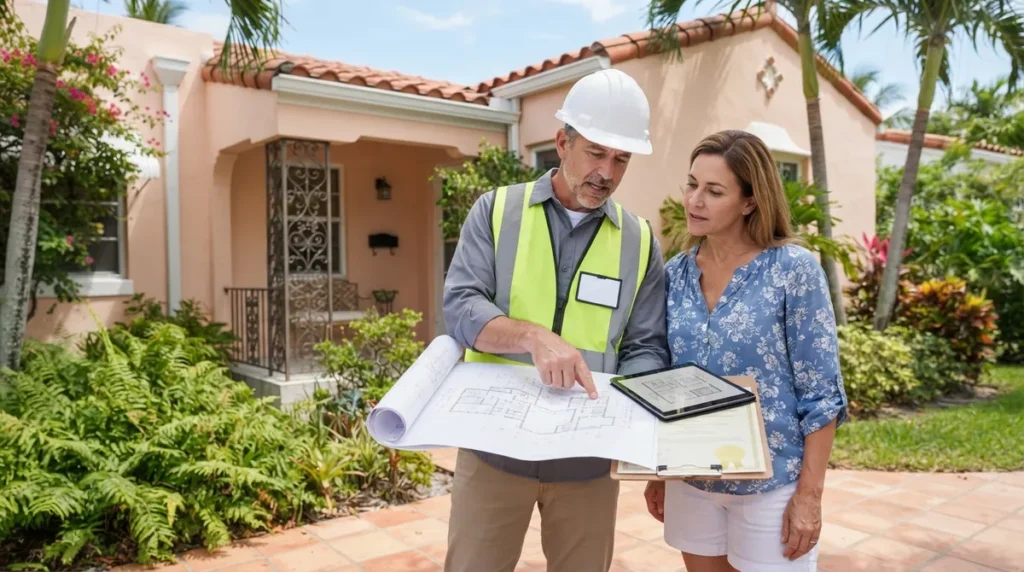
You have a project in mind, maybe a kitchen remodel in Coral Gables, a roof replacement in Hialeah, or a backyard addition in unincorporated Kendall. Then reality hits: someone has to actually get the permit. If you have been typing "who can pull a building permit for me in Miami" into a search bar, you are in good company. It is one of the most common questions we hear, and the answer is friendlier than most people expect.
Here is the short version. In Miami, the permit is generally pulled by a Florida-licensed contractor qualified for the work, or by a qualifying owner-builder who meets strict eligibility rules. A permitting service can prepare the paperwork, coordinate documents, and track the review, but it cannot replace a license or make an ineligible person eligible.
In this guide, we will walk you through each option step by step, show you how to figure out which office controls your property, and help you choose the right path for your project and your comfort level. Think of it as a roadmap from "I have no idea where to start" to "my permit is in review."
The Short Answer: Who Can Legally Pull a Permit in Miami?
In Miami, only certain people can be the applicant and permit holder. That is not red tape for its own sake. The permit holder takes responsibility for the work, the inspections, and the code compliance that follows.
Generally, these are your options:
- A Florida-licensed contractor qualified for the type of work (general, roofing, electrical, plumbing, mechanical, and so on).
- A qualifying owner-builder, meaning the property owner who meets the jurisdiction's eligibility rules and accepts legal responsibility for the project.
- An authorized representative who helps prepare, submit, and track the application on behalf of the licensed contractor or eligible owner, depending on what the local building department allows.
That last point matters. A permit expediter or permitting service is a fantastic helper, but the license or owner-builder eligibility has to come from somewhere legitimate. Always confirm with the building department that has jurisdiction who may be listed as applicant and permit holder for your specific project.
Step 1: Find Out Which Office Controls Your Property
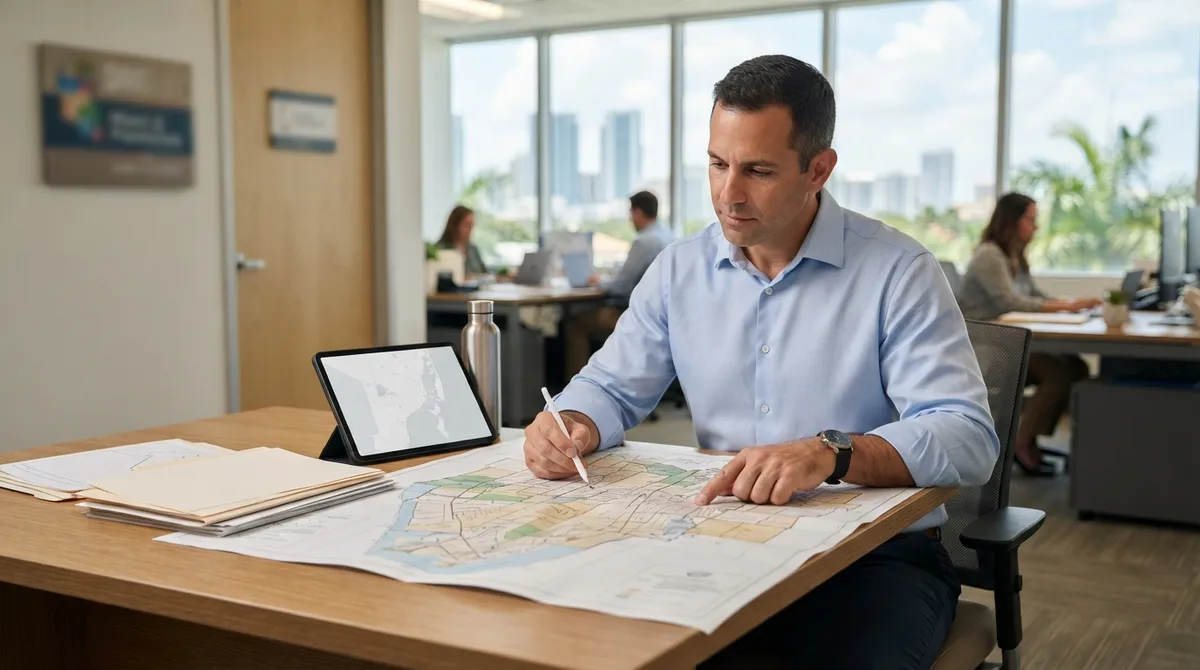
This is the step that trips up more Miami homeowners than any other. "Miami" is not one permitting office. The right office depends on where your property actually sits.
- City of Miami: Issues permits within the city limits and uses its iBuild portal for building permits.
- Other incorporated municipalities: Cities like Coral Gables, Miami Beach, Hialeah, and others each run their own building departments with their own rules.
- Unincorporated Miami-Dade County: Handled through the county's permitting process. These properties are generally identified by folio numbers beginning with "30."
A mailing address that says "Miami" does not guarantee your property is in the City of Miami. Look up your folio number through the Miami-Dade Property Appraiser, then confirm the jurisdiction before you apply. This five-minute check can save you weeks of resubmitting to the wrong office.
| Jurisdiction Type | Who Issues the Permit | How to Tell |
|---|---|---|
| City of Miami | City of Miami Building Department | Property sits inside City of Miami limits; applications go through iBuild |
| Other incorporated city | That city's own building department | Municipality named on your tax bill or property record |
| Unincorporated Miami-Dade | Miami-Dade County permitting | Folio number generally begins with "30" |
Step 2: Option One, Hire a Licensed Contractor
For most projects, the simplest answer to "who can pull a building permit for me in Miami" is the contractor doing the work. A Florida-licensed contractor qualified for the scope of work can apply for and obtain the permit. Contractors may also need to register with the local jurisdiction; Miami-Dade County notes that a Florida state license supersedes its county-license requirement.
Here is how to make sure your contractor is the real deal:
- Ask for their Florida license number and the license category.
- Verify the license is active through the Florida DBPR license lookup.
- Confirm the license type matches your project (a roofer cannot pull your electrical permit, for example).
- Ask whether they are registered with your specific municipality, if registration is required there.
- Get the permit number in writing once it is issued, and keep a copy.
A quick warning, offered with love: if a contractor suggests that you pull the permit as the owner so they can skip it, pause. That arrangement can leave you carrying the legal and financial risk for work you did not control. We cover this scenario in more depth in our guide on unlicensed contractor mistakes Florida owners make.
Step 3: Option Two, Pull It Yourself as an Owner-Builder
Yes, a homeowner can pull their own permit in Miami, but only when the project and property meet the legal limits. Owner-builders assume responsibility for the work and must complete the jurisdiction's required disclosures or validation before a permit is issued.
City of Miami Owner-Builder Rules
The City of Miami limits owner-builder permits to owner-occupied one- and two-family residences. The process includes proof of ownership and residence, an interview, a test, and a signed and notarized disclosure. Two more details are worth knowing:
- An owner-builder may receive no more than one master permit for new construction, an addition, or alteration of a single-family or duplex residence in any 24-month period.
- Certain trade permits, including roofing, electrical, mechanical, plumbing, and gas, must be obtained by appropriately licensed contractors under the City's stated rules.
Miami-Dade County Owner-Builder Rules
Miami-Dade County's program allows qualifying owners to apply for building and trade permits, subject to eligibility rules and validation. For residential property, the work must generally be on a one- or two-family residence or farm outbuilding for the owner's own use or occupancy. Separate limits apply to commercial property, where qualifying owner-builder work is limited to a one-story building or addition of no more than 500 square feet, or maintenance and repairs not exceeding $5,000 per building.
| Question | City of Miami | Unincorporated Miami-Dade |
|---|---|---|
| Property types allowed | Owner-occupied one- and two-family residences | One- or two-family residence or farm outbuilding for owner's use; limited commercial work |
| Trade permits (electrical, plumbing, etc.) | Must be pulled by licensed contractors | Allowed for qualifying owners, subject to validation |
| Extra requirements | Proof of residence, interview, test, notarized disclosure | Owner-builder validation and disclosures |
| Frequency limit | One master permit per 24 months | Verify with the county |
Owner-builder rules differ between jurisdictions and change over time, so verify current requirements with the department that has jurisdiction before you apply. If you want a deeper walkthrough, our article on owner-builder permits in 2026 explains the responsibilities in plain English, and our owner-builder permits service can help you prepare.
Step 4: Option Three, Use a Permitting Service or Expediter
This is where a lot of homeowners, realtors, and contractors breathe a sigh of relief. A permitting service handles the administrative heavy lifting so the right person can stay focused on the actual work.
Here is what a good permitting partner can do:
- Prepare the application and assemble supporting documents
- Coordinate owner and contractor signatures and authorizations
- Submit plans through the correct portal or in person
- Track the review and respond to reviewer comments
- Manage revisions and resubmittals
- Coordinate inspections through closeout
What a permitting service cannot do is stand in for a required license or make an otherwise ineligible person legally entitled to obtain a permit. The strongest setup pairs a licensed contractor (or an eligible owner-builder) with a team that handles the paperwork and follow-up. That is exactly what permit facilitation and filing is designed for, and it is how 1 Contractor Solutions works across all 67 Florida counties.
If you are weighing whether to hire help or go it alone, our comparison of a permit runner versus a full-service expediter breaks down the real differences in cost and coverage.
Which Option Fits You? A Quick Comparison
| Your Situation | Best Path | Why |
|---|---|---|
| Hiring someone for the work | Licensed contractor pulls the permit | The contractor is responsible for compliance and inspections |
| Owner-occupied home, small project, hands-on owner | Owner-builder (if eligible) | You control the project but accept full responsibility |
| Roofing, electrical, plumbing, or mechanical work in the City of Miami | Licensed trade contractor | These trade permits must be pulled by licensed contractors under City rules |
| Busy contractor with multiple jobs | Contractor plus a permitting service | Frees up time and speeds up tracking and revisions |
| Realtor or investor with a closing deadline | Permitting service plus licensed contractor | Fast research, filing, and coordination |
Step 5: Gather What You Will Need to Apply
No matter who pulls the permit, applications move faster when the paperwork is complete. Permit applications commonly require:
- Owner and contractor information and signatures
- Proof of ownership or authorization (often a deed or property record)
- Plans appropriate to the scope, which may need to be sealed by a Florida-licensed engineer or architect for structural, electrical, or mechanical work
- Supporting approvals, such as product approvals for roofing, windows, or doors
- Notice of Commencement, when required for the project
Plans are where many applications stall. If you are unsure who prepares and seals them, read who seals structural drawings for Florida permits, and see how our in-house team handles plans, drafting, and engineering so your set is permit-ready from the start.
Step 6: Submit, Track, and Respond to Reviews
Once your documents are ready, submission depends on your jurisdiction. The City of Miami uses its iBuild portal for building permits. Unincorporated Miami-Dade County accepts applications through its permitting portal and also offers in-person submission. Other municipalities have their own systems.
After you file, expect a review. Reviewers may issue comments asking for corrections or clarifications. That is normal, not a failure. The key is responding quickly and completely. If your application gets bounced, our guide on denied permit help in Miami shows how to fix and resubmit without starting over.
Want to speed things up? Some projects qualify for private provider plan review, where a licensed private provider reviews your plans instead of the county queue. Learn how it works in our private provider plan review in Miami guide.
Keep an eye on timing, too. Under the City of Miami's rules, a permit is valid for 180 days from issuance or the last approved inspection, subject to applicable rules. Let it lapse and you may face an expired permit headache, which we unpack in 9 ways to fix an expired building permit in Miami.
Common Mistakes to Avoid
After helping contractors, homeowners, and realtors across Florida, we see the same stumbles again and again:
- Applying to the wrong jurisdiction. A "Miami" mailing address does not guarantee City of Miami permitting.
- Letting a contractor use your owner-builder status. You carry the responsibility, even if you did not do the work.
- Hiring unlicensed help. Always verify licenses before signing anything.
- Skipping the permit entirely. Unpermitted work can complicate sales, insurance, and inspections. If that has already happened, our 7 steps to legalize unpermitted work can point you back toward compliance.
- Submitting incomplete plans. Missing seals, product approvals, or signatures cause avoidable delays.
Who This Matters For
The answer shifts slightly depending on who you are:
- General contractors: Your license is your key. Pair it with a team that handles filing, tracking, and revisions so your crews stay on schedule.
- Solar companies: Solar permits need accurate structural and electrical documentation and a qualified permit holder. A coordinator can keep approvals moving.
- Realtors and investors: Permitting research helps you spot open permits and unpermitted work before closing.
- Homeowners: Choose between a licensed contractor and owner-builder status, then lean on help for the paperwork.
- Architects, designers, and specialty trades: Outsourced drafting, engineering, and permit administration can keep projects moving without adding staff.
Ready to Get Your Miami Permit Moving?
So, who can pull a building permit for you in Miami? A Florida-licensed contractor qualified for the work, a qualifying owner-builder, or a licensed professional supported by a permitting team that prepares, files, and tracks everything. The right choice depends on your property's jurisdiction, your project scope, and how much responsibility you want to carry.
You do not have to figure it all out alone. 1 Contractor Solutions responds within 30 minutes, handles permit filing, plan drafting, and sealed engineering in house, and works across all 67 Florida counties. If you want to get a free quote, we will tell you which office controls your project and what it will take to get approved. You can also see what customers say when you visit us on Google — 1 Contractor Solutions, follow us on LinkedIn, or follow us on Facebook. Marketing support for this content comes from Brain Buzz Marketing.
Permits approved. Projects moving. Let's get yours started.
FAQs
Who is legally allowed to pull a building permit in Miami?
Generally, a Florida-licensed contractor qualified for the work, or a qualifying owner-builder who meets the jurisdiction's eligibility rules. A permitting service can help prepare and track the application, but it cannot replace a required license. Always confirm who may be listed as applicant with the building department that has jurisdiction.
Can a homeowner pull their own building permit in Miami?
Yes, if the project and property meet the legal limits. In the City of Miami, owner-builder permits are limited to owner-occupied one- and two-family residences, and the process includes proof of ownership and residence, an interview, a test, and a notarized disclosure. Miami-Dade County has its own owner-builder program with separate rules.
Can a permit expediter apply for a building permit on my behalf in Miami?
An expediter can prepare applications, coordinate documents, submit plans, and track reviews. However, the permit still has to be tied to a properly licensed contractor or an eligible owner-builder. Check with the local building department about who may be listed as the applicant and permit holder for your project.
How do I know if my property is in the City of Miami or unincorporated Miami-Dade County?
Look up your folio number through the Miami-Dade Property Appraiser. Unincorporated properties generally have folio numbers beginning with "30," while incorporated properties are handled by their municipality. A "Miami" mailing address alone is not enough to tell.
Can an owner-builder pull electrical, plumbing, or roofing permits in Miami?
It depends on the jurisdiction. The City of Miami states that certain trade permits, including roofing, electrical, mechanical, plumbing, and gas, must be obtained by appropriately licensed contractors. Miami-Dade County's program is broader for qualifying owners, so verify current rules before applying.
We do this work every day across all 67 Florida counties. Call (866) 314-6931 and we will tell you what your situation actually requires — including when you do not need us.
Related services
Permit Facilitation & Filing
You have a crew scheduled, a client asking for dates, and a permit sitting somewhere in a queue you cannot see. We file it, w…
See the servicePlan Review Coordination
A permit in plan review is not one queue. On a commercial project it can be six queues, each with its own reviewer, its own c…
See the serviceReady to get your permit moving?
One call tells you which jurisdiction controls your project, what it will take, and what it will cost. Most of the time we can scope it on the phone.