
Blog
How to Choose Who to Hire for After-the-Fact Engineering in FL
Wondering who to hire for after-the-fact engineering in Florida? Learn how to vet licensed engineers, match disciplines, and legalize unpermitted work.
Key Takeaways
-
Florida law requires a Florida-licensed professional engineer whose discipline matches your unpermitted work to sign and seal after-the-fact documents; out-of-state or unlicensed people cannot sign them.
-
An engineer's report does not legalize work by itself; only the local building department decides what is required and whether the work is approved.
-
Match the specialty to the job: structural engineers handle additions, roof framing, and solar, while MEP engineers handle electrical, mechanical, and plumbing changes.
-
Verify the engineer's license on the Florida Board of Professional Engineers lookup and confirm exactly who will seal your documents before signing anything.
-
No statewide fee or checklist exists for after-the-fact permits, so choose an engineer with proven experience in your specific city or county.
-
Get a written scope, fee, timeline, and revision policy before work starts, and be wary of anyone guaranteeing approval before seeing the site.
So you found out the work on your property was never permitted. Maybe a prior owner skipped the paperwork. Maybe a crew you trusted never pulled the permit. Maybe a buyer's inspector just flagged it and your closing date is suddenly wobbly. First, take a breath. This happens to Florida property owners, contractors, and agents more often than you would think, and it is very fixable.
The big question is simple: who should I hire for after the fact engineering in Florida? The short answer is a Florida-licensed professional engineer whose discipline matches your unpermitted work, ideally one who has handled after-the-fact permits with your specific city or county. In this guide, we will walk through exactly how to find, vet, and work with that person, step by step, in plain English.
Whether you are a general contractor cleaning up a job, a solar company with an install that missed a permit, a realtor racing a closing, or a homeowner who just wants to sleep at night, this roadmap is for you. We will also show you where an after-the-fact permitting service fits into the picture.
What After-the-Fact Engineering Actually Means
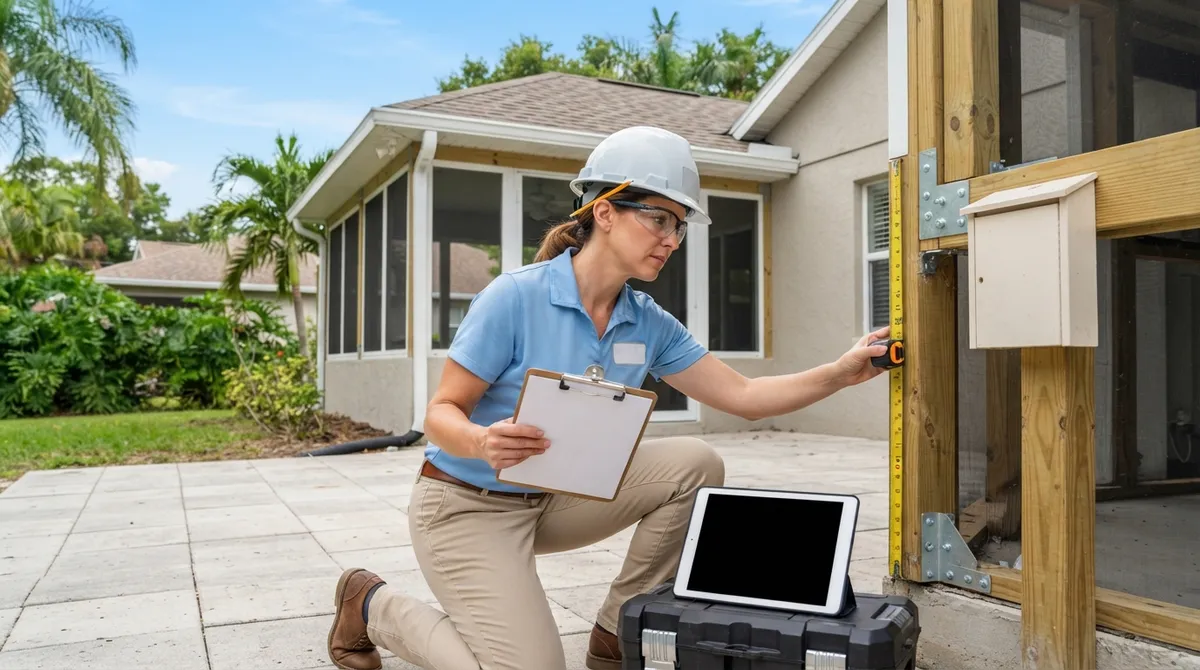
After-the-fact (ATF) engineering is the technical side of legalizing work that was built without a permit. Florida law generally requires a permit before anyone constructs, alters, modifies, repairs, or demolishes a building. When that step gets skipped, the local building department decides what it needs to see before it will legalize the work.
That is where an engineer comes in. A qualified engineer can:
- Review and document the existing conditions on site
- Assess whether the completed work is structurally sound
- Identify deficiencies that need correcting
- Prepare calculations, drawings, or a remediation plan
- Provide signed and sealed documents when the building department requires them
Here is the important part, and it is worth saying clearly: an engineer's report does not legalize anything by itself. Only the local building department can decide what is required and whether the work is approved. Your engineer builds the technical case. The jurisdiction makes the call.
Step 1: Confirm You Need a Florida-Licensed Professional Engineer
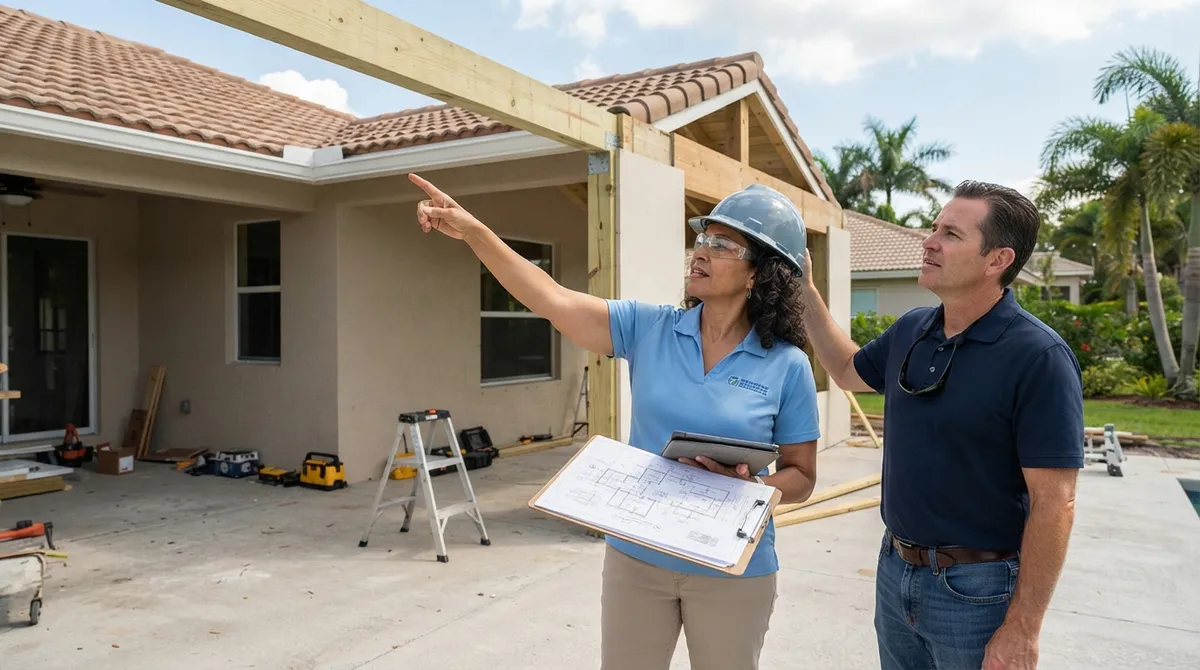
Florida Statutes Chapter 471 restricts the practice of engineering to duly licensed engineers, subject to limited statutory exemptions. Final engineering plans and documents filed for public record generally must be signed, dated, and sealed by the responsible licensee.
In everyday terms, that means a friend who "knows structures" or an out-of-state engineer without Florida licensure cannot sign your ATF package. The building department will not accept it.
Not every ATF project needs an engineer. A small cosmetic fix might only need an inspection. But if your unpermitted work touches load paths, framing, foundations, roof structure, wind resistance, or major electrical, mechanical, or plumbing systems, expect the reviewer to ask for engineering. When in doubt, ask the building department what documentation they require for your scope, or have a permitting pro check for you using our building department lookup tool.
Step 2: Match the Engineer's Discipline to Your Unpermitted Work
This is where many people stumble. "Engineer" is not one job title. Different problems call for different specialties.
| Type of Unpermitted Work | Engineer You Likely Need | Other Professionals That May Be Needed |
|---|---|---|
| Room addition, enclosed patio, lanai, garage conversion | Structural engineer | Architect or drafter, MEP engineer, surveyor |
| Roof framing or truss changes | Structural engineer | Licensed roofing contractor |
| Retaining wall, drainage, grading | Civil or structural engineer | Surveyor |
| Solar array on a roof | Structural engineer and electrical engineer | Licensed solar or electrical contractor |
| HVAC, electrical, or plumbing changes | MEP engineer | Licensed trade contractor |
| Pool, pool cage, or screen enclosure | Structural engineer | Licensed pool contractor |
Notice the right-hand column. Engineering alone may not cover architectural, electrical, plumbing, mechanical, fire-safety, zoning, or contractor-permit requirements. Some jobs also need a Florida-licensed architect, contractor, surveyor, or specialty consultant. Learn more about our structural engineering and MEP engineering services if your project crosses disciplines.
Step 3: Verify the License Before You Sign Anything
Trust, but verify. Checking a license takes only a few minutes and can save you thousands of dollars and months of delay.
- Look up the individual engineer. Use the state license lookup referenced by the Florida Board of Professional Engineers to confirm the license is active and in good standing.
- Check the firm, if hiring a company. Confirm the engineering firm is properly registered in Florida as applicable.
- Ask who takes professional responsibility. Someone specific must sign and seal your documents. Get that name up front.
- Confirm the discipline. A licensed engineer with deep civil experience may not be the right fit for a complex structural assessment.
- Ask for relevant experience. Specifically, ask about after-the-fact work, not just new construction.
Friendly tip: if someone is vague about who will actually seal your drawings, treat that as a yellow flag. A confident pro answers that question immediately.
Step 4: Look for Local After-the-Fact Experience
Here is something that surprises many people. No single statewide fee, timeline, or uniform checklist exists for after-the-fact engineering permits. Every enforcing agency sets its own procedures, and those can differ even between neighboring cities.
That means the best engineer for you is one who has actually walked this path with your jurisdiction. Someone who knows how Hillsborough County reviewers think may approach things differently than someone who works mostly in Miami-Dade County, where requirements around wind and product approvals can be especially detailed.
Good questions to ask any candidate:
- Have you handled similar ATF permits in this city or county?
- Will you coordinate directly with the building department?
- Can you perform or arrange required site inspections and testing?
- What happens if the reviewer asks for corrections?
- Do you handle the as-built drawings, or do I need a separate drafter?
Step 5: Understand What the Engineer Will Do on Site
Once hired, expect your engineer to start with a site visit. This is the heart of most ATF projects, and knowing what happens can calm a lot of nerves.
During the visit, the engineer typically:
- Measures and documents what was actually built
- Photographs framing, connections, fasteners, and structural elements where visible
- Compares the work against current Florida Building Code requirements
- Notes anything that appears undersized, missing, or improperly connected
- Decides whether further investigation or testing is needed
A common worry is, "What if the work is already covered up?" The answer depends on the situation. A qualified engineer may document concealed or completed work where feasible, and in some cases the building department may require selective opening of walls or ceilings so inspectors can see what is behind them. The exact scope depends on the work, your available records, site access, and what the building official requires.
Your engineer's findings often feed into as-built drawings and, where needed, an engineer letter that summarizes conditions and certifies what can be certified.
Step 6: Get a Written Scope, Fee, and Timeline
Before any work starts, ask for a written agreement. A trustworthy pro will happily provide one. It should spell out:
- Scope of work: exactly what will be inspected, analyzed, and drawn
- Deliverables: reports, calculations, sealed drawings, letters, or all of the above
- Fees: flat or hourly, and what triggers additional charges
- Schedule: realistic timing for the site visit and for delivering documents
- Revisions: whether responding to reviewer comments is included
Please be cautious with anyone who promises guaranteed approval before even seeing the site. Approval belongs to the building department, and no honest professional can guarantee it ahead of time. They can promise careful work, clear communication, and persistence. That is what you want.
Who Are Your Real Options?
Let's compare the common paths side by side so you can pick what fits your situation.
| Option | Best For | Watch Out For |
|---|---|---|
| Independent Florida PE | Single, well-defined structural or MEP issue | You manage drafting, filing, and reviewer comments yourself |
| Engineering firm | Larger or multi-discipline projects | Confirm who seals, and ask about ATF-specific experience |
| Architect | Changes to layout, egress, or occupancy | May still need a separate engineer for structural items |
| Permitting company with in-house engineering | Owners and pros who want one team to handle everything | Verify the sealing engineer and the counties covered |
For many people, the last option is the least stressful. Instead of coordinating an engineer, a drafter, and a permit filer separately, one team handles the whole chain. That is the model we follow at 1 Contractor Solutions. Our drafting and engineering are in house, and our own engineer signs and seals the work, so when a reviewer flags something, we fix it without waiting on an outside consultant to call someone back.
Tips for Each Type of Reader
General Contractors and Design Trade Professionals
If you are cleaning up a job, bring your engineer in early and keep documentation tight: photos, material specs, and any subcontractor records. A single point of contact for drafting, engineering, and filing keeps your crew scheduled instead of waiting. Our general contractor services are built around exactly that.
Solar Companies
Rooftop arrays usually need structural verification and electrical documentation. Clear roof framing information up front speeds up the review. See how we support solar contractors with code-compliant documentation.
Realtors and Investors
When a closing is on the line, speed and clarity matter most. Ask any candidate how quickly they can inspect and what documents the lender or title company may want. Our realtor and closing support exists for exactly these time-crunch moments.
Homeowners and Residential Property Owners
You do not need to speak fluent building code. You just need someone who explains the process kindly and clearly. Start with our homeowner resources and ask lots of questions. Good pros love questions.
Common Mistakes to Avoid
- Hiring the cheapest quote without checking the license. An unsealed or improperly sealed package gets rejected.
- Assuming one professional covers everything. Engineering may not satisfy zoning, architectural, or contractor-permit requirements.
- Skipping the building department conversation. Requirements vary, so find out what your jurisdiction expects early.
- Waiting too long. Open violations and stop-work orders can add complexity. If you have received a notice, see our urgent permit rescue options.
- Ignoring the cost of doing nothing. Unpermitted work can surface during appraisals, insurance claims, and sales, as covered in our guide on how to legalize unpermitted work in Florida.
A Quick Roadmap You Can Follow Today
- Gather any records you have: old permits, photos, contracts, plans, and inspection reports.
- Run an open permit search to see what exists on file for the address.
- Identify which jurisdiction actually controls your property, since city lines can be tricky.
- Call or check the building department about ATF requirements for your scope.
- Choose and verify a Florida-licensed engineer matched to your work.
- Get a written scope, fee, and schedule.
- Schedule the site visit and respond promptly to any questions.
- Submit the package and stay ready for reviewer comments.
You do not have to do all of this alone. Many of our clients simply hand us the address and the problem, and we handle the engineering, drafting, filing, and tracking. If that sounds like a relief, you can see what other property owners say in our reviews, and Visit us on Google — 1 Contractor Solutions to read feedback from real customers.
Wrapping Up: You Can Absolutely Fix This
Unpermitted work feels stressful, but it is rarely the end of the road. The right professional turns a scary situation into a checklist. Hire a Florida-licensed engineer whose specialty matches your work, verify that license, look for real local after-the-fact experience, and get everything in writing. Add a team that can draft, file, and shepherd the permit through review, and you are in great shape.
If you want a partner who handles the whole journey, from sealed drawings to permit closeout, across all 67 Florida counties, we would be glad to help. Reach out to get a free quote and tell us your address and what happened. We respond fast, and we will point you to the clearest path forward. You can also stay connected and follow us on LinkedIn or follow us on Facebook for permitting tips as 2026 unfolds.
FAQs
Who is qualified to prepare an after-the-fact engineering report in Florida?
A Florida-licensed professional engineer whose discipline matches your unpermitted work, such as structural for additions and roof framing or MEP for electrical, mechanical, and plumbing. Florida Statutes Chapter 471 restricts engineering practice to duly licensed engineers, so make sure the person sealing your documents holds an active Florida license.
Will an engineer's report guarantee my unpermitted work gets approved?
Unfortunately, no, and anyone promising that is overselling. An engineer builds the technical case, but only your local building department decides what is required and whether the work is approved. A strong, well-prepared package simply gives you the best possible shot.
Can an engineer certify work that is already covered up?
Sometimes, yes. A qualified engineer may document concealed work where feasible, and your building department may require openings in walls or ceilings so inspectors can see what is behind them. The exact approach depends on the work, available records, site access, and what the building official requires.
Do I need an architect or contractor in addition to an engineer?
It depends on your project. Engineering alone may not cover architectural, zoning, fire-safety, or contractor-permit requirements, so some jobs also need a Florida-licensed architect, contractor, surveyor, or specialty consultant. Your building department or a permitting pro can tell you which pieces your scope needs.
How do I verify a Florida professional engineer's license?
Use the state license lookup referenced by the Florida Board of Professional Engineers to confirm the license is active and in good standing. If you are hiring a firm, also confirm it is properly registered in Florida and ask exactly who will take professional responsibility for sealing your documents.
We do this work every day across all 67 Florida counties. Call (866) 314-6931 and we will tell you what your situation actually requires — including when you do not need us.
Related services
Permit Facilitation & Filing
You have a crew scheduled, a client asking for dates, and a permit sitting somewhere in a queue you cannot see. We file it, w…
See the servicePlan Review Coordination
A permit in plan review is not one queue. On a commercial project it can be six queues, each with its own reviewer, its own c…
See the serviceReady to get your permit moving?
One call tells you which jurisdiction controls your project, what it will take, and what it will cost. Most of the time we can scope it on the phone.