
Blog
How to Choose the Best After-the-Fact Permit Service in FL
Unpermitted work in Florida? Learn how after-the-fact permits work, what they cost, and what to look for in the best permitting service.
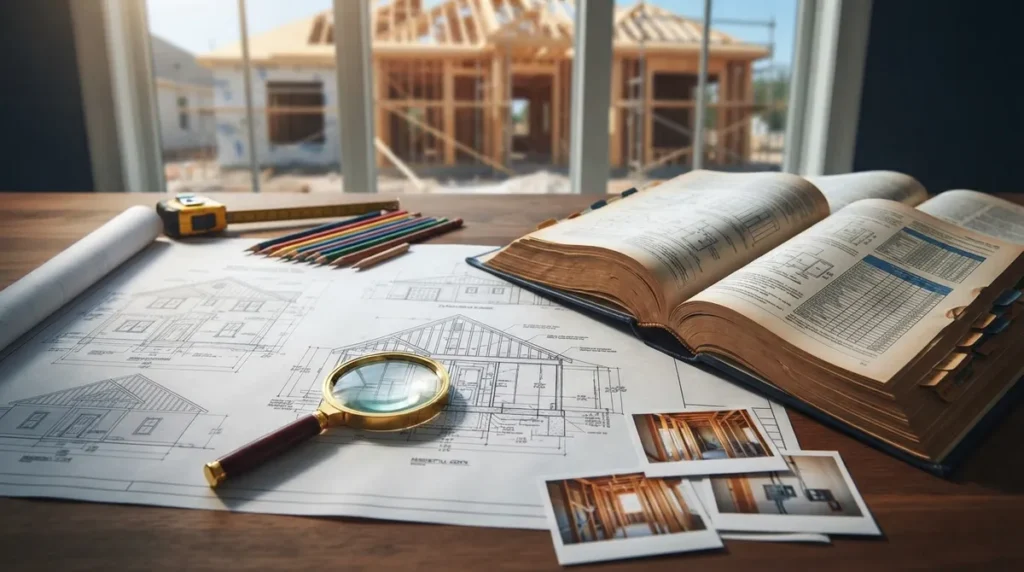
Key Takeaways
-
After-the-fact permits don't automatically legalize unpermitted work; the building department must verify compliance with applicable building codes and local requirements, and corrective work may be required if code violations are found.
-
Each Florida jurisdiction has different procedures, fees, and penalties for after-the-fact permits with no statewide standard—some counties like St. Lucie charge double the regular permit fee, so always verify requirements with your specific building department.
-
Concealed work (framing, wiring, plumbing behind drywall) often requires either opening for inspection or engineering documentation like sealed plans and as-built drawings, making in-house engineering capabilities valuable for avoiding delays.
-
Unpermitted work typically resurfaces at critical moments like sales, refinances, or insurance claims, potentially triggering code-enforcement fines, property liens, and closing delays—addressing it proactively prevents costly escalation.
-
Choose a permitting service with in-house drafting and engineering, experience across multiple Florida jurisdictions, transparent pricing, and proper credentials—avoid any provider guaranteeing approval, since only the building official makes that decision.
-
Timelines vary by jurisdiction workload and project complexity; Florida Statutes set a 30-business-day deadline for single-family dwellings but with exceptions, so a well-prepared submittal is your best tool for keeping projects moving.
Let's be honest: finding out that a deck, a roof, a garage conversion, or a bathroom remodel was never permitted is a stomach-drop moment. Maybe you bought the house that way. Maybe a contractor swore they "had it handled." Maybe a buyer's inspector flagged it two weeks before closing. Whatever the story, you are not alone, and you have options.
The good news is that Florida building departments have a formal path for this: the after-the-fact permit. The tricky part is that the path looks different in every city and county, and the person guiding you through it matters a great deal. That's why choosing the best after the fact permitting service in Florida is less about flashy promises and more about knowing what to look for.
In this friendly, step-by-step guide, we'll walk through what an after-the-fact permit really is, what the process looks like, what it can cost, and how to pick a service that will actually get you across the finish line. Whether you're a homeowner, a general contractor, a solar company, or a real estate professional, you'll leave knowing exactly what questions to ask.
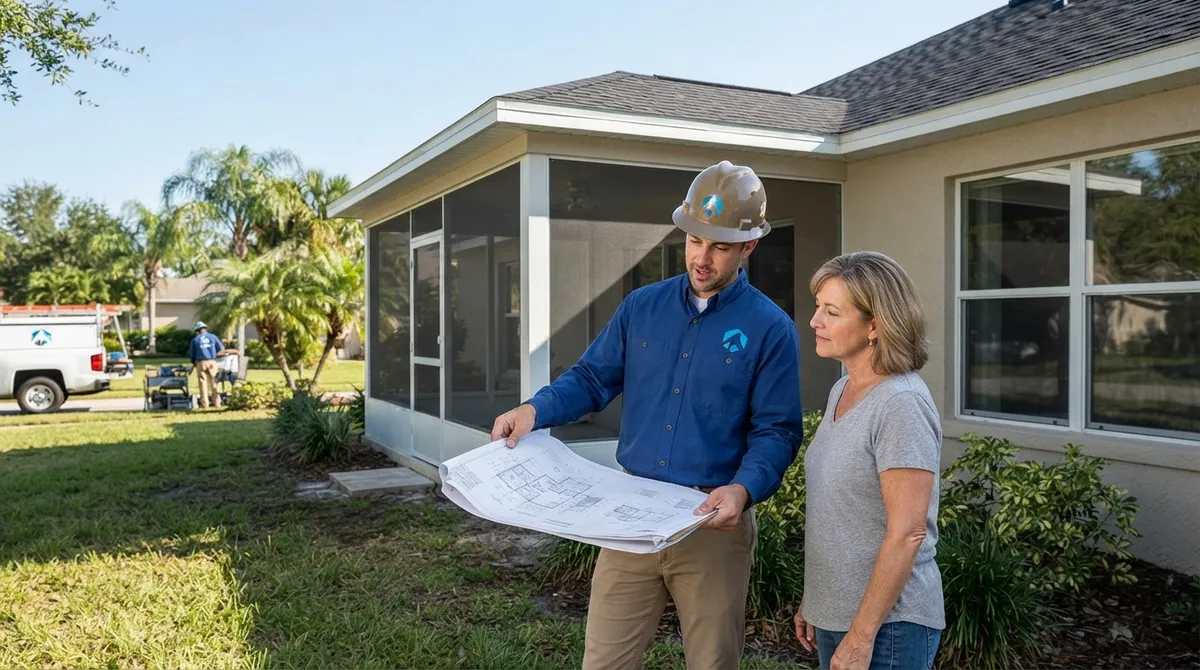
What Is an After-the-Fact Permit in Florida?
An after-the-fact permit is a local building department's review and permitting process for work that was started or completed without the required permit. Florida law is clear on the starting point: Florida Statutes §553.79 makes it unlawful to construct, alter, repair, or demolish a building without first obtaining a permit from the appropriate enforcing agency, subject to statutory exceptions.
Here's the part many people miss: an after-the-fact permit does not automatically legalize the work. The applicant still has to show that what was built complies with the applicable building codes and local requirements. If it does, the permit is issued and inspections are closed out. If it doesn't, corrective work may be required first.
It also helps to know who does what. A private permitting service can research, prepare, file, and coordinate. But only the local building department issues the permit and decides whether the work meets code. Any service that tells you otherwise is not being straight with you.
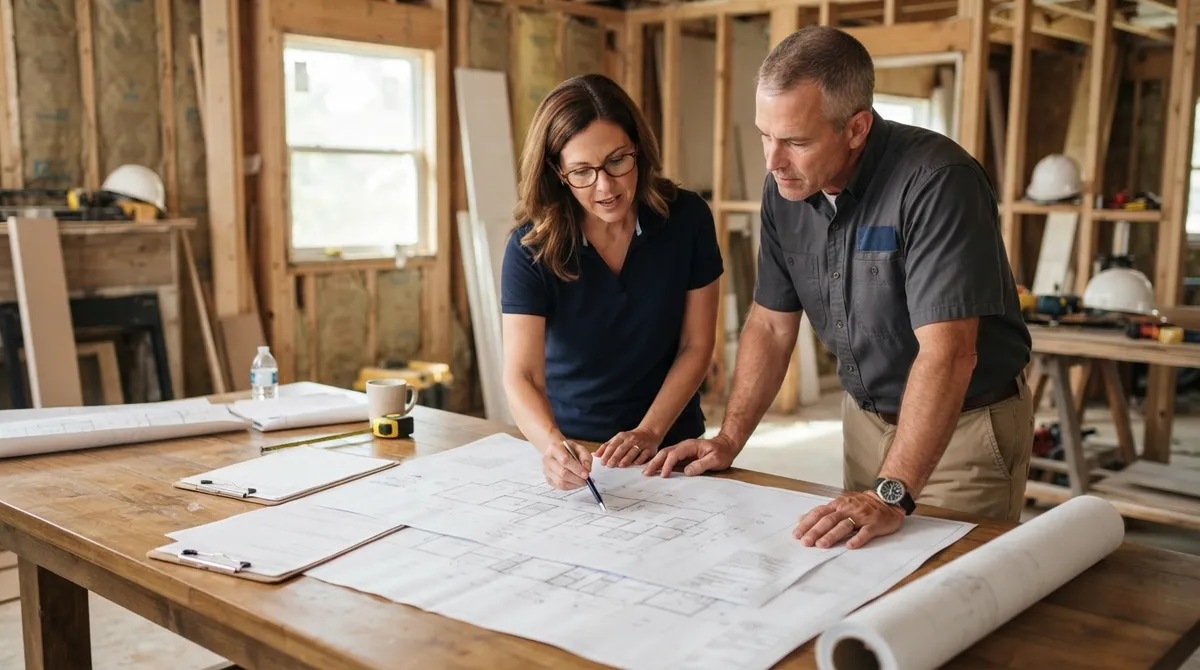
How to Get an After-the-Fact Permit: The Step-by-Step Process
Every jurisdiction has its own quirks, but the general roadmap looks like this. If you'd like a deeper dive, our guide on how to get an after-the-fact permit in Florida covers the details.
- Confirm the correct jurisdiction. Properties near city lines are sometimes governed by the county, not the city. Our building department lookup tool can help you confirm who has authority over your address.
- Research permit history and violations. Check for open permits, expired permits, and code-enforcement cases. You can start with our open permit search.
- Define the scope of work. Document exactly what was built or changed, when, and where.
- Gather documentation. This may include photos, measurements, product approvals, contractor information, and as-built drawings.
- Prepare and submit the application. Depending on the work, this can include plans, structural or electrical documentation, and engineer letters.
- Answer plan-review comments. Reviewers may request corrections or additional information.
- Complete inspections. Inspectors verify the work and, where needed, require concealed items to be exposed or evaluated.
- Close out the permit. Final approval closes the file and clears the record.
Miss a step, or do it out of order, and delays pile up fast. That's exactly where an experienced service earns its keep.
What Does an After-the-Fact Permit Cost?
This is the question everyone asks first, and the honest answer is: it depends on where you are. Fees, penalties, and procedures vary by city and county. There is no single statewide after-the-fact fee.
To show how local these rules can be, St. Lucie County states in its Building FAQ that its after-the-fact permit fee is double the regular permit fee, and it warns that concealed work may require a third-party engineering analysis. That is one county's policy, not a statewide rule, so always verify with the building department serving your address. For a broader look, see our breakdown of after-the-fact permit costs in Florida.
| Cost Factor | What Drives It | Who Sets It |
|---|---|---|
| Permit fee | Type and value of work; some jurisdictions apply a penalty multiplier | Local building department |
| Plans and drawings | Complexity of the scope and documentation needed | Drafting/engineering provider |
| Engineering evaluation | Concealed work, structural or electrical questions | Licensed engineer |
| Corrective work | Anything that fails code review or inspection | Contractor performing repairs |
| Service or facilitation fee | Research, filing, tracking, and coordination time | Your permitting service |
What Happens If You Leave Unpermitted Work Alone?
It can be tempting to hope the problem quietly goes away. Unfortunately, unpermitted work tends to resurface at the worst possible moment: a sale, a refinance, an insurance claim, or a neighbor's complaint.
- Code-enforcement action: A notice of violation can lead to daily fines and required corrective work.
- Liens: St. Lucie County, for example, warns that unresolved violations can lead to fines and even a property lien.
- Closing delays: Lenders, title companies, and buyers often insist on resolution before closing.
- Insurance headaches: Unpermitted work can complicate claims.
- Safety risks: Work that was never inspected may hide real structural or electrical problems.
If you've received a notice, our code compliance violations team can help you respond before things escalate. And for a full picture of the risks, read about the penalty for building without a permit in Florida.
What Should the Best After-the-Fact Permitting Service in Florida Do for You?
A great service acts like your outsourced permitting department. Here's what that looks like in practice:
- Researches property records, permit history, and code-enforcement cases
- Identifies the right jurisdiction and its specific requirements
- Prepares or coordinates plans, as-built drawings, and engineer letters
- Files the application and tracks it through review
- Responds to reviewer comments and handles resubmittals
- Coordinates inspections through final approval
- Keeps you informed in plain English along the way
Notice what's not on that list: guaranteeing approval. No honest provider can promise that, because the building official makes the final call. What a strong provider can do is prepare a clean, complete package and remove the guesswork.
9 Things to Look for When Choosing a Service
Use this checklist when comparing providers. The best after-the-fact permitting service in Florida should check most, if not all, of these boxes.
- In-house drafting and engineering. When a reviewer flags something, you want it fixed immediately, not routed to an outside consultant who calls back next week. In-house sealed drawings can save real time.
- Statewide reach with local knowledge. Florida has 67 counties and hundreds of municipalities, each with its own process. Ask how many jurisdictions the team has actually filed in.
- Willingness to take difficult files. Some firms decline expired or messy cases. Look for a team that welcomes them.
- Transparent scope and fees. You should know what's included, what isn't, and what the county will charge separately.
- Proper credentials. Verify Florida licensing or professional credentials for any regulated work, including engineering seals.
- No guaranteed-approval promises. Be wary of anyone who claims they can "make it go away."
- Fast, reliable communication. When a closing date or a stop-work order is looming, response time matters.
- Experience with your project type. Roofs, solar, additions, windows, and pools each have different documentation needs.
- A clear track record. Ask about years in Florida permitting and the volume of permits handled.
Comparing Your Options: DIY, Contractor, or Permitting Service
You have a few ways to tackle this. Here's how they stack up.
| Approach | Best For | Watch Out For |
|---|---|---|
| DIY with the building department | Simple, small-scope work with clear documentation | Confusing requirements, resubmittals, and lost time |
| Original contractor | Cases where the contractor is licensed, active, and cooperative | Contractors who have vanished or lack local registration |
| Independent engineer only | Work needing a structural or electrical evaluation | Still need someone to file, track, and coordinate |
| Full-service permitting firm | Complex files, tight deadlines, multi-trade scopes | Vague pricing or approval guarantees |
If you're comparing hiring paths, you may also find our article on who helps with after-the-fact permits in Florida useful.
Concealed Work, Engineering, and Sealed Drawings
One of the biggest surprises for property owners is what happens when the work is already covered up. If framing, wiring, or plumbing is hidden behind drywall or finishes, the building official may require it to be opened for inspection or supported by engineering documentation.
That documentation might include sealed plans, as-built drawings, or an engineer's evaluation. The exact evidence depends on the work, the code, and the local building official. This is why in-house engineering is such a valuable feature. A team that can produce as-built drawings and engineer letters under one roof keeps your project from stalling between vendors.
Curious whether a seal is even necessary? Our guide on whether a sealed drawing is required for after-the-fact permits breaks it down.
Tips for Different Readers
Homeowners and Residential Property Owners
Start by finding out what you actually have. Pull the permit history, take photos, and gather any receipts or contractor details. Then bring in help before you contact the county, so you understand your options. Our homeowner resources are a friendly place to start.
General Contractors and Trade Professionals
If you inherited a job from another contractor or discovered a permitting gap mid-project, speed and documentation are everything. A partner who handles filing, engineering, and resubmittals lets your crew stay on schedule. See how we support general contractors.
Solar Companies
Solar installs need clean structural and electrical documentation. If an install went in without the right permit, a coordinated fix that includes engineering support keeps interconnection and inspections from stalling. Learn more about our work for solar contractors.
Real Estate Professionals
A permit surprise during a sale can derail a closing. Early research and a clear plan for resolution keep everyone calm. Our realtor and closing support is built for exactly these moments.
How Long Does It Take?
Timelines vary widely, and anyone quoting a guaranteed number is guessing. Florida Statutes §553.79(16) sets a 30-business-day deadline for issuing a permit for a single-family residential dwelling after an application is received, and a 10% reduction in the permit fee for each business day the local agency misses that deadline. But those provisions come with conditions and exceptions, and they aren't a guaranteed timeline for after-the-fact cases.
In practice, your timeline depends on the jurisdiction's workload, the completeness of your package, whether concealed work must be evaluated, and how quickly corrections are turned around. A well-prepared submittal is the single best way to keep things moving.
Why Local Jurisdiction Knowledge Matters
Florida is not one permitting system; it's hundreds. A process that works smoothly in one city may be handled very differently ten miles away. That's why statewide experience matters. If you're in a major market, you can explore our county pages for Hillsborough County, Miami-Dade County, and Broward County, or browse all Florida counties we serve.
Where 1 Contractor Solutions Fits In
At 1 Contractor Solutions, we think of ourselves as Florida's outsourced permitting department. We take on after-the-fact and expired permits, including the files other people decline. Our drafting and engineering are in house, and our own engineer signs and seals the work, so when a reviewer has a comment, we can address it right away.
We serve all 67 Florida counties, have filed in more than 400 municipalities, and respond within 30 minutes day or night. If you'd like to see what others say, you can visit us on Google — 1 Contractor Solutions, or follow us on LinkedIn and follow us on Facebook for permitting tips.
Facing a deadline? Our urgent permit rescue service is designed for stop-work orders, denials, and closings held up by permit issues.
Final Thoughts and Next Steps
Unpermitted work is fixable. The path requires the right jurisdiction, honest documentation, code-compliant proof, and a team that knows how local reviewers think. When you're vetting providers, prioritize in-house engineering, statewide experience, transparent pricing, and a refusal to promise guaranteed approvals.
You don't have to untangle this alone. If you're ready to move forward, get a free quote and let our team tell you which jurisdiction controls your property, what it will take, and how fast we can get started. Permits approved. Projects moving.
FAQs
What is an after-the-fact building permit in Florida?
It's the local building department's process for reviewing work that was started or finished without the required permit. It doesn't automatically legalize the work, though. You still need to show it meets applicable code, and the building department makes the final call.
How much does an after-the-fact permit cost in Florida?
It depends on your city or county, because there's no single statewide fee. For example, St. Lucie County says its after-the-fact permit fee is double the regular fee, while other jurisdictions use their own schedules. Add in plans, possible engineering, and any corrective work for your true total.
Can I get an after-the-fact permit if the work is covered by drywall?
Often, yes, but the building official may ask for the work to be opened up or supported with engineering documentation, such as sealed plans or an engineer's evaluation. What's required depends on the type of work and the local rules, so it's smart to check early.
Do I need an engineer to legalize unpermitted work in Florida?
Not always, but many cases benefit from one, especially when work is concealed or involves structural, electrical, or wind-load questions. The local building official decides what evidence is enough, and an in-house engineering team can make that step much smoother.
How do I choose a Florida after-the-fact permitting service?
Look for in-house drafting and engineering, real experience in your jurisdiction, clear fees, proper credentials, and fast communication. Steer clear of anyone who guarantees approval, since only the building department can issue the permit.
We do this work every day across all 67 Florida counties. Call (866) 314-6931 and we will tell you what your situation actually requires — including when you do not need us.
Related services
Permit Facilitation & Filing
You have a crew scheduled, a client asking for dates, and a permit sitting somewhere in a queue you cannot see. We file it, w…
See the servicePlan Review Coordination
A permit in plan review is not one queue. On a commercial project it can be six queues, each with its own reviewer, its own c…
See the serviceReady to get your permit moving?
One call tells you which jurisdiction controls your project, what it will take, and what it will cost. Most of the time we can scope it on the phone.