
Blog
Who Helps With After the Fact Permits in Florida
Learn exactly who helps resolve after-the-fact permits in Florida, from building departments to licensed engineers and permit expediters.

Key Takeaways
-
After-the-fact permits require more than just filing paperwork—local building departments still conduct full review with potential extra scrutiny, may require as-built drawings and engineering evaluations, and can mandate corrections to meet current code standards.
-
You typically need a team approach: start with your local building department, involve a licensed Florida contractor for structural/electrical/plumbing work, consider a permit expediter to coordinate the process, and hire a licensed engineer/architect if structural or MEP documentation is needed.
-
After-the-fact permit fees are often double the standard rate (as in St. Lucie County), and ignoring violations can result in notices, fines, or property liens, making early resolution financially and legally critical.
-
Permit expediters cannot guarantee approval but provide significant value by identifying correct jurisdictions, assembling complete applications, tracking reviews, and responding to comments—essentially acting as a translator between you and building departments.
-
The process involves seven key steps: confirm jurisdiction, gather existing documentation, prepare as-built drawings, submit the application, respond to plan review comments, schedule inspections (sometimes requiring finishes to be opened), and reach final closeout.
-
Timeline varies by county and work complexity, but having an active team that tracks your file and responds quickly to reviewer comments can save weeks—especially important given Florida's high permitting volume of 46,500+ residential permits in Q1 2025 alone.
So you just found out there's unpermitted work on your property, and now your stomach is doing that little flip-flop thing. Maybe a home inspector flagged it during a sale. Maybe code enforcement left a friendly (but firm) notice on your door. Or maybe you're a contractor who inherited someone else's shortcut and now you're the one holding the bag. Take a breath — you are not the first person this has happened to, and you won't be the last. Florida sees this constantly, and there's a whole system of professionals whose entire job is helping people fix exactly this kind of situation.
The good news? You don't have to figure this out alone. Whether you're a homeowner in Bradenton, a general contractor juggling five jobsites, or a realtor trying to save a closing, there are specific people and processes designed to get unpermitted work legalized. Let's walk through exactly who does what, so you know who to call first.
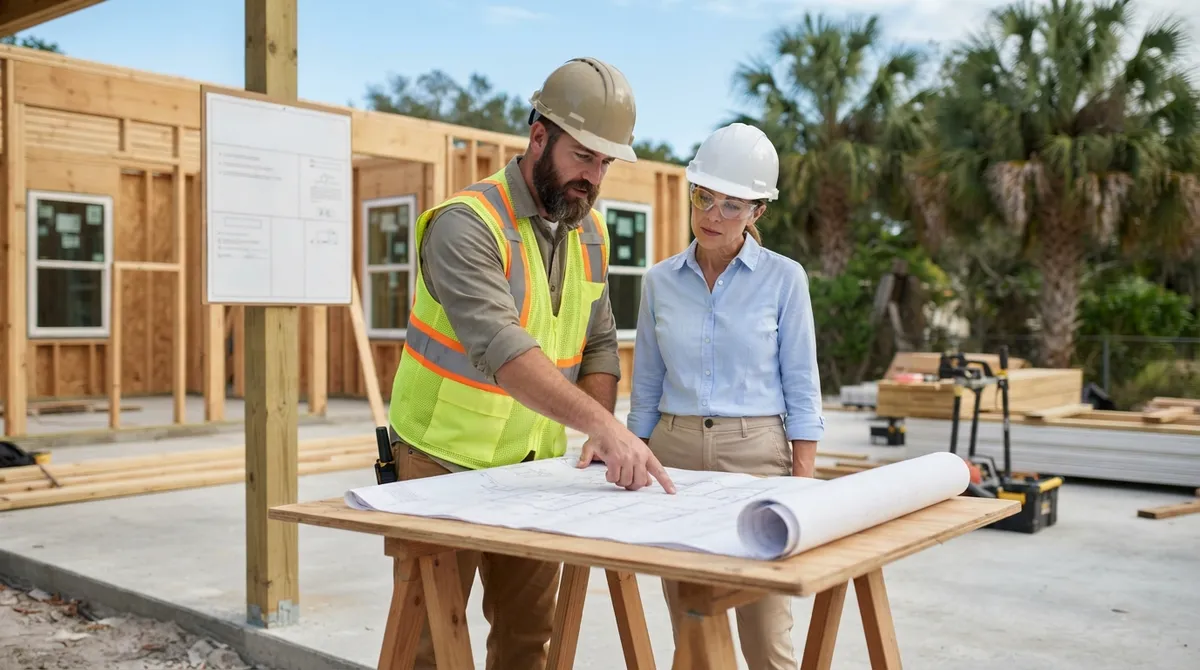
What Is an After-the-Fact Permit, Really?
An after-the-fact permit is simply a building permit applied for after construction has already happened, instead of before. Florida Statutes §553.79 requires permits for covered construction and alterations before work begins, so applying after the fact is essentially playing catch-up with the law. The catch is that filing the paperwork doesn't automatically make everything okay — the local building department still has to review it like any other permit, sometimes with extra scrutiny.
This matters because a lot of folks assume that once they submit the application, they're in the clear. Not quite. The building official can require as-built drawings, engineering evaluations, inspections, and even corrections to bring the work up to current code. That's exactly why having the right team in your corner from the start saves so much time and stress.

Who Actually Helps With After-the-Fact Permits in Florida
There isn't one single person who solves this for you — it's more like a small team, and who you need depends on the scope of the work. Here's a friendly breakdown of the usual players.
1. The Local Building Department
Your city or county building department is always your first stop, whether you like it or not. They're the ones who decide what documentation is required, what fees apply, and what inspections need to happen. Every jurisdiction runs things a little differently, so a process that works in Tampa might look completely different in Fort Lauderdale. If you're not sure who has jurisdiction over your property, our building department lookup tool can point you in the right direction fast.
2. A Licensed Florida Contractor
If the unpermitted work involves structural changes, electrical, plumbing, or mechanical systems, you'll typically need a licensed contractor to pull the permit and take responsibility for bringing the work up to code. This is especially true for general contractors managing larger renovation or commercial projects, where multiple trades might be tangled up in the same violation.
3. A Permit Expediter or Permitting Consultant
This is where a company like 1 Contractor Solutions comes in. A permit expediter doesn't replace the building official and can't guarantee approval, but they can identify the correct authority, assemble your application package, track the review process, respond to comments, and push the file toward closeout. Think of it as having someone who speaks fluent "building department" translating everything for you.
4. A Florida-Licensed Architect or Engineer
When the scope requires structural or MEP documentation — say, an addition, a load-bearing wall change, or concealed electrical work — you'll need a Florida-licensed architect or professional engineer to prepare sealed drawings or evaluations. St. Lucie County, for example, notes that concealed work may require a third-party engineering analysis before the permit can move forward. Having in-house engineering and architectural drafting teams means fixes to reviewer comments happen quickly instead of waiting on an outside consultant to call back.
Step-by-Step: How the After-the-Fact Permit Process Usually Works
- Confirm the jurisdiction. Figure out exactly which city or county building department enforces code at your address — it's not always the obvious answer near county lines.
- Gather existing documentation. Old permits, surveys, photos, and any records of the work already done help build your case.
- Prepare as-built drawings or plans. Many jurisdictions require drawings showing exactly what was built, which may need a licensed drafter or engineer.
- Submit the application. This includes fees, which are often higher than standard permit fees for after-the-fact cases.
- Respond to plan review comments. Reviewers may ask for corrections, additional engineering, or clarifications.
- Schedule inspections. Some work may need to be opened up (yes, that sometimes means cutting into drywall) so inspectors can verify it meets code.
- Reach closeout. Once everything checks out, the permit is finalized and the violation is resolved.
Comparing Your Options: Who Should You Hire First?
| Provider | Best For | What They Can't Do |
|---|---|---|
| Building Department | Confirming requirements and jurisdiction | Provide design services or advocate on your behalf |
| Licensed Contractor | Physical corrections and code compliance work | Prepare sealed engineering documents unless separately licensed |
| Permit Expediter | Filing, tracking, coordinating reviews | Guarantee approval or replace licensed design professionals |
| Architect/Engineer | Sealed drawings, structural/MEP evaluations | Handle contractor-level construction work |
Why This Process Looks Different Depending on Who You Are
For General Contractors
If you're managing a job where a previous contractor cut corners, you need general contractor permitting support that includes sealed drawings and reliable permit filing and tracking across whichever county your project sits in — whether that's Hillsborough County or Broward County.
For Solar Companies
Unpermitted solar installs are more common than you'd think, especially with fast-moving solar contractor projects. Structural and electrical documentation needs to be code-compliant, and coordinating with local jurisdictions quickly matters when customers are waiting on utility interconnection.
For Realtors and Real Estate Investors
Nothing stalls a closing faster than discovering an open or missing permit during due diligence. Our realtor and closing support services exist specifically to research, document, and resolve these issues before they blow up a deal.
For Homeowners
Maybe you bought a house with a Florida room the previous owner built without a permit. It happens all the time. Homeowners often just need someone to translate the building department's requirements into plain English and handle the paperwork.
For Design Trade Professionals
Architects and specialty trades sometimes need outsourced drafting-only services when they already have their own engineer of record but need extra hands to keep projects moving.
What Documents and Inspections Are Typically Required
- As-built drawings showing exactly what was constructed
- Structural or MEP engineering evaluations, especially for concealed work
- Proof of contractor licensing or owner-builder status
- Site plans if the work affects setbacks, drainage, or property lines
- Inspection reports, sometimes requiring finishes to be opened for verification
- Engineer letters certifying the work meets current code standards
What Happens If You Don't Resolve It
Ignoring an unpermitted work violation rarely makes it go away. St. Lucie County, for instance, states that its after-the-fact permit fee is double the standard rate, and unresolved violations can lead to a notice of violation, fines, or even a property lien. Every jurisdiction handles enforcement a little differently, so it's worth confirming specifics with your local code compliance and violations team early rather than waiting for a certified letter to show up.
How Long Does This Typically Take?
Timelines vary quite a bit depending on the county, the complexity of the work, and how quickly reviewer comments get resolved. Florida's residential permitting activity has been steadily busy — the state recorded 46,500 residential building permits in the first quarter of 2025 alone, according to the National Association of Home Builders, so building departments are handling significant volume. Having a team that actively tracks your file and responds to comments quickly can shave weeks off the process.
Choosing the Right Permitting Partner
Before hiring anyone to help with an after-the-fact permit, ask a few questions:
- Are they licensed in Florida where required, and can they show it?
- Do they have direct experience with your specific building department?
- Does their scope include design, engineering, fees, inspections, and full permit closeout — or just partial filing?
- Can they explain the process in plain language without a bunch of jargon?
With over 5,000 permits handled and experience filing in more than 400 Florida municipalities, our team has seen just about every version of this problem — from a homeowner's enclosed patio in St. Petersburg to a commercial build-out missing paperwork in Miami. You can browse real feedback from people we've helped by checking 1 Contractor Solutions on Google, or connect with us on LinkedIn and Facebook for updates on Florida permitting trends.
A Quick Look at Common Fees and Requirements by Situation
| Situation | Typical Requirement | Who Handles It |
|---|---|---|
| Unpermitted room addition | Sealed structural drawings, as-builts | Engineer + permit expediter |
| Unpermitted solar install | Electrical/structural documentation | Solar contractor + engineer |
| Missing CO on renovated space | Inspections, code compliance review | Building department + expediter |
| Concealed electrical/plumbing | Possible wall opening for inspection | Contractor + inspector |
Ready to Take the Next Step?
Dealing with unpermitted work doesn't have to feel like wandering through a maze blindfolded. With the right combination of building department guidance, licensed contractors, and a permitting team that handles the heavy lifting, you can get back to enjoying your property — or closing your deal — with confidence. If you're ready to stop guessing and start solving, get a free quote from our team today, and let's get your Florida permit sorted out together.
FAQs
Who can help me get an after-the-fact building permit in Florida?
You'll typically need a combination of your local building department, a licensed Florida contractor, and possibly a permit expediter or engineer, depending on the scope of the work. It really is a team effort, so don't feel like you have to figure it all out solo!
Can a permit expediter get an after-the-fact permit approved in Florida?
A permit expediter can prepare your application, track the review, and coordinate with the building department, but they can't guarantee approval — that decision always rests with the local building official. Think of them as your knowledgeable guide through the process, not a magic wand.
Do I need an engineer or architect for an after-the-fact permit?
If the unpermitted work involves structural changes, additions, or concealed electrical and plumbing, yes, you'll likely need a Florida-licensed engineer or architect to prepare sealed drawings or an evaluation. It's a common requirement, especially for larger renovations.
How much does an after-the-fact permit cost in Florida?
Costs vary widely by jurisdiction, but many counties charge double the standard permit fee for after-the-fact applications, as seen in St. Lucie County's published fee schedule. It's always best to confirm the exact rate with your local building department before you start.
What happens if I don't resolve an unpermitted construction violation?
Ignoring the issue can lead to a notice of violation, ongoing fines, or even a lien on your property, so it's worth tackling sooner rather than later. The good news is that most jurisdictions have a clear path to resolution once you start the process.
We do this work every day across all 67 Florida counties. Call (866) 314-6931 and we will tell you what your situation actually requires — including when you do not need us.
Related services
Permit Facilitation & Filing
You have a crew scheduled, a client asking for dates, and a permit sitting somewhere in a queue you cannot see. We file it, w…
See the servicePlan Review Coordination
A permit in plan review is not one queue. On a commercial project it can be six queues, each with its own reviewer, its own c…
See the serviceReady to get your permit moving?
One call tells you which jurisdiction controls your project, what it will take, and what it will cost. Most of the time we can scope it on the phone.