
Blog
High Volume Roofing Permits in Tampa: A 2026 Workflow Guide
Learn how high volume roofing permits work in Tampa, from virtual inspections to tracking workflows, and how to keep every roof permit moving in 2026.

Key Takeaways
-
Each roof replacement in Tampa requires an individual permit with its own address, scope, contractor, documents, fees, and inspection history—high volume means managing many separate permits simultaneously, not one blanket permit covering multiple roofs.
-
Residential roof inspections in Tampa are virtual through the VuSpex process; tile roofs and homeowner permits require a dry-in inspection, while non-tile contractor roofs may substitute a roof mitigation/attestation form per City requirements.
-
Implement a daily tracking system with columns for address/jurisdiction, permit number, submitted documents, fees, and inspection notes to prevent self-inflicted delays like wrong-agency filings, unpaid fees, missed inspections, and permit expiration.
-
Verify the property is in the City of Tampa (not unincorporated Hillsborough County) before filing, and confirm contractor licensing and current municipality registration for every application to avoid lost time and rejected submissions.
-
Outsourced permitting services can handle filing, status tracking, reviewer comments, and revisions, freeing your crews to focus on roofwork while the licensed contractor remains responsible for code compliance and the City retains permit authority.
-
Watch for special cases including unpermitted or expired prior roof work, commercial roof-covering permits with separate requirements, and jobs requiring engineer letters or sealed drawings before standard filing procedures.
If you've ever tried to keep thirty roof permits moving at once, you already know the feeling. One address is missing a product approval. Another is waiting on a virtual inspection. A third needs a fee paid before anything can happen. Multiply that by a busy storm season and suddenly your best project manager is spending the whole week inside a permit portal instead of running crews.
That's where a repeatable system comes in. In this guide, we'll walk through how high volume roofing permits in Tampa actually work, what the City of Tampa expects, and which controls keep dozens of separate permit records clean and moving. Whether you're a roofing contractor, a restoration company, a property manager, or a homeowner juggling a few repairs, you'll find practical steps you can use right away.
One quick note up front: requirements can change by property, roof type, and scope, so always confirm current City instructions for each record. Think of this article as your friendly roadmap, not a substitute for the City's official guidance.

What "High Volume Roofing Permits" Really Means in Tampa
Here's the first thing worth clearing up. High volume does not mean one blanket permit covering many roofs. In Tampa, every roof-replacement job is its own permit record, with its own address, scope, contractor, documents, fees, and inspection history.
So when we talk about high volume roofing permits in Tampa, we mean the repeatable administration of many individual applications, inspections, and closeouts at the same time. The challenge isn't any single permit. It's keeping every one of them accurate and consistent while the pace picks up.
For context, one third-party permit-data site reported roughly 4,891 roofing permits issued in Tampa over a recent 12-month window in its 2026 listing. That's not an official City figure, so verify against City records before leaning on it, but it gives you a feel for the scale of activity in this market.
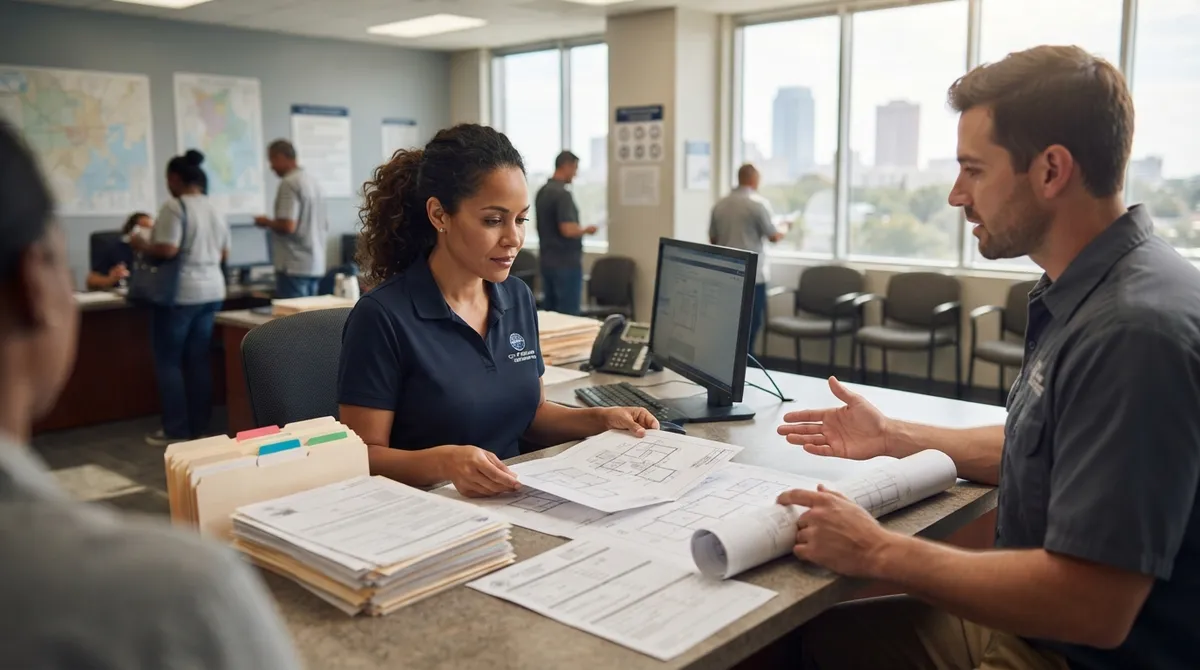
How the City of Tampa Handles Roof Permits
The City of Tampa runs a dedicated roofing permit process through its Construction Services department. Applicants are directed to the City's roofing permit page and its online Accela Citizen Access portal, where applications, fees, and inspections are managed.
The process generally moves through three stages:
- Application: You submit the permit request with property details, scope, and contractor information.
- Fees: Permit fees are assessed and paid before work proceeds.
- Inspections: The City handles roofing inspections, which are currently virtual for residential reroofs.
Tampa also publishes construction forms and instructions online, including roof-mitigation materials and guidance for starting an online permit application. Reading those pages before you file saves real time later. If you want a broader look at how the city fits into the region, our Tampa permitting resource and our Hillsborough County page are good starting points.
Virtual Inspections and the Roof Dry-In Rule
One of the biggest operational details in Tampa is how inspections work. According to the City's published residential roof-replacement guidance, inspections are handled virtually through the VuSpex Offline Field Report process, for both contractors and homeowners.
The City lists a roof dry-in inspection as required for all tile roofs and for homeowner permits. For non-tile roofs, contractors may be able to submit a roof mitigation/attestation in lieu of the dry-in, subject to the City's requirements.
The City also describes its inspection list as typical, noting that additional inspections may be required depending on project scope. In other words, don't assume every reroof follows an identical path. Check each permit.
| Roof Type / Permit Type | Dry-In Inspection | Alternative Documentation |
|---|---|---|
| Tile roofs | Required | None listed in published guidance |
| Homeowner permits | Required | None listed in published guidance |
| Non-tile roofs (contractor) | May be replaced | Roof mitigation/attestation, per City requirements |
That table reflects the City's published guidance, and it's worth re-confirming before each job since rules can be updated. If you want to understand how inspections fit into the bigger picture, see our overview of permit inspections.
Florida Code and Wind-Mitigation Basics
Underneath the City's workflow sits state law and the Florida Building Code. Florida Statutes section 553.844 addresses roof-replacement techniques and windstorm loss mitigation, and the applicable code provisions need to be checked against the specific building and work scope.
Practically, that means a roof on a coastal Tampa Bay home may involve different considerations than one inland, and a commercial low-slope roof isn't handled like a residential shingle reroof. Product approvals, fastening requirements, and mitigation documentation all matter, and the City's local review is where it all gets verified.
For roofing-specific filings, our page on roof permits explains how we approach the paperwork, and our guide to product approvals on older roofs is helpful when a job's history is murky.
The Real Challenges of Running Many Permits at Once
When volume climbs, the same handful of problems show up again and again. Recognizing them early is half the battle.
- Inconsistent submissions: One crew uploads a complete packet, another forgets the mitigation form, and reviewers send both back with different comments.
- Wrong jurisdiction: Addresses near city lines can sit in the City of Tampa or unincorporated Hillsborough County. Filing in the wrong one burns days.
- Fee and status blind spots: Unpaid fees or missed status changes quietly stall records.
- Inspection scheduling gaps: Virtual inspections still need clean documentation, and a missed upload can delay a closeout.
- Expiring permits: When jobs drag, permits can lapse. We cover that in why Tampa roofing permits keep expiring.
None of these are dramatic on their own. Together, at volume, they're what turn a profitable month into a stressful one.
A Repeatable Workflow for High Volume Roofing Permits in Tampa
The good news is that high volume roofing permits in Tampa become manageable when you treat each record as part of a system. Here's a practical workflow you can adopt.
- Validate the address and jurisdiction. Confirm the property is actually inside the City of Tampa before you build the application.
- Confirm contractor licensing and registration. Make sure the license and any required municipality registration are current for each filing.
- Gather required documents per job. That includes scope details, product approvals, and any roof mitigation or attestation paperwork the City asks for.
- Submit through the City's portal. File the application and watch for fee assessments right away.
- Track status and fees daily. A simple shared tracker with address, permit number, status, and next action keeps nothing hidden.
- Schedule and document inspections. Capture dry-in or mitigation documentation and follow the virtual inspection steps carefully.
- Close out cleanly. Confirm final inspection approval and file the closeout so the record doesn't linger open.
These are operational best practices, not guarantees. Approval and turnaround time stay in the City's hands, and available research doesn't establish a guaranteed processing time. But a tight workflow removes the self-inflicted delays, which are usually the biggest ones.
A Sample Tracking Setup
You don't need fancy software to start. A shared spreadsheet with a few disciplined columns goes a long way.
| Column | What It Tracks | Why It Helps |
|---|---|---|
| Address & jurisdiction | Verified City vs. County location | Prevents wrong-agency filings |
| Permit number & status | Current Accela record state | Shows stalled records at a glance |
| Documents submitted | Product approvals, mitigation forms | Avoids repeat reviewer comments |
| Fees | Assessed, paid, outstanding | Stops payment-related holds |
| Inspection notes | Dry-in, mitigation, final | Keeps closeouts on schedule |
| Expiration watch | Permit age and renewal flags | Prevents lapsed permits |
When Outsourcing the Permit Work Makes Sense
Here's the honest truth: a permitting service doesn't replace your responsibility as the licensed contractor for code-compliant work, and it doesn't replace the City's authority to issue permits and approve inspections. What it can do is take the administrative load off your plate.
That's the role 1 Contractor Solutions plays for roofers across Florida. We act as an outsourced permitting department: filing applications, tracking records, working reviewer comments, and coordinating revisions so your crews can stay on rooftops. If you run a roofing company, our roofing contractor services and the Roof Permit Partnership Program were built for exactly this kind of volume.
We also cover the situations that tend to blow up a schedule. Need help with comments or resubmittals? Our revisions and resubmittals team handles that. Need to file lots of records at once? See permit facilitation and filing. And when a permit stalls or a job lands in trouble, our urgent permit rescue service steps in.
Who Benefits Most From High Volume Support
Different readers feel the strain in different ways, so let's break it down.
- Roofing contractors: You need consistent filings across many addresses without hiring an in-house permit coordinator.
- General contractors: Reroofs often sit inside a bigger scope, and clean permit tracking keeps the whole project on time. See our general contractor services.
- Restoration companies and property managers: Storm-driven demand means many roofs at once, often across multiple properties. Check out support for restoration companies and property managers.
- Solar companies: Roof condition and permit status often affect solar timing, so coordinated roofing permits help everyone downstream.
- Realtors and investors: Open or expired roof permits can stall a sale. Our guide on clearing a Tampa permit hold before closing walks through it.
- Homeowners: Even a single reroof benefits from knowing the dry-in and inspection steps ahead of time.
Special Cases to Watch For
Not every roof job is a clean replacement, and a few scenarios deserve extra attention.
Unpermitted or expired roof work
If a previous owner or contractor skipped the permit, or a permit expired before closeout, the fix is different from a standard new filing. Our resources on unpermitted roofs in Florida and after-the-fact and expired permits explain the options.
Commercial roof coverings
Tampa also publishes separate guidance for commercial roof-covering replacement permits and inspections. Don't assume the residential steps apply. Pull the commercial page for the property type you're working on.
Jobs that need engineering
Some roofs, especially older structures or those with truss questions, may need an engineer's letter or sealed drawings to satisfy review. Because our drafting and engineering are in house, that support is available without the outside-consultant runaround. Learn more about engineer letters.
Quick Checklist Before You File
Run through this list for every record, no matter how routine the job feels.
- Address confirmed inside the City of Tampa
- Contractor license and registration current
- Roof type identified (tile vs. non-tile) so you know the dry-in or attestation path
- Product approvals and mitigation documents ready
- Fees tracked from assessment through payment
- Inspection plan set for the virtual VuSpex process
- Expiration date noted so the permit doesn't lapse
If you'd like help finding the right agency for a tricky address, our building department lookup tool and open permit search are free and quick.
Keep Your Roofs Moving in 2026
High volume roofing permits in Tampa don't have to feel like juggling flaming torches. With a verified address, complete documents, a daily tracker, and a clear plan for virtual inspections, each record becomes a small, predictable task instead of a surprise. And when the pace outgrows your team, an outsourced permitting department can carry the load.
We'd love to help. If you're staring down a stack of roof permits, get a free quote and tell us what you're working with. We respond within 30 minutes, day or night, and se habla español. You can also see what our customers say by checking out our 1 Contractor Solutions reviews on Google, and follow us on LinkedIn or follow us on Facebook for Florida permitting updates. Permits approved. Projects moving.
FAQs
Do I need a permit to replace a roof in Tampa, Florida?
Yes, roof-covering replacement in Tampa goes through the City's dedicated roofing permit process, with application, fee, and inspection stages. It's always smart to confirm the current requirements for your specific property and scope on the City's Construction Services roofing page.
How are roof replacement inspections handled in Tampa?
The City's published guidance says residential roof-replacement inspections are virtual, using the VuSpex Offline Field Report process. A roof dry-in is listed for tile roofs and homeowner permits, while non-tile roofs may be able to use a roof mitigation/attestation instead, subject to City requirements.
Can one permit cover multiple roofs in Tampa?
No, each roof job needs its own permit record with its own address, scope, contractor, fees, and inspections. High volume support simply means coordinating many separate permits accurately and consistently, which is where a permitting service can really help.
Can a permitting service submit multiple roofing permit applications for a contractor?
Absolutely. A permitting service can organize submissions, track statuses and fees, and work reviewer comments across many records. The licensed contractor stays responsible for code-compliant work, and the City keeps authority over issuing permits and approving inspections.
How can roofing contractors track a high volume of Tampa permit applications?
Start with a shared tracker listing each address, permit number, status, fees, documents, and inspection notes. Add an expiration-watch column so no permit lapses quietly, and review it daily so stalled records get attention fast.
We do this work every day across all 67 Florida counties. Call (866) 314-6931 and we will tell you what your situation actually requires — including when you do not need us.
Related services
Permit Facilitation & Filing
You have a crew scheduled, a client asking for dates, and a permit sitting somewhere in a queue you cannot see. We file it, w…
See the servicePlan Review Coordination
A permit in plan review is not one queue. On a commercial project it can be six queues, each with its own reviewer, its own c…
See the serviceReady to get your permit moving?
One call tells you which jurisdiction controls your project, what it will take, and what it will cost. Most of the time we can scope it on the phone.