
Blog
Do I Need a Permit for an Above Ground Pool in Florida?
Wondering if you need a permit for an above ground pool in Florida? Learn the 24-inch rule, local requirements, documents, and safety rules.
Key Takeaways
-
Above ground pools holding water 24 inches deep or more will likely need a permit in Florida, but the exact rule is set by your local city or county building department.
-
A pool under 24 inches is not automatically exempt, since local zoning, setbacks, and HOA rules can still require approval before installation.
-
Florida Statute 515.27 requires at least one qualifying safety feature, such as a compliant barrier, approved safety cover, or alarm, to pass final inspection.
-
Ladders and steps must be securable, lockable, or removable, or protected by a compliant barrier, a detail that often catches first-time pool owners off guard.
-
Before buying, call your local building department and ask about depth rules, setbacks, required documents, and whether electrical, decks, or enclosures need separate permits.
-
Skipping the permit can lead to stop work orders, fines, and closing delays when selling, so getting approval upfront is usually faster and cheaper.
You found the perfect above ground pool online. It is on sale, the delivery date is close, and the backyard is begging for some summer fun. Then a little voice asks the big question: do I need a permit for an above ground pool in Florida? It is a smart thing to ask before the truck shows up, and we are glad you are asking it.
Here is the friendly short version. In most Florida jurisdictions, yes, you will likely need a permit if your pool holds water deeper than 24 inches. But the permit itself is handled locally, so the details change from one county or city to the next. This guide walks you through what the state law says, what local offices usually want, which extras can trigger more approvals, and how to avoid expensive surprises. Whether you are a homeowner, a general contractor, a realtor helping a buyer, or a pool installer, you will leave with a clear game plan.
The Short Answer: Do You Need a Permit for an Above Ground Pool in Florida?
For most Florida homeowners, the answer is yes if the pool is 24 inches deep or more. Florida's residential pool-safety law, Chapter 515 of the Florida Statutes, covers any residential pool intended for swimming or recreational bathing that contains water more than 24 inches deep. The definition specifically includes above-ground pools.
The state sets the safety rules, but your local building department decides whether a permit is required and how you apply. Two local examples show the pattern:
- Brevard County identifies permits for above-ground pools that are 24 inches or greater in depth.
- Charlotte County lists above-ground pools 24 inches or greater in its residential pool permit category.
These are examples, not a universal rule. Your city or county may be stricter, and a shallower pool is not automatically exempt. Always confirm with your local building department before you buy, because setbacks, zoning, and local rules can still apply.
What Florida Law Says About Above Ground Pools
Chapter 515, often called the Residential Swimming Pool Safety Act, exists to protect children from drowning. It is not a permit statute by itself, but it shapes what inspectors look for at final inspection.
Under Florida Statute 515.27, a residential pool covered by the law must have at least one qualifying safety feature before it can pass final inspection and receive a certificate of completion. The options include:
- A compliant enclosure or barrier
- An approved pool safety cover
- Specified alarms and door-safety measures
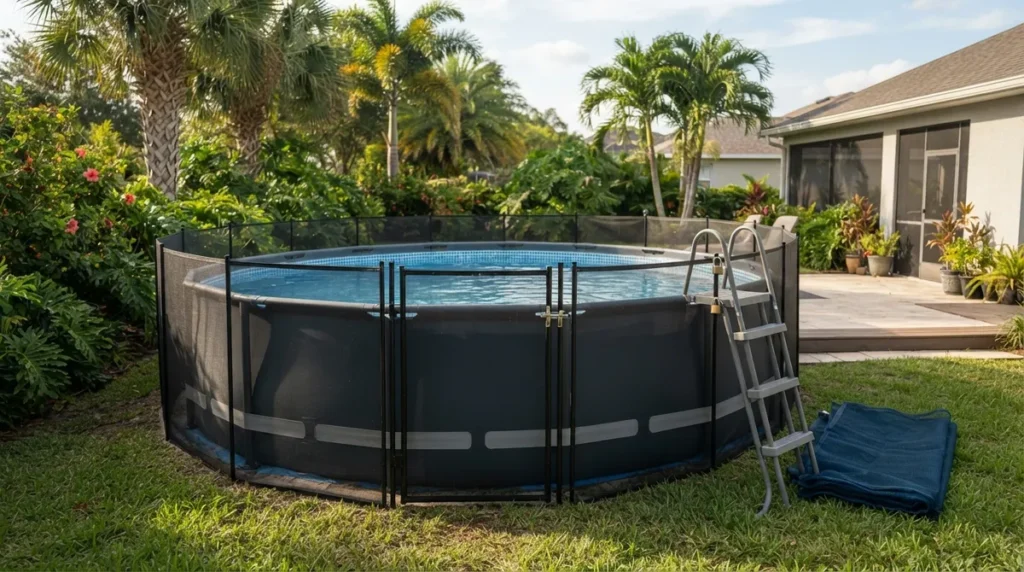
Above ground pools get some helpful flexibility. The pool's own structure may serve as the barrier, or a barrier may be mounted on top of it, as long as it meets the applicable barrier requirements. Access ladders and steps must be securable, lockable, or removable, or protected by a compliant barrier. That detail trips up a lot of first-time pool owners, so plan your ladder setup early.
Quick Reference: Permit Triggers at a Glance
| Situation | Permit Likely Needed? | What to Do |
|---|---|---|
| Above ground pool 24 inches deep or more | Yes, in many jurisdictions | Call your local building department before buying |
| Above ground pool under 24 inches deep | Not guaranteed to be exempt | Ask about zoning, setbacks, and local rules |
| Pool with new electrical wiring | Often a separate electrical permit | Ask whether it is bundled or filed separately |
| Pool with an attached deck | Often a separate or combined deck review | Include the deck in your site plan |
| Pool with a screen enclosure | Typically yes, with engineering | Plan for sealed structural drawings |
Why the 24-Inch Rule Is Not the Whole Story
Many people hear "24 inches" and assume anything shallower is a free pass. We would gently encourage you to pause there. The 24-inch threshold comes from the state pool-safety definition, and it is a helpful guidepost. But it does not guarantee that a shallower pool needs no approval.
Local governments can add their own requirements. A city might regulate where a pool can sit on your lot, how far it must be from a property line, or whether it needs a fence regardless of depth. Homeowners associations may also have their own rules, which are separate from the building department.
So the smartest first step is a quick call or visit to your local building or zoning office. Ask three simple questions:
- Does my pool depth require a permit here?
- What setbacks and zoning rules apply to my lot?
- What documents do I need to apply?
Write down the answers and the name of the person you spoke with. That small habit can save you real headaches later.
What Documents Do You Need for an Above Ground Pool Permit?
Every jurisdiction has its own checklist, but most ask for a similar set of items. Having them ready makes the process feel much less intimidating.
- Permit application: The form from your city or county building department.
- Site or plot plan: A drawing that shows where the pool will sit and the distance to property lines and structures.
- Pool and equipment details: Size, depth, type, and the location of pumps and filters.
- Manufacturer installation instructions: Charlotte County, for example, requests these for above-ground pools over 24 inches deep.
- Barrier and ladder documentation: Proof of how the pool wall, barrier, or ladder meets safety requirements, where applicable.
- Contractor or owner-builder information: Licensing details or owner-builder paperwork, depending on who is doing the work.
The site plan is the item people most often get wrong. A hand-drawn sketch with guessed measurements can lead to a rejection and a resubmittal. If you want it done right the first time, our team can help with site plans for Florida permits that show the setbacks reviewers look for.
Other Approvals That Can Come Along for the Ride
Here is where a simple pool purchase can become a bigger project. The pool shell is only one piece. A permit office looks at the complete picture, so ask which approvals apply to everything you plan to build, not just the pool.
Electrical Work
If you are adding a pump, outlet, lighting, or a dedicated circuit, expect electrical requirements. Pool electrical work has strict safety rules, and many jurisdictions require a licensed electrician and a separate permit or inspection. Our MEP engineering team handles the electrical documentation when a project needs it.
Decks and Screen Enclosures
A deck around an above ground pool is popular, and it often needs its own review. A screen enclosure adds wind-load considerations, and Florida takes those seriously. These typically require sealed structural drawings. If you are curious about who provides them, see our guide on who seals structural drawings for Florida permits.
Site Conditions
Several conditions can trigger extra review:
- Tree removal near the pool location
- Coastal or flood-zone conditions
- Septic tank or well locations that limit where a pool can go
- Utility easements and drainage paths
Checking these early keeps you from digging a pool site, only to learn it sits on a restricted area.
Step-by-Step: How to Get Your Above Ground Pool Permit Approved
Think of this as your friendly roadmap. Follow these steps in order and you will avoid most common detours.
- Confirm your jurisdiction. Near city lines, it is not always obvious whether the city or the county controls your address. Verify which office reviews your property.
- Call the building department. Ask whether your pool depth requires a permit and what the application checklist includes.
- Check zoning and HOA rules. Confirm setbacks, fence rules, and any association approvals.
- Prepare your site plan. Show the pool, property lines, structures, and equipment locations with accurate measurements.
- Gather the manufacturer's instructions. Include ladder, barrier, and installation details.
- Submit the application. File it with all required documents and pay the fee, which varies by jurisdiction.
- Respond to reviewer comments. If the office asks for changes, answer promptly and resubmit.
- Install and schedule inspections. Build to the approved plans and request each required inspection.
- Pass final inspection. Confirm your safety feature meets Florida Statute 515.27 and collect your certificate of completion.
Fees and timelines change, so we will not quote a number here. Ask your local office for current figures, and see how long the process usually takes in our guide on how long a building permit takes in Florida.
Barrier and Ladder Safety: What Inspectors Look For
Safety is the heart of the pool law, so inspectors pay close attention here. For an above ground pool, a few practical points matter most.
| Safety Element | What It Means for an Above Ground Pool |
|---|---|
| Pool wall as barrier | The pool structure can serve as the barrier if it meets applicable barrier requirements |
| Mounted barrier | A compliant barrier may be attached to the top of the pool wall |
| Ladders and steps | Must be securable, lockable, or removable, or protected by a compliant barrier |
| Safety feature at final | At least one qualifying feature under Florida Statute 515.27 is required to pass |
A common mistake is leaving a ladder in place and unlocked after the pool is filled. Plan how you will secure or remove it, and put that in your documentation if the office asks.
What Happens If You Skip the Permit?
We understand the temptation. A pool seems simple, the permit feels like paperwork, and the weekend is right there. But skipping the permit can create problems that last far longer than a weekend.
Unpermitted work can lead to stop work orders, fines, code enforcement notices, and trouble when you sell your home. A buyer's inspection or a title review can uncover an unpermitted pool, and that can delay or derail a closing. If you are already in that spot, do not panic. There are clear paths to fix it, and our guides can help:
- 7 steps to legalize an unpermitted pool in Florida
- How to legalize an existing pool in Florida
- How to sell a Florida house with unpermitted additions
Getting the permit up front is almost always easier and cheaper than fixing things afterward.
Tips for Different Readers
For Homeowners and Residential Property Owners
Start with a phone call before you shop. Knowing your depth limit, setbacks, and ladder rules helps you buy the right pool the first time. Keep your approved plans and inspection records in a folder, because you will want them when you sell.
For General Contractors and Pool Installers
Pool and spa work moves faster when the paperwork is clean. Reviewers reject incomplete site plans and missing manufacturer documents all the time. Our team supports pros through permitting for pool and spa contractors and permit facilitation and filing, so your crew stays on the schedule.
For Realtors and Property Buyers
If you spot an above ground pool on a listing, ask whether it was permitted and whether the file is closed. An open or missing permit can surface late in a deal. Learn what to do in our guide on who pays for open permits when buying a Florida home.
Why Local Rules Vary So Much Across Florida
Florida has 67 counties and hundreds of municipalities, and each one runs its own permit process. A pool that sails through in one city can need extra paperwork across the county line. Fees, forms, review times, and even depth thresholds can shift.
That variety is the biggest reason homeowners feel lost. You do not need to memorize every rule. You only need to know which office controls your address and what that office wants. If you are unsure, our building department lookup tool can point you to the right place, and our guide on which Florida jurisdiction reviews your project explains how to tell.
When It Helps to Bring in a Permitting Team
Plenty of homeowners handle a simple pool permit on their own, and that is perfectly fine. But some situations are worth a helping hand:
- Your lot has tight setbacks, easements, or flood-zone conditions
- You are adding a deck, screen enclosure, or new electrical service
- Your application was rejected and you need to fix and resubmit
- You are not sure which jurisdiction controls your property
- You are on a deadline, such as a closing or a delivery date
At 1 Contractor Solutions, we act as Florida's outsourced permitting department. We prepare plans, file applications, track reviews, work every reviewer comment, and carry the project through approval, with drafting and engineering handled in house. If you are exploring your options, take a look at our homeowner permitting services, and if you want to see how neighbors feel about working with us, Visit us on Google — 1 Contractor Solutions.
The Bottom Line on Above Ground Pool Permits
So, do you need a permit for an above ground pool in Florida? If your pool holds water 24 inches deep or more, the answer is very likely yes, and even shallower pools deserve a quick check with your local office. The state sets the safety standards, while your city or county runs the permit process. Plan for a site plan, manufacturer instructions, a compliant barrier or ladder setup, and any extras like electrical, decks, or enclosures.
A little preparation now keeps your summer on track and protects your home's value later. If you would rather have an experienced team handle the paperwork, get a free quote and we will tell you exactly which jurisdiction controls your property and what it will take. You can also follow us on LinkedIn or follow us on Facebook for more Florida permitting tips. Now go enjoy that pool, the right way.
FAQs
What size above ground pool requires a permit in Florida?
Florida's pool-safety law covers residential pools holding water more than 24 inches deep, and local examples like Brevard and Charlotte counties require permits at 24 inches or greater. Since each city or county sets its own rules, a quick call to your local building department will confirm the exact threshold for your address.
Does a pool under 24 inches deep need a permit in Florida?
Not always, but do not assume you are in the clear. The 24-inch mark does not guarantee that a shallower pool needs no approval, because zoning, setbacks, and local rules can still apply. Check with your local building or zoning office before you install.
What are Florida's above ground pool fence and ladder safety requirements?
The pool's structure may serve as the barrier, or a compliant barrier can be mounted on it. Ladders and steps must be securable, lockable, or removable, or protected by a compliant barrier, and at least one qualifying safety feature is required to pass final inspection under Florida Statute 515.27.
Do I need a separate permit for pool electrical work, a deck, or a screen enclosure?
Often, yes. Electrical work, decks, and screen enclosures can each trigger their own permits, reviews, or sealed drawings depending on your jurisdiction. Ask your local office which approvals apply to the full project, not just the pool itself.
How do I find out which permits my Florida city or county requires?
Start by confirming which jurisdiction controls your property, since city lines can be tricky. Then contact that building department and ask about permits, zoning, setbacks, and the document checklist. A permitting team like 1 Contractor Solutions can also research this for you and file the application.
We do this work every day across all 67 Florida counties. Call (866) 314-6931 and we will tell you what your situation actually requires — including when you do not need us.
Related services
Permit Facilitation & Filing
You have a crew scheduled, a client asking for dates, and a permit sitting somewhere in a queue you cannot see. We file it, w…
See the servicePlan Review Coordination
A permit in plan review is not one queue. On a commercial project it can be six queues, each with its own reviewer, its own c…
See the serviceReady to get your permit moving?
One call tells you which jurisdiction controls your project, what it will take, and what it will cost. Most of the time we can scope it on the phone.