
Blog
DIY vs. Pro: Best After-the-Fact Bathroom Help in Florida?
Remodeled a Florida bathroom without a permit? Compare DIY vs. professional after-the-fact help, costs, and steps to fix it right.
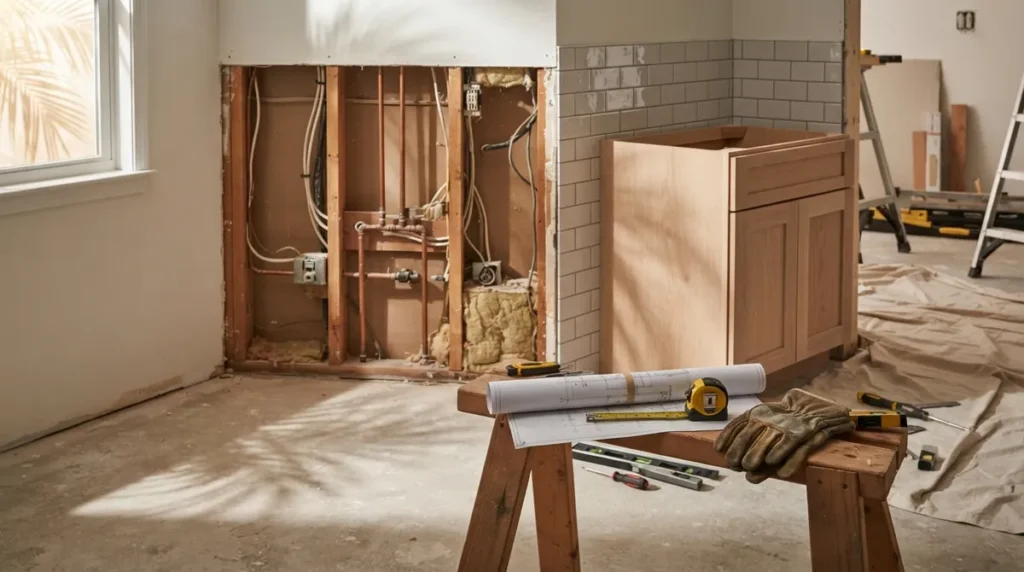
Key Takeaways
-
Florida's permit rules depend on the actual work: cosmetic tile or cabinet swaps often need no permit, while plumbing, electrical, structural, mechanical, or gas changes commonly do.
-
If your remodel is still underway, stop work immediately and contact the local building department, since continuing can increase costs and may lead to citations.
-
An after-the-fact permit does not automatically legalize work; inspectors may require plans, fees, and inspections, and concealed work may need to be opened up or corrected.
-
Florida's Statutes 553.79 $7,500 exemption does not cover electrical, plumbing, structural, mechanical, or gas work, so do not treat it as a blanket pass for bathroom remodels.
-
DIY works best for small, well-documented projects in a familiar jurisdiction, while concealed plumbing or wiring, tight deadlines, or unclear city-versus-county authority favor professional help.
-
Resolve unpermitted bathroom work before listing a home, since buyers, lenders, and appraisers may demand permit documentation and can walk away from the deal.
So you finished (or started) a bathroom remodel, and then someone mentioned the word "permit." Take a breath. You are far from the first Florida homeowner, investor, or contractor to land in this spot, and it is usually more fixable than it feels at 2 a.m. when you are searching for the best bathroom remodel after the fact help in Florida.
The big question is how to tackle it. Do you walk into the building department yourself and sort it out? Or do you bring in a permitting professional who does this every week? Both paths exist, and each makes sense in the right situation.
In this friendly guide, we compare the do-it-yourself route with hiring professional help. We will cover when a bathroom remodel needs a permit, what an after-the-fact permit really involves, what it can cost, and how to pick the right partner. One quick note: rules, fees, and inspections vary by city and county, so always confirm details with your local building department.
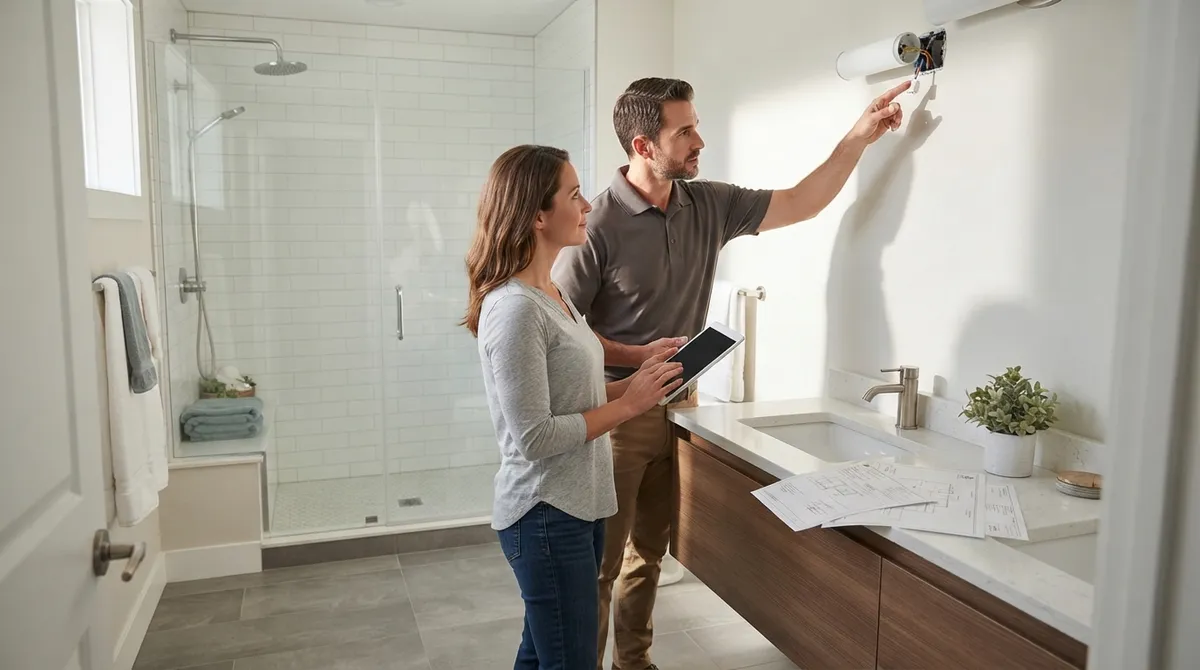
First Things First: Did Your Bathroom Remodel Need a Permit?
Not every bathroom project needs a permit, and that is good news. Florida law generally requires a permit before covered construction, alteration, repair, or modification, but the details depend on the actual work performed.
Hillsborough County, for example, says cosmetic work such as tile or cabinet installation typically does not require a permit, while work involving plumbing likely does. Electrical, structural, mechanical, and gas work can also trigger permit requirements.
Florida Statutes section 553.79 includes a limited exemption for certain work valued under $7,500 at a single-family dwelling. However, it does not cover electrical, plumbing, structural, mechanical, or gas work, and it does not apply in a flood hazard area. It also requires a written exemption request with supporting documentation. So please do not treat that dollar figure as a blanket pass for bathroom remodels.
Quick Permit Check for Common Bathroom Tasks
| Remodel Task | Permit Likely Needed? | Why It Matters |
|---|---|---|
| Replacing tile or paint only | Often no | Typically cosmetic, but confirm locally |
| Swapping cabinets in place | Often no | Cosmetic unless plumbing or electrical changes |
| Moving a toilet, shower, or sink | Likely yes | Plumbing changes are commonly regulated |
| Adding outlets, fans, or lighting circuits | Likely yes | Electrical work usually requires a permit |
| Removing or altering a wall | Likely yes | Structural work is regulated |
| New exhaust ducting or HVAC changes | Likely yes | Mechanical work often requires review |
When in doubt, ask the local authority. Our building department lookup tool can help you find the right office for your address.
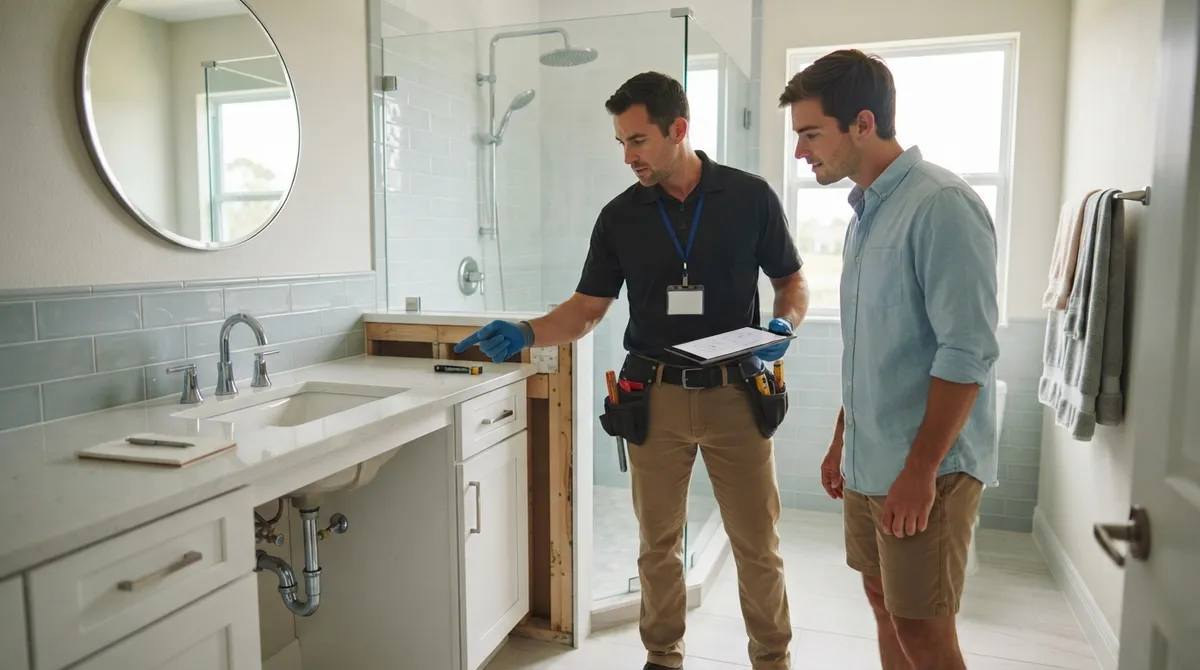
What "After-the-Fact" Help Actually Means
After-the-fact help simply means resolving work that was started or finished without a required permit. The good news is that Florida building departments commonly have a process for this.
The not-so-fun news is that an after-the-fact permit does not automatically legalize the work. The jurisdiction may require an application, plans or supporting documents, permit fees, and inspections to confirm the work meets applicable code.
If concealed work cannot be inspected or does not comply, you may need to expose, correct, or even reconstruct portions of it. The building official decides the specific remedy for your property.
Florida's 8th Edition (2023) Building Code took effect December 31, 2023, so applications submitted now generally need to meet that edition, along with applicable supplements and local requirements. For a deeper walkthrough of the process, our guide on how to get an after-the-fact permit in Florida is a great next read.
The DIY Route: Handling It Yourself
Going solo is possible, and some confident homeowners do it successfully. It tends to work best for smaller projects in a jurisdiction you already understand.
What DIY Usually Involves
- Stop work. If the remodel is still underway, Hillsborough County advises stopping immediately and contacting the building department. Continuing can increase costs and may lead to a citation.
- Identify your jurisdiction. The city or county that controls your address may not be obvious near city lines.
- Contact the building department. Ask how they handle after-the-fact permits for bathroom work.
- Gather documents. Expect to need an application, sketches or plans, and possibly contractor information.
- Pay fees and schedule inspections. Costs and procedures vary widely by jurisdiction.
- Correct any issues. Inspectors may require changes before final approval.
Can a Homeowner Pull the Permit?
Possibly. Florida homeowners may be able to apply as owner-builders under section 489.103(7), but this carries direct-supervision and other statutory obligations. Local rules apply too. Hillsborough County, for instance, requires an owner-builder disclosure and says the property must be your primary residence for its homeowner-permit process.
Also, work that requires a licensed contractor should be handled by appropriately licensed trades. Learn more about owner-builder permits before deciding.
Where DIY Gets Tricky
- Concealed plumbing or wiring that inspectors cannot see
- Missing or hand-drawn plans that reviewers reject
- Multiple correction rounds that stretch for weeks
- Unclear rules between a city and the surrounding county
- A looming closing date or lender deadline
The Pro Route: Hiring Permitting Help
A Florida permitting service can help identify the correct jurisdiction, assemble applications and plans, coordinate licensed trades, and track inspections. Think of it as hiring a guide who has walked this trail many times.
To be clear, no service can guarantee approval or replace the building department's decision. What a good one can do is reduce guesswork, prevent avoidable rejections, and keep things moving.
What Professional Help Typically Covers
- Jurisdiction research to confirm who actually controls your property
- As-built drawings and plans that reflect what was really built
- Engineer letters or sealed drawings when reviewers want them
- Application filing and tracking so nothing stalls unnoticed
- Comment responses and resubmittals when reviewers request changes
- Inspection coordination with licensed plumbers, electricians, and other trades
That is where a one-stop team shines. At 1 Contractor Solutions, we handle permit facilitation and filing, plus in-house as-built drawings and sealed engineering, so a reviewer comment does not send you hunting for an outside consultant. We also specialize in after-the-fact and expired permits, the files many others decline.
DIY vs. Pro: Side-by-Side Comparison
| Factor | DIY | Professional Help |
|---|---|---|
| Upfront cost | Lower (permit fees only) | Higher (service fee plus permit fees) |
| Time investment | High; you manage everything | Low; the team handles the legwork |
| Plans and drawings | You create or hire separately | Often drafted and sealed in-house |
| Handling reviewer comments | You respond and resubmit | Team responds and resubmits |
| Local knowledge | Learned as you go | Built from many prior filings |
| Best for | Simple, accessible work in a familiar jurisdiction | Concealed work, deadlines, or complex jurisdictions |
What Will It Cost?
Honest answer: it depends. Fees, penalties, and required documents differ by city and county, and there is no single statewide price tag.
As one county-specific example, Hillsborough County states that citations for work started without the proper permit may be up to $500 per violation. That is not a statewide schedule, but it shows why acting early matters.
Your total cost usually combines several pieces:
- Permit and inspection fees set by the jurisdiction
- Plans, as-builts, or engineering documentation
- Any corrective work inspectors require
- Professional service fees, if you hire help
For more detail, see our breakdown of after-the-fact permit costs in Florida. The goal is not the cheapest path on paper. It is the path that avoids paying twice.
Which Route Fits You?
Different readers land in different places, so here is a friendly cheat sheet.
Homeowners
If your remodel was modest and you know exactly what was done, DIY may be worth a try. If you are unsure what is behind the walls, or your sale or refinance is coming up, professional help usually saves stress. Our homeowner resources are a good starting point.
Real Estate Professionals and Investors
Unpermitted bathroom work can surface during inspections, appraisals, or title review. When a closing clock is ticking, a team experienced in realtor and closing support can move faster than a first-timer. If something is already stuck, our urgent permit rescue service was built for exactly that.
General Contractors and Design Trades
If you inherited a job, or a subcontractor skipped a step, cleanup is part of protecting your reputation. Outsourcing drafting, engineering, and filing frees your crew to keep building. See how we support general contractors.
Warning Signs You Should Call a Pro
- You received a stop work order or code enforcement notice
- Plumbing or electrical was moved or added
- Walls were closed up before any inspection
- A buyer, lender, or insurer is asking for permit documentation
- A prior owner did the work and you have no records
- You are not sure whether the city or county has authority
If a notice has already arrived, our resource on code compliance violations explains what to expect.
How to Choose the Best After-the-Fact Help
Not all permitting help is equal, so a little vetting goes a long way. Here is a simple checklist:
- Ask about scope. Do they handle after-the-fact bathroom permits in your specific city or county?
- Check licensing. Confirm any contractors or engineers involved are appropriately licensed.
- Look for in-house drafting and engineering. It prevents delays when reviewers ask for changes.
- Get fees in writing. Understand what is included and what is paid to the jurisdiction.
- Watch for guarantees. Be cautious of anyone promising approval. Only the building department decides.
- Confirm responsiveness. You want someone who answers quickly when a deadline is near.
At 1 Contractor Solutions, we answer around the clock, respond within 30 minutes, and work across all 67 Florida counties. You can visit us on Google — 1 Contractor Solutions to see what customers say, and follow us on LinkedIn or follow us on Facebook for more Florida permitting tips.
Selling a Home With Unpermitted Bathroom Work
Many readers ask whether they can sell at all. In many cases, yes, but unpermitted work can complicate inspections, appraisals, financing, and negotiations. Buyers and lenders may ask for permits or closure documentation, and some will walk away.
Resolving the issue before listing generally gives you more control than scrambling mid-contract. If you are already in the middle of a deal, read how to handle a closing delayed by unpermitted work. Also consider an open permit search so there are no surprises.
The Verdict: So Which Wins?
For small, clearly documented, easily inspected work, DIY can be a perfectly reasonable choice. For anything involving concealed plumbing or electrical, a tight deadline, or a jurisdiction you do not know, professional help usually wins on time, stress, and the risk of paying twice.
Either way, the best move is the same: stop work if it is ongoing, confirm your local rules, and act sooner rather than later. Penalties and costs tend to grow with delay, and options tend to shrink.
Ready for a hand? We would love to help you sort it out. Get a free quote and tell us your address and your situation. We will tell you which jurisdiction controls it, what it will likely take, and then go do the work.
FAQs
Do I need a permit for a bathroom remodel in Florida?
It depends on the work. Purely cosmetic updates like tile or cabinets often don't need one, but plumbing, electrical, structural, mechanical, or gas changes commonly do. Check with your local building department before you start so there are no surprises.
What happens if I remodeled my bathroom without a permit in Florida?
You may face a citation, stop work order, or a requirement to obtain an after-the-fact permit, and penalties vary by county. The good news is that most jurisdictions offer a path to fix it, usually involving an application, plans, fees, and inspections.
Does an after-the-fact permit automatically make the work legal?
Not automatically. The building department will usually require inspections to confirm the work meets code, and concealed work that can't be verified may need to be opened up or corrected. The official in your jurisdiction decides what's required.
Can a Florida homeowner pull a permit for bathroom remodeling work?
Sometimes, as an owner-builder under section 489.103(7), but it comes with supervision duties and local conditions, like primary-residence requirements in some counties. Work that requires a licensed contractor should be handled by appropriately licensed trades.
Can I sell a Florida home with unpermitted bathroom work?
Often yes, but it can complicate inspections, appraisals, and financing, and some buyers or lenders will ask for permits first. Resolving it before listing usually gives you more control and fewer last-minute headaches.
We do this work every day across all 67 Florida counties. Call (866) 314-6931 and we will tell you what your situation actually requires — including when you do not need us.
Related services
Permit Facilitation & Filing
You have a crew scheduled, a client asking for dates, and a permit sitting somewhere in a queue you cannot see. We file it, w…
See the servicePlan Review Coordination
A permit in plan review is not one queue. On a commercial project it can be six queues, each with its own reviewer, its own c…
See the serviceReady to get your permit moving?
One call tells you which jurisdiction controls your project, what it will take, and what it will cost. Most of the time we can scope it on the phone.