
Blog
Fix It Yourself vs. Hire a Pro: Unpermitted Work FL
Comparing DIY research vs. professional help for work done without a permit in Florida, with steps, costs, and consequences explained.
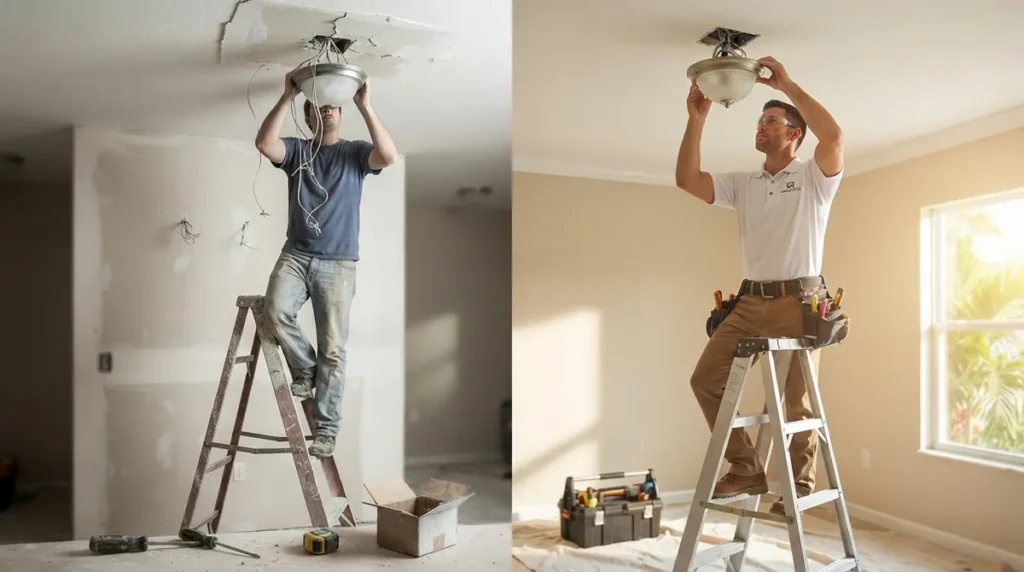
So you just found out there's work done without a permit in Florida lurking somewhere on your property, your client's property, or a job site you're managing. Deep breath. You're not alone, and you're definitely not the first person to feel that little jolt of "uh oh" when a home inspector, appraiser, or code enforcement officer mentions the words "no permit on file." This happens more often than you'd think across the Sunshine State, from a quietly enclosed lanai in Bradenton to a garage-turned-bedroom in Tampa that nobody bothered to document.
The real question isn't whether unpermitted work is a problem (it usually is), but how you handle it. Do you try to tackle the after-the-fact permit process yourself, county website tab by county website tab? Or do you bring in a permitting team that already knows the players, the paperwork, and the pitfalls? We're going to walk through both paths honestly, because we genuinely want you to make the choice that fits your project, your timeline, and your peace of mind.
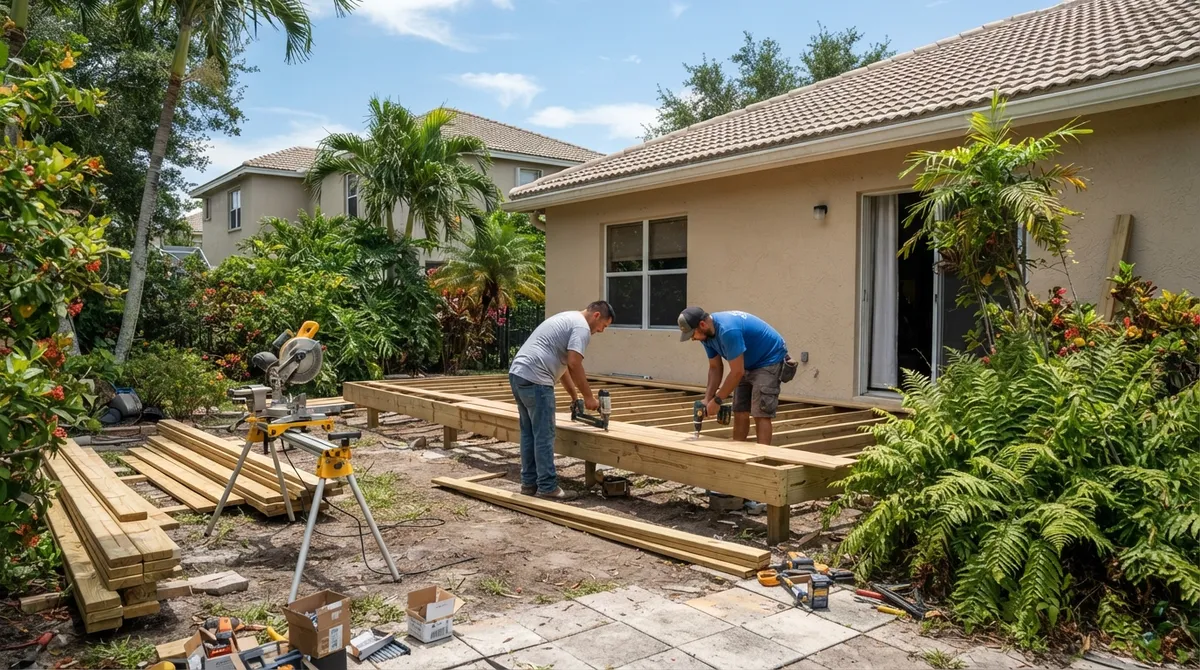
What Counts as Work Done Without a Permit in Florida?
Florida's building code requires a permit before you start most construction, alteration, repair, or demolition work. That framework flows from Florida Statutes §§553.79, 553.80, and 489.127, but the day-to-day rules depend heavily on your local building department. A screened porch in one county might sail through with minimal review, while the same structure in a coastal flood zone triggers a completely different conversation.
Here are common examples our team sees across Florida jurisdictions:
- Room additions or converted garages with no inspection history
- Electrical panel upgrades done by a handyman instead of a licensed electrician
- Pool enclosures, sheds, or fences built past the point of "no big deal"
- Roof replacements after a storm where nobody pulled a permit
- Plumbing or HVAC changes hidden behind drywall
- Interior remodels that removed load-bearing walls without engineering review
If any of that sounds familiar, don't panic. There's a legal path forward, and it's called an after-the-fact permit.

The Two Paths Forward: DIY Research vs. Professional Permitting Help
When someone discovers work done without a permit in Florida, they generally choose one of two routes. Let's compare them side by side so you can see where each one shines and where each one gets messy.
| Factor | DIY Approach | Professional Permitting Service |
|---|---|---|
| Jurisdiction research | You call, email, and hope for callbacks | Team already knows local building department contacts |
| As-built drawings | You hire a separate draftsman or attempt sketches | In-house drafting and sealed engineering included |
| Application accuracy | Trial and error, possible rejections | Experienced submission reduces correction cycles |
| Inspection coordination | You schedule and hope you understood requirements | Team manages exposure requirements and re-inspections |
| Timeline | Often stretches for months | Streamlined tracking and follow-up |
| Cost transparency | Fees and surcharges can surprise you | Clearer expectations set upfront |
Going It Alone: What the DIY Route Actually Involves
We respect anyone who wants to handle their own permitting. It's your property, your project, and sometimes your budget is tight enough that every dollar matters. If you're going the DIY route, here's what you're signing up for.
Step-by-Step DIY Process
- Identify the correct jurisdiction. Florida has 67 counties and hundreds of municipalities, and the lines aren't always where you'd guess. Our jurisdiction lookup guidance and tools like the Building Department Lookup can help.
- Pull permit history. Use the Open Permit Search tool to see if anything is already on file for the address.
- Prepare as-built documentation. This usually means measuring the existing structure and creating drawings that reflect what was actually built, not what was originally planned.
- Determine if engineering is required. Structural changes, electrical work, plumbing, or HVAC modifications often need a licensed professional's sealed documents.
- Submit the after-the-fact application. Pay attention to local surcharges, since ATF fees are frequently higher than standard permit costs.
- Respond to correction comments. Reviewers almost always have questions or requests for revisions.
- Schedule inspections. Be prepared for the possibility that inspectors may require exposing concealed framing, wiring, or plumbing.
- Close out the permit. Final approval means the work is officially legalized.
That's a lot of steps, and each one can eat days or weeks if you're new to the process. Many homeowners find the biggest hurdle is simply knowing which office to call first, which is exactly why resources like our jurisdiction guide exist.
Bringing in a Permitting Partner: What Changes
Now let's flip the script. When you work with a dedicated Florida permitting service, the same eight steps still happen, but you're not the one chasing them down. A good partner already knows which building department handles your address, has relationships with reviewers, and can produce sealed drawings in house rather than waiting on a separate engineer's schedule.
This is where 1 Contractor Solutions comes in. Since 1CS operates as a licensed private provider, they can perform plan review themselves in many cases instead of leaving you stuck in a county queue behind hundreds of other applications. For general contractors juggling multiple job sites, or solar companies trying to get interconnection approvals before incentive deadlines shift, that speed difference is not a small thing.
Who Benefits Most From Professional Help
- General contractors managing several unpermitted-discovery situations at once, who need consistent tracking across jobs
- Solar companies needing structural and electrical documentation that satisfies both building code and utility interconnection requirements
- Real estate professionals trying to clear title or close a sale where unpermitted work surfaced during inspection
- Homeowners who inherited a mystery addition from a previous owner and have no idea where to start
- Design trade professionals who need outsourced drafting and engineering without hiring full-time staff
- Property owners facing a code enforcement notice with a clock already ticking
If your situation involves a real estate closing on the line, our realtor and closing support services are built specifically for that kind of pressure.
Real Consequences of Skipping the After-the-Fact Process
Whichever path you choose, understand what's at stake if unpermitted work stays unpermitted. Florida Statutes §162.09 gives code enforcement authorities the ability to issue daily civil penalties, commonly up to $250 per day for an initial violation and up to $500 per day for repeat violations, depending on local procedures and the specifics of the case.
| Consequence | Why It Happens |
|---|---|
| Stop-work order | Building official discovers active construction without a permit |
| Code enforcement fines | Daily penalties accrue under §162.09 until resolved |
| Higher permit fees | Many jurisdictions apply ATF surcharges, sometimes doubling standard fees |
| Sale or refinance delays | Title companies and lenders flag open permits or unpermitted additions |
| Forced removal | Serious code violations may require demolition of noncompliant work |
| Insurance complications | Claims can be denied or reduced if unpermitted work contributed to damage |
None of this is meant to scare you, just to be honest. The good news is that Florida's system is built around fixing these situations, not punishing people forever. Learn more about the specific penalty structure in our detailed breakdown of the penalty for building without a permit in Florida.
What If the Work Is Still in Progress?
If you discover mid-project that permits were never pulled, the safest move is to stop work immediately and contact the authority having jurisdiction. Continuing construction can escalate a simple oversight into a stop-work order, additional fines, and a much longer road to approval. This is one area where DIY hesitation can actually cost more than professional intervention, since a permitting team can often get an emergency consultation moving the same day.
Do You Need an Engineer, Architect, or Licensed Contractor?
This depends entirely on what was built. Structural changes, like removed walls or altered roof framing, typically require a structural engineer's sealed drawings. Electrical, plumbing, and gas work usually need licensed trade contractors to certify the installation meets code. Our structural engineering and MEP engineering teams handle exactly this kind of documentation, working from as-built measurements to produce plans that satisfy the local building department.
For simpler situations, sometimes all that's needed is an engineer letter confirming the existing condition is sound. You can read more about when that applies in our guide on who writes engineer letters for Florida permits.
Selling or Refinancing With Unpermitted Work on the Books
Real estate professionals deal with this constantly. A buyer's inspector flags an addition that doesn't match county records, and suddenly the closing timeline is in jeopardy. Lenders and title companies want clean records, and rightly so. If you're navigating this exact scenario, our piece on whether an open permit can delay a Florida real estate closing walks through practical solutions, including expedited ATF processing designed to keep deals on track.
Making the Decision That's Right for You
So which path wins, DIY or professional help? Honestly, it depends on your bandwidth, your comfort level with bureaucracy, and how much is riding on the timeline. If you've got one small shed and plenty of patience, tackling the county paperwork yourself might work out fine. But if you're managing multiple properties, facing a closing deadline, or dealing with structural or electrical concerns, bringing in a permitting partner usually saves both time and stress.
Our team at 1 Contractor Solutions has spent over 15 years working in Hillsborough County, Pinellas County, Manatee County, and dozens of other jurisdictions across the state, filing in more than 400 municipalities along the way. Whether you're in Bradenton, Tampa, or St. Petersburg, we already know which office to call and what they'll want to see. You can browse our full range of permitting and engineering services to see everything we handle beyond after-the-fact permits.
Curious what past clients have experienced? Take a look at what people are saying, or visit us on Google — 1 Contractor Solutions, to see reviews from contractors and homeowners we've helped through exactly this process. You can also connect with us and stay updated by following us on LinkedIn or Facebook.
Ready to Legalize That Unpermitted Work?
Unpermitted construction doesn't have to feel like a permanent cloud hanging over your property. Whether you're a homeowner who inherited someone else's shortcuts, a contractor juggling several ATF cases, or a real estate agent racing a closing date, there's a clear path from "uh oh" to "approved." For deeper reading on how the process unfolds jurisdiction by jurisdiction, check out our guide on how to legalize unpermitted work in Florida.
If you're ready to stop guessing and start moving forward, reach out to our team and get a free quote today. We'll tell you exactly what your project needs, no jargon, no runaround, just a clear plan to get your permit approved and your project moving.
FAQs
What work requires a permit in Florida?
Most construction, alteration, repair, or demolition work covered by the Florida Building Code requires a permit before you start, though the specifics depend on your local building department. Things like additions, electrical upgrades, plumbing changes, and roof replacements almost always need one, so when in doubt, it's always worth a quick call to check!
How do I get an after-the-fact permit in Florida?
You'll need to identify your correct jurisdiction, gather as-built drawings, possibly hire an engineer for structural or MEP components, then submit an application along with any required fees. It's a process with several moving parts, but plenty of folks (including our team) walk through it every single day, so you're in good company.
Can unpermitted work be legalized if it was completed years ago?
Yes, in most cases! Florida doesn't have a statute of limitations that erases the need for a permit, but building departments regularly process after-the-fact applications for work completed long ago. The key is documenting what exists and showing it meets current code requirements.
How much does an after-the-fact permit cost in Florida?
Costs vary quite a bit by county and city, since there's no single statewide fee schedule. Some jurisdictions charge a surcharge on top of standard permit fees, and industry sources report costs reaching two or three times the normal fee in certain areas, so checking with the local authority (or a permitting service familiar with that jurisdiction) is your best bet.
Will I have to open walls or demolish work for an inspection?
It's possible, especially if concealed framing, wiring, or plumbing needs to be verified for safety and code compliance. We know that's not the news anyone wants to hear, but a good permitting team can help you understand exactly what's likely to be required before you start, so there are fewer surprises along the way.
We do this work every day across all 67 Florida counties. Call (866) 314-6931 and we will tell you what your situation actually requires — including when you do not need us.
Related services
Permit Facilitation & Filing
You have a crew scheduled, a client asking for dates, and a permit sitting somewhere in a queue you cannot see. We file it, w…
See the servicePlan Review Coordination
A permit in plan review is not one queue. On a commercial project it can be six queues, each with its own reviewer, its own c…
See the serviceReady to get your permit moving?
One call tells you which jurisdiction controls your project, what it will take, and what it will cost. Most of the time we can scope it on the phone.