
Blog
Broward County Code Violation? Your Fix-It Roadmap
Learn how code compliance violations work in Broward County, from deadlines and fines to how permitting pros help resolve unpermitted work fast.
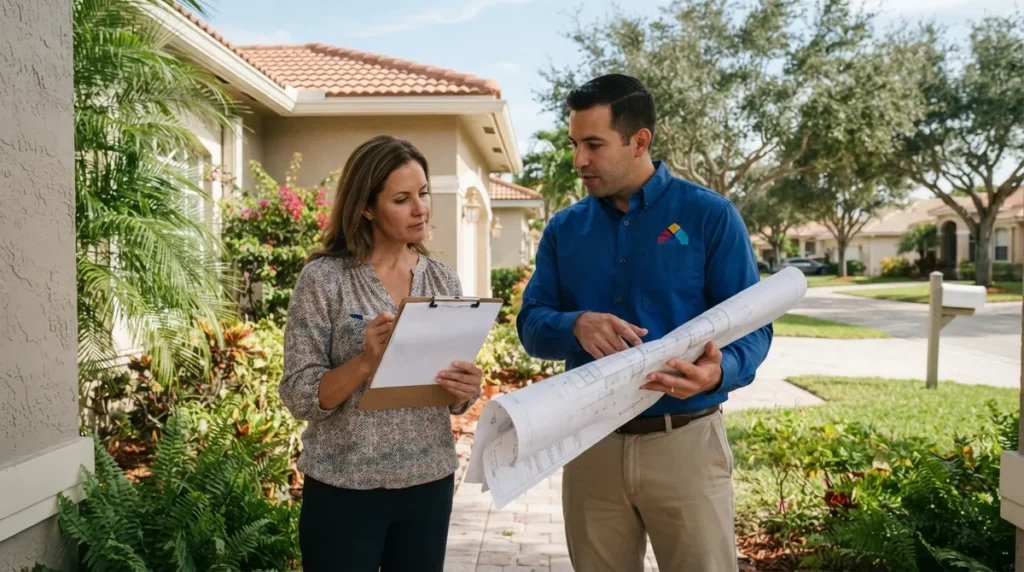
Getting a notice taped to your door or dropped in the mail from Broward County code enforcement can make your stomach drop, and that's completely normal. Take a breath, though, because you're in good company here, and this is a fixable problem. Whether you're a homeowner in Fort Lauderdale who just found out that sunroom your uncle built in 1998 was never permitted, or a general contractor juggling five open cases across the county, understanding how a code compliance violation Broward County case actually works is the first step toward putting it behind you.
This guide walks through what these violations mean, who actually enforces them, how the timelines work, and what it takes to get back into good standing. We'll also talk about when it makes sense to bring in a permitting professional instead of trying to untangle county ordinances on your own at 11 p.m. with a cup of coffee and a lot of open browser tabs.
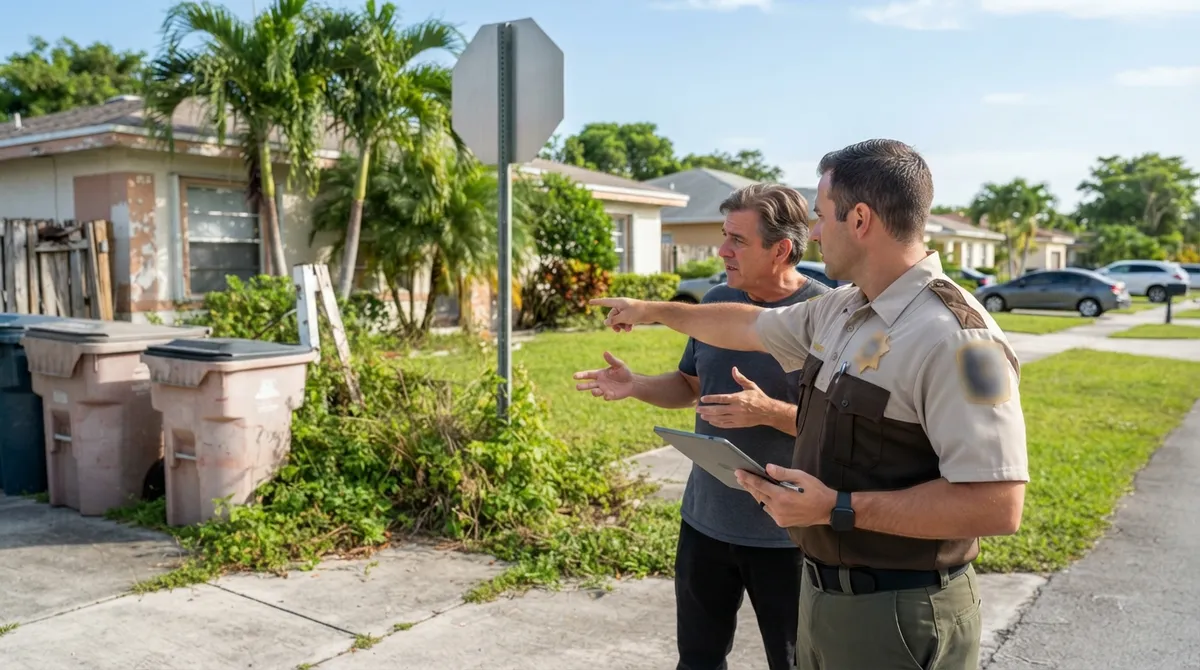
What Counts as a Code Compliance Violation in Broward County
Here's something a lot of people don't realize: "code compliance violation" isn't one single thing. It's an umbrella term covering several different types of enforcement matters, and the agency that handles yours depends entirely on where your property sits and what kind of issue triggered the notice.
Generally speaking, violations fall into a few buckets:
- Unpermitted construction or work that doesn't match approved plans or zoning approvals
- Zoning violations, like using a property in a way that isn't allowed for that district
- Property-maintenance issues, such as overgrown lots, unsafe structures, or exterior disrepair
- Other local ordinance violations that vary by municipality
Broward County's Building Code Division handles code compliance for the Broward Municipal Services District (BMSD) and Fort Lauderdale-Hollywood International Airport. But here's the catch: if your property sits inside one of Broward's many incorporated cities, like Fort Lauderdale, Hollywood, Pembroke Pines, or Coral Springs, you're likely dealing with that city's own code enforcement department instead of the county. This distinction trips people up constantly, and it's honestly one of the most common reasons a violation drags on longer than it should.
Why Jurisdiction Matters So Much
If you send correspondence or drop off documents at the wrong office, you're not making progress, you're just spinning your wheels while deadlines quietly tick down. Before you do anything else, confirm exactly which agency issued your notice and which building department has jurisdiction over your address. Our Building Department Lookup tool is a good starting point for figuring that out quickly, and our Broward County page has more localized detail for cities like Fort Lauderdale.
The Most Common Trigger: Unpermitted Construction
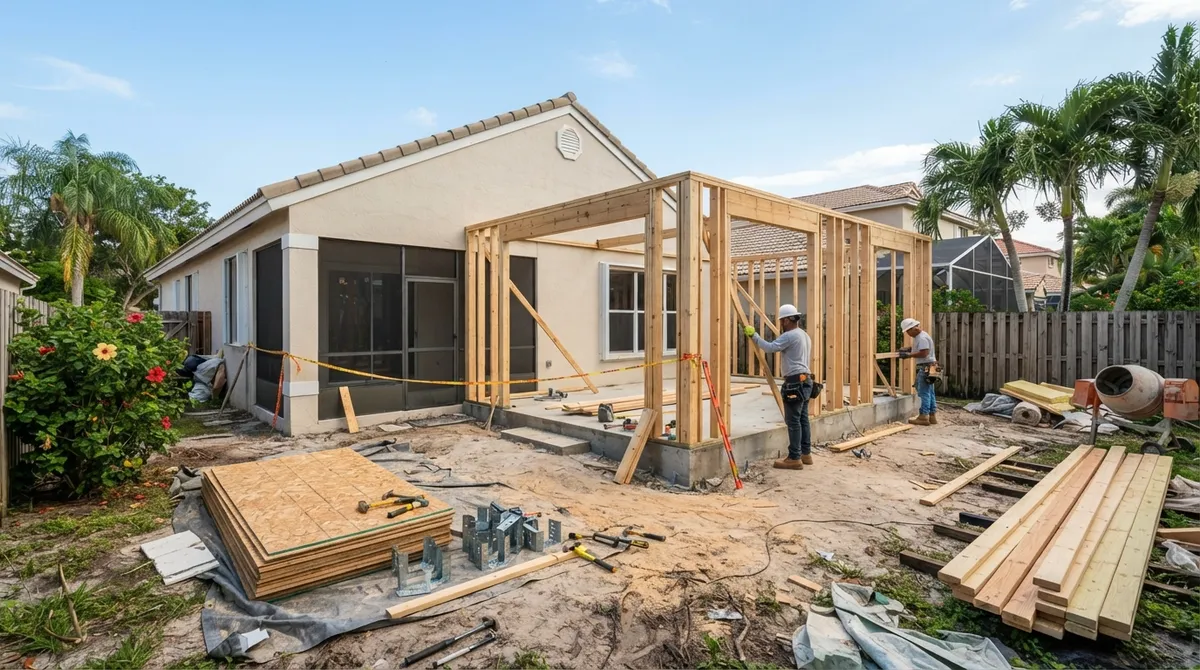
By far, one of the most frequent reasons people end up with a code compliance violation Broward County notice is construction work completed without the required permits or zoning approval. Maybe a previous owner added a room, converted a garage, or installed a pool without pulling permits. Maybe a contractor promised to "handle the paperwork" and never did. Either way, Broward County identifies this kind of unpermitted work as a code-compliance concern within the BMSD, and it's treated seriously.
Here's an important nuance: getting a permit application approved doesn't automatically close out a separate zoning or enforcement case. These are sometimes treated as distinct matters, so you'll want to confirm exactly what the notice requires before assuming one fix solves everything. This is where a lot of well-meaning homeowners get tripped up, thinking a quick after-the-fact permit closes the book, when the county actually wants additional documentation or an inspection sign-off too.
Steps to Resolve an Unpermitted Construction Violation
- Confirm which agency issued the notice and verify the deadline printed on it
- Identify exactly what permits or zoning approvals are missing for the work in question
- Assemble or reconstruct plans, often including as-built drawings that reflect what was actually built
- Submit the after-the-fact permit application along with any required engineer letters or structural verification
- Coordinate with the building department through plan review and respond to any comments
- Schedule and pass the required inspections
- Confirm the code enforcement case is formally closed, not just the permit
A permitting professional can walk each of these steps with you, and honestly, that's exactly the kind of work we do all day. We help general contractors, solar installers, realtors, and homeowners across Broward figure out which permits are missing, put together compliant plans, and carry the file through to closeout.
Deadlines You Cannot Afford to Miss
This is the part where timing really matters, so let's slow down and get specific. Broward County's code-enforcement ordinance generally provides for written notice and a reasonable correction period. Under the provision described in the county's code, that window is typically no less than 5 days and no more than 30 days, depending on the circumstances and the specific procedure being used. That's a wide range, and it depends heavily on the type of violation and the issuing agency, so never assume your timeline matches a neighbor's or a story you read online.
If you've received a citation rather than a standard notice, there's a separate and shorter clock running. Under the county ordinance, a recipient generally has 10 days after service of the citation to request an administrative hearing. Miss that window, and you may waive your right to a hearing altogether. That's a tough outcome to walk back, so treat this deadline as non-negotiable and follow whatever instructions are printed directly on your notice.
| Notice Type | Typical Timeframe | What Happens Next |
|---|---|---|
| Standard violation notice | 5 to 30 days to correct | Correct the issue and request re-inspection before deadline |
| Citation | 10 days to request hearing | File written request for administrative hearing or risk waiving it |
| Uncorrected violation | Varies by case order | Proceeds to hearing, fines may begin accruing |
| Unpaid fine/order | Set by case order | May result in a recorded Notice of Lien Order |
What Happens If You Don't Correct the Violation
Nobody wants to hear this part, but it's better to know upfront than to be blindsided later. If a violation isn't corrected within the allowed period, the case can move forward to a hearing, and that hearing can result in fines. These fines often accrue daily until the violation is resolved, which means procrastination gets expensive fast.
Worse, if fines or orders go unpaid, Broward County's Clerk has indicated that non-parking code-enforcement cases may result in a recorded Notice of Lien Order against the property. A lien can complicate refinancing, selling, or even passing the property to heirs down the road. If you're a realtor or investor evaluating a Broward property, this is exactly why a title search or open permit check before closing is so valuable. Our Open Permit Search tool and realtor closing support services exist specifically to catch these issues before they blow up a transaction.
Historical Context on Enforcement Volume
To give you a sense of scale, Broward County's own quarterly reports have documented meaningful enforcement activity over the years. For example, a 2017 third-quarter report recorded 451 enforcement cases opened, 459 violations brought into compliance, and 854 community-standards inspections conducted that quarter. An earlier 2017 second-quarter report showed 502 cases opened and 458 violations resolved. These are historical figures, not current totals, but they illustrate that code enforcement in Broward has long been an active, ongoing process, not some rare occurrence.
Reporting a Suspected Violation
If you're on the other side of this, maybe you've noticed a neighboring property with construction that looks unpermitted, Broward County directs residents within the BMSD to report suspected violations through 311, the county's online investigation request system, or by calling the Building Code Division directly at 954-765-4400. Just remember to confirm current contact details and jurisdiction before submitting anything, since numbers and portals can change.
How a Permitting Partner Can Help You Resolve a Violation Faster
Here's where we come in, and honestly, this is the part of our job that feels the most rewarding. Untangling a code compliance case usually means figuring out exactly what documentation the county wants, preparing compliant drawings, and then walking the file through every round of review comments until it's approved. That's a lot of moving pieces for someone who isn't doing this every single day.
At 1 Contractor Solutions, our in-house drafting and engineering team prepares sealed drawings for exactly these situations, whether that's structural engineering documentation for an unpermitted addition, MEP engineering for electrical or plumbing work done without inspection, or architectural drafting to bring old plans up to current code. Because our engineer signs and seals work in-house, we're not waiting on an outside consultant to return a phone call while your deadline creeps closer.
We also handle the permit facilitation and filing itself, track the application, and work every reviewer comment until the case closes. If your situation involves a stop-work order or a violation that's threatening a closing date, our urgent permit rescue service is built exactly for that kind of pressure. And if you're a general contractor, solar contractor, or working on behalf of a homeowner client, our code compliance violations service page walks through exactly how we approach these files.
Who Typically Needs This Kind of Help
- General contractors managing an open violation on a project they're actively building out
- Solar companies needing compliant structural documentation for installations flagged during inspection
- Realtors and buyers who discovered a violation during due diligence and need it resolved before closing
- Homeowners who inherited a violation from a prior owner's unpermitted work
- Property managers overseeing multiple units across different Broward municipalities
If any of that sounds familiar, you're far from alone, and there's a clear path forward. You can always get a free quote to see exactly what your specific case will require before committing to anything.
A Quick Comparison: Handling It Yourself vs. Working With a Permitting Team
| Factor | Doing It Yourself | Working With a Permitting Team |
|---|---|---|
| Jurisdiction research | You call around to confirm the right department | Confirmed quickly using existing county relationships |
| Plan preparation | May need to hire a separate architect or engineer | In-house sealed drawings, no outside handoffs |
| Reviewer comments | You interpret and respond to technical comments alone | Comments are worked directly by the team that drew the plans |
| Timeline pressure | Easy to miss the 10-day hearing request window | Deadlines tracked and managed proactively |
| Inspections | Scheduled and coordinated by you | Coordinated as part of the overall service |
We're proud of the relationships we've built across South Florida, and we'd genuinely encourage you to see what our clients have to say. You can visit us on Google — 1 Contractor Solutions to read real reviews, or check out our updates and community involvement when you follow us on LinkedIn and follow us on Facebook. For broader background on how Florida's building code framework operates statewide, the Florida Building Commission's official portal is a solid reference point.
Wrapping Up: You Don't Have to Untangle This Alone
A code compliance violation Broward County notice feels overwhelming at first glance, but it really does come down to a handful of clear steps: confirm the jurisdiction, understand the deadline, gather the right documentation, and carry the case through to closeout. Thousands of Broward property owners work through this exact process every year, and there's a well-worn path to getting back into good standing.
If you're staring down a notice right now and aren't sure where to start, our team is ready to help you figure out exactly what's needed and get moving. Reach out today to get a free quote and let's get your Broward County property back on solid, compliant ground.
FAQs
How do I find out which agency handles a code violation at my Broward County property?
Great question, and one we hear all the time! Broward County's Building Code Division handles violations within the Broward Municipal Services District and the airport area, but if your property sits inside an incorporated city like Fort Lauderdale or Hollywood, that city's own code enforcement office likely has jurisdiction instead. Checking the notice itself and cross-referencing with a building department lookup tool is the fastest way to confirm who's really in charge of your case.
What should I do after receiving a Broward County code compliance notice?
First things first, take a deep breath, then read every word on that notice carefully, including the deadline. From there, confirm which agency issued it, figure out exactly what corrective action or documentation is required, and start gathering plans or permits right away since these correction windows can be as short as 5 days.
Can I get a permit for construction that was completed without a permit in Broward County?
In many cases, yes, this is called an after-the-fact permit, and it's something we help with regularly. The authority having jurisdiction decides what documentation, corrective work, or inspections are needed, so it's worth confirming specifics with the building department or a permitting professional before assuming your project qualifies.
How long do I have to correct or appeal a Broward County code violation?
It really depends on the type of notice you received. Standard violations under the county ordinance typically allow 5 to 30 days to correct the issue, while citations generally give you just 10 days to request an administrative hearing, so don't wait around once that notice arrives.
Can a code compliance violation create a lien on my Broward County property?
Unfortunately, yes, it can. If fines from an uncorrected violation go unpaid, Broward County's Clerk has noted that non-parking code-enforcement cases may result in a recorded Notice of Lien Order, which is exactly why addressing violations promptly protects both your property and your peace of mind.
We do this work every day across all 67 Florida counties. Call (866) 314-6931 and we will tell you what your situation actually requires — including when you do not need us.
Related services
Permit Facilitation & Filing
You have a crew scheduled, a client asking for dates, and a permit sitting somewhere in a queue you cannot see. We file it, w…
See the servicePlan Review Coordination
A permit in plan review is not one queue. On a commercial project it can be six queues, each with its own reviewer, its own c…
See the serviceReady to get your permit moving?
One call tells you which jurisdiction controls your project, what it will take, and what it will cost. Most of the time we can scope it on the phone.