
Blog
Appraisal Found an Unpermitted Addition? Who to Hire in FL
An appraisal flagged an unpermitted addition in Florida? Learn which licensed pros to hire, what inspections to expect, and how to keep your closing on track.
Key Takeaways
-
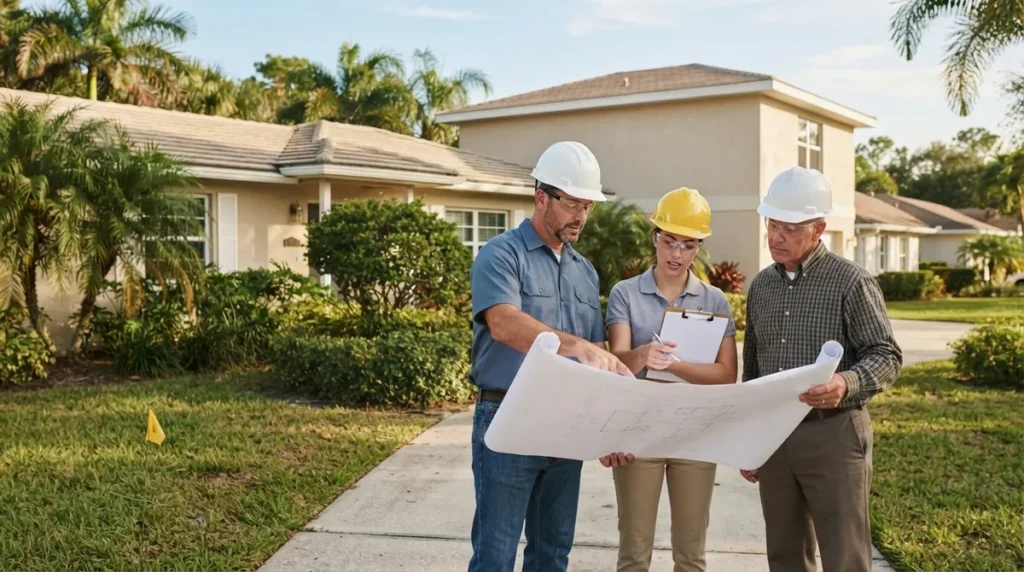
Hire a small team: a Florida-licensed contractor experienced with existing construction, a licensed engineer or architect if the building department requires sealed documentation, and a permitting professional to coordinate filings.
-
An appraisal flag is a yellow flag, not a code violation: it does not mean the addition is unsafe or that the county has taken action, but it can affect lender conditions.
-
Confirm which jurisdiction (city or county) controls the property and check the permit history first, since an expired or unclosed permit needs a different fix than a permit that was never pulled.
-
Expect inspectors may ask to open concealed walls or ceilings to verify structural, electrical, plumbing, or mechanical work; if something fails code or cannot be verified, corrections or partial reconstruction may be required.
-
Verify any contractor's license through DBPR's MyFloridaLicense service, and avoid anyone who guarantees approval or suggests skipping the building department.
-
Tell your lender, insurer, and the other party early and get their documentation requirements in writing, since a closed permit may not satisfy every condition on its own.
You were so close to the finish line. The offer was accepted, the lender was moving, and then the appraiser's report landed with one unwelcome note: the addition on this house doesn't appear in the permit records. If that's where you are, take a deep breath. This happens to Florida buyers, sellers, and homeowners more often than you might think, and it is usually fixable.
The big question is who should I hire when an appraisal finds an unpermitted addition in Florida? The short answer is a small team: a Florida-licensed contractor who is comfortable with existing construction, a Florida-licensed engineer or architect if your building department wants documentation or sealed plans, and a permitting professional who can coordinate the paperwork and the conversation with the jurisdiction. Not every job needs all three, and the right mix depends on the addition and the local rules.
In this guide, we'll walk through what the appraisal actually means, who does what, what to expect from inspections, and how to keep your closing, lender, and insurer in the loop.
What an Appraisal Finding Actually Means
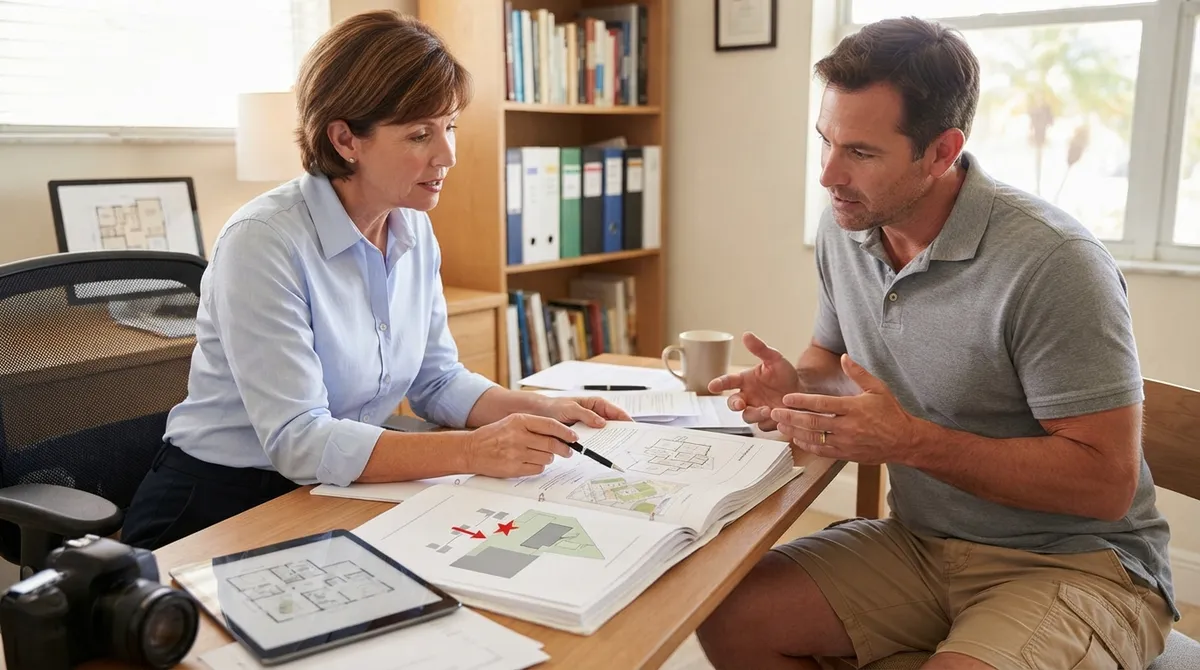
An appraisal is a valuation exercise, not a code inspection. When an appraiser flags an unpermitted addition, they are noting that living space, a garage conversion, or a room-sized structure appears to exist without matching permit records. That note can raise questions for the lender, and it may affect how the space is counted.
It does not mean the addition is unsafe, and it does not mean the county has already taken action. It also does not mean that fixing the paperwork will automatically change the appraised value or satisfy every lender condition. Think of it as a yellow flag: slow down, gather facts, and make a plan.
Step One: Start With the Right Building Department
Before you hire anyone, find out exactly which jurisdiction controls the property. Near city lines, this is not always obvious, and the wrong department will waste weeks. You can use a building department lookup tool to confirm whether the city or the county holds the permit authority for your address.
Once you know, ask how that office handles an existing addition built without permits. Forms, fees, required documents, and enforcement procedures vary from one Florida jurisdiction to the next. A permitting service can help you navigate the process, but only the building official decides what is required and what is approved.
Check the Permit History First
It also helps to know what is already on file. Sometimes the addition was permitted years ago and the permit simply expired or was never closed out. Other times there was never a permit at all. A quick open permit search can tell you whether you're dealing with a missing permit or an open one, and those are two different fixes.
Who Should You Hire? The Core Team
Here is how the roles typically break down when you are legalizing an addition that already exists. Remember that the exact team depends on your local requirements.
| Professional | What They Do | When You Need Them |
|---|---|---|
| Florida-licensed building or general contractor | Evaluates the existing work, performs corrections, coordinates licensed trades, and often pulls the permit | Almost always, especially if corrections or repairs are likely |
| Florida-licensed engineer or architect | Documents and evaluates the addition, prepares sealed drawings or letters | When the building department requires structural evaluation, plans, or calculations |
| Permitting professional or expediter | Researches records, prepares applications, coordinates plans, tracks review, and communicates with the jurisdiction | When you want the process managed so you aren't chasing the county yourself |
| Licensed trade contractors (electrical, plumbing, mechanical, roofing) | Verify and correct regulated trade work | When inspectors need to confirm or fix concealed systems |
The Licensed Contractor
Your contractor should have real experience with existing, unpermitted construction. That is a different skill from building new. They need to be comfortable opening up a wall, reading what is inside, and talking with inspectors about what they find.
Florida Statute §489.113 generally requires contractors to be certified or registered, and it says certain trade work, including electrical, mechanical, plumbing, roofing, and air-conditioning, must be performed or subcontracted by appropriately licensed contractors. Before you sign anything, verify the license through DBPR's MyFloridaLicense service and check any local requirements. If you want a refresher, our guide to Florida contractor license requirements covers the basics.
The Engineer or Architect
Many jurisdictions want proof that an existing addition is structurally sound. That usually means a Florida-licensed engineer or architect evaluates the work and prepares sealed documentation. Depending on the addition, that could be as-built drawings, a structural evaluation, or an engineer letter. For larger or more complex additions, full structural engineering may be needed.
If you want to understand who actually signs these documents, this explainer on who seals structural drawings for Florida permits is a helpful read.
The Permitting Professional
This is the person who keeps the whole thing moving. A good permitting service researches the property's permit history, documents the size and use of the addition, confirms the local process, and then prepares and files the application. They track the review, answer reviewer comments, and handle resubmittals so you aren't left decoding rejection notices.
One honest caveat: ask any permitting firm whether they act only as an expediter or also provide licensed design or engineering services. Permitting assistance on its own does not authorize someone to perform regulated contracting or engineering. At 1 Contractor Solutions, the drafting and engineering are done in house, with our own engineer signing and sealing the work, so you aren't waiting on an outside consultant when a reviewer asks for a fix. You can read more about how permit facilitation and filing works.
How the Process Usually Unfolds
Every jurisdiction is a little different, but most retroactive permit journeys follow a similar rhythm. Here is a realistic outline.
- Confirm the jurisdiction and permit history. Identify the correct building department and look for any prior or expired permits tied to the address.
- Document the addition. Measure it, photograph it, and note how it is used (bedroom, living space, garage conversion, enclosed patio).
- Ask the building department how they handle it. Request the forms, fees, and document list for legalizing existing work.
- Prepare plans and engineering. Produce as-builts, a site plan or survey if needed, and any sealed structural or MEP documentation.
- File the application. Submit the packet and respond promptly to reviewer comments.
- Complete inspections and corrections. Schedule inspections, open concealed areas if required, and fix anything that does not meet code.
- Close out the permit. Obtain final approval, then provide the documentation to your lender, buyer, or insurer.
If you'd like to see the same journey from a broader angle, our walkthrough on how to legalize unpermitted work in Florida goes deeper.
What to Expect From Inspections
This is the part that makes people nervous, so let's be upfront. Because the work was already finished without inspections, the building department may ask to see inside it. That can mean selectively opening walls, ceilings, or other finishes so inspectors can verify concealed structural, electrical, plumbing, or mechanical work.
If everything checks out, you move forward. If something does not meet applicable code, or it simply cannot be verified, corrections or even partial reconstruction may be required. No one can promise approval in advance, and anyone who does should raise an eyebrow. What a good team can do is set realistic expectations, minimize surprises, and handle the corrections efficiently. For a clearer picture, see our guide to inspections and this look at whether you'll really have to demolish unpermitted work.
Matching the Problem to the Right Help
Not every unpermitted addition is the same. Here is a quick way to think about which professional should lead.
| Situation | Likely Lead Professional | Supporting Help |
|---|---|---|
| Permit was pulled years ago but never finished | Permitting professional | Contractor to complete inspections |
| Enclosed patio or garage conversion with no permit | Licensed contractor | Engineer for structure; permitting service for filing |
| Structural room addition | Engineer or architect plus contractor | Permitting service to coordinate review |
| Electrical or plumbing added without permits | Licensed trade contractor | Permitting service for inspections |
| Closing is days away | Permitting professional | Contractor and engineer on standby |
Tell the Right People, Early
Because this surfaced during an appraisal, communication matters. Promptly let your lender, the other party in the transaction, your real estate professionals, and your insurer know what's going on, as appropriate. Then ask each of them what documentation they need to see.
Lenders and insurers have their own conditions, and a closed permit may or may not satisfy them on its own. Getting their requirements in writing early prevents the frustrating loop of fixing one thing only to learn they wanted another. If a sale is on a deadline, our article on what to do when an appraisal finds an unpermitted addition and our real estate guidance in realtor closing support can help you plan the timeline.
Tips for Different Readers
- Homeowners: Don't panic and don't start demolition on your own. Gather any old plans, receipts, or photos first, and talk to the building department before swinging a hammer.
- Buyers and investors: Ask the seller for permit history and talk to a permitting professional before you waive contingencies. It's easier to negotiate repairs before closing than after.
- Real estate agents: Bring a permitting pro in early so your clients get a realistic scope and timeline instead of surprises at the closing table.
- General contractors and design professionals: If you lack the in-house drafting or engineering capacity, outsourcing the as-builts and sealed documents keeps you focused on the corrections themselves.
Red Flags When Hiring
The wrong hire can turn a manageable problem into a costly one. Watch for these warning signs:
- Anyone who guarantees permit approval or inspection results before reviewing the work
- A contractor or permitting company who can't show a verifiable Florida license where one is required
- Vague answers about who will actually prepare and seal the drawings
- Pressure to skip the building department and just "fix it quietly"
- No clear explanation of whether they are an expediter, a designer, a contractor, or a combination
A trustworthy professional will explain the process in plain language, tell you what they can and can't control, and put the scope and fees in writing.
Cost and Timing: Set Honest Expectations
There isn't a single statewide price for legalizing an addition, and any number you see online should be treated as a rough guide at best. Fees, documentation, engineering scope, and corrections all vary by jurisdiction and by the condition of the work. Timelines depend on review queues, inspection scheduling, and whether corrections are needed. For a closer look at budgeting, see what it costs to legalize a Florida addition and our overview of after-the-fact permit cost in Florida.
Ready to Get This Sorted?
An appraisal that flags an unpermitted addition feels like a roadblock, but it's really a to-do list: confirm the jurisdiction, document the work, bring in the right licensed professionals, and work through the building department step by step. The earlier you assemble your team, the more options you have.
1 Contractor Solutions serves all 67 Florida counties, with permitting, plan drafting, and engineering under one roof, and we respond within 30 minutes day or night. If you'd like a second set of eyes on your situation, you can get a free quote and we'll tell you which jurisdiction controls your property and what it will take. You can also visit us on Google — 1 Contractor Solutions to see what our customers say, and follow us on LinkedIn or follow us on Facebook for more Florida permitting tips. You've got this, and you don't have to figure it out alone.
FAQs
Who should I hire to legalize an unpermitted addition in Florida?
Most owners need a Florida-licensed contractor experienced with existing construction, plus a licensed engineer or architect if the building department requires an evaluation or sealed plans. A permitting professional can tie it all together by handling research, applications, and communication with the jurisdiction.
Can a Florida permitting service get a permit for an addition built without permits?
A permitting service can prepare the application, coordinate plans, and guide you through review, but approval is always up to the local building official. It depends on whether the addition can be shown to meet applicable codes, and no one can honestly guarantee the outcome in advance.
Will the county make me open walls or remove part of an unpermitted addition?
Possibly. Inspectors may ask to see concealed structural, electrical, plumbing, or mechanical work, which can mean selectively opening finishes. If something doesn't meet code or can't be verified, corrections or partial reconstruction may be required.
Will an unpermitted addition affect my mortgage, home sale, or insurance in Florida?
It can. Lenders and insurers often have their own documentation requirements, so tell them early and ask what they need. Resolving the permit doesn't automatically change the appraised value or satisfy every lender condition, so get requirements in writing.
We do this work every day across all 67 Florida counties. Call (866) 314-6931 and we will tell you what your situation actually requires — including when you do not need us.
Related services
Permit Facilitation & Filing
You have a crew scheduled, a client asking for dates, and a permit sitting somewhere in a queue you cannot see. We file it, w…
See the servicePlan Review Coordination
A permit in plan review is not one queue. On a commercial project it can be six queues, each with its own reviewer, its own c…
See the serviceReady to get your permit moving?
One call tells you which jurisdiction controls your project, what it will take, and what it will cost. Most of the time we can scope it on the phone.