
Blog
After-the-Fact Permit vs. Tearing Out Work: Which Wins?
Compare getting an after-the-fact permit in Florida versus removing unpermitted work. Learn costs, timelines, documents, and which path fits your project.
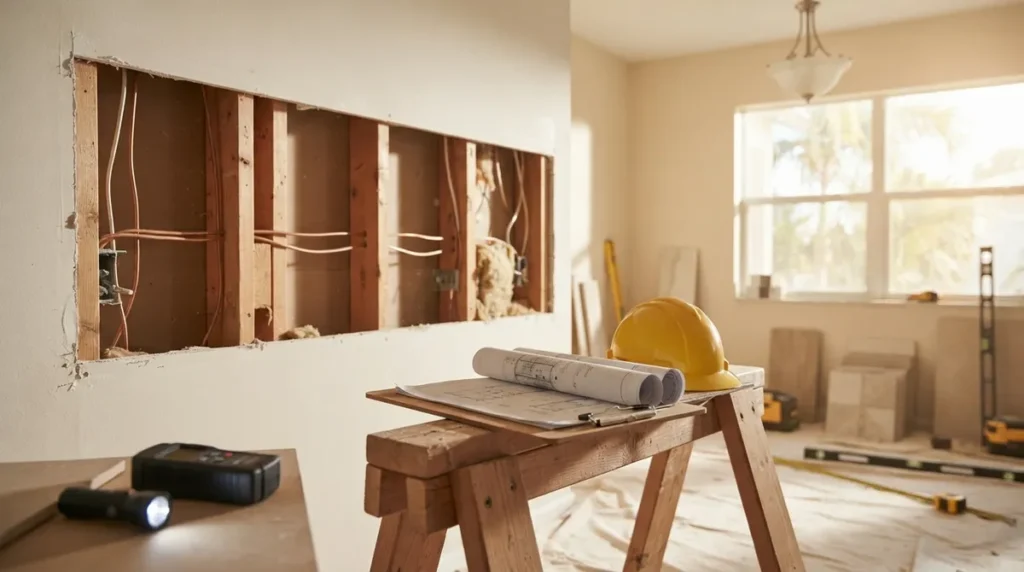
Key Takeaways
-
Unpermitted work can be legalized through an after-the-fact permit, which is usually cheaper and faster than demolition when the existing work is sound and can be documented.
-
There is no statewide after-the-fact fee in Florida; costs are set locally, and some jurisdictions, such as St. Lucie County, charge double the standard permit fee.
-
Concealed work may require walls to be opened for inspection, but some jurisdictions accept a third-party engineering evaluation instead, so ask your building department early.
-
Demolition and rebuild is the better choice when work is structurally unsafe, cannot be verified or corrected, or violates zoning, setback, or floodplain rules that no permit can fix.
-
Check zoning, floodplain, HOA, historic, and environmental approvals at the start, since winning a building permit does not resolve those separate requirements.
-
Unresolved unpermitted work can bring code enforcement fines or liens and complicate insurance claims, refinancing, and resale, so addressing it promptly protects your property.
So you just found out that a deck, a re-roof, a bathroom remodel, or a screened lanai was built without a permit. First, take a breath. You are far from alone, and Florida has a well-worn path for fixing it. Plenty of homeowners, contractors, and buyers find themselves needing to get an after the fact permit in Florida every single week.
The real question is what to do next. You have two broad choices: bring the work into the permitting system with an after-the-fact permit, or remove the work and start over. Both are legitimate. Each carries different costs, timelines, and risks.
In this friendly guide, we compare the two routes side by side so you can decide with confidence. We cover what the law says, what the building department will want, how fees work, and when demolition is actually the smarter play. Along the way, we point out where 1 Contractor Solutions can take the paperwork off your plate, whether you are a general contractor, a solar company, a realtor, or a homeowner trying to sleep better at night.
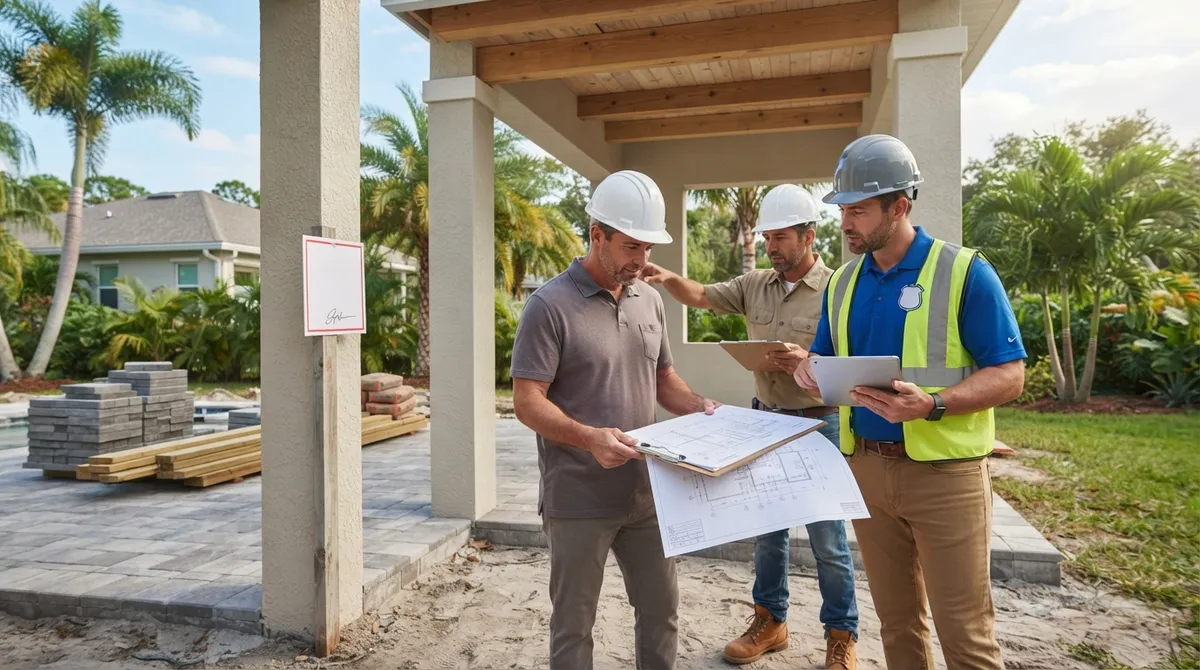
What Is an After-the-Fact Permit in Florida?
An after-the-fact permit is a regular building or trade permit that you apply for once work has already started or finished without one. It is not a pardon, and it is not automatic approval. The local building department still reviews the work to confirm it meets code.
Florida Statutes §553.79 generally prohibits covered construction, alteration, repair, or demolition without first obtaining a permit from the local enforcing agency. Because permitting is administered locally, the exact rules, forms, fees, and penalties depend on your city or county, not on one statewide schedule.
That local flavor matters. A request in Hillsborough County can look different from one in Miami-Dade County, even for nearly identical work. If you want a deeper walkthrough of the service itself, see our page on after the fact and expired permits.
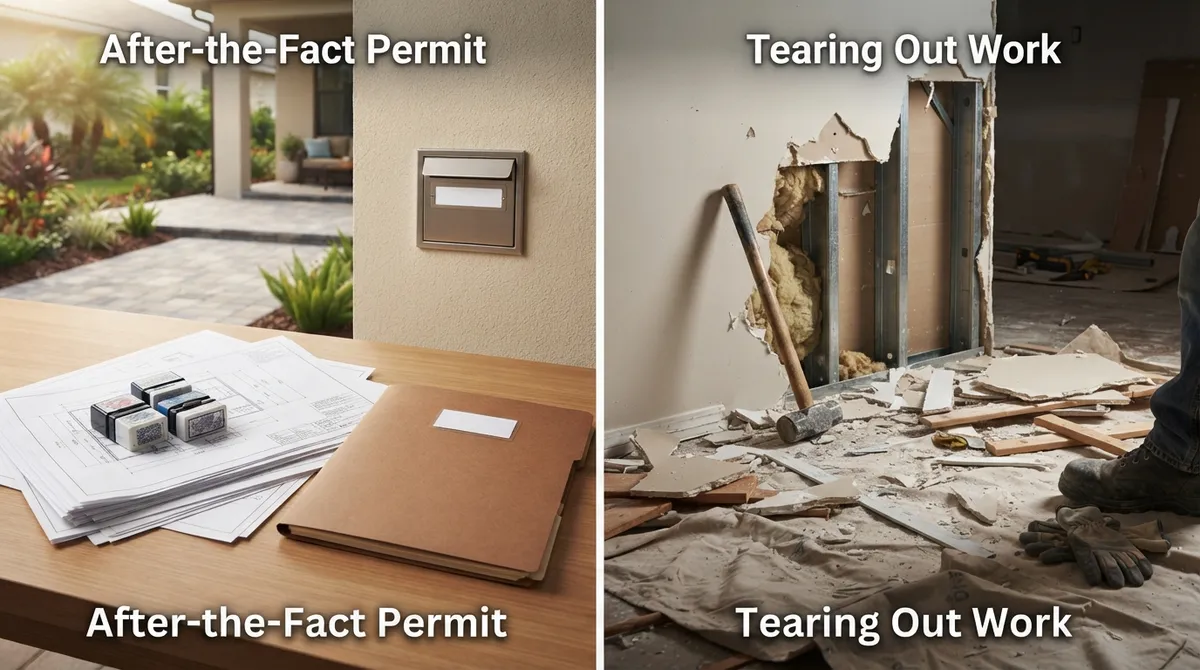
The Two Paths: A Quick Side-by-Side
Before we dig into the details, here is the big picture. Think of it as a friendly cheat sheet.
| Factor | After-the-Fact Permit | Remove and Redo |
|---|---|---|
| Core idea | Legalize existing work through review and inspection | Demolish, then permit and rebuild correctly |
| Typical cost drivers | Permit fees (sometimes doubled), plans or as-builts, engineering, possible opening of walls | Demolition, disposal, new materials, new labor, plus normal permit fees |
| Timeline | Often shorter if work is sound and documented | Longer because you rebuild from scratch |
| Biggest risk | Work may not meet code and need corrections | Spending far more than needed on sound work |
| Best for | Work that appears code-compliant or can be corrected | Work that is dangerous, badly built, or cannot be legalized |
In most cases we see, the after-the-fact route wins because it preserves the value of work that is already in place. But there are real exceptions, and we will cover those too.
Path One: How to Get an After-the-Fact Permit in Florida
Here is the typical sequence. Exact steps vary by jurisdiction, so treat this as a roadmap rather than a rulebook.
- Identify the right jurisdiction. Your property may sit in a city, a county, or near a boundary line. Our building department lookup tool can help you confirm who controls your address.
- Contact the building department promptly. Be upfront about the full scope of work. Hiding pieces of it tends to backfire during inspection.
- Gather your documentation. This often includes the application, scope and valuation of the work, contractor information, and plans or as-built drawings.
- Add engineering where needed. Structural or electrical work often requires a signed and sealed evaluation or letter.
- Submit, track, and answer comments. Reviewers may issue comments that require revised drawings or added details.
- Pass inspections and close the permit. Once the work is verified, the permit is finaled.
That is the heart of it. The work is not complicated in concept, but it is detail heavy, and the details are where projects stall.
What Documents Will You Likely Need?
Requirements vary, but most departments ask for some combination of the items below.
- A completed permit application describing all unpermitted work
- Scope of work and project valuation
- Plans or as-built drawings showing what actually exists
- Contractor license and insurance information, or owner-builder paperwork
- Product approvals, such as those for windows, doors, or roofing materials
- Engineering evaluations or engineer letters for structural, electrical, or mechanical elements
- A site plan or survey for additions, pools, fences, or accessory structures
Will You Have to Open Up Walls?
This is the question that keeps people up at night, so let us address it directly. If the work is concealed behind drywall, tile, or other finishes, the building official may require it to be exposed so an inspector can see it. In some jurisdictions, a third-party engineering evaluation may be accepted instead, where allowed.
St. Lucie County, for example, notes that concealed work may require an engineering analysis at the owner's cost. The takeaway is simple: ask early what your jurisdiction accepts, because that single answer can save you a lot of drywall dust and money.
Path Two: Removing the Work and Starting Over
Sometimes tearing it out really is the right call. If the work was built so poorly that it cannot be brought up to code at a reasonable cost, demolition and a clean rebuild may be cleaner and safer.
Common situations where removal makes sense include:
- Structural work that cannot be verified or corrected, such as undersized framing or missing connections
- Electrical or plumbing work that is unsafe and mostly concealed
- Additions that violate setbacks, height limits, or floodplain rules and cannot receive approval
- Structures built where zoning does not allow them at all
If you go this route, you still need proper permits, including demolition permits where applicable. Removal is not a loophole. It is simply a different way of getting to compliant work.
Cost Comparison: What Do You Actually Pay?
Here is where people expect a single number, and unfortunately there is not one. Florida does not set one statewide after-the-fact fee. Fees and penalties are local.
Some jurisdictions charge an added penalty or double the standard permit fee. St. Lucie County's published FAQ, for instance, states that its after-the-fact fee is double. Code enforcement fines or liens may also come into play if violations remain unresolved.
| Cost Item | After-the-Fact Permit | Remove and Redo |
|---|---|---|
| Permit fees | Regular fee, sometimes doubled by local rule | Regular fee for demolition and for new work |
| Plans and drawings | As-builts or plans of existing conditions | Full new plans |
| Engineering | Evaluation or sealed letter for existing work | Design engineering for new work |
| Construction costs | Corrections only, if needed | Demolition plus full rebuild |
| Inspection extras | Possible opening of walls or testing | Standard inspections |
For a closer look at how pricing tends to shake out, our guide to after the fact permit costs in Florida breaks it down further.
Timeline: Which Route Gets You Done Faster?
If the existing work is sound and well documented, an after-the-fact permit is usually faster than rebuilding. You skip demolition, material orders, and fresh construction.
That said, review speed varies a lot by jurisdiction and by how complete your submittal is. A thin application invites comments, and comments mean resubmittals. If you want to understand the baseline, read our explainer on how long a building permit takes in Florida.
One practical tip: submit a complete package the first time. Clean drawings, clear photos, and a sealed engineering letter, if needed, can cut weeks off the process.
Which Option Fits Your Situation?
Different readers face different pressures. Here is how the choice often plays out for each group.
Homeowners and Residential Property Owners
If you bought a home with an unpermitted addition, or a past contractor skipped the permit on your roof, the after-the-fact route usually protects your investment. Unpermitted work can complicate insurance claims, refinancing, and resale, so resolving it is worth the effort. Our page for homeowners explains how we help.
Real Estate Professionals and Investors
A permit problem discovered during due diligence can derail a closing. Agents and investors often need fast research and a clear plan for legalizing the work before the contract deadline. See how we support realtors and closing timelines.
General Contractors and Design Trades
When a job started before the permit was issued, or a subcontractor skipped a step, you need clean documentation and a reliable reviewer relationship. Our team coordinates filings and plan review for general contractors and trades who would rather not maintain in-house permitting staff.
Solar Companies
Solar installers sometimes inherit systems that were installed without proper approvals. Legalizing them requires structural and electrical documentation that reviewers will accept. We support solar contractors with code-compliant packages.
Other Approvals That Can Still Apply
A building permit does not automatically resolve every other rule. Even after you legalize the construction itself, you may need approval from other departments or agencies.
- Zoning: Setbacks, lot coverage, and use restrictions still apply.
- Floodplain: Work in a flood zone may trigger elevation or substantial improvement rules.
- Environmental: Projects near water may need separate environmental permits.
- Historic preservation: Historic districts have their own review.
- HOA or condo rules: Private approvals may be required in addition to the public permit.
Skipping these checks is a classic way to win the permit and still hit a wall. Confirm them at the start.
Owner-Builder Rules and Small-Job Exemptions
Florida has an owner-builder exemption, but it is limited. The owner must meet state-law conditions, personally appear and sign the application, and use licensed trade subcontractors for regulated work when applicable. Always verify eligibility with the local authority. We cover the basics on our owner-builder permits page.
There is also a statutory exemption for certain work valued at less than $7,500 on an owner's single-family dwelling, subject to conditions and exceptions. Because rules and applicability can change, confirm with your local building department before assuming you are exempt.
Storm Repairs and Temporary Relief Programs
After hurricanes, some local governments create limited relief for storm repairs. Pinellas County, for example, described a limited after-the-fact process for certain hurricane repairs in specified jurisdictions, with penalty waivers that ran through June 30, 2026. Standard permit fees still applied, and fees were reinstated July 1, 2026.
This kind of relief is local and temporary. It is not a statewide waiver, and it does not cover unrelated new construction or certain outdoor amenities. If you are in Pinellas County or another storm-affected area, ask what programs are active today rather than assuming an old deadline still applies.
Red Flags That Point Toward Professional Help
You do not have to do this alone. In fact, a few warning signs suggest it is smart to bring in a team.
- You received a stop-work order or a code enforcement notice
- A closing or refinance is on a deadline
- The work is structural, electrical, or concealed
- You are unsure which jurisdiction actually controls the property
- You have already been told your submittal was incomplete or denied
If any of these sound familiar, our urgent permit rescue service is built for exactly this. And if code enforcement is already involved, our guide to code compliance violations explains how we help resolve them.
How 1 Contractor Solutions Helps
We are Florida's outsourced permitting department. Our drafting and engineering are done in house, and our own engineer signs and seals the work, so when a reviewer flags something, we fix it without waiting on an outside consultant. We work across all 67 Florida counties and respond within 30 minutes, day or night.
For after-the-fact projects, that typically means we research the jurisdiction, prepare as-builts and plans, coordinate engineering letters, file the application, track it, and work every reviewer comment through final inspection. You can also see what other clients say, as many of our 1 Contractor Solutions reviews on Google mention how smooth the process felt.
Want to stay in the loop between projects? You can follow us on LinkedIn or follow us on Facebook for practical Florida permitting updates. For authoritative statutory language, you can also review Florida Statutes §553.79 on Online Sunshine.
The Verdict: Which Path Wins?
For most Florida property owners, getting an after-the-fact permit wins. It preserves work that is already sound, usually costs less than a full rebuild, and gets you a clean permit record for insurance, financing, and resale.
Removal wins when the work is unsafe, cannot be legalized, or violates rules that no permit can fix. The only way to know for sure is to have the work reviewed against local requirements.
If you are ready to move forward, we would love to help. Get a free quote today, tell us your address and the problem, and we will tell you which jurisdiction controls it, what it will take, and then go do it. Permits approved. Projects moving.
FAQs
How do I get an after-the-fact building permit in Florida?
Start by contacting the local building department that controls your property and disclosing the full scope of unpermitted work. Then submit an application with plans or as-built drawings, contractor or owner-builder details, and any needed engineering, and pass the required inspections. Exact steps vary by jurisdiction, so confirm the checklist early.
How much does an after-the-fact permit cost in Florida?
There is no single statewide fee. Costs are set locally, and some jurisdictions charge an added penalty or double the standard permit fee. St. Lucie County's published FAQ, for example, lists a double fee, so check with your own building department for current rates.
Can I get a permit after construction is already finished?
Yes, in most cases you can apply for a permit after the work is complete. The building department will review it for code compliance, which may include inspections, opening concealed work, or accepting a third-party engineering evaluation where allowed.
Can a Florida homeowner apply as an owner-builder for after-the-fact work?
Sometimes, yes, but the exemption is limited. The owner must meet state-law conditions, personally sign the application, and use licensed subcontractors for regulated trade work when applicable. Verify your eligibility with the local authority before you apply.
What happens if I leave unpermitted work alone in Florida?
Unpermitted work can lead to code enforcement fines or liens, and it may complicate insurance claims, refinancing, and resale. Resolving it sooner usually keeps options open and costs more manageable.
We do this work every day across all 67 Florida counties. Call (866) 314-6931 and we will tell you what your situation actually requires — including when you do not need us.
Related services
Permit Facilitation & Filing
You have a crew scheduled, a client asking for dates, and a permit sitting somewhere in a queue you cannot see. We file it, w…
See the servicePlan Review Coordination
A permit in plan review is not one queue. On a commercial project it can be six queues, each with its own reviewer, its own c…
See the serviceReady to get your permit moving?
One call tells you which jurisdiction controls your project, what it will take, and what it will cost. Most of the time we can scope it on the phone.