
Blog
After the Fact Permit in Florida: 2026 Owner's Guide
Unpermitted work in Florida? Learn how after-the-fact permits work, what documents you need, typical costs, and how to get approved in 2026.
Key Takeaways
-
An after-the-fact permit in Florida is a local permit applied for after work is built; there is no statewide category, so your city or county sets the process, fees, and evidence required.
-
Applying late does not automatically legalize unpermitted work; the jurisdiction must confirm the work meets the Florida Building Code, and corrections or removal may be required.
-
Hidden work may need to be exposed, tested, or documented with as-built drawings, photos, receipts, or sealed engineer letters before approval.
-
Confirm you are applying to the correct authority first, since city and county jurisdictions differ, and run an open or expired permit search before filing.
-
Describe the completed work fully and accurately; omitting scope commonly causes problems during inspection.
-
Verify current fees, waivers, and program rules directly with the local building department, because programs like Pinellas County's storm-permitting waiver can end or change.
Let's be honest: finding out that work on your property was done without a permit can feel like a punch in the gut. Maybe you bought a home and the inspector spotted an enclosed patio nobody ever filed on. Maybe a contractor skipped the paperwork, or a storm repair got rushed through. Take a deep breath. You are far from the first person in this boat, and there is a well-worn path out of it.
An after the fact permit in Florida is simply a local building permit you apply for once regulated work has already been built. It is not a special statewide permit category. Your local building department decides how it works, what it costs, and what proof it wants to see.
In this friendly guide, we will walk through what the law says, what officials typically ask for, how to build a strong application, and how to avoid the mistakes that slow people down. Whether you are a homeowner, a general contractor, a solar installer, or a real estate pro, you will find practical steps here. And if you would rather hand the paperwork to someone who does this daily, our after-the-fact and expired permit team is ready to help.
What an After the Fact Permit in Florida Really Is
Florida Statute §553.79(1)(a) generally makes it unlawful to construct, alter, repair, or demolish a building without first getting a permit from the appropriate enforcing agency. When that step gets skipped, the fix is a permit application submitted afterward, reviewed by the same local authority that would have handled it originally.
Here is the part many people miss: the state sets the general rule, but your city or county runs the process. There is no single statewide after-the-fact fee schedule, checklist, or penalty chart.
Applying late also does not automatically legalize the work. The jurisdiction still has to be satisfied that what was built meets the Florida Building Code and any related requirements, such as fire, floodplain, or zoning rules.
Common Situations That Lead to After-the-Fact Permitting
- A previous owner added a room, enclosure, or pool cage without permits
- A contractor skipped the permit or abandoned the job
- Storm or hurricane repairs were completed in a hurry
- A tenant or flipper did interior remodeling without approvals
- A home inspection, appraisal, or title search flagged unpermitted work
- A code enforcement notice arrived in the mail
What Happens When Work Was Done Without a Permit
The consequences vary by location and by how the issue came to light. Voluntarily coming forward usually feels a lot better than waiting for a notice, though the outcome still depends on the jurisdiction and the work involved.
Common results include:
- Added fees or fines: Some jurisdictions charge standard permit fees plus extra for work done without a permit
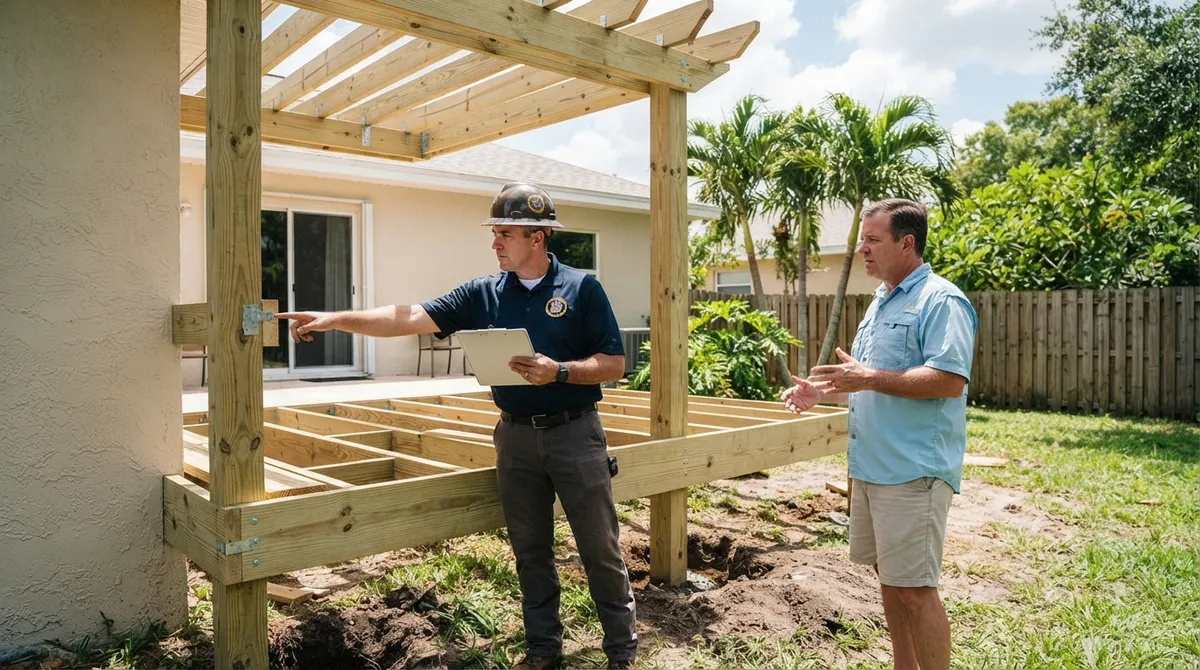
- Inspection requirements: Officials may require inspections of completed and concealed work
- Corrections: Noncompliant work may need to be fixed, revised, or removed
- Transaction delays: Open issues can stall a sale, refinance, or insurance claim
If you want to understand the penalty side in more depth, our guide on the penalty for building without a permit in Florida covers it in detail.
The Big Question: Can the Work Just Be Approved As-Is?
Sometimes yes, but you should not count on it. Approval depends on whether the work can be shown to meet code. Because finished walls, ceilings, and slabs hide what is underneath, officials often need extra evidence.
That can mean:
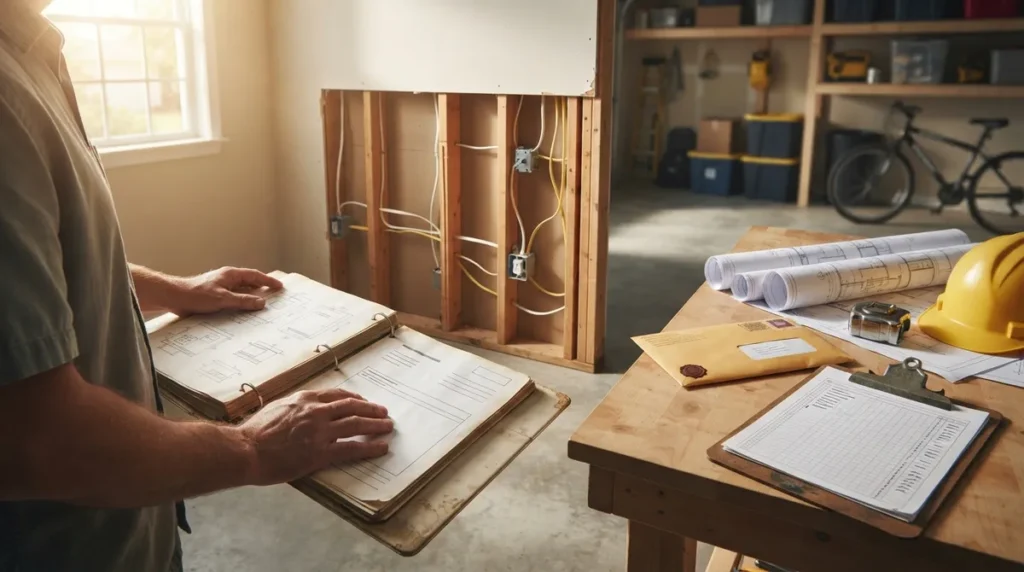
- Opening walls or ceilings so wiring, framing, or plumbing can be seen
- Providing photos, receipts, or contractor records
- Testing certain systems
- Supplying sealed engineering that verifies structural integrity
The local building department decides what evidence is acceptable. That is why talking to them early, and being upfront about the scope, makes everything smoother.
Step-by-Step: How to Get an After the Fact Permit in Florida
While every jurisdiction has its own quirks, the process generally follows this rhythm:
- Identify the correct building department. City limits matter, and boundaries near city lines can be confusing. Our building department lookup tool helps you find the right authority.
- Check for open or expired permits. Run an open permit search so you know what already exists on the record.
- Describe the completed work accurately. Honest, detailed scope descriptions build trust and prevent surprises later.
- Ask for the after-the-fact checklist. Many departments publish one, and it tells you exactly what to assemble.
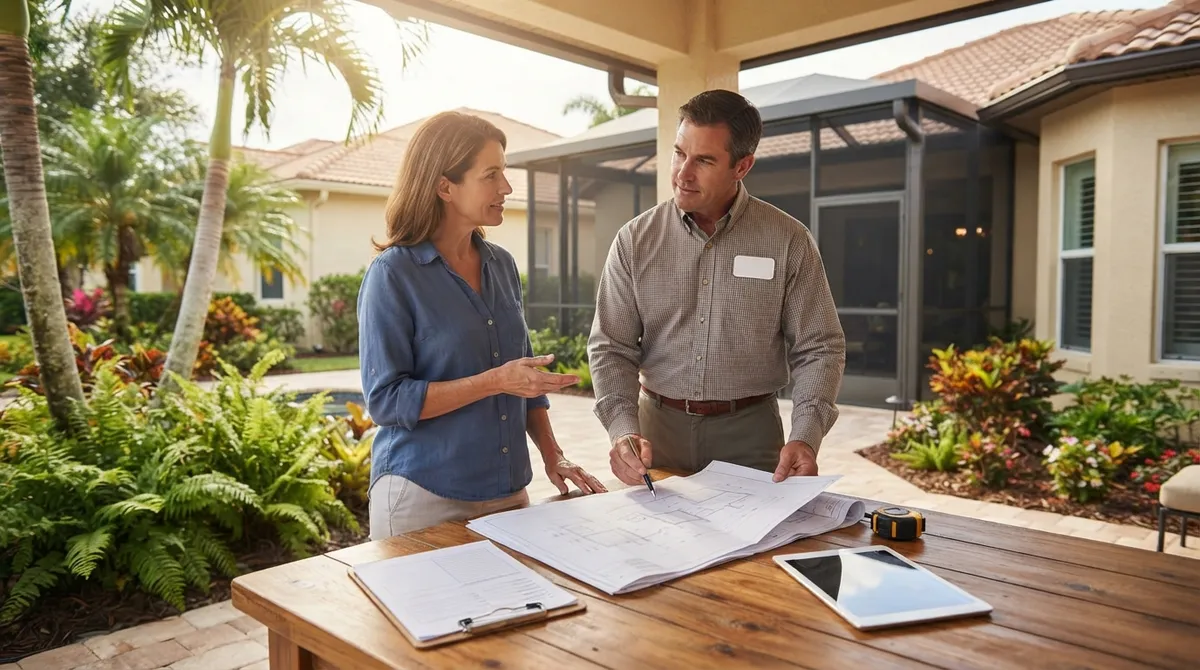
- Gather plans and records. This typically includes as-built drawings, site plans, product approvals, and contractor or owner documentation.
- Submit the application and pay fees. Confirm the current fee schedule directly with the department.
- Schedule inspections. Expect inspectors to verify the finished work, and possibly concealed elements.
- Complete corrections. Fix any deficiencies, revise drawings if needed, and resubmit.
- Obtain final approval and permit closure. Keep the final documentation; you will want it at sale or refinance.
Documents You May Need
Requirements differ, but this table shows what building departments commonly ask for and why.
| Document | Purpose | Who Usually Prepares It |
|---|---|---|
| As-built drawings | Show what was actually constructed | Drafter or design professional |
| Site plan or survey | Confirm setbacks, lot coverage, and placement | Surveyor or drafter |
| Sealed engineer letter | Verify structural or system compliance | Florida-licensed engineer |
| MEP documentation | Demonstrate electrical, plumbing, and mechanical compliance | MEP engineer or licensed trade |
| Photos and records | Document concealed or completed work | Owner or contractor |
| Product approvals | Confirm windows, doors, or roofing materials qualify | Contractor or supplier |
Need drawings of what already exists? Learn more about as-built drawings and engineer letters, which are two of the most common after-the-fact deliverables.
Timelines, Fees, and What to Expect
Many people ask how long it takes and what it costs. The honest answer is: it depends on your jurisdiction, the scope, and the condition of the work.
Florida Statute §553.792 (2026) sets decision timeframes for certain complete and sufficient building permit applications, including 5 business days for specified work under $15,000 at an existing single-family dwelling, and 30 or 60 business days for certain residential applications depending on building size. These timelines are not a guarantee of approval and may not apply to every after-the-fact case.
| Factor | How It Affects Cost or Timing | |
|---|---|---|
| Scope of work | Larger or structural work usually means more review and inspections | |
| Concealed construction | Opening walls or testing adds time and expense | |
| Plan quality | Clean, complete submittals reduce comment rounds | |
| Local fee schedule | Fees and penalties vary by jurisdiction | |
| Corrections needed | Noncompliant work requires repairs and resubmittal |
For a deeper look at pricing, see our breakdown of after-the-fact permit costs in Florida.
Special Cases: Storms, Flood Zones, and Local Programs
Some situations carry extra layers. Flood-zone properties and disaster-repair cases can involve additional local requirements beyond ordinary code review. If your property sits in a flood zone, the FEMA 50 percent rule may come into play for substantial improvements.
Local programs can also change the picture. For example, Pinellas County ran an after-the-fact storm-permitting program for specified unincorporated areas and named municipalities where the county is the building official. Its temporary penalty waiver ended June 30, 2026, and fees were reinstated July 1, 2026, according to the county. If you are in Pinellas County, verify your eligibility and current fees directly with the county.
The lesson: always confirm the current rules with your local authority, because programs, waivers, and fee schedules change.
Mistakes That Slow Down After-the-Fact Permits
After years of watching these files, the same stumbling blocks show up again and again:
- Applying to the wrong jurisdiction. Filing with the city when the county controls the parcel (or vice versa) wastes weeks.
- Understating the scope. Leaving out part of the work usually backfires during inspection.
- Skipping engineering when it is needed. Structural items often require sealed documentation.
- Assuming payment equals approval. Paying fees does not guarantee approval or prevent enforcement.
- Ignoring notices. Unanswered violations can escalate.
- Submitting incomplete packets. Missing documents trigger comment rounds and delays.
Tips for Different Readers
Homeowners and Property Owners
Start by pulling your permit history, then contact the building department or a permitting professional before touching anything. If you received a notice, respond promptly. Our homeowner resources explain what to expect.
General Contractors and Trade Professionals
Document everything with dated photos as work progresses, and keep product approvals handy. If a client brings you a legacy problem, scope the engineering early. See how we support general contractors across Florida.
Solar Companies
Installations done without proper permits can usually be brought into compliance with code-compliant structural and electrical documentation. Solar contractors benefit from having engineering and filing handled together.
Real Estate Professionals
Permit issues surface at the worst moment: right before closing. Getting ahead of them protects deals, and our realtor closing support was built for exactly that. You can also read about how an open permit found at closing can be handled.
Should You Hire a Permitting Professional?
You can absolutely start the process yourself, especially for small, simple scopes. But after-the-fact files tend to involve more moving parts than a normal permit: as-built drawings, engineer letters, inspection coordination, and back-and-forth with reviewers.
A Florida permitting professional can coordinate documentation, communicate with the agency, and keep the file moving. To be clear, no one can guarantee approval, because the building department makes the final call. What a good partner can do is reduce errors, speed up responses, and make sure you are asking for the right thing in the right place.
At 1 Contractor Solutions, we act as Florida's outsourced permitting department. Our drafting and sealed engineering are handled in house, so when a reviewer raises a comment, we can address it quickly instead of waiting on an outside consultant. We work across all 67 Florida counties, and you can see how others rate us on Google as 1 Contractor Solutions. For urgent situations, such as stop work orders or closings in jeopardy, take a look at our urgent permit rescue service.
Wrapping Up
Unpermitted work is stressful, but it is rarely a dead end. The path forward is consistent: find the right building department, describe the work honestly, assemble solid documentation, pass inspections, correct anything that falls short, and close the permit. Take it one step at a time and keep good records.
Remember that an after the fact permit in Florida varies by jurisdiction, so confirm current fees and requirements locally before you submit. If you would like a knowledgeable team in your corner, get a free quote and tell us your address and what happened. We respond fast, we know the local rules, and we are happy to help you get back to a clean, closed permit. You can also follow us on LinkedIn or follow us on Facebook for more Florida permitting tips.
FAQs
What is an after the fact permit in Florida?
It is a local building permit you apply for after regulated work has already been completed without the required permit. It is not a separate statewide category, so your city or county building department sets the process, fees, and inspection requirements.
Can I get a permit in Florida after construction is already complete?
In most cases, yes, you can apply, though approval is not automatic. The building department will want proof that the work meets the Florida Building Code, which may include plans, inspections, engineering, and sometimes opening up finished areas.
Will the inspector make me open walls or remove finishes?
Possibly. If structural, electrical, plumbing, or mechanical work is hidden, officials can require it to be exposed, tested, or documented so it can be properly evaluated. The local building department decides what evidence is acceptable.
How much does an after the fact permit cost in Florida?
Costs vary by jurisdiction and project scope, since there is no uniform statewide fee schedule. Some departments charge standard permit fees plus additional fees or fines for unpermitted work, so confirm the current schedule directly with your local authority.
Can unpermitted work be grandfathered in or approved as-is?
Don't count on it. Late applications do not automatically legalize work, and the jurisdiction may require corrections, revised plans, or removal if something does not meet code. Paying fees alone does not guarantee approval.
We do this work every day across all 67 Florida counties. Call (866) 314-6931 and we will tell you what your situation actually requires — including when you do not need us.
Related services
Permit Facilitation & Filing
You have a crew scheduled, a client asking for dates, and a permit sitting somewhere in a queue you cannot see. We file it, w…
See the servicePlan Review Coordination
A permit in plan review is not one queue. On a commercial project it can be six queues, each with its own reviewer, its own c…
See the serviceReady to get your permit moving?
One call tells you which jurisdiction controls your project, what it will take, and what it will cost. Most of the time we can scope it on the phone.