Blog
9 Facts About After-the-Fact Permitting West Palm Beach
Learn exactly how after-the-fact permitting works in West Palm Beach, from jurisdiction rules to costs, inspections, and how to fix unpermitted work.
Key Takeaways
-
After-the-fact permits are not automatic approvals; building officials review completed work against current Florida Building Code just like new construction, and non-compliant work requires corrections or partial removal.
-
Confirm your exact jurisdiction first, as properties with West Palm Beach addresses may fall under City of West Palm Beach, unincorporated Palm Beach County, or neighboring municipalities—each with different forms, fees, and timelines.
-
You'll need a complete application package including permit forms, as-built plans, photographs, sealed engineering drawings for structural/electrical work, and contractor information; missing pieces cause significant delays.
-
Unpermitted work can freeze real estate sales and refinancing when discovered during title searches or lender inspections, but these issues are usually resolvable quickly when addressed early with a clear plan.
-
Total costs combine standard permit fees, after-the-fact penalty fees (often 2-3x the standard fee), engineering/architectural fees, correction costs, and potential code enforcement fines—get a project-specific estimate rather than assuming a flat rate.
-
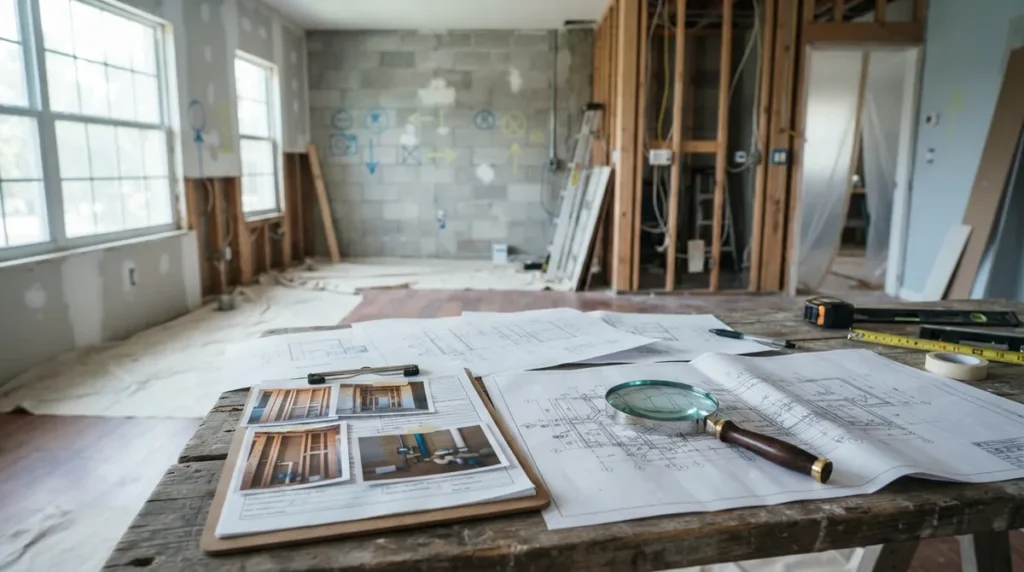
Concealed work like framing, wiring, or plumbing behind walls may require exposure for inspection per Florida Building Code section 110.1, since unpermitted work never received required inspections before being finished.
Finding out your West Palm Beach property has unpermitted work can feel like a punch to the gut. Maybe you're a homeowner who just learned that lanai enclosure from the previous owner was never permitted. Maybe you're a real estate agent whose deal just stalled at closing because of an open code enforcement flag. Or maybe you're a contractor who inherited someone else's mess and now you're the one explaining it to the client. Take a breath. This happens more often than you'd think, and there's a clear path forward.
After-the-fact permitting West Palm Beach property owners need isn't some mysterious loophole or a get-out-of-jail-free card. It's a structured process for documenting work that's already been built, getting it reviewed against current code, and correcting whatever needs correcting. We've walked hundreds of Florida property owners through this exact situation, and we know it can be handled without losing your mind (or your closing date). Let's break down the nine things you genuinely need to know before you start.
1. After-the-Fact Permits Are Not Automatic Approval
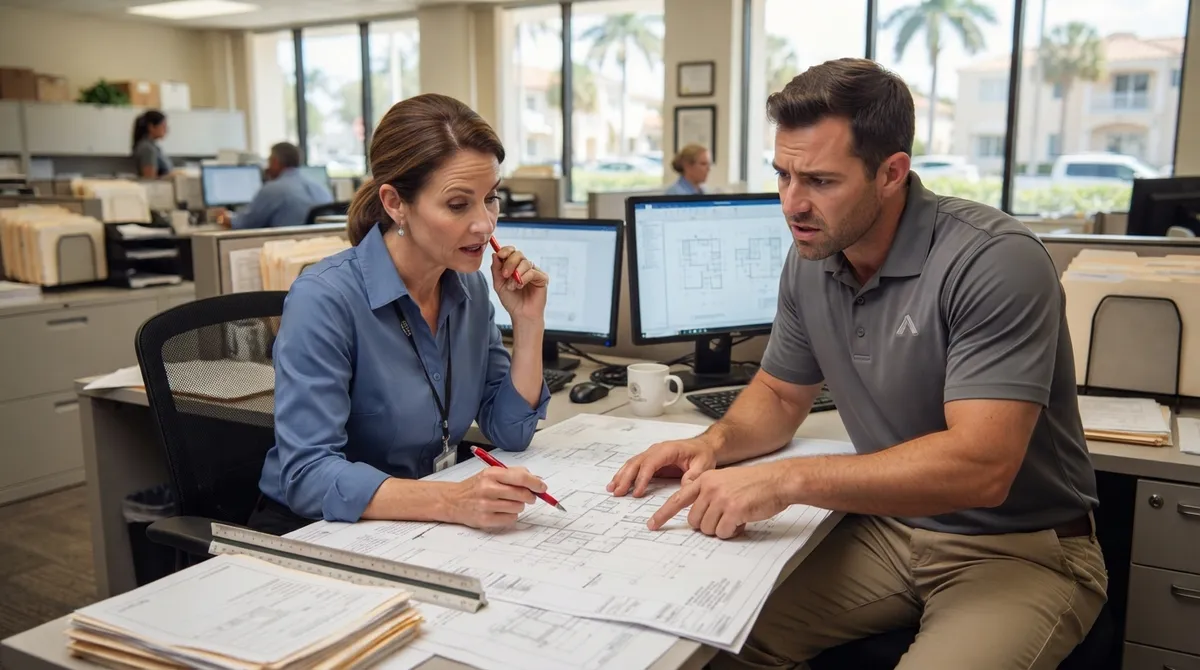
A common misconception is that filing for an after-the-fact permit means the city will simply rubber-stamp whatever was built. That's not how it works. The building official reviews the completed work exactly like they'd review new construction plans, checking it against the Florida Building Code edition in effect and any local amendments.
If the work doesn't meet code, you're looking at corrections, and in some cases, partial removal of what was built. This is why documentation matters so much. An accurate as-built drawing package gives reviewers exactly what they need to evaluate the work fairly the first time.
2. Florida Law Requires Permits Before Work Begins — Not After
Florida Statutes section 553.79 is pretty clear: you're supposed to get your permit before you start construction, alteration, repair, modification, or demolition work. Building without one isn't just a paperwork oversight in the eyes of the law.
That said, the statute (and local building codes) also recognize that unpermitted work happens, whether from past owners, unlicensed contractors, or good-faith misunderstandings. The after-the-fact process exists precisely because Florida jurisdictions need a path to bring these properties into compliance rather than leaving them in permanent limbo.
3. Confirm Your Jurisdiction First — It Changes Everything
Here's something people miss constantly: not every property with a West Palm Beach address is actually governed by the City of West Palm Beach. Depending on exactly where the parcel sits, you could be dealing with the city's building department, unincorporated Palm Beach County, or a neighboring municipality entirely.
Each jurisdiction has its own application forms, fee schedules, and review timelines. Filing with the wrong office wastes time you don't have, especially if you're under pressure from a pending sale or a code enforcement deadline. Tools like a building department lookup or an open permit search can help you confirm exactly which office controls your property before you file a single form.
Quick Jurisdiction Checklist
- Pull your property's parcel information from the county appraiser's site
- Verify whether the address falls inside official city limits
- Check for any annexation history that might have shifted jurisdiction
- Call the building department directly to confirm before submitting
- Ask a permitting professional to verify if you're unsure — it's worth the peace of mind
4. What You'll Actually Need to Submit
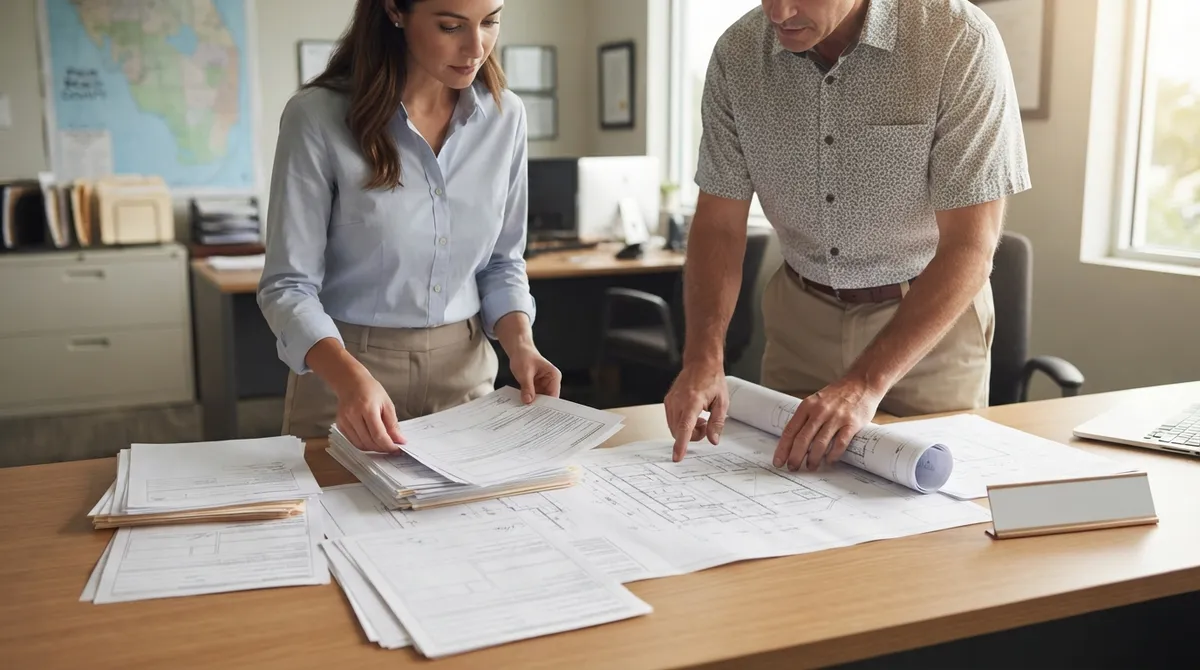
A typical after-the-fact application isn't a single form. It's a package. Missing pieces are one of the biggest reasons applications bounce back and forth, adding weeks to your timeline.
| Document | Purpose |
|---|---|
| Permit application form | Formal request identifying the work and property |
| As-built site or floor plans | Shows the work exactly as constructed |
| Photographs and measurements | Visual verification of existing conditions |
| Signed and sealed engineering drawings | Required for structural, electrical, or complex work |
| Contractor information | Identifies who performed the work, where applicable |
| Supporting inspection reports | May be needed for concealed or structural components |
For anything touching structure, electrical, or plumbing, you'll likely need a licensed professional's sealed drawings. This is where in-house structural engineering and MEP engineering support saves enormous back-and-forth, since corrections can be turned around quickly instead of waiting on an outside consultant's schedule.
5. Concealed Work May Need to Be Exposed
This is the part nobody loves hearing, but it's honest: if the completed work hid framing, wiring, plumbing connections, or waterproofing behind finished walls or ceilings, the building official may require that concealed work be exposed for inspection.
Florida Building Code section 110.1 requires permitted work to stay accessible for inspection until it's approved. When work was finished without that inspection ever happening, exposing sections of drywall, flooring, or ceiling may be the only way to confirm what's actually behind there. It's not fun, but it protects everyone, including future buyers of the property.
6. Costs Add Up From Several Different Sources
There's no single flat fee for after-the-fact permitting in Florida, and West Palm Beach is no exception. Your total cost typically combines several categories.
- Standard permit fees set by the local building department
- Additional after-the-fact penalty fees, which Florida Building Code section 109.4 allows jurisdictions to charge locally
- Engineering or architectural fees for sealed drawings, which vary with project complexity
- Correction costs if the work needs modification to meet code
- Possible separate code enforcement fines or liens, which are distinct from the permit process itself
Industry sources often describe after-the-fact penalty fees as roughly two to three times a standard permit fee in some Florida jurisdictions, though you should always confirm current numbers directly with the applicable building department rather than assuming a citywide rate. For a deeper cost breakdown, our after-the-fact permit Florida cost guide walks through typical fee categories in more detail.
7. Unpermitted Work Can Freeze a Sale or Refinance
If you're a real estate agent or investor, you already know this pain point well. A title search or lender inspection turns up unpermitted work, and suddenly your closing date is in jeopardy. Buyers get nervous, lenders get cautious, and everyone starts asking who's responsible for fixing it.
The good news is that these issues are resolvable, often faster than people expect when handled by someone who does this daily. We've seen open permits found at closing resolved with focused effort rather than months of delay. Coordinating realtor closing support early, as soon as an issue surfaces, keeps buyers and sellers on the same page and moving toward the table.
8. Code Enforcement Discovery Comes With Its Own Track
Sometimes the trigger for after-the-fact permitting isn't a sale, it's a neighbor complaint, an aerial inspection, or a routine code enforcement sweep. Once a violation is documented, the property owner typically has a deadline to either remove the unpermitted work or legalize it through the permitting process.
These situations run on two parallel tracks: the permitting side, which brings the work into compliance, and the code enforcement side, which may involve fines that accrue daily until resolved. Understanding code compliance violations and how they interact with the permitting timeline helps property owners avoid surprises. Getting ahead of it with a clear plan tends to stop the fine clock much faster than ignoring the notice.
9. A Permitting Partner Makes the Difference
Here's the honest truth: after-the-fact permitting involves a lot of moving pieces — jurisdiction confirmation, plan preparation, reviewer coordination, inspection scheduling, and sometimes code enforcement negotiation happening simultaneously. Doing it alone, especially while managing a business, a renovation, or a pending sale, is exhausting.
This is exactly the kind of work we handle every day at 1 Contractor Solutions. Our after the fact expired permits team researches permit history, confirms the correct jurisdiction, coordinates our in-house engineers for sealed drawings, responds to plan review comments, and tracks every step through final closeout. We're a licensed private provider too, which means for eligible projects, we can handle plan review ourselves instead of waiting in a county queue. If your situation feels urgent, our urgent permit rescue service is built for exactly that pressure.
How the Process Generally Flows
While every jurisdiction has its own quirks, most after-the-fact permit journeys follow a similar rhythm from start to finish.
- Confirm the correct permitting jurisdiction for the property
- Research existing permit history and any code enforcement flags
- Prepare accurate as-built plans, sometimes with engineer involvement
- Submit the application with all required supporting documents
- Respond to plan review comments across relevant disciplines
- Schedule and pass required inspections, including any concealed work exposure
- Complete corrections if the work doesn't meet current code
- Close out the permit once all approvals and inspections are finalized
Comparing Your Options for Handling It Yourself vs. Getting Help
| Consideration | Doing It Yourself | Working With a Permitting Team |
|---|---|---|
| Jurisdiction research | Time-consuming, easy to get wrong | Verified quickly by experienced staff |
| Engineering and sealed drawings | Requires finding and hiring a separate professional | In-house engineers handle it directly |
| Plan review response time | Depends on your own availability | Same-day coordination in many cases |
| Inspection scheduling | Manual follow-up with the department | Tracked and managed for you |
| Code enforcement coordination | Can be confusing to navigate alone | Handled alongside the permitting process |
Whether you're a homeowner trying to sell your house, a general contractor cleaning up a previous crew's oversight, or a solar company needing code-compliant documentation for a system that was installed before permitting caught up, the path forward is the same: confirm jurisdiction, document accurately, and work the process methodically. Our homeowners and general contractors resources go deeper into audience-specific guidance if you want to explore further.
For readers researching outside Palm Beach County, we also serve Broward County, Miami-Dade County, and communities throughout the state, so if your project spans multiple jurisdictions, we can coordinate all of it under one roof.
Final Thoughts on Moving Forward With Confidence
Discovering unpermitted work doesn't have to derail your plans, your sale, or your peace of mind. It just requires the right documentation, the right jurisdiction, and a bit of patience while the review process runs its course. Thousands of Florida property owners have walked this exact path and come out the other side with a fully compliant, legally documented property.
We'd genuinely love to help make your after-the-fact permitting West Palm Beach experience as smooth as possible. Our team answers around the clock, responds fast, and keeps our engineering and drafting work in house so corrections don't sit in someone else's inbox. You can get a free quote today and let's figure out exactly what your property needs. You can also read what other property owners have experienced by visiting Visit us on Google — 1 Contractor Solutions, or connect with us on follow us on LinkedIn and follow us on Facebook for more permitting tips across Florida. For general background on Florida's statewide building code requirements, the Florida Building Commission is a helpful public resource as well.
FAQs
How do I get an after-the-fact permit in West Palm Beach?
You'll start by confirming whether the City of West Palm Beach or another jurisdiction actually governs your property, then prepare as-built plans documenting the work exactly as it exists. From there, you submit the application, work through plan review comments, and pass any required inspections before the permit closes out. It sounds like a lot, but taking it one step at a time (or having a permitting team handle it for you) makes it very manageable!
How much does an after-the-fact permit cost in West Palm Beach?
Costs vary because they combine several pieces: standard permit fees, possible after-the-fact penalty fees, engineering costs for sealed drawings, and any corrections needed to meet code. There's no single flat number, so it's best to get a project-specific estimate rather than relying on a general figure floating around online.
Will I need an engineer or architect for an after-the-fact permit?
For structural, electrical, or otherwise complex work, yes, you'll typically need signed and sealed drawings from a licensed professional. The good news is that having in-house engineering support can speed this up considerably, since corrections don't require waiting on a separate outside consultant.
Can I sell or refinance a West Palm Beach property with unpermitted work?
It's much harder, and many deals stall when unpermitted work surfaces during a title search or lender inspection. The great news is these issues are almost always resolvable, often faster than people fear, especially when addressed early with a clear plan instead of waiting until the closing table.
Will walls or ceilings need to be opened for an after-the-fact inspection?
Sometimes, yes. If work like wiring or framing was concealed behind finished surfaces without ever being inspected, the building official may ask for that concealed work to be exposed so it can be properly verified. It's not the most fun step, but it genuinely protects you and any future owner of the property.
We do this work every day across all 67 Florida counties. Call (866) 314-6931 and we will tell you what your situation actually requires — including when you do not need us.
Related services
Permit Facilitation & Filing
You have a crew scheduled, a client asking for dates, and a permit sitting somewhere in a queue you cannot see. We file it, w…
See the servicePlan Review Coordination
A permit in plan review is not one queue. On a commercial project it can be six queues, each with its own reviewer, its own c…
See the serviceReady to get your permit moving?
One call tells you which jurisdiction controls your project, what it will take, and what it will cost. Most of the time we can scope it on the phone.