
Blog
8 Steps for After the Fact Permitting Tampa (2026)
Built without a permit in Tampa? Follow these 8 friendly steps to confirm jurisdiction, prepare plans, pass inspection, and close your permit in 2026.
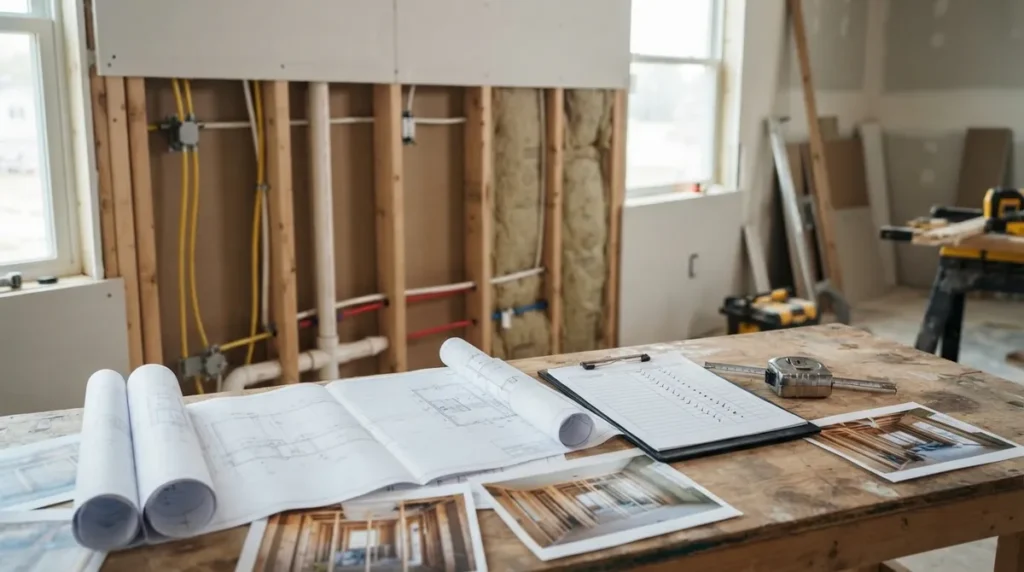
Key Takeaways
-
Stop work immediately if still in progress and confirm jurisdiction—Tampa mailing address doesn't guarantee City of Tampa control; some properties fall under Hillsborough County with different forms, fees, and review processes.
-
Gather comprehensive documentation before filing: photos from every angle, contracts, receipts, product specifications, and prior permits to smooth the review process and avoid delays.
-
Prepare professional as-built drawings and engineering documentation early—building officials typically require proof that existing work meets Florida Building Code, especially for structural, electrical, plumbing, and mechanical systems.
-
Inspectors may request exposure of concealed work behind finished surfaces, but this is usually targeted and limited; engineers' letters can sometimes reduce required demolition or opening.
-
File the After the Fact Affidavit with the correct agency, track status actively, respond quickly to plan review comments, and expect multiple rounds of revisions before final inspection approval closes the permit.
-
Confirm current fees, exemption thresholds, and enforcement penalties directly with your local agency—requirements change annually and unpermitted work can block sales, refinancing, and insurance coverage until resolved.
Let's be honest: finding out that a deck, a roof, a window install, or a garage conversion was built without a permit is a stomach-dropping moment. Maybe you bought the house that way. Maybe a contractor swore he "had it handled." Maybe you just didn't know. Whatever the story, take a breath. You are far from the first person in Hillsborough County to land here, and there is a real path forward.
After the fact permitting in Tampa is the process of asking the local building authority to review and approve work that required a permit but was started or finished without one. It is not an automatic pardon. Inspectors may want plans, photos, engineering, and even a peek behind finished walls. Still, with the right steps in the right order, most owners get to a clean, closed permit.
This 2026 guide walks you through eight friendly, practical steps, from confirming who actually has jurisdiction over your property to getting that final inspection approval. Whether you are a homeowner, a general contractor, a solar installer, or a real estate pro, you will find something useful here.
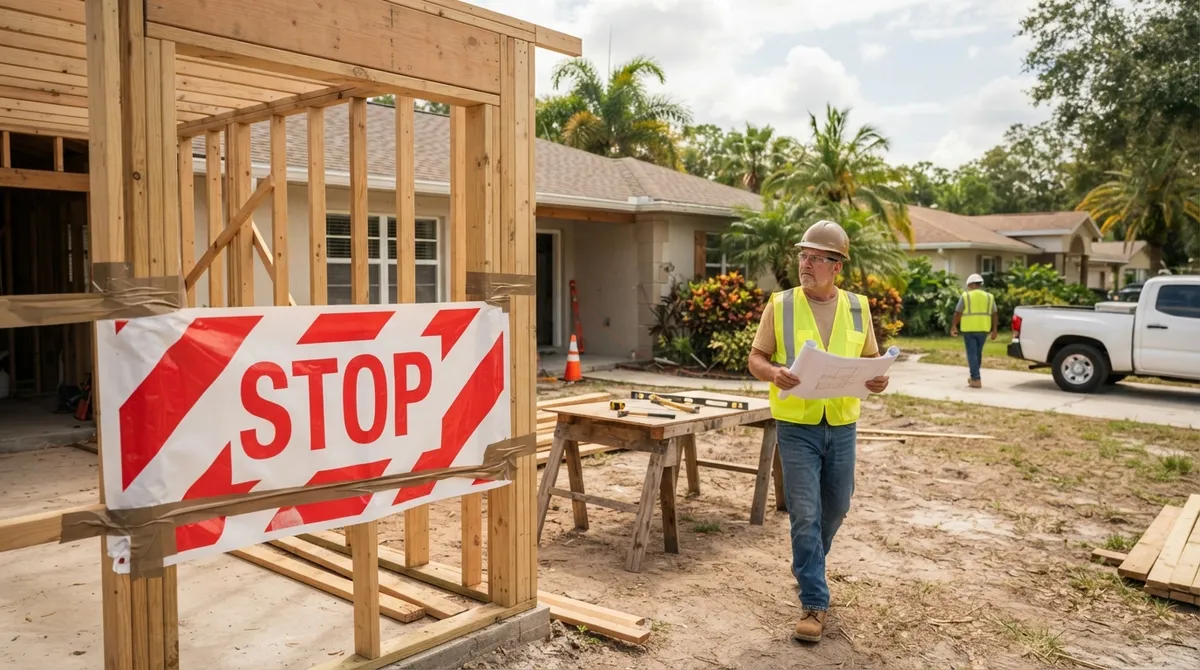
Step 1: Stop Work and Confirm What You Are Dealing With
First things first: if work is still in progress, pause it. Continuing to build while a permit issue is open can make things more complicated and may lead to a stop work order. A short pause costs you far less than ripping out work later.
Next, take stock of what actually happened. Florida Statutes §553.79 generally makes it unlawful to perform covered construction, alteration, repair, or demolition without first obtaining a permit from the appropriate enforcing agency. That covers a lot of ground, so make a simple list of everything that was done.
- Structural changes such as additions, removed walls, or new openings
- Electrical, plumbing, mechanical, and gas work
- Roofing, windows, and doors
- Pool cages, enclosures, decks, and retaining walls
- Solar or other equipment installations
Be thorough here. Trade work hiding inside a "simple remodel" is one of the most common surprises we see, and it is much better to find it now than during an inspection.

Step 2: Figure Out Who Has Jurisdiction (City of Tampa or Hillsborough County)
Here is a detail that trips up many owners: a Tampa mailing address does not always mean the City of Tampa controls your permit. Some properties with a Tampa address sit in unincorporated Hillsborough County, and others fall within neighboring municipalities. The City of Tampa handles properties inside city limits, while unincorporated areas fall under Hillsborough County.
Getting this wrong wastes weeks, because the forms, fees, and review requirements differ. Our free building department lookup tool can help you point in the right direction, and our pages for Tampa and Hillsborough County explain how local processes work.
| Question | City of Tampa | Unincorporated Hillsborough County |
|---|---|---|
| Who reviews the permit? | City of Tampa Construction Services | Hillsborough County permitting staff |
| Where do forms come from? | City of Tampa Documents and Forms page | County permitting resources |
| Best first move | Confirm the current After the Fact Affidavit and requirements | Confirm current application and fee requirements |
Step 3: Gather Your Records, Photos, and History
Reviewers love documentation, and the more you bring, the smoother things tend to go. Start collecting everything related to the work before you ever submit.
- Photos of the work from every angle, including any framing, wiring, or plumbing still visible
- Contracts, receipts, and invoices that show when and by whom the work was done
- Product specifications for windows, doors, roofing, or equipment
- Any prior permits, surveys, or approved plans for the property
- Notes on what you know about hidden or concealed work
If a prior owner or a disappearing contractor did the work, do not panic. You can still build a solid packet from what you can see and measure today. Photos taken now, plus field verification by a professional, can fill many gaps.
Step 4: Understand the Tampa Paperwork
The City of Tampa lists an "After the Fact Affidavit" among the forms on its Construction Services documents page. The exact requirements depend on the type of work and the property, so always confirm the current form, submittal checklist, and fees with the City before you file. Requirements change, and a form that was right last year may not be right in 2026.
It also helps to know that Tampa's guidance says permit-required work must be inspected and receive final inspection approval, and that inspections cannot be scheduled until the permit exists. Some projects may qualify for an Early Start Authorization, but that is for work begun before plan review, and the work must remain uncovered. For work already finished, plan on documentation and inspection rather than shortcuts.
Our team at After The Fact Expired Permits handles this paperwork every week, so you do not have to decode each checklist yourself.
Step 5: Prepare Plans, Drawings, and Engineering
This is where many after the fact permitting Tampa applications succeed or stall. Because the work is already built, the building official often needs drawings that show exactly what exists and proof that it meets the Florida Building Code.
Depending on your project, that can include:
- As-built drawings showing what was actually constructed
- Site plans showing setbacks and placement
- Structural engineering for additions, framing changes, and load paths
- MEP engineering for electrical, plumbing, and mechanical systems
- Engineer letters certifying that existing work is sound
Sealed drawings are common for structural items, and a licensed engineer's letter can sometimes resolve questions that would otherwise require demolition. Having drafting and engineering under one roof keeps comment responses fast, which is a big reason many Tampa owners bring us in early.
Quick Guide: What Type of Work Usually Needs What
| Type of Work | Common Documentation |
|---|---|
| Addition or enclosure | As-built plans, structural review, site plan |
| Roof replacement | Product approvals, roof details, possible engineer letter |
| Windows and doors | Product approvals, installation details |
| Electrical or plumbing | Trade drawings, possible exposure for inspection |
| Solar system | Electrical plans, structural attachment details |
Treat this table as a starting point, not a promise. The reviewer decides what a specific project requires.
Step 6: File the Application and Track It Closely
With your records and drawings ready, it is time to submit. Filing is only the beginning, though. A good tracking habit keeps your project from quietly sitting in a queue.
- Submit the application, affidavit if required, and drawings through the correct agency
- Pay the applicable fees after confirming the current fee schedule
- Check status regularly rather than waiting for a call
- Respond to plan review comments quickly and completely
- Resubmit corrected documents as needed
Comments are normal, so do not let one round of corrections discourage you. Our permit facilitation and filing and revisions and resubmittals services exist precisely for this stage, because fast, accurate responses are what move a file from "in review" to "approved."
Step 7: Be Ready for Inspections and Concealed Work
Here is the part people worry about most: inspections. Because the work was done without oversight, the inspector may request access to see what is behind finished surfaces. That can mean opening a section of drywall to view wiring, or exposing framing connections.
It sounds scary, but it is usually targeted and limited, not a full teardown. Your engineer or permit team can often help you propose the smallest reasonable exposure points, or support the file with photos and an engineer's letter when appropriate. The final call belongs to the building official.
If deficiencies turn up, they will need to be corrected and re-inspected. That might be a missing strap, an improper breaker, or a product that lacks proper approvals. Fixing items found during inspection is a normal part of the process. If you want to know more about how this works, our inspections page walks through the options, including private provider inspections where available.
Step 8: Get Final Approval and Close the Permit
The finish line is a passed final inspection and a closed permit. This is the moment that protects you at resale, during refinancing, and when dealing with insurers. An open or unresolved permit can hold up a closing, and our guide on how to clear a Tampa permit hold before closing explains why timing matters.
Once approved, keep copies of everything: the permit card, inspection sign-offs, final approval, and sealed documents. Store them with your property records. If you are a real estate professional, our realtor and closing support can help get a file closed on a deadline.
Common Questions About Exemptions and Owner-Builders
Many owners hope their project was exempt. Florida law does provide a limited exemption for certain work valued below $7,500 at a single-family dwelling. However, it excludes specified work and circumstances, including electrical, plumbing, structural, mechanical, or gas work, and property in a flood hazard area. The owner or contractor must submit a written exemption request with supporting documentation to the local agency to qualify. It is not a blanket pass.
The owner-builder route is similar. Florida Statutes §489.103 describes conditions for owners acting as their own contractor, including direct onsite supervision of work not performed by licensed contractors. It is not a general workaround for permitting or licensing rules. If you are considering it, learn more about owner builder permits before relying on it.
What About Fees and Penalties?
This is the question everyone asks, and the honest answer is: verify directly. We have not found a reliable, current Tampa-specific penalty amount in the official sources, so you should confirm fees and any enforcement penalties with the City of Tampa or Hillsborough County, whichever has jurisdiction. Fees depend on the project value, the type of work, and the current fee schedule.
For general budgeting context, you can read our overview of after the fact permit Florida cost. If a code complaint is already involved, our code compliance violations team can help you respond calmly and correctly.
Why Tampa Owners Bring in a Permitting Team
You can absolutely try this on your own, and some simple files go smoothly. But after the fact permitting Tampa projects tend to involve unknowns: hidden work, missing paperwork, unclear jurisdiction, and reviewers who want engineering. A team that does this every day helps you avoid wrong turns.
At 1 Contractor Solutions, we act as Florida's outsourced permitting department. We prepare plans, coordinate with reviewers, handle revisions, and carry the file through closeout, with in-house sealed drawings and same-day response. We serve general contractors, solar companies, realtors, and homeowners, so whatever your angle, we have likely seen it before. If you want to hear from people who have been through it, read what clients say on Google for 1 Contractor Solutions.
For deeper reading, our guide on how to get an after the fact permit in Tampa pairs nicely with this one. You can also check the Florida Statutes directly at Online Sunshine's Florida Statutes section 553.79, and review the City's own Construction Services documents and forms. If you like practical Florida permitting updates, follow us on LinkedIn or follow us on Facebook.
Ready to Get Your Tampa Permit Back on Track?
Unpermitted work feels heavy, but it is fixable. Stop work, confirm jurisdiction, gather records, prepare solid drawings, file carefully, welcome the inspection, and close the permit. Take it one step at a time and you will get there.
If you would like a friendly team in your corner, get a free quote from 1 Contractor Solutions today. Tell us the address and the problem, and we will tell you exactly what it takes and then go do it.
FAQs
How do I get an after-the-fact permit in Tampa, Florida?
Start by confirming whether your property is under the City of Tampa or Hillsborough County. Then gather photos and records, prepare any required plans or engineering, submit the application and the After the Fact Affidavit if required, and complete the inspections needed for final approval.
Will Tampa make me open walls to inspect unpermitted work?
Possibly. Inspectors may request exposure of concealed work so they can verify it meets code. The extent depends on the project, and photos or an engineer's letter can sometimes reduce how much needs to be opened, though the building official makes the final call.
Are there penalties for unpermitted construction in Tampa?
Fees and enforcement penalties vary, and we have not found a reliable, current Tampa-specific penalty amount in official sources. Your best move is to confirm the current fee schedule and any enforcement details directly with the City of Tampa or Hillsborough County.
Can I sell or refinance a Tampa home with unpermitted work?
It is sometimes possible, but unpermitted work can create hurdles with lenders, appraisers, and buyers. Resolving it through an after-the-fact permit before closing usually makes the transaction much smoother.
Does a small project need a permit in Tampa?
Not always, but you should not assume it is exempt. Florida's limited exemption for work under $7,500 excludes electrical, plumbing, structural, mechanical, and gas work, as well as flood hazard areas, and it requires a written request. Always verify with the local agency first.
We do this work every day across all 67 Florida counties. Call (866) 314-6931 and we will tell you what your situation actually requires — including when you do not need us.
Related services
Permit Facilitation & Filing
You have a crew scheduled, a client asking for dates, and a permit sitting somewhere in a queue you cannot see. We file it, w…
See the servicePlan Review Coordination
A permit in plan review is not one queue. On a commercial project it can be six queues, each with its own reviewer, its own c…
See the serviceReady to get your permit moving?
One call tells you which jurisdiction controls your project, what it will take, and what it will cost. Most of the time we can scope it on the phone.