
Blog
7 After-the-Fact Roof Permit Mistakes Florida Roofers Make
Fixing an unpermitted roof in Florida? Avoid these 7 after-the-fact permitting mistakes and learn the right steps to take with your local building department.
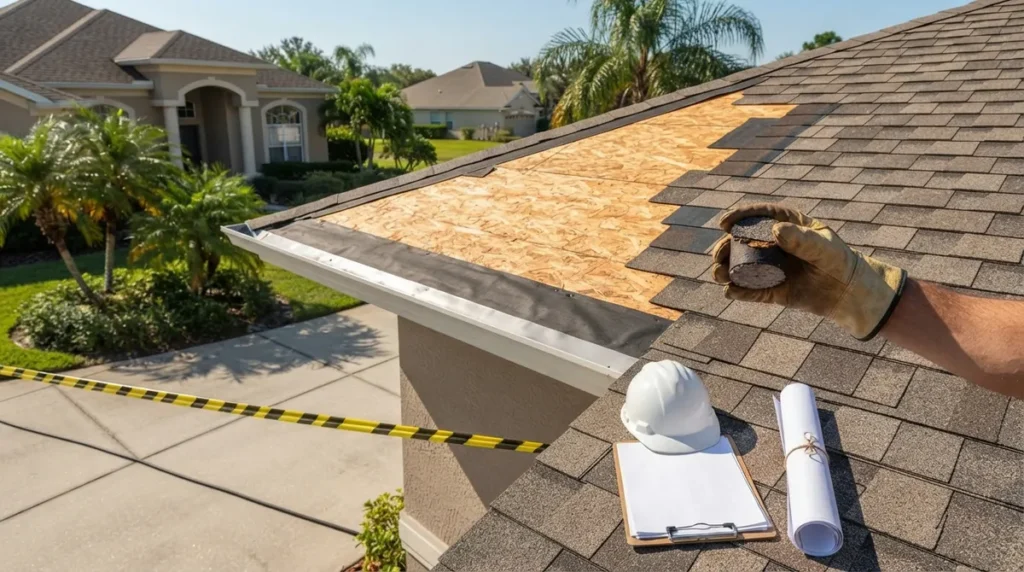
Key Takeaways
-
Filing an after-the-fact permit does not guarantee approval; the local building department reviews the application and may request corrections, extra documentation, or corrective work.
-
Stop all remaining roofing work immediately once you discover there is no permit, since Florida Statutes §489.127 prohibits performing permit-required work without a permit in effect.
-
Florida has no statewide after-the-fact roofing fee schedule or process, so confirm the specific documents, inspections, and fees with the local building department that controls the address.
-
Verify that your Florida roofing license is active and that the contractor of record on the application matches who actually performed the work, as required under §489.13.
-
Photos alone rarely satisfy requirements; gather contracts, invoices, product approvals, installation photos, and license details, and expect possible test cuts or a sealed engineer letter for concealed work.
-
Track the application closely by responding promptly to reviewer comments, scheduling inspections as soon as allowed, and confirming closeout so the permit is formally finaled.
Let's be honest: every roofer has been there. The crew finished early, the homeowner was thrilled, and then someone realized the permit was never pulled, never closed, or belonged to a different contractor entirely. That sinking feeling is real, and we want you to know it's fixable.
After the fact permitting for roofers in Florida is one of the most common rescue jobs in the permitting world. The tricky part is that a late application does not automatically legalize anything. Under Florida Statutes §553.79, covered building work generally needs a permit before it starts. And §489.127 flags performing permit-required work with no permit in effect as prohibited conduct. So the goal isn't just filing paperwork. It's filing it the right way, with the right local office, in the right order.
In this friendly guide, we walk through seven mistakes we see roofers make when they try to fix an unpermitted job, plus what to do instead. Whether you run a small crew or manage dozens of reroofs a month, a little knowledge here can save weeks of headaches and a pile of fees. Let's dig in.
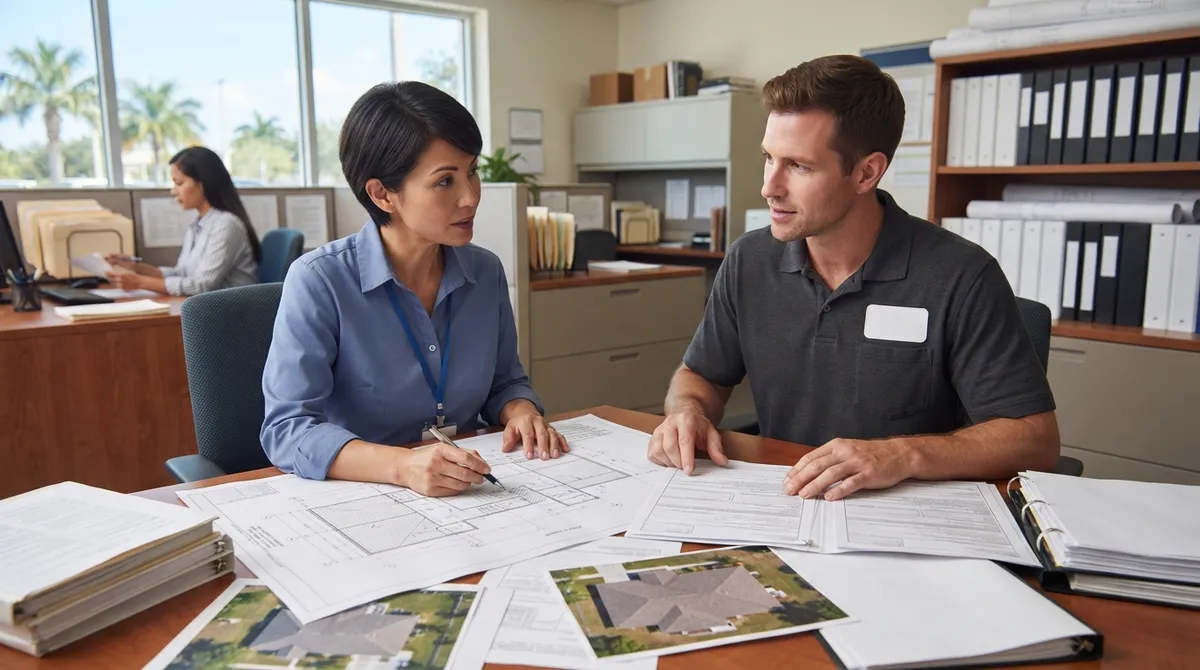
Why After-the-Fact Roof Permits Are Handled Locally
Here's the first thing to know: there is no single statewide after-the-fact roofing permit process or fee schedule in Florida. Your local building department, called the authority having jurisdiction, decides what documents it wants, which inspections apply, what fees are charged, and how enforcement works.
That means what worked in Lee County may not work in Miami-Dade, and vice versa. Lee County's roof guide, for example, describes dry-in and final inspections, while Miami-Dade publishes its own inspection guidance tied to code provisions. These are local examples, not universal rules.
| Factor | Who Decides | Why It Matters to Roofers |
|---|---|---|
| Application documents | Local building department | Packets differ by county and city |
| Fees | Local building department | No statewide after-the-fact fee schedule exists |
| Inspections required | Local building official | Concealed work may need extra verification |
| Enforcement steps | Local code enforcement and building official | Timelines and penalties vary |
If you work across several counties, our building department lookup tool is a handy way to confirm which office actually controls a given address. Jurisdiction lines near city borders are not always obvious.
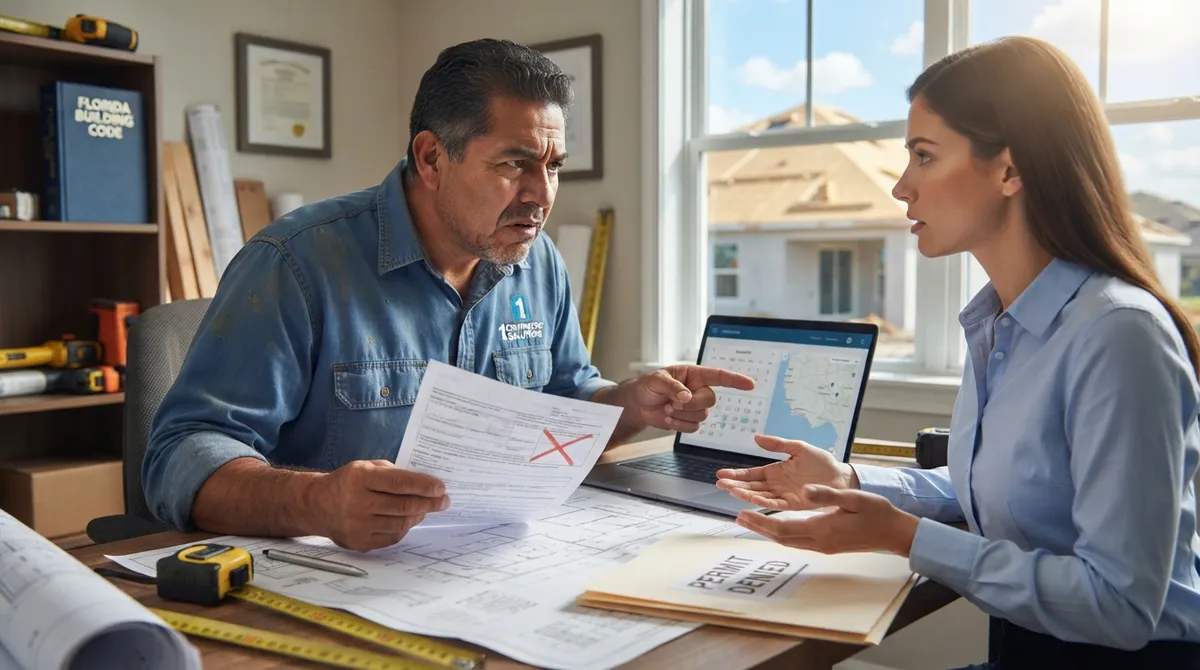
Mistake #1: Assuming a Late Application Equals Approval
This is the big one. Many roofers believe that once they file after the work is done, the problem disappears. It doesn't work that way.
An after-the-fact application starts a review. The building department may approve it, ask for corrections, require extra documentation, or require corrective work. Approval is never guaranteed, and the application is not permission to keep working.
Think of it like turning in a homework assignment late. It still has to be correct, and the teacher still gets to grade it. Our after-the-fact and expired permits service exists precisely because these files need a careful, jurisdiction-specific approach.
Mistake #2: Continuing Work While You Sort It Out
If a roof is only partly finished and you realize there's no permit, stop. Seriously, stop.
Florida Statutes §489.127 prohibits commencing or performing work that requires a building permit while no permit is in effect. Finishing the roof "just to get it done" can make the situation worse and invite stop work orders, citations, and uncomfortable conversations with the building official.
Here's the friendly, practical order of operations:
- Pause any remaining work on the job.
- Identify the exact property address and scope of work completed so far.
- Contact the local building department and ask how to apply for an after-the-fact permit.
- Ask what inspections and documentation they will require.
- Gather your records before you submit anything.
If a stop work order is already on the table, our urgent permit rescue team responds within 30 minutes, day or night.
Mistake #3: Ignoring the Licensing Requirement
Licensing trips up more roofers than you'd expect. Under Florida Statutes §489.13, a local building department may not issue a permit to a contractor who lacks the appropriate active credential for work requiring licensure.
So before anyone files, confirm the following:
- Your Florida roofing license or registration is active, not expired or inactive.
- Your municipality or county registration is current where the job sits.
- The contractor of record on the application matches who actually did the work.
- Insurance and workers' comp documentation are up to date.
If your credentials are tangled up, our DBPR licensee processes and municipality registration services can help you clean that up before you submit.
Mistake #4: Showing Up With Photos and Nothing Else
Photos are wonderful. They are not a complete package.
Building departments may require plans, product approvals, contractor and property information, and evidence that the installed work complies with the Florida Building Code. If concealed work can't be verified, the building official may require additional documentation, testing, or even exposure of the roof assembly before approval. Photographs alone should never be assumed to satisfy inspection requirements.
| Document | Why It Helps |
|---|---|
| Signed contract and invoices | Proves scope, dates, and who performed the work |
| Product information and approvals | Shows installed materials meet Florida requirements |
| Photos taken during installation | Supports what's hidden under the finished roof |
| Contractor license details | Confirms the applicant is eligible to pull the permit |
| Sealed engineer letter or drawings (when needed) | Verifies structural or code compliance when the jurisdiction requires it |
Keep every scrap of paperwork. Contracts, invoices, photographs, and product data sheets all tell the story of what happened on the roof.
Mistake #5: Forgetting That Inspections Happen in Stages
Roof inspections commonly happen at stages like underlayment or dry-in, and then again at final. Lee County's guide lists dry-in and final inspections, and Miami-Dade's guidance describes checks both during installation and after completion, including inspections before roofing attachment or adhesion work is concealed.
Here's the challenge with after-the-fact work: a completed roof makes those in-progress conditions much harder to inspect. The building official can't see the deck, the underlayment, or the fasteners anymore.
That can lead to requests like:
- Test cuts or partial exposure of the roof assembly
- A sealed letter from a licensed engineer
- Additional photographic or product documentation
- Corrective work if something doesn't meet code
The specific remedy depends on your jurisdiction, so confirm with the building department up front. Our in-house engineering team and engineer letters are built for exactly these situations, with sealed work coming from our own engineer rather than an outside consultant you have to chase.
Mistake #6: Treating Every County the Same
A roofer who does great work in Hillsborough may be surprised by how differently Miami-Dade or Lee County approaches the same situation. Don't assume another county's rules apply.
Here's a quick reference of what we see across popular roofing markets:
| Area | What Roofers Should Expect |
|---|---|
| Miami-Dade County | Published roofing inspection guidance and detailed product approval expectations |
| Lee County | Roof guide describing permits for replacement, repair, or re-covering, with dry-in and final inspections |
| Hillsborough County | Local submission and review procedures that differ from coastal South Florida |
| Broward County | Municipality-by-municipality variation within a single county |
Also, don't assume every roof repair is exempt. Whether a repair or replacement needs a permit depends on the local rules and the scope of the work. When in doubt, ask the building department before the crew touches a shingle.
Mistake #7: Skipping the Paper Trail and Tracking
Filing is only half the battle. After the application goes in, plan review comments, correction notices, and inspection scheduling need active management. Roofers who file and forget often watch permits sit, stall, or expire.
A solid follow-through process looks like this:
- Submit a complete packet with all documentation the jurisdiction requested.
- Track the application status daily or weekly.
- Respond to every reviewer comment promptly and completely.
- Schedule inspections as soon as the department allows.
- Confirm closeout so the permit is formally finaled.
If you're handling many reroofs at once, our Roof Permit Partnership Program and permit facilitation and filing services act as your outsourced permitting department. Roofers can also explore our dedicated page for roofing contractors.
Who Else Needs to Know About This?
Roofers aren't the only ones affected by unpermitted roofing work. Here's how it ripples outward:
- General contractors: You may inherit an unpermitted roof on a project and need it resolved before final inspection.
- Solar companies: Panels can't go on a roof with an open or missing permit history without raising flags.
- Real estate professionals: An unpermitted roof can surface at inspection or closing. See our guide on realtor and closing support.
- Homeowners: You can sometimes be the one left holding the problem when a contractor disappears.
For related reading, our unpermitted roof guide for Florida owners and our overview of the penalty for building without a permit in Florida give helpful context.
What Penalties and Fees Can Apply?
We get asked about this constantly, so here's the honest answer. Florida Statutes §553.79 does not establish one statewide after-the-fact roofing fee. Local departments set their own fees, and some add penalty multipliers for work started without a permit.
Separately, the research on §489.127 reports a maximum civil penalty of $2,000 under that statute, though enforcement and applicable penalties depend on the facts of the case and current law. Always confirm current figures with your local building department rather than relying on a number you saw online. For a deeper dive, check our breakdown of after-the-fact permit costs in Florida.
Putting It All Together
Fixing an unpermitted roof isn't about panic. It's about steady, informed steps. Stop remaining work, contact the right local office, confirm your license is active, gather every document you can, and be ready for the possibility that concealed work may need extra verification.
If you want a partner in your corner, we'd love to help. 1 Contractor Solutions works across all 67 Florida counties, with in-house drafting and engineering, same-day response, and a team that has handled thousands of permits and projects. Want to hear what others say? Visit us on Google — 1 Contractor Solutions to read reviews from our customers.
Ready to get that roof off your to-do list and out of your stress pile? Get a free quote and let our team figure out which jurisdiction controls your job, what it will take, and how fast we can move. You can also follow us on LinkedIn or follow us on Facebook for more Florida permitting tips. For the official statutory language, you can read Florida Statutes §553.79 directly.
FAQs
Can a roofer get an after-the-fact permit in Florida?
In most cases, yes, you can apply, but approval is never automatic. Your local building department controls the process, including documentation, inspections, and any corrective work. The best first step is a quick call to them to ask how it works in your jurisdiction.
What happens if a roof is replaced without a permit in Florida?
You may face a stop work order, extra fees, and requests for documentation or even exposure of concealed roof components before approval. Under Florida Statutes §489.127, performing permit-required work without a permit is prohibited conduct, so it's wise to act quickly and stay honest with the building official.
What documents are needed for an after-the-fact roof permit?
Requirements vary by county, but you'll commonly want your contract, invoices, product information, installation photos, and contractor license details. Some jurisdictions also ask for plans or a sealed engineer letter. Photos alone usually aren't enough, so gather everything you can.
Will the building department require part of a completed roof to be opened for inspection?
Sometimes, yes. If in-progress work like underlayment or fastening can't be verified once the roof is finished, the building official may require additional documentation, testing, or exposure of the assembly. Confirm the specific remedy with your local jurisdiction before assuming anything.
Can a homeowner or a new contractor apply for a permit after roofing work is complete?
It depends on the jurisdiction and who holds the proper credentials. A contractor must have an active, appropriate license under §489.13 to be issued a permit, and homeowners may have owner-builder options in some cases. Check with your local building department, or reach out to us and we'll point you in the right direction.
We do this work every day across all 67 Florida counties. Call (866) 314-6931 and we will tell you what your situation actually requires — including when you do not need us.
Related services
Permit Facilitation & Filing
You have a crew scheduled, a client asking for dates, and a permit sitting somewhere in a queue you cannot see. We file it, w…
See the servicePlan Review Coordination
A permit in plan review is not one queue. On a commercial project it can be six queues, each with its own reviewer, its own c…
See the serviceReady to get your permit moving?
One call tells you which jurisdiction controls your project, what it will take, and what it will cost. Most of the time we can scope it on the phone.