
Blog
6 Pros to Hire for After-the-Fact Roof Approval in Florida
Roof already installed without paperwork? Learn which 6 Florida pros to hire for after-the-fact product approval and how to sequence them.
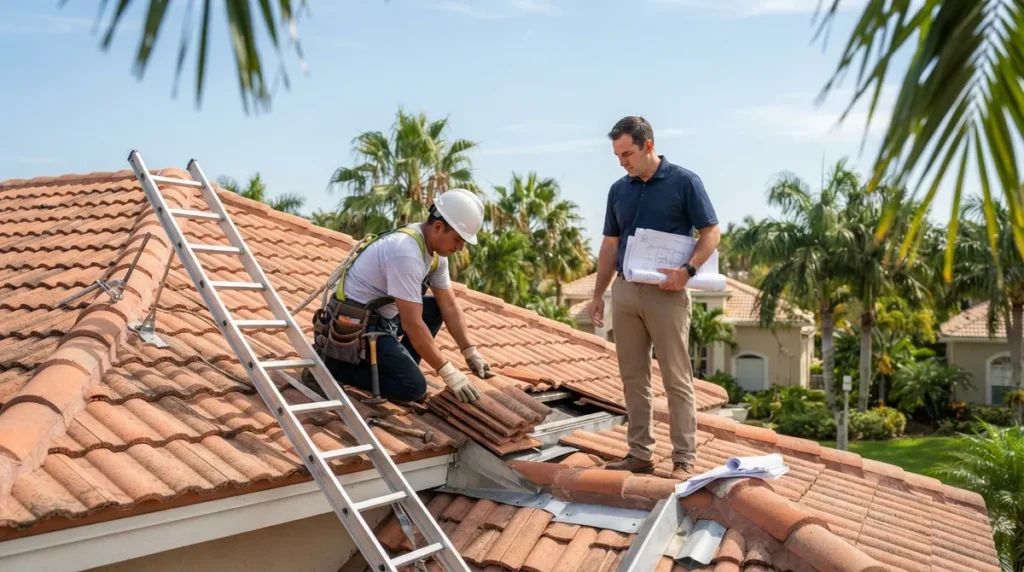
Key Takeaways
-
A Florida product approval documents code compliance for a product; it is not a permit or retroactive approval of your installation, so you must also prove the installed roof matches the approval.
-
Start by hiring a Florida-licensed roofing contractor to identify installed materials, match them to FL numbers or Miami-Dade NOAs, and coordinate with the building department.
-
Add a licensed engineer when the building official requires calculations or a sealed letter, such as when a roof changes from shingle to tile.
-
A permitting service can organize records, file the application, and track reviewer comments, but it cannot legalize noncompliant work or replace licensed trades.
-
Confirm your jurisdiction and the code edition in effect when the roof was installed before spending money on documents, since the wrong checklist can waste weeks.
-
Find out early if materials lack a product approval, because remediation such as engineering evaluation or component replacement is far easier before a sale or insurance claim.
So the roof is already on, the crew is long gone, and now someone is asking for a product approval number you have never heard of. Take a breath. You are far from the first Florida owner, agent, or contractor to land here, and it is very fixable. The real question is who should I hire for product approval after the fact roofing Florida projects actually need, because the answer is rarely just one person.
Here is the thing most people miss: a Florida product approval is not a permit, and it is not a retroactive stamp of approval. It simply documents that a roofing product or system has been evaluated for code compliance. Proving that your installed roof matches that approval is a team effort. Depending on your building department, you may need a licensed roofer, an engineer, an architect, and a permitting pro to keep it all organized.
In this guide, we walk through six professionals who can help, what each one does, and how to sequence them so your after-the-fact roof permit moves forward instead of stalling. Whether you are a homeowner, a general contractor, a solar company, or a real estate pro facing a closing deadline, you will find a clear path below.
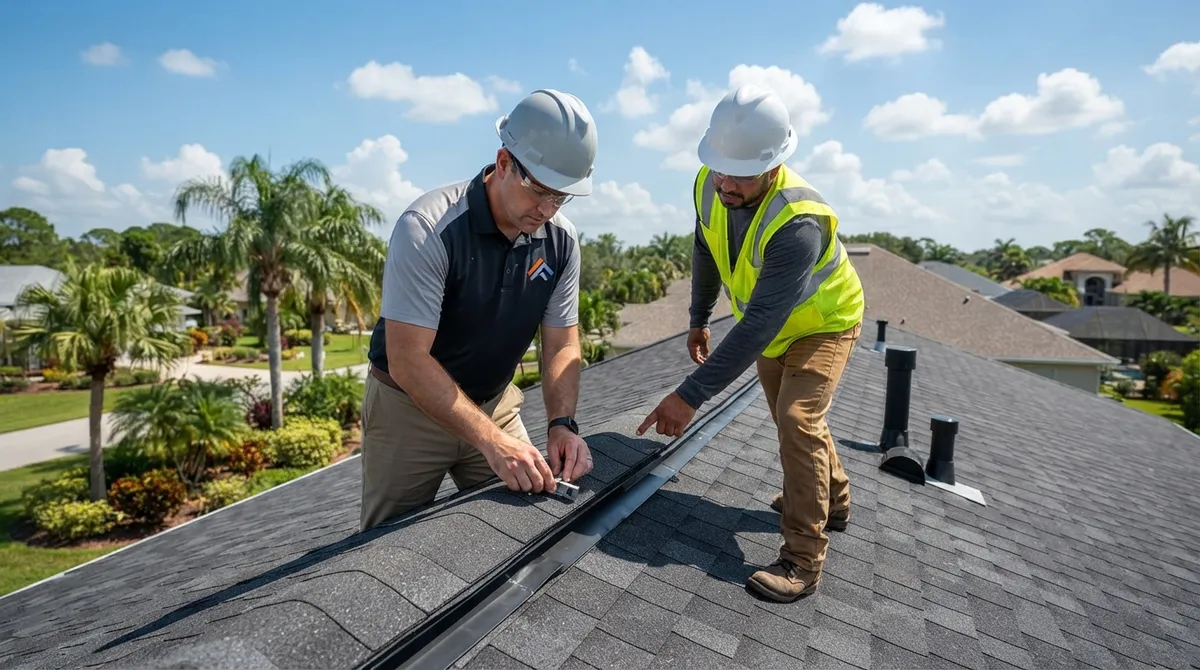
First, What Does "Product Approval After the Fact" Actually Mean?
Before hiring anyone, it helps to know what you are asking them to do. Florida's statewide product-approval system, implemented October 1, 2003, lets manufacturers get products evaluated for use under the Florida Building Code. You can search the state database by FL number, manufacturer, product, and code version.
When a roof was installed without a permit, or the paperwork was never closed out, the building department typically wants to confirm three things:
- The materials on the roof have a valid Florida Product Approval or, in Miami-Dade and Broward, a Miami-Dade NOA.
- The approval matches the exact product and assembly actually installed, not just the manufacturer's name.
- The roof was installed per the approval's installation requirements for your wind zone, exposure, and building height.
That third point is where most after-the-fact files get stuck. A product approval alone does not prove the roof was installed correctly. Reviewers may ask for product labels, invoices, photos, installation instructions, inspection access, or even removal of a small section to expose concealed work. For a deeper look at how the two approval systems differ, see our guide on Miami-Dade NOA vs. Florida Product Approval.
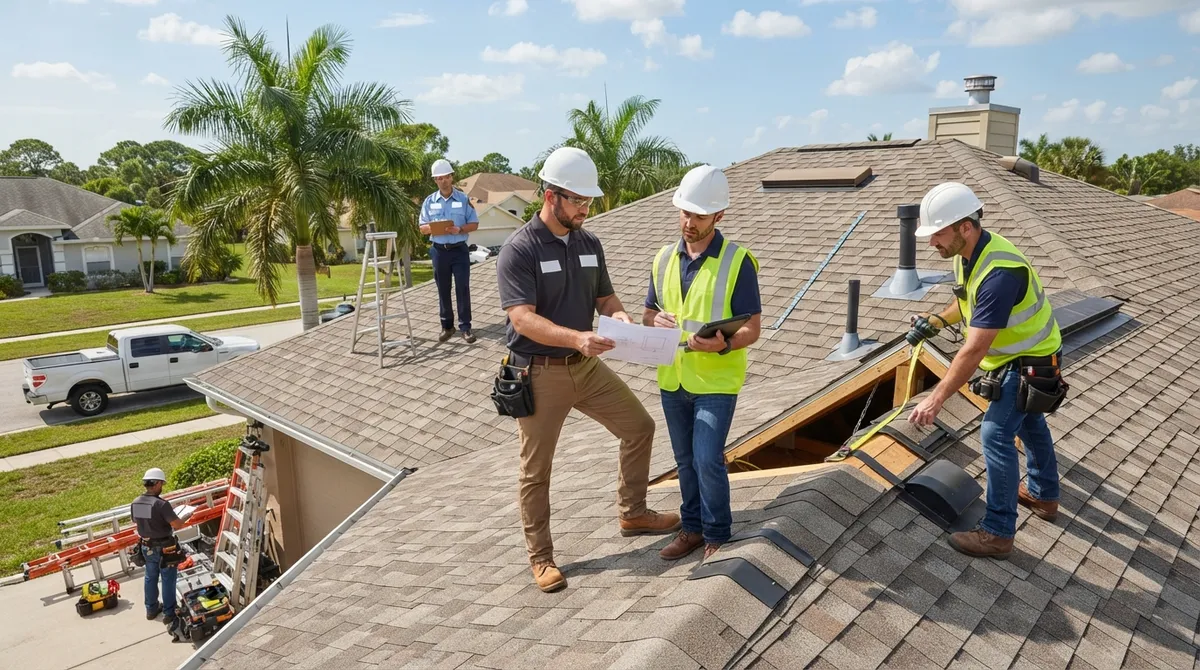
The 6 Professionals to Consider
1. A Florida-Licensed Roofing Contractor (Your Starting Point)
If you only hire one person first, make it a properly licensed Florida roofing contractor. Under Florida Statutes section 489.113, roofing work generally must be performed by a contractor holding the appropriate state certificate or registration, or be subcontracted to one. That includes assessing and documenting an already-installed roof.
A good roofer can:
- Inspect the roof and identify the shingles, underlayment, fasteners, tile, or metal panels actually installed.
- Match those materials to a specific FL approval number or NOA.
- Coordinate the after-the-fact permit and inspections with the local building department.
- Perform any corrective work if something does not meet the approved assembly.
Always verify the license and insurance through official state or local channels before signing anything. If you are a roofing company yourself, our roofing contractor support page explains how we help crews keep permits moving.
2. A Florida-Licensed Professional Engineer
When the building official wants more than paperwork, an engineer steps in. This is common when the roof assembly changed in a way that affects the structure, such as moving from shingles to tile, or when the original install details cannot be confirmed.
Lee County's roofing guidance is a good example: it directs applicants to identify the specific assembly and approval number, and notes that engineering may be required for certain changes, like installing tile where tile was not present before. An engineer can provide site-specific calculations, wind-load evaluations, and a sealed letter. Our team handles this in house through our engineer letters and structural engineering services.
One important note: an engineer does not replace the roofer. They evaluate and seal; they do not do the roofing work.
3. A Florida-Licensed Architect (When Plans Are Needed)
Some jurisdictions or project types call for architect-prepared drawings, especially on commercial buildings, multi-family properties, or larger re-roofs tied to other changes. An architect can produce permit-ready roof plans and details that tie the approved product to your actual building conditions.
If you already have your own design professional, you may only need drafting support. We offer drafting-only services so your seal and your client stay yours while we prepare the permit set.
4. A Florida Permitting Service
This is the pro that ties everything together. A permitting service organizes records, identifies the local application checklist, retrieves product-approval documents, files the application, tracks reviewer comments, and handles revisions until closeout.
What a permitting service cannot do is just as important. It cannot independently legalize noncompliant work, and it cannot substitute for a licensed contractor, engineer, architect, or the building official where those are required. Think of it as your outsourced permitting department rather than a shortcut around the rules.
That is exactly the role 1 Contractor Solutions plays across all 67 Florida counties. We handle permit facilitation and filing, after-the-fact and expired permits, and roof permits, with in-house sealed drawings so a reviewer comment does not turn into a week-long wait on an outside consultant.
5. A Private Provider (Optional, But Powerful)
Florida law allows owners and contractors to use a licensed private provider for plan review and inspections instead of waiting in the county queue. For an after-the-fact roof, that can mean faster review and scheduled inspections on your timeline.
Private provider routes do not change the code requirements, and not every after-the-fact situation fits neatly into them, so confirm with the authority having jurisdiction first. We are a licensed private provider ourselves, and you can learn more on our private provider inspections page.
6. A Building Department Liaison or Product-Approval Researcher
Sometimes the missing piece is simply finding the right approval number. If the original invoice is gone and the shingle bundle labels are faded, someone has to trace the product back to its FL number or NOA and confirm the approval was valid for the code edition in effect.
This is detective work, and it is where experienced permit pros save weeks. They know how to read approval documents, check the listed installation conditions, and present them in the format your local reviewer expects. Our guide on product approvals for old roofs goes deeper on this.
Who Does What: A Quick Comparison
| Professional | Main Role | Can Replace the Roofer? | Typically Needed When |
|---|---|---|---|
| Licensed roofing contractor | Assess, document, and permit the roof | N/A (they are the roofer) | Almost always |
| Professional engineer | Calculations, evaluation, sealed letter | No | Structural changes or unclear install details |
| Architect | Permit-ready plans and details | No | Commercial or larger projects |
| Permitting service | Filing, tracking, coordination, revisions | No | Whenever paperwork or reviewer comments pile up |
| Private provider | Plan review and inspections | No | When you want faster, scheduled review |
| Approval researcher or liaison | Trace and document product approvals | No | Missing invoices, labels, or records |
How to Sequence Your Hires (A Simple Roadmap)
Hiring in the right order saves money and avoids duplicate work. Here is the flow we recommend for most Florida owners and contractors:
- Confirm your jurisdiction. City lines can be tricky, and the wrong department means the wrong checklist. Our building department lookup helps you find the right office.
- Hire or confirm a licensed roofer. Have them inspect the roof and identify installed materials.
- Gather your records. Collect invoices, photos, labels, contracts, and any old permit paperwork.
- Match materials to approvals. Pull the FL number or NOA for each component and confirm the assembly is covered.
- Bring in an engineer or architect if the official requires it. Do not guess; ask the building department what they need.
- File the after-the-fact permit and schedule inspections. Track comments and respond quickly.
If you are not sure where your property stands today, run an open permit search first. You may discover an old permit that just needs to be reopened rather than a brand-new application.
Which Code Edition Applies? Don't Skip This
The state product-approval database identifies the 2023 Florida Building Code (8th Edition) as effective December 31, 2023. But if your roof was installed years ago under an earlier edition, the reviewer may evaluate it differently. Confirm the code edition and local submittal requirements with your building department before you spend money on documents.
Wind exposure, building height, and location also matter. A product approved for one pressure rating may not cover a high-wind coastal site. That is why the approval must match your actual conditions, not just the product name.
Common Mistakes That Cost Owners Weeks
We see the same few missteps again and again. Avoid these and you will already be ahead:
- Hiring a permit service and expecting it to legalize everything. It coordinates; it does not override the code or replace licensed trades.
- Submitting a manufacturer name instead of an approval number. Reviewers want the specific FL number and assembly.
- Assuming a product approval proves correct installation. It does not; the install still has to be verified.
- Skipping the jurisdiction check. The wrong checklist wastes weeks.
- Waiting until the closing week. If a sale is involved, start the moment a permit issue appears.
If a sale is on the line, our guide on unpermitted roofs in Florida and our realtor closing support can help you move fast without cutting corners.
What If the Roof Materials Have No Product Approval?
This is the scenario that makes owners nervous, so let's be direct. If the installed materials lack a Florida Product Approval or Miami-Dade NOA, the building official may require remediation, which could range from engineering evaluation to replacing the non-approved components. Remedies vary by jurisdiction and project conditions.
The good news is that you find out early rather than at a failed inspection or an insurance claim. Our article on expired permits and insurance claims explains why getting this documented now protects you later.
Who Should You Hire? Match Your Situation
| Your Situation | Best First Call |
|---|---|
| Homeowner with an unpermitted re-roof | Licensed roofer plus a permitting service |
| General contractor with a closed-out job missing paperwork | Permitting service to rebuild the file |
| Roof type changed (e.g., shingle to tile) | Roofer plus an engineer |
| Agent or investor with a closing deadline | Permitting service with private provider options |
| Solar company with a roof-penetration issue | Roofer, engineer, and permitting coordination |
Ready to Get Your Roof Documented?
Sorting out product approval after the fact feels like a maze, but you do not have to walk it alone. The right team, hired in the right order, turns a stressful surprise into a checklist. If you want a partner who files, tracks, and carries the permit through approval and closeout, with in-house sealed drawings and a response within 30 minutes, we would love to help. Reach out and get a free quote today.
Curious how other Florida owners and contractors feel about working with us? Visit us on Google — 1 Contractor Solutions to read reviews, and you can also follow us on LinkedIn or follow us on Facebook for Florida permitting tips as the rules evolve in 2026.
FAQs
Who should I hire first for an after-the-fact roofing permit in Florida?
Start with a properly licensed Florida roofing contractor. They can inspect the roof, identify what was installed, and work with your local building department on the permit and inspections. From there, you can add an engineer, architect, or permitting service as needed.
Can a Florida product approval be obtained after the roof is already installed?
Not in the way many people hope. A product approval documents that a product was evaluated for code compliance; it is not a permit or a retroactive certification of your install. What you can do is locate the existing approval number for your materials and show the installed roof matches it.
Will I need an engineer or architect to permit an unpermitted roof replacement?
Sometimes, but not always. If the building official wants site-specific plans, calculations, or an evaluation, a Florida-licensed engineer or architect may be required. Changes like adding tile where it was not before commonly trigger engineering, so ask your department what they need up front.
Can a permitting service handle an after-the-fact roofing permit?
Yes, a permitting service can organize records, retrieve product-approval documents, file the application, and coordinate reviewer comments. What it cannot do is replace a licensed roofer, engineer, architect, or the building official, or legalize noncompliant work on its own.
What happens if my roof materials do not have a Florida Product Approval or Miami-Dade NOA?
The building official may require corrective steps, which vary by jurisdiction and project conditions. That could mean an engineering evaluation or replacing the non-approved components. Finding out now, before a sale or insurance claim, gives you more options and less stress.
We do this work every day across all 67 Florida counties. Call (866) 314-6931 and we will tell you what your situation actually requires — including when you do not need us.
Related services
Permit Facilitation & Filing
You have a crew scheduled, a client asking for dates, and a permit sitting somewhere in a queue you cannot see. We file it, w…
See the servicePlan Review Coordination
A permit in plan review is not one queue. On a commercial project it can be six queues, each with its own reviewer, its own c…
See the serviceReady to get your permit moving?
One call tells you which jurisdiction controls your project, what it will take, and what it will cost. Most of the time we can scope it on the phone.