
Blog
5 Things to Know About an EV Charger Permit Fort Myers FL
Planning an EV charger permit in Fort Myers, FL? Learn jurisdiction, who can pull it, FDACS rules, and how to avoid delays.
Key Takeaways
-
Confirm which jurisdiction controls your address before filing, since a Fort Myers mailing address may fall under the City, unincorporated Lee County, or another municipality with different rules and fees.
-
A Level 2 home charger usually requires an electrical permit, and the City of Fort Myers Electrical Trade Permit application and checklist define what is needed for your scope.
-
Permits must be pulled by a properly licensed, City-registered contractor or an eligible owner-builder who signs an Owner-Builder Disclosure Statement.
-
Florida preempts local EV charger regulation under Statute 366.94, but local governments still issue permits and inspect work against state rules and the electrical code.
-
Public-use chargers, including free ones, must be registered annually with FDACS, separate from the local building permit.
-
Have an electrician check panel capacity before filing, since a panel or service upgrade can expand permit scope, drawings, and utility coordination.
So you just picked up an electric vehicle, and now you are staring at your garage wall wondering, "Can I just plug this in myself?" We get it. The excitement of a new EV is real, and nobody wants to wait around on paperwork. But if you are looking into an EV charger permit Fort Myers FL projects require, you are already ahead of the game.
Here is the friendly truth: installing a Level 2 charger usually means new electrical work, and new electrical work generally means an electrical permit. Florida is growing fast on the charging front, too. As of February 2, 2026, the state had 4,096 charging-station locations and 13,806 charging ports, according to a 2026 Florida Senate bill analysis citing U.S. Department of Energy data. More chargers means more permit files landing on building departments' desks.
In this guide, we will walk you through five things every homeowner, contractor, solar installer, and property owner should know before pulling an EV charger permit in Fort Myers. We will keep it simple, keep it honest, and point out the little traps that can slow you down. Let's plug in!
1. Confirm Which Jurisdiction Actually Controls Your Address
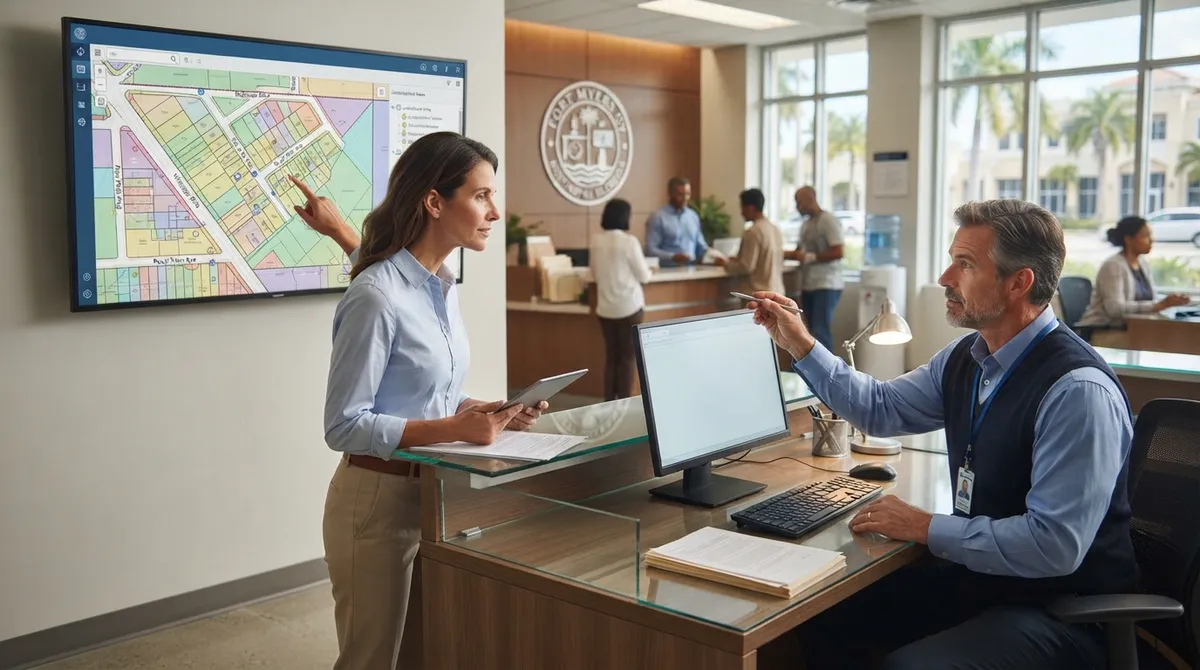
This is the step people skip, and it is the one that trips up the most projects. A "Fort Myers" mailing address does not always mean you are inside the City of Fort Myers. Depending on where you live, your property could fall under the City, unincorporated Lee County, or another nearby municipality.
Why does it matter? Because the permitting authority sets the application, the fees, the inspections, and the contractor registration rules. Submit to the wrong office and you lose days, sometimes weeks.
How to Check Your Jurisdiction
- Look up your parcel on the Lee County Property Appraiser site and note the listed municipality.
- Check your tax bill or utility bill for the jurisdiction name.
- Call the City of Fort Myers Building, Permitting & Inspections Division and ask if your address is inside city limits.
- Confirm with your licensed electrical contractor, who files in these jurisdictions regularly.
Near city lines, this is not always obvious. At 1 Contractor Solutions, we work across all 67 Florida counties and have filed in more than 400 municipalities, so figuring out who really controls a property is a daily routine for us. You can see how this works across the region on our Fort Myers permitting page.
| Mailing Address Says | Could Actually Be | Why It Matters |
|---|---|---|
| Fort Myers | City of Fort Myers | City electrical trade permit and checklist apply |
| Fort Myers | Unincorporated Lee County | County permitting process applies |
| Fort Myers | Another municipality | That city's rules and fees apply |
2. Know That an Electrical Permit Is the Starting Point
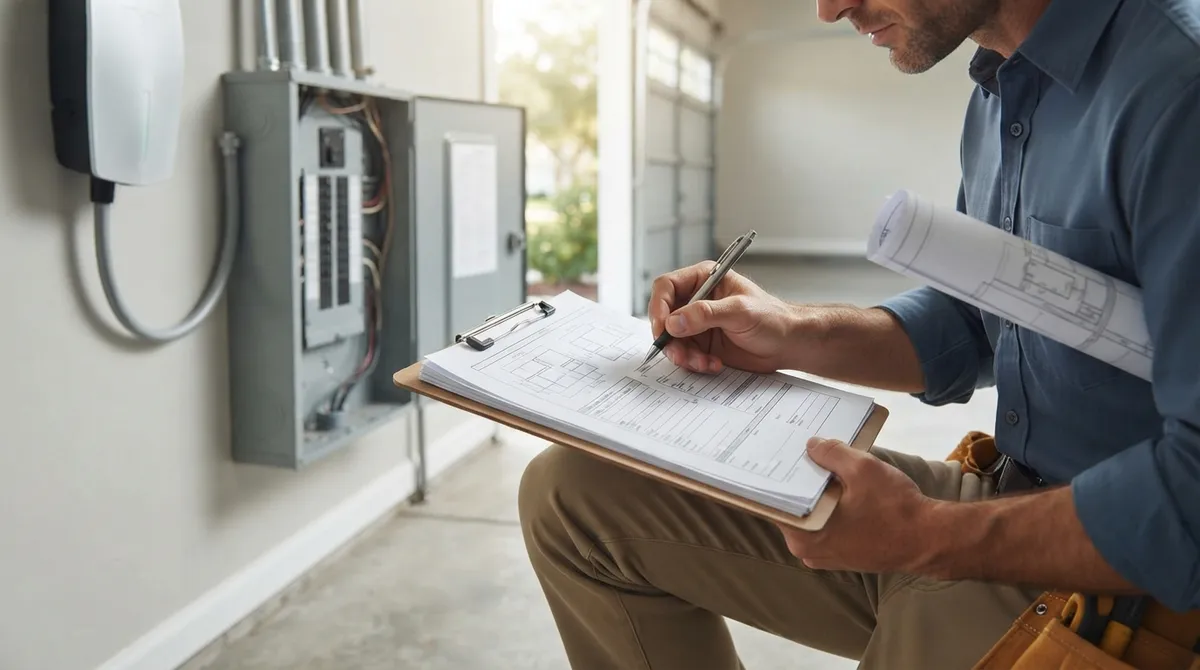
For most home installations, the EV charger permit in Fort Myers, FL comes down to an electrical permit. The City of Fort Myers publishes an Electrical Trade Permit application and a checklist that spells out what is expected.
According to that checklist, the City requires a completed, signed Electrical Trade Permit application and, when applicable, an Owner-Builder Disclosure Statement. For one- and two-family homes, the checklist says drawings are not required for the listed electrical work. That is good news for a simple garage charger.
But here is the catch: scope changes everything. Always confirm what your specific job needs with the permitting authority.
What Can Expand Your Project's Scope?
- Adding a new dedicated circuit
- Upgrading the electrical service or panel
- Trenching to a detached garage, carport, or driveway pedestal
- Structural work such as mounting on a wall or building a stand
- Changes to parking layout or site configuration
- Multiple chargers at a multifamily or commercial property
A basic plug-in charger on an existing circuit looks very different on paper than a three-charger commercial install with a panel upgrade. If your job leans toward the bigger side, drawings and engineering may come into play. Our team prepares MEP engineering and sealed drawings in house, so you are not waiting on an outside consultant to return a call.
3. Understand Who Is Allowed to Pull the Permit
Here is where a lot of friendly DIY dreams hit a speed bump. The City's electrical checklist says permits must be obtained by a properly licensed contractor or an eligible owner-builder. Contractors also need to be actively registered with the City and have current license and insurance information on file.
That registration piece surprises plenty of out-of-town contractors. Holding a Florida license is not always enough on its own. If you are a contractor expanding into the Fort Myers area, our guide on how to register your contractor license in a new Florida county is a helpful read.
Your Options at a Glance
| Who Pulls the Permit | What They Need | Best For |
|---|---|---|
| Licensed electrical contractor | Active license, City registration, current insurance | Most homeowners and all commercial jobs |
| Eligible owner-builder | Signed Owner-Builder Disclosure Statement and eligibility | Owner-occupied homes where the owner does the work |
| Permitting company on your behalf | Authorization from the contractor or owner | Anyone who wants filing, tracking, and comments handled |
One friendly caution: an owner-builder pulling an electrical permit takes on real responsibility. Electrical work done wrong is a safety risk, and inspectors will check it. For most EV charger installs, hiring a licensed electrician is the smoother path. Curious about the owner route? Our owner-builder permits page explains how it works.
4. Remember That State Law and Local Permits Work Together
You may have heard that Florida "preempts" local EV charger rules. That is true, but it does not mean permits disappear. Florida Statutes section 366.94 reserves the regulation of EV charging stations to the state. It also expressly requires local governments to issue permits based on state rules and other applicable state law.
In plain English: your city or county cannot invent its own special EV charger regulations, but it still reviews and inspects the work to make sure it meets state requirements and the electrical code. Preemption does not eliminate electrical or other applicable permitting requirements.
Public Charging Has an Extra Step
If you are installing a charger for public use, such as at a retail center, hotel, or restaurant, there is a second requirement beyond the building permit. The Florida Department of Agriculture and Consumer Services (FDACS) administers EV charging-station rules. FDACS says public-use charging stations must be registered annually, whether or not users pay to charge.
That registration is separate from your local construction permit. Think of it as two lanes: one for the building department, one for FDACS. Business owners often miss the second lane. If you are opening or updating a commercial space, our small business permitting team can help you sort out what applies.
| Installation Type | Local Electrical Permit | FDACS Registration |
|---|---|---|
| Private home charger | Generally yes | Not for private use |
| Public-use charger (free or paid) | Yes | Yes, annually |
| Commercial or multifamily charger | Yes, often with more review | Depends on whether it is public-use |
5. Prepare Your Application Before You Walk In
A little prep goes a long way. The City of Fort Myers lists its Building, Permitting & Inspections Division at 1825 Hendry St., Suite 101, Fort Myers, FL 33901, with a phone number of (239) 321-7925. The electrical checklist also lists permits@fortmyers.gov. Details can change, so verify current contact information and submission procedures before you apply.
A Simple Pre-Filing Checklist
- Confirm your jurisdiction (see Tip 1).
- Choose your charger model and confirm its amperage and circuit needs.
- Have your electrician check your panel capacity before you file.
- Gather the signed application and any Owner-Builder Disclosure Statement if applicable.
- Confirm the contractor's license, City registration, and insurance are current.
- Ask whether drawings, a load calculation, or engineering is needed for your scope.
- Ask about utility coordination if your service is being upgraded.
Fees, review times, and inspection steps vary by authority and project size, so ask the office directly rather than relying on a number you saw online. Expect an inspection once the work is complete, and keep the charger accessible until it passes.
Common Mistakes That Cause Delays
- Filing with the wrong jurisdiction
- Using a contractor who is not registered with the City
- Skipping the permit because the work "seems small"
- Ignoring panel capacity until the inspector asks
- Forgetting FDACS registration on public-use chargers
Skipping the permit is the biggest one. Unpermitted electrical work can complicate insurance claims and slow down a future sale. If that has already happened, do not panic. Our guides on legalizing unpermitted work in Florida and after-the-fact electrical permits walk you through the fix.
How This Helps Different Project Types
Every reader comes to an EV charger project with a different goal, so here is how the process shakes out for each.
- Homeowners: Hire a licensed, City-registered electrician, confirm your jurisdiction, and keep your permit paperwork with your home records.
- General contractors: Make sure your electrical subcontractor is registered where the work is located, and build permit time into your schedule.
- Solar companies: Pairing a charger with solar and storage often adds panel and interconnection considerations. Review our notes on permit facilitation and filing for bundled projects.
- Realtors and investors: An open or missing charger permit can surface during due diligence. Check the permit history before closing.
- Property managers: Multi-charger installs and public-use stations bring extra review and FDACS registration, so plan early.
Final Thoughts: Plug In With Confidence
Getting an EV charger permit in Fort Myers, FL does not have to feel like a maze. Confirm your jurisdiction, pull the right electrical permit through a properly licensed and registered contractor (or an eligible owner-builder), remember that state law and local permitting work together, and register public-use chargers with FDACS. Do those things and you will be charging at home with a permit that protects you, your insurance, and your resale value.
If you would rather hand the paperwork to someone who does this every day, we are ready to help. 1 Contractor Solutions acts as Florida's outsourced permitting department, handling filing, tracking, plan review coordination, and sealed drawings with same-day response. Ready to move your project forward? Get a free quote and let us take the permit off your plate.
Want to see how we treat our customers? Visit us on Google — 1 Contractor Solutions to read what others are saying about our Fort Myers area service. You can also follow us on LinkedIn and follow us on Facebook for permitting tips, and our website partner Brain Buzz Marketing helps keep our resources fresh and easy to find.
FAQs
Do I need a permit to install an EV charger in Fort Myers, Florida?
In most cases, yes. A Level 2 charger usually involves new electrical work, which generally requires an electrical permit. Confirm your exact scope with the permitting authority that controls your address before any work begins.
How do I know if my property is in the City of Fort Myers or unincorporated Lee County?
A Fort Myers mailing address does not guarantee you are inside city limits. Check your parcel on the Lee County Property Appraiser site, look at your tax bill, or call the City's Building, Permitting & Inspections Division to confirm.
Can a homeowner pull an EV charger permit in Fort Myers?
Possibly. The City's checklist says permits must come from a properly licensed contractor or an eligible owner-builder, who signs an Owner-Builder Disclosure Statement. For most homes, a licensed and City-registered electrician is the smoother, safer route.
Do public EV charging stations in Florida need anything besides a local permit?
Yes. FDACS says public-use charging stations must be registered annually, whether or not users pay to charge. That registration is separate from your local construction permit, so plan for both.
Does an EV charger install require a panel or service upgrade permit?
Sometimes. If your existing panel cannot handle the added load, you may need a panel or service upgrade, which can change the permit scope, plans, and utility coordination. Have your electrician check capacity before you file.
We do this work every day across all 67 Florida counties. Call (866) 314-6931 and we will tell you what your situation actually requires — including when you do not need us.
Related services
Permit Facilitation & Filing
You have a crew scheduled, a client asking for dates, and a permit sitting somewhere in a queue you cannot see. We file it, w…
See the servicePlan Review Coordination
A permit in plan review is not one queue. On a commercial project it can be six queues, each with its own reviewer, its own c…
See the serviceReady to get your permit moving?
One call tells you which jurisdiction controls your project, what it will take, and what it will cost. Most of the time we can scope it on the phone.