
Blog
3 Escrow & After-the-Fact Permit Mistakes in Florida (2026)
Mixing up escrow and after-the-fact permits can derail a Florida closing. Learn 3 costly mistakes and how to coordinate both the smart way in 2026.
Key Takeaways
-
There is no statewide Florida 'permit escrow' program or standard holdback amount; permit approval is handled by the local building department, while escrow is a private transaction arrangement.
-
Escrow funds do not make unpermitted work legal, clear a code violation, or release a lien; only the building department can approve the work.
-
Check the property's permit history and confirm the controlling jurisdiction before negotiating any escrow or holdback terms with your title agent and attorney.
-
Vet any after-the-fact permit coordinator for jurisdiction-specific experience, written scope and fee terms, status reporting, and follow-through to documented closeout; avoid anyone guaranteeing approval.
-
Submitting an after-the-fact application does not close a case or satisfy lenders and title companies; the real finish line is documented permit closeout.
-
Start permit reviews early in a sale, since open permits and code violations can delay lenders, insurers, and title companies and push back closing dates.
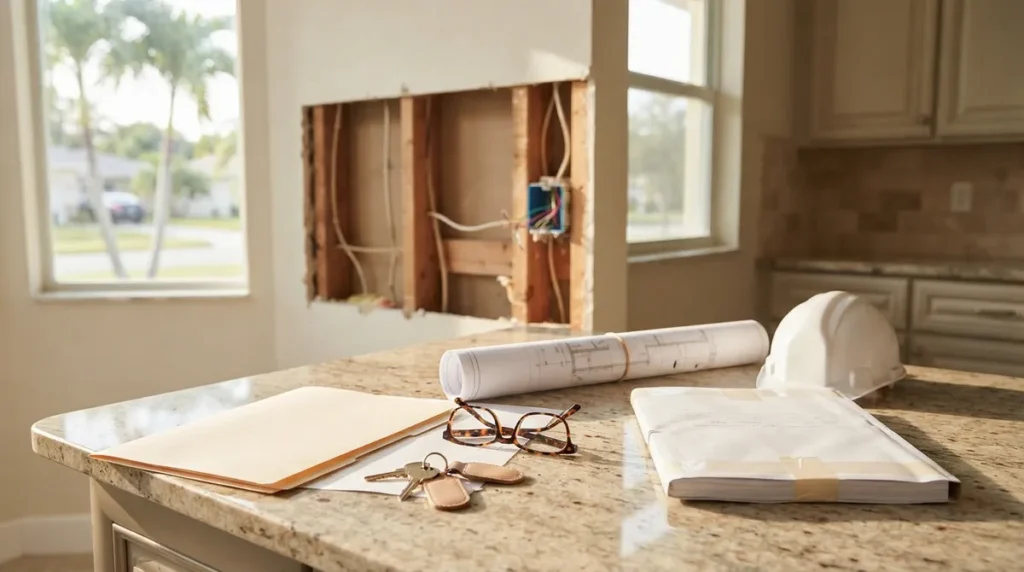
Picture this: you're days from closing on a Florida home when the inspector mentions that the screened lanai, the converted garage, or the shiny new roof never had a permit. Suddenly everyone is asking about "escrow" and "after-the-fact permits" in the same breath, and nobody seems to agree on what either one actually does.
Take a deep breath. You are far from the first person in this spot, and it is very fixable. When people search for the best escrow after the fact permit coordination Florida has to offer, they are usually mixing two separate needs: resolving unpermitted work through the local building department, and managing the money side of a real-estate transaction while that work gets sorted out.
Here is the honest truth up front. There is no statewide "permit escrow" program, and no single universal amount that applies everywhere. What exists is a local permitting process and a private transaction arrangement. Getting them confused is where the expensive mistakes happen. This guide walks through the three biggest ones, so you can protect your closing, your budget, and your sanity in 2026.

First, Let's Untangle Two Different Things
Before we get to the mistakes, it helps to separate the two moving parts. They run on different tracks, managed by different people.
| Item | What It Is | Who Controls It |
|---|---|---|
| After-the-fact (ATF) permit coordination | Documenting and seeking local approval for work already completed without a required permit, then handling review, inspections, corrections, and closeout | The local building department (city or county) |
| Escrow | A transaction arrangement where a neutral party holds funds under agreed conditions | The buyer, seller, and title/escrow agent, guided by legal counsel |
An escrow holdback is not a permit. A permit is not an escrow. Only the building department can approve the work, and only the transaction parties can decide how money is held and released. A good coordinator keeps both tracks moving without pretending to control either one.
Mistake #1: Treating Escrow as a Substitute for Permit Approval
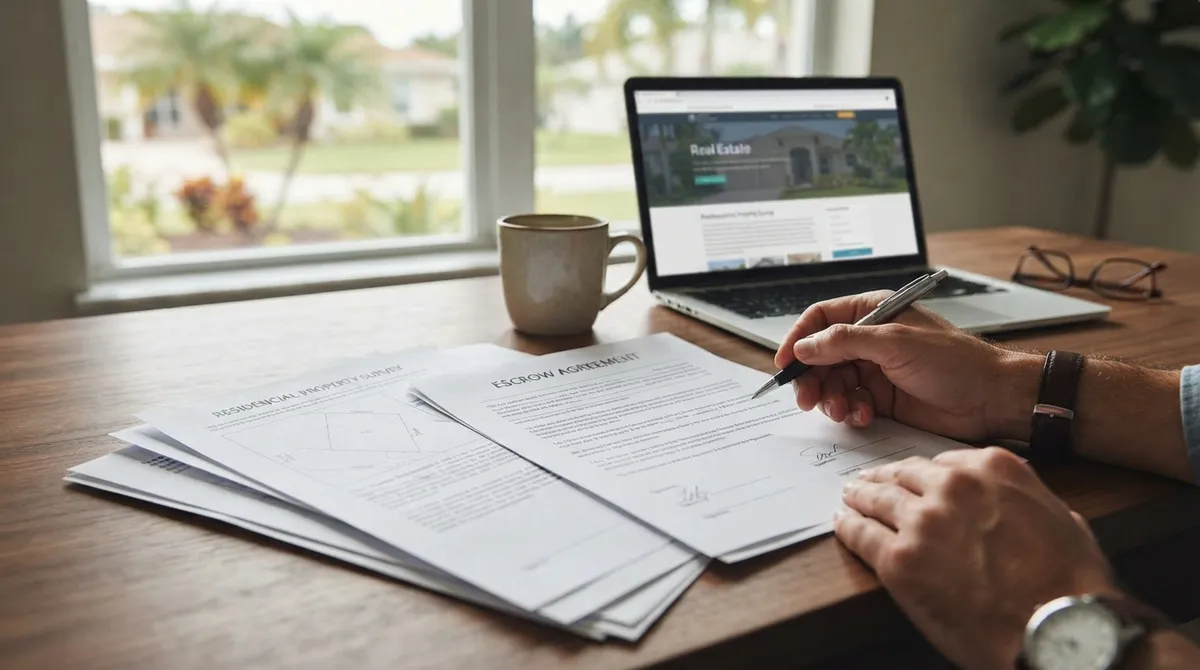
This is the big one. Someone suggests, "Let's just hold some money in escrow and close anyway." It sounds tidy, and sometimes parties do negotiate something like it. But escrow does not make the work legal, clear a violation, or satisfy a lender or insurer on its own.
Why this trips people up
- Escrowed funds do not change the legal status of the unpermitted work.
- A holdback does not close an open code-enforcement case or release a lien.
- Lenders, title companies, and insurers may still want documented permit resolution.
- The building department, not the escrow agent, decides what approval requires.
We also need to be careful here: the available research does not identify a standard statewide escrow amount or procedure for ATF permits. Any holdback figure is something the parties negotiate with their title or escrow agent and attorney. Treat anyone quoting a "standard" number with healthy skepticism.
What to do instead
Start by finding out exactly what the property has on record. You can run an open permit search to see what is already on file, then confirm which office actually controls the address with the building department lookup. Once you know the real scope, you can decide whether to fix before closing, negotiate a credit, or structure a holdback with proper legal guidance.
If a closing clock is ticking, our guide on how to handle escrow for a Florida after-the-fact permit goes deeper on the transaction side, and this piece on permit holds and closings explains how delays tend to unfold.
Mistake #2: Hiring a Coordinator Without Checking What They Actually Do
Not every "permit helper" is built the same. The best coordination follows the matter from the first records check all the way to documented closeout. Cutting corners at the hiring stage is how a two-week fix turns into a two-month saga.
An ATF permit is a local process, and a private coordinator cannot override the building official or guarantee approval. What a strong coordinator can do is keep the file organized, the documents complete, and the responses fast. Here is what to look for.
| What to Evaluate | Why It Matters |
|---|---|
| Jurisdiction-specific experience | Requirements vary by city, county, and project type |
| Written scope and fee terms | Avoids surprise charges and unclear deliverables |
| Status reporting and communication | Closings and deadlines depend on timely updates |
| In-house drafting and engineering | Reviewer comments get answered without outside delays |
| Follow-through to closeout | Submitting an application alone does not end the case |
Red flags worth noticing
- Anyone promising guaranteed approval or a guaranteed timeline.
- Vague scope with no written fee terms.
- No plan for plan-review comments, inspections, or corrections.
- Unclear coordination with licensed engineers, architects, or trade contractors.
A friendly tip from the trenches: ask how they handle a reviewer comment that lands on a Friday afternoon. The answer tells you a lot. At 1 Contractor Solutions, drafting and engineering live in house and our own engineer signs and seals the work, so a flagged comment gets fixed rather than passed along to someone else. You can read more about after-the-fact and expired permit services to see what a full-scope approach looks like.
For a side-by-side look at what to ask, how to choose the best after-the-fact permit service in FL is a handy companion read.
Mistake #3: Assuming Applying Equals Fixed
Many owners breathe a huge sigh of relief the moment an application goes in. Understandable, but premature. Submitting an ATF application does not automatically close a code-enforcement case, clear a violation, release a lien, or satisfy a buyer, lender, or title company.
What a typical ATF workflow looks like
- Check the records. Review property and permit history, identify the authority having jurisdiction, and look for any open code-enforcement case.
- Document existing conditions. Field measurements, photos, and as-built or existing-condition drawings.
- Prepare the application. Assemble supporting documents, product approvals, and any engineering the department requires.
- Respond to plan-review comments. Expect questions. Quick, accurate answers keep the file moving.
- Coordinate inspections and corrections. Some work may need opening up, repair, or even removal if it cannot meet code.
- Confirm final closeout. Get documented permit closure that the buyer, lender, and title company can actually rely on.
Skipping from step three to "all done" is the classic trap. The finish line is documented closeout, not a stamped receipt.
Common requirements you may encounter
Requirements vary by city and county and by the work involved. Depending on your jurisdiction, a case might call for:
- Existing-condition or as-built drawings
- Sealed documentation such as a structural engineer letter
- Product approvals for windows, doors, or roofing components
- Licensed trade contractors for electrical, plumbing, or mechanical work
- Inspections, corrective work, or removal of noncompliant portions
Fees and procedures also differ by jurisdiction. Search results mention possible investigation or after-the-fact fees plus professional, inspection, and correction costs, but no verified statewide fee schedule exists. Get a jurisdiction-specific estimate before you budget, and review the after-the-fact permit Florida cost breakdown for the kinds of line items to expect.
How Real Estate Professionals, Contractors, and Homeowners Can Each Win
Different readers feel this problem differently, so here is how to approach it from where you stand.
- Real estate professionals: Surface permit history early, before contract deadlines squeeze everyone. Our realtor closing support is built around exactly this.
- General contractors: If a prior trade skipped a permit, document it and route it properly rather than building on top of it. See our resources for general contractors.
- Homeowners: Start with honest records and a clear scope. Our homeowner resources explain the path in plain language.
- Solar companies and trades: Installations done without approval can often be legalized with proper structural and electrical documentation. Look at solar contractor support for how that works.
If the problem involves a stop-work order, denial, or a closing that is already wobbling, our urgent permit rescue team treats those files as priority.
A Quick Word on Local Help and Local Variation
Every Florida jurisdiction runs its own playbook. Some municipalities even offer navigation help of their own. For example, Fort Lauderdale describes a city Permit Solutions Team that helps people work through development-process issues, though some permit categories are not eligible. Local resources like that can be a useful companion to private coordination, not a replacement for it.
Because requirements differ so much, it pays to confirm the details directly with your building department. If you are in a busy market, our county pages for Hillsborough County, Broward County, and Miami-Dade County are good places to start, and our Florida coverage page lists every area we serve across all 67 counties.
Putting It All Together: A Smarter Game Plan
So what does the best approach to escrow and after-the-fact permit coordination in Florida really look like? Not a magic provider or a magic number. It looks like a few sensible habits:
- Separate the permit track from the money track from day one.
- Verify the property's records and the controlling jurisdiction before negotiating anything.
- Work with a coordinator who gives you written scope, clear fees, and honest expectations.
- Lean on your title or escrow agent and attorney for the transaction terms.
- Aim for documented closeout, not just a submitted application.
Follow those five steps and you will dodge the three mistakes above. For anyone wondering who handles the technical heavy lifting, who should I hire to legalize an after-the-fact permit is a friendly next read.
Ready for a Calmer Closing?
You do not have to untangle permits and escrow alone. 1 Contractor Solutions acts as Florida's outsourced permitting department, handling filing, tracking, plan review coordination, and sealed drawings in house, with same-day response across all 67 counties. If you want a clear scope and a real plan, get a free quote and we will tell you which jurisdiction controls your property and what it will take.
Curious what other owners and agents say? See what our 1 Contractor Solutions customers share on Google by choosing to visit us on Google — 1 Contractor Solutions. You can also follow us on LinkedIn or follow us on Facebook for Florida permitting updates. For official building-code information, the Florida Building Commission is a reliable public reference.
FAQs
What is an after-the-fact building permit in Florida?
It's a local permit process for work that was already completed without the required approval. The building department reviews the documentation, may require inspections or corrections, and decides whether the work can be approved. Requirements vary by city and county, so it's always smart to confirm locally.
Can a buyer and seller use escrow funds to handle an unresolved permit issue in Florida?
Sometimes parties negotiate a holdback, but escrow doesn't make unpermitted work legal or clear a violation. The terms and release conditions should be set with your title or escrow agent and a qualified attorney, since no standard statewide amount or procedure was verified for ATF permits.
Does applying for an after-the-fact permit clear a code violation or lien?
Not by itself. An application is just the starting line, and a code-enforcement case or lien typically needs documented resolution through the proper local department. Confirm the exact evidence and deadlines with the building department and your transaction professionals.
How do I choose a permit coordinator for an after-the-fact permit in Florida?
Look for experience in your specific jurisdiction and project type, written scope and fee terms, steady status updates, and follow-through to documented closeout. Be cautious of anyone who guarantees approval, because only the local building official can approve the work.
Can an after-the-fact permit issue delay a Florida home closing?
Yes, it can. Open permits, code violations, or unresolved unpermitted work may concern lenders, insurers, and title companies, so checking records early gives everyone more time to fix things calmly.
We do this work every day across all 67 Florida counties. Call (866) 314-6931 and we will tell you what your situation actually requires — including when you do not need us.
Related services
Permit Facilitation & Filing
You have a crew scheduled, a client asking for dates, and a permit sitting somewhere in a queue you cannot see. We file it, w…
See the servicePlan Review Coordination
A permit in plan review is not one queue. On a commercial project it can be six queues, each with its own reviewer, its own c…
See the serviceReady to get your permit moving?
One call tells you which jurisdiction controls your project, what it will take, and what it will cost. Most of the time we can scope it on the phone.