
Blog
14 Things to Know About Florida Inspector Investigations (2026)
Facing a Florida building inspector investigation for unpermitted work? Here are 14 friendly, practical things to know before you respond.
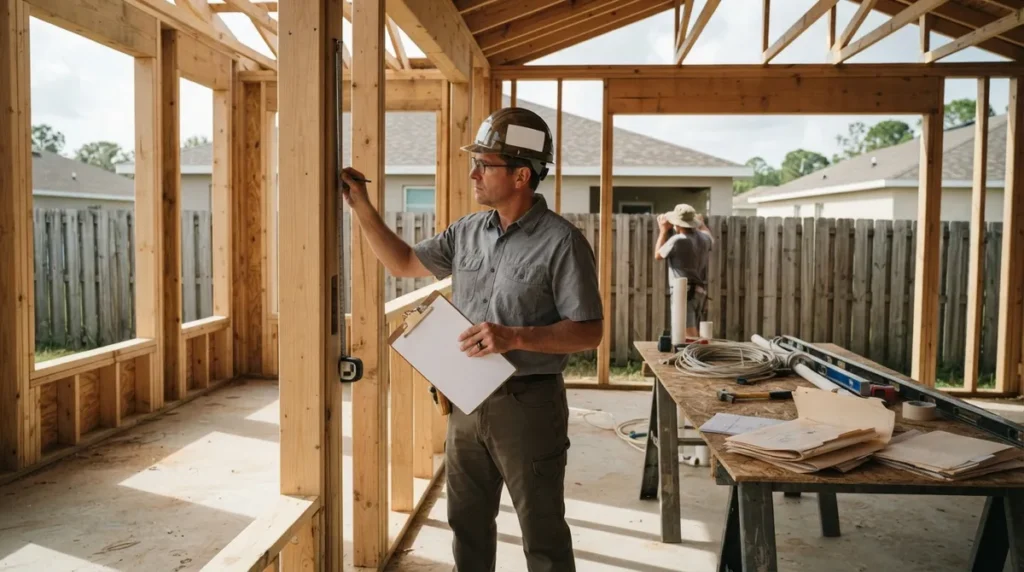
Key Takeaways
-
Florida property owners are responsible for resolving unpermitted work violations even when a contractor failed to pull the permit; after-the-fact permits are not automatic approvals and must satisfy all current code requirements and inspections.
-
Building inspector investigations are triggered by neighbor complaints, property sales, refinances, aerial imagery mismatches, or routine inspections; inspectors compare permit records to actual work and may require concealed work exposure for verification.
-
The after-the-fact permit process involves submitting sealed plans or engineer letters, paying jurisdiction-specific fees plus work-without-permit surcharges, responding to plan review comments, and passing all required inspections before closeout.
-
Stop-work orders must be obeyed immediately; confirm jurisdiction, gather as-built documentation, and contact the building department early to understand deadlines and appeal procedures to avoid escalating violations.
Getting a knock on the door from a building inspector, or finding a notice taped to your gate, can make anyone's stomach drop. Take a breath. A building inspector investigation of unpermitted work in Florida is stressful, but it is also a process with clear steps, and plenty of owners, contractors, and investors have come through it just fine.
Here is the heart of it. Under Florida Statutes § 553.79, construction, alteration, repair, and demolition generally require a permit before work begins. When a local building department suspects that did not happen, it can review permit records, inspect the property, and require the owner to get a permit and prove code compliance. The details, fees, and deadlines vary by city and county.
In this guide, we walk through 14 things worth knowing, from how investigations start to how they end. Whether you are a general contractor, solar installer, realtor, or homeowner, you will find practical, friendly guidance you can use today. At 1 Contractor Solutions, we work through these situations across all 67 Florida counties, so we have seen how they tend to unfold.
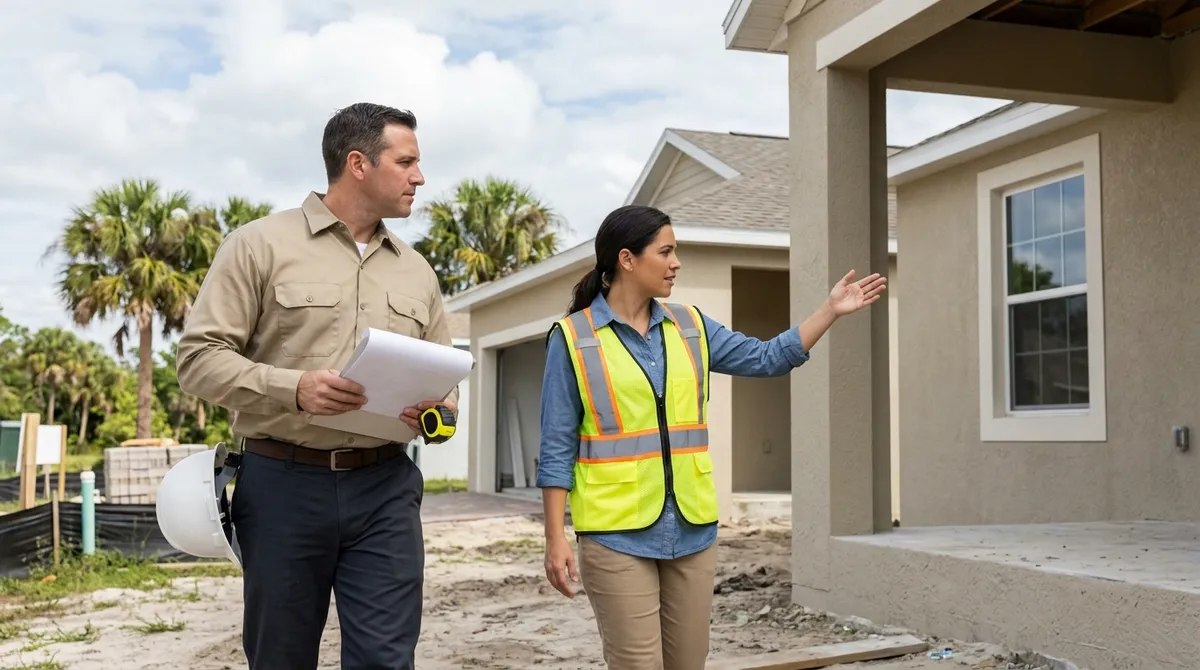
How Investigations Start and What Inspectors Look For
1. Your Local Building Department Is the Decision-Maker
In Florida, the enforcing agency is usually the city or county building department where the property sits. That office decides whether work complies and whether a permit can be approved. Near city lines, it is not always obvious which jurisdiction controls your address, so confirm it early. Our building department lookup tool is a handy place to start.
2. Investigations Often Begin With a Trigger
Inspectors rarely show up at random. Common triggers include:
- A neighbor complaint or tip
- A routine inspection on a different permit
- A property sale, refinance, or insurance review
- Aerial imagery that does not match permit records
- A contractor or utility reporting unusual work
Knowing the trigger helps you predict what the inspector will focus on.
3. Inspectors Compare Paper to Reality
A typical investigation checks permit records and then compares authorized work with what actually exists at the property. The agency may inspect, photograph, and document suspected work, then decide whether permits or required inspections are missing. Procedures vary by jurisdiction, so read every notice closely.
4. How to Find Out If You Are Being Investigated
Not sure whether something is open? Start with these steps:
- Search the property address in your city or county permit portal.
- Look for open violations, complaints, or expired permits.
- Check your mail and property for posted notices.
- Call the building department and ask about case status.
- Run an open permit search to spot loose ends.
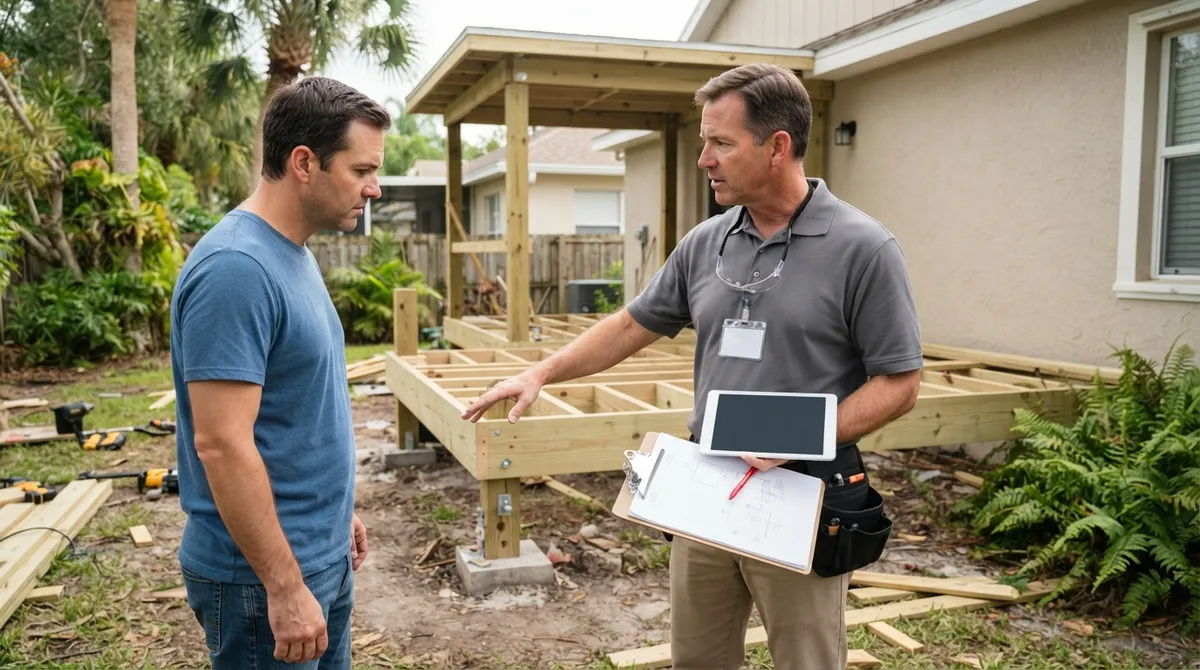
What Happens When Unpermitted Work Is Found
5. Building Code Enforcement Is Not Always Regular Code Enforcement
Here is a detail that surprises people. Florida Statutes Chapter 162 excludes certain enforcement under §§ 553.79 and 553.80 concerning construction. That means a building-code case may not follow the same path as a general code-enforcement case. Follow the specific notice, compliance, and appeal instructions your local agency issues.
6. You May Receive a Stop-Work Order
Where authorized, the agency can issue a stop-work order. If you get one, stop the work it covers right away. Then review the notice for:
- The exact scope of work covered
- Required actions and deadlines
- Contact information and appeal procedures
Ignoring a stop-work order can make things much worse. If your project is frozen and a crew is waiting, see our guide on what to do after a stop-work order.
7. Who Is Responsible: The Owner or the Contractor?
Good question, and the answer is often "it depends." The property owner typically has to resolve the violation on the property, even when a contractor skipped the permit. A contractor may face separate licensing consequences. If a contractor promised to pull the permit and did not, document everything. Our article on a homeowner who said they would pull the permit explains how these situations play out.
8. Work Hidden Behind Walls May Need to Be Exposed
Inspectors cannot approve what they cannot see. Completed work may need to be opened up so they can verify concealed framing, wiring, plumbing, or other construction. If the work does not comply, the agency may require corrections before approving the permit or closing the violation.
Here is how concealed-work scenarios commonly look:
| Type of Work | What May Need Exposure | Why It Matters |
|---|---|---|
| Electrical | Drywall or ceiling sections | Verify wiring, boxes, and grounding |
| Plumbing | Wall cavities, slab access | Check supply, drain, and venting |
| Structural additions | Framing, connectors, footings | Confirm load path and fasteners |
| Roofing | Decking, underlayment | Verify attachment and materials |
In some cases, an engineer letter or as-built documentation can reduce how much demolition is needed, though the building official makes the final call.
Getting Legal: The After-the-Fact Permit Process
9. An After-the-Fact Permit Is Not Automatic Approval
This is the most important myth to bust. An after-the-fact permit is not a waiver of code requirements. You generally apply through the local permitting authority, provide requested plans or documentation, and satisfy applicable review and inspection requirements. If the work fails, it may need to be corrected or removed. Learn more about our after-the-fact and expired permit services.
10. The Basic Path to Legalizing Unpermitted Work
While every jurisdiction differs, the general sequence looks like this:
- Read the notice and note every deadline.
- Identify the correct jurisdiction and permit history.
- Gather as-built drawings, photos, and product information.
- Get sealed plans or an engineer letter where required.
- Submit the after-the-fact application and pay fees.
- Respond to plan review comments.
- Pass required inspections, including any exposure of concealed work.
- Close the permit and the violation.
For a deeper walkthrough, see how to get an after-the-fact permit in Florida.
11. Sealed Drawings and Engineer Letters Often Help
For structural, electrical, or mechanical work, the building department may want sealed documentation showing the work meets code. Our in-house drafting and engineering team prepares as-built drawings and engineer letters so reviewer comments get fixed fast instead of bouncing between outside consultants.
Costs, Current Code, and Timing
12. Fees and Penalties Vary by Jurisdiction
Florida law authorizes reasonable permit fees, and local agencies may add charges for work started before a permit was issued. Investigation fees and penalties differ widely, so confirm the amount in your jurisdiction's current fee schedule. Here is a simple way to think about the cost components:
| Cost Component | What to Expect |
|---|---|
| Standard permit fee | Based on the local fee schedule and project value |
| Work-without-permit surcharge | Set by the local agency; confirm current rates |
| Plans and engineering | Depends on scope and required seals |
| Corrections or exposure | Depends on what inspectors find |
For more on budgeting, read about after-the-fact permit costs in Florida and the penalty for building without a permit.
13. Noncompliant Work May Need to Be Corrected
Can unpermitted work be approved if it does not meet the current Florida Building Code? Not as-is. The agency may require upgrades or corrections before approval. Sometimes that is a few fasteners or a breaker swap. Other times it is more involved. An honest evaluation before you apply helps you plan your budget and timeline.
14. Real Estate Deals Raise the Stakes
Open permits and unpermitted work love to surface at the worst moment: right before closing. Lenders, appraisers, and title companies may flag issues, and buyers may ask for repairs or credits. If you are a realtor or investor, see our guides on an open permit found at closing and our realtor closing support.
How a Permitting Professional Can Help
A permitting-services professional cannot approve your work. Only the local building official can do that. What we can do is take the weight off your shoulders. We help identify the correct jurisdiction, review permit history and notices, coordinate plans and licensed professionals, submit the application, and track inspections to closeout.
- General contractors: keep crews on schedule while we handle filing, revisions, and resubmittals.
- Solar companies: get code-compliant structural and electrical documentation for faster reviews.
- Realtors and investors: clear permit problems before they derail a closing.
- Homeowners: get a clear plan instead of guessing what the notice means.
- Design and trade professionals: outsource drafting, engineering, and permit administration.
We also offer code compliance violation help and an urgent permit rescue service for stop-work orders, denials, and held-up closings. You can follow us on LinkedIn or follow us on Facebook for more Florida permitting tips, and you can see what our customers say when you visit us on Google — 1 Contractor Solutions.
For the legal text itself, the Florida Legislature publishes Florida Statutes § 553.79 online, which is worth a read if you want the source language.
Final Thoughts: Breathe, Then Take the Next Step
An inspector investigation does not have to become a disaster. Read the notice, stop work if ordered, document what exists, and work with the building department rather than against it. The sooner you act, the more options you tend to have.
If you are staring at a notice right now, we would be happy to help you sort out the next move. Get a free quote and let our team review your situation. We respond fast, day or night, so you are never waiting around alone.
FAQs
How do I find out whether a building inspector is investigating unpermitted work at my Florida property?
Start by searching your address in your city or county permit portal for open violations, complaints, or expired permits. Check your mail and property for posted notices, and call the local building department to ask about case status. You can also run an open permit search to catch anything lingering in the records.
Can a Florida inspector require me to open walls or ceilings to inspect unpermitted work?
Yes, completed work may need to be exposed so inspectors can verify concealed framing, wiring, plumbing, or other construction. Requirements vary by jurisdiction and by what the inspector needs to see. Sealed as-built documentation or an engineer letter can sometimes help limit how much has to be opened.
What should I do if I receive a stop-work order for unpermitted construction in Florida?
Stop the work covered by the order right away, then read the notice carefully for its scope, required actions, deadlines, and appeal procedures. Gather your documents and contact the building department or a permitting professional to plan your next steps. Continuing work after a stop-work order can create bigger problems.
Does an after-the-fact permit guarantee approval in Florida?
No, an after-the-fact permit is not automatic approval or a waiver of code requirements. You still need to submit plans or documentation, pass review, and satisfy required inspections. If the work does not comply, the agency may require corrections before approving the permit or closing the violation.
How much are after-the-fact permit fees or penalties in Florida?
Fees vary by jurisdiction. Florida law authorizes reasonable permit fees, and local agencies may add charges for work started before a permit was issued. Check the current fee schedule for your city or county to confirm investigation fees and any penalties.
We do this work every day across all 67 Florida counties. Call (866) 314-6931 and we will tell you what your situation actually requires — including when you do not need us.
Related services
Permit Facilitation & Filing
You have a crew scheduled, a client asking for dates, and a permit sitting somewhere in a queue you cannot see. We file it, w…
See the servicePlan Review Coordination
A permit in plan review is not one queue. On a commercial project it can be six queues, each with its own reviewer, its own c…
See the serviceReady to get your permit moving?
One call tells you which jurisdiction controls your project, what it will take, and what it will cost. Most of the time we can scope it on the phone.