
Blog
14 Steps to Legalize an Existing Structure in Florida (2026)
Learn the 14 steps to legalize an existing structure in Florida, from jurisdiction checks to as-builts, engineering, inspections, and permit closeout.
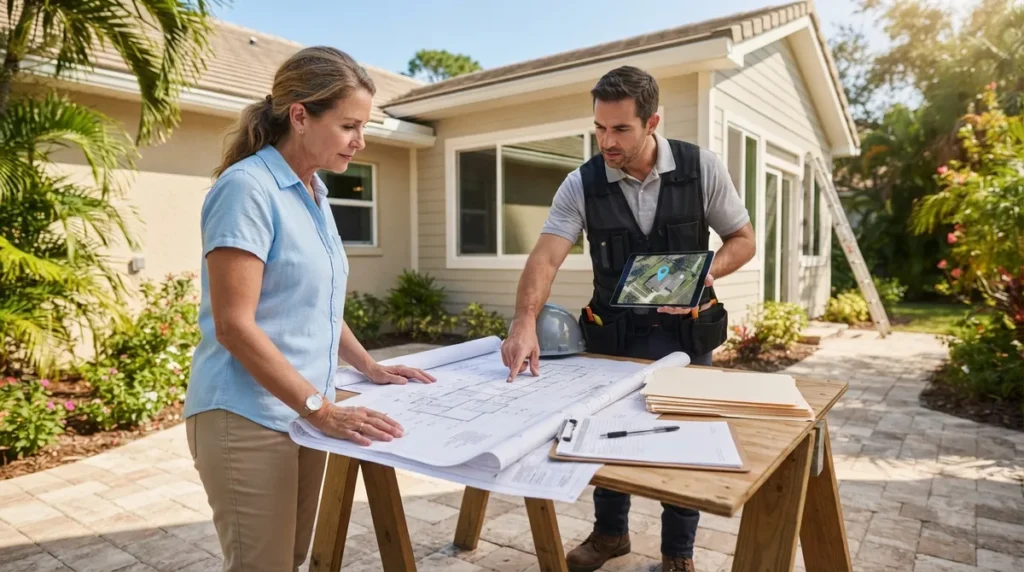
Key Takeaways
-
Unpermitted work in Florida is typically fixed by applying to the local building department for an after-the-fact permit, since each city and county sets its own process with no single statewide form.
-
Confirm the correct jurisdiction first, since a mailing address may not reveal whether a property is in a city or unincorporated county land, and filing with the wrong office wastes weeks.
-
Check the permit history and any open code enforcement cases before applying, as an old unfinaled permit may simply need reopening and open violations can add deadlines or fines.
-
Prepare accurate as-built drawings showing what exists today, not what was originally intended, because they form the backbone of nearly every legalization packet.
-
An after-the-fact application does not legalize anything by itself; the permit must be closed after all reviews, corrections, and inspections are satisfied.
-
Expect that walls and ceilings may need to be opened for inspection, so plan for selective openings, testing, or photo documentation and keep a contractor available to reopen and close finishes.
Maybe you bought a home with a patio enclosure the last owner swore was "all done right." Maybe your contractor built the addition and never closed the permit. Or maybe you just found out that the garage conversion you've enjoyed for years was never approved. First, take a breath. You are far from alone, and it is very often fixable.
To legalize an existing structure in Florida, you generally apply to the local building department for an after-the-fact permit, document what was built, and pass the required reviews and inspections. Florida Statutes §553.79 sets the statewide baseline that permitted work must be permitted, but each city and county decides how its own process works. There is no single statewide legalization form.
In this friendly guide, we walk through 14 practical steps, from finding the right jurisdiction to closing the permit. Whether you are a homeowner, a general contractor, a realtor, or a solar company cleaning up an old install, you will find a clear path forward here.
Why Legalizing an Existing Structure Matters in Florida
Unpermitted work does not just sit quietly in the background. It can surface during a sale, a refinance, an insurance claim, or a neighbor's complaint. When it does, it can slow everything down.
Here are the most common reasons people decide to legalize:
- Selling the property: Buyers, lenders, and title companies increasingly ask about open or missing permits.
- Refinancing or a HELOC: Lenders may flag unpermitted additions.
- Insurance concerns: Unpermitted work can complicate claims.
- Code enforcement notices: A violation letter usually has a deadline attached.
- Safety: Concealed electrical, structural, or plumbing work deserves a professional look.
If you are staring at a notice right now, our team handles code compliance violations every week, and the situation is usually more manageable than owners expect.
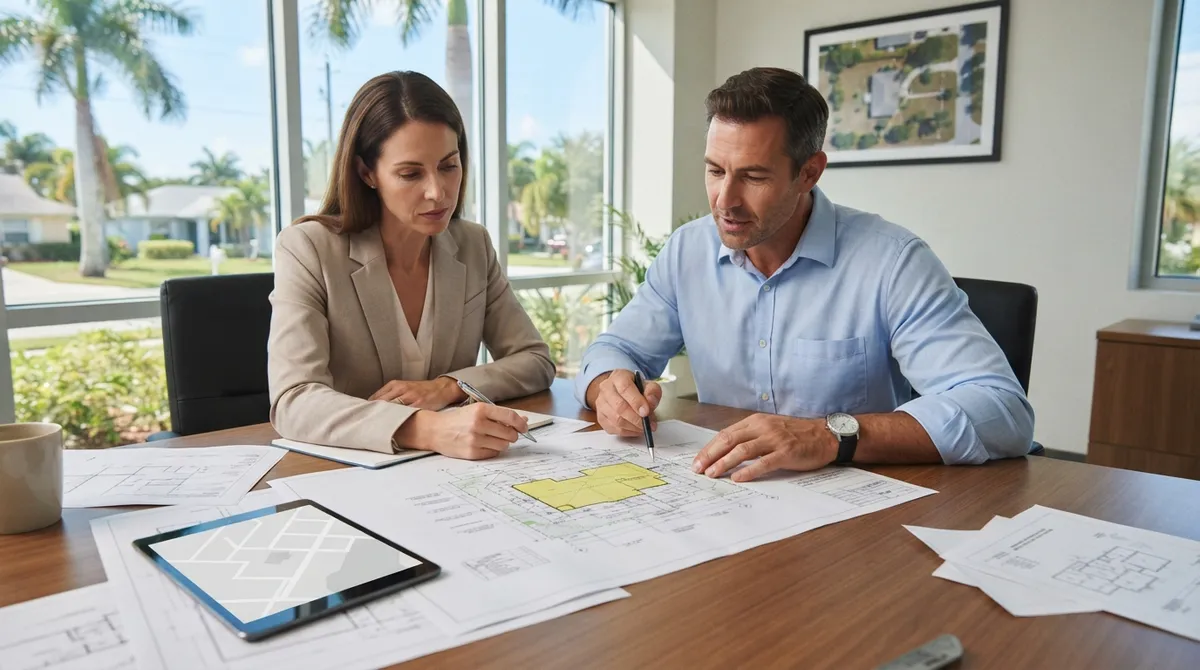
14 Steps to Legalize an Existing Structure in Florida
1. Confirm What Was Actually Built
Start by listing exactly what exists. Is it an addition, an enclosed porch, a pool cage, a retaining wall, a roof replacement, or electrical and plumbing alterations? Walk the property, take photos, and measure everything. This inventory drives every later decision.
2. Identify the Correct Jurisdiction
This step trips up more people than you would think. A mailing address does not always tell you whether a property sits inside a city or in unincorporated county land. Near city lines, it can be genuinely confusing. Our building department lookup tool can help you point to the right office, and our guide on which Florida jurisdiction reviews my project goes deeper.
3. Research the Permit History
Before you apply for anything, check what is already on file. You may discover an old permit that was never finaled, or an expired one that simply needs to be reopened. Our open permit search is a good starting point. If an expired permit is in the mix, read about how to close an expired permit in Florida.
4. Check for Open Code Enforcement Cases
Ask the jurisdiction whether any violation or lien is attached to the parcel. An open case changes your timeline and sometimes your fees. It also tells you how much urgency you are dealing with.
5. Talk to the Building Department Early
A short, friendly call can save weeks. Ask which code provisions apply, what the after-the-fact application requires, and whether fees or penalty multipliers apply. Keep notes with the name and date of each conversation. Do not assume that the age of the structure makes it automatically legal, because it usually does not.
6. Gather Your Existing Documents
Pull together anything that helps tell the story of the work:
- Old surveys and site plans
- Purchase and inspection reports
- Contractor invoices and contracts
- Product approvals or window and door labels
- Photos showing the work before, during, or after construction
7. Determine Whether Sealed Drawings Are Required
Depending on the scope and the local rules, the jurisdiction may require plans or evaluations signed and sealed by a Florida-licensed architect or professional engineer. Structural elements like additions, roofs, trusses, and screen enclosures commonly fall in this category. Our in-house team prepares structural engineering and sealed documents, so there is no waiting on an outside consultant.
8. Prepare As-Built Drawings
As-builts show what exists today, not what someone intended to build. They typically include floor plans, elevations, dimensions, and construction details, plus a site plan showing setbacks. Accurate as-built drawings are the backbone of nearly every legalization packet. If you want a deeper walkthrough, see our 14 steps to get as-built drawings for Florida permits.
9. Add an Engineer Letter When Needed
Sometimes the reviewer does not need a full redesign. They just need a licensed professional to confirm that what was built is safe and code-compliant. That is where an engineer letter can be a lifesaver. For a closer look, read how to use an engineer letter to save your permit.
10. Submit the After-the-Fact Permit Application
Now you file. The package usually includes the application, owner and contractor information, as-builts, the site plan, and any engineering. Details vary by jurisdiction, so follow their checklist exactly. Our permit facilitation and filing team handles this daily, and our overview on how to get an after-the-fact permit in Florida pairs nicely with this step.
11. Respond to Plan Review Comments
Reviewers often come back with questions. That is normal, not a rejection of you personally. Answer every comment completely and resubmit promptly. Our revisions and resubmittals service exists precisely for this stage.
12. Be Ready to Expose Concealed Work
Because walls, ceilings, and slabs hide what is inside, inspectors may ask for selective openings, testing, or photo documentation. Plan for this in advance, and keep a contractor or handyman on call to open and close finishes. If the work does not meet code, corrections or even partial reconstruction may be required.
13. Pass the Required Inspections
Expect a series of inspections, which may include structural, electrical, plumbing, mechanical, and a final. Keep the permit card and approved plans accessible on site. Our inspections support can help you prepare so the inspector sees a clean, ready job.
14. Close the Permit and Keep Your Records
Here is the part many people miss: an after-the-fact application does not legalize anything by itself. The process is only complete when the required reviews, corrections, inspections, and final approvals are satisfied and the permit is closed. Save the final approval, the closed permit record, and a copy of the sealed documents for future buyers and lenders.
Typical Documents by Type of Unpermitted Work
Every jurisdiction differs, but this table gives you a realistic starting picture of what reviewers often ask for.
| Type of Work | Common Documents | Engineering Often Needed? |
|---|---|---|
| Room addition or garage conversion | As-builts, site plan, structural details, energy forms | Frequently |
| Screen enclosure or pool cage | As-builts, site plan, wind-load details | Frequently |
| Roof replacement | Product approvals, roof details, photos | Sometimes |
| Retaining wall or fence | Site plan, wall details, height information | Depends on height and design |
| Electrical, plumbing, or HVAC alterations | Trade drawings, equipment data, photos | Often for MEP review |
| Solar installation | Site plan, structural and electrical documentation | Often |
Always confirm requirements with the authority having jurisdiction, since lists vary by city and county.
What Affects Your Timeline and Cost
Florida has no uniform statewide fee schedule for after-the-fact permits, and we would never want to hand you a made-up number. Fees, penalties, and review times are set locally. What we can do is show you the main levers.
| Factor | How It Affects the Project |
|---|---|
| Jurisdiction | Fees, penalty multipliers, and review speed differ by city and county |
| Scope of work | Larger or structural projects need more review and engineering |
| Document quality | Clean as-builts reduce comment rounds |
| Concealed conditions | Openings and corrections add time and cost |
| Open violations | Cases may add deadlines, fines, or lien releases |
For more perspective, our articles on after-the-fact permit costs in Florida and the penalty for building without a permit in Florida break this down further.
Tips for Different Readers
For Homeowners
You do not need to feel embarrassed. Many owners inherit unpermitted work. Start with research, gather your documents, and get a professional opinion before talking to the county. Our homeowner services page explains how we help.
For General Contractors
If a past project never got closed out, address it before it becomes a license or reputation issue. Clean documentation protects you and your client, and our general contractor services are built around keeping your crews moving.
For Realtors and Investors
Permit surprises can derail closings. Identify them during due diligence, not at the closing table. Our realtor and closing support helps clear holds quickly, and you can read about what to do when an open permit is found at closing.
For Solar Companies and Trades
If an older installation or alteration was never permitted, documentation and engineering are usually the fastest route back to compliance. Our solar contractor team supports distributed energy projects across Florida.
Common Mistakes to Avoid
- Assuming time makes it legal: Age alone does not erase a missing permit.
- Skipping the jurisdiction check: Filing with the wrong office wastes weeks.
- Submitting rough sketches: Incomplete drawings generate endless comments.
- Ignoring concealed work: Surprises behind walls cost more later.
- Letting a notice sit: Deadlines in violation letters are real.
- Walking away at the application stage: The permit must be closed to be finished.
How 1 Contractor Solutions Can Help
Think of 1 Contractor Solutions as Florida's outsourced permitting department. We work across all 67 counties, and our drafting and engineering are in house, so when a reviewer flags something, we fix it directly. Our after-the-fact and expired permits service takes on the files other firms decline. If time is tight, our urgent permit rescue team can step in on denials, stop work orders, and delayed closings.
Curious how other customers feel? You can see what people say on Google by visiting our 1 Contractor Solutions Google profile, and you are welcome to follow us on LinkedIn or follow us on Facebook for Florida permitting updates.
For the official statutory baseline, you can read Florida Statutes Section 553.79 directly on the Florida Senate website.
Ready to Make Your Structure Official?
Legalizing an existing structure in Florida takes patience, good documentation, and the right guidance, but it is a well-worn path. Start by identifying your jurisdiction, gather your records, prepare accurate as-builts, and work through reviews and inspections until the permit is closed. Once that final approval is in your hands, you can sell, refinance, and enjoy your space with real peace of mind.
Want a hand from people who do this every day? Get a free quote and tell us your address and your problem. We respond within 30 minutes, day or night, and we will tell you exactly what it takes.
FAQs
How do I legalize an unpermitted structure in Florida?
You generally apply to your local building department for an after-the-fact permit, submit as-built drawings and any required engineering, and pass the necessary reviews and inspections. The process is only finished once the permit is closed. Since each city and county sets its own rules, confirm the details with your local jurisdiction first.
Do I need an engineer or architect to legalize an existing structure?
Often, yes, especially for additions, roofs, enclosures, and other structural work. Many jurisdictions require plans or evaluations signed and sealed by a Florida-licensed architect or professional engineer. Your building department can tell you what applies to your specific project.
Will inspectors make me open walls or ceilings?
Possibly. Because work can be hidden behind finishes, officials may require selective openings, testing, or photo documentation to verify construction. If the work does not meet applicable code, you may need to make corrections before approval.
How much does an after-the-fact permit cost in Florida?
There is no statewide fee schedule, so costs vary by jurisdiction, scope, and any penalties. Ask your local building department for current fees, and budget for drawings and possible engineering as well.
Can I sell or refinance a Florida property with unpermitted construction?
Sometimes, but it can create real hurdles. Buyers, lenders, and title companies may question open or missing permits, and that can delay a closing. Legalizing the work beforehand usually makes the transaction much smoother.
We do this work every day across all 67 Florida counties. Call (866) 314-6931 and we will tell you what your situation actually requires — including when you do not need us.
Related services
Permit Facilitation & Filing
You have a crew scheduled, a client asking for dates, and a permit sitting somewhere in a queue you cannot see. We file it, w…
See the servicePlan Review Coordination
A permit in plan review is not one queue. On a commercial project it can be six queues, each with its own reviewer, its own c…
See the serviceReady to get your permit moving?
One call tells you which jurisdiction controls your project, what it will take, and what it will cost. Most of the time we can scope it on the phone.