
Blog
13 Ways Solar Companies Get Permits Faster in Miami (2026)
Learn 13 proven ways solar companies get permits faster in Miami, from CPP and expedited review to complete packages and sealed plans.
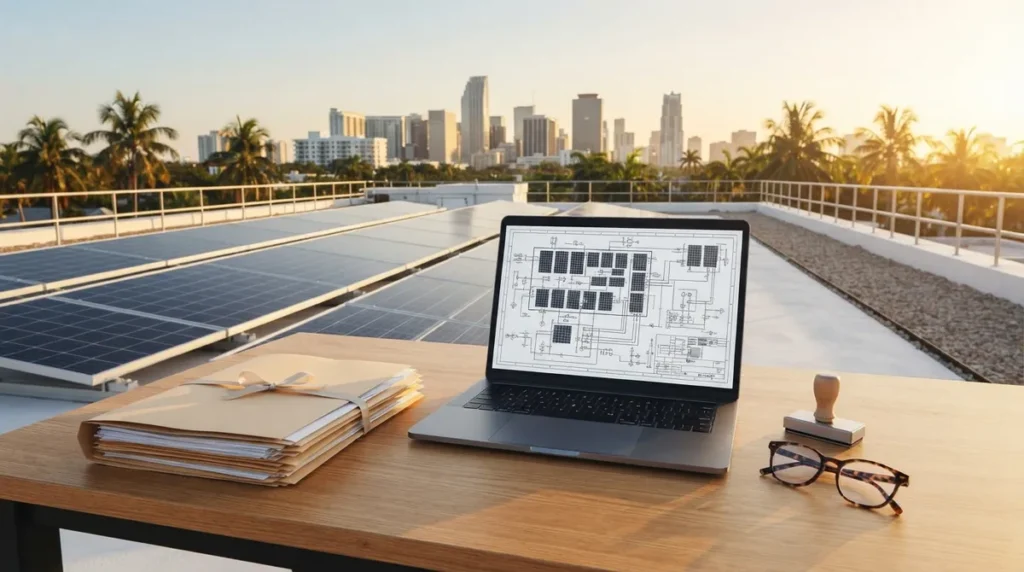
Key Takeaways
-
Confirm the correct jurisdiction before filing: City of Miami and unincorporated Miami-Dade County use different portals, forms, and procedures, and filing in the wrong place costs days.
-
Submit solar PV applications electronically with clean, properly named PDFs, since paper plans needing conversion may add 24 to 48 hours.
-
Ensure a complete first-pass package: notarized permit application, contractor-signed Electrical Category 34 fee sheet, electronic plans, and required seals, because one missing document can trigger rejection.
-
Include the FSEC PV certification form and owner solar-system disclosure form in every submission, since these small forms are commonly forgotten.
-
Draw detailed rooftop plans showing wind zones, ASCE 7 pressures, clearances, and structural load information upfront to avoid reviewer comments that cost full review cycles.
-
Respond to reviewer comments the same day by correcting, re-sealing if needed, and resubmitting electronically, since response speed separates fast permitting from slow.
If you run a solar company in South Florida, you already know the feeling. The crew is scheduled, the equipment is staged, the customer is excited, and then the permit sits in review. Every idle day costs you money and goodwill. So, how do solar companies get permits faster in Miami? The honest answer is that it rarely comes down to one magic trick. It comes down to a long list of small habits that keep your application moving instead of bouncing back with comments.
We work with solar contractors across Florida every day, and the same patterns show up again and again. The companies that move quickly file with the right authority, submit a complete and coordinated package, and answer reviewer comments fast. The ones that stall usually skip one of those steps.
One quick note before we dive in: no official source publishes a guaranteed turnaround time, and actual timing depends on jurisdiction, completeness, and review comments. What you can control is how clean your package is. Here are 13 practical ways to tighten up your process in 2026.
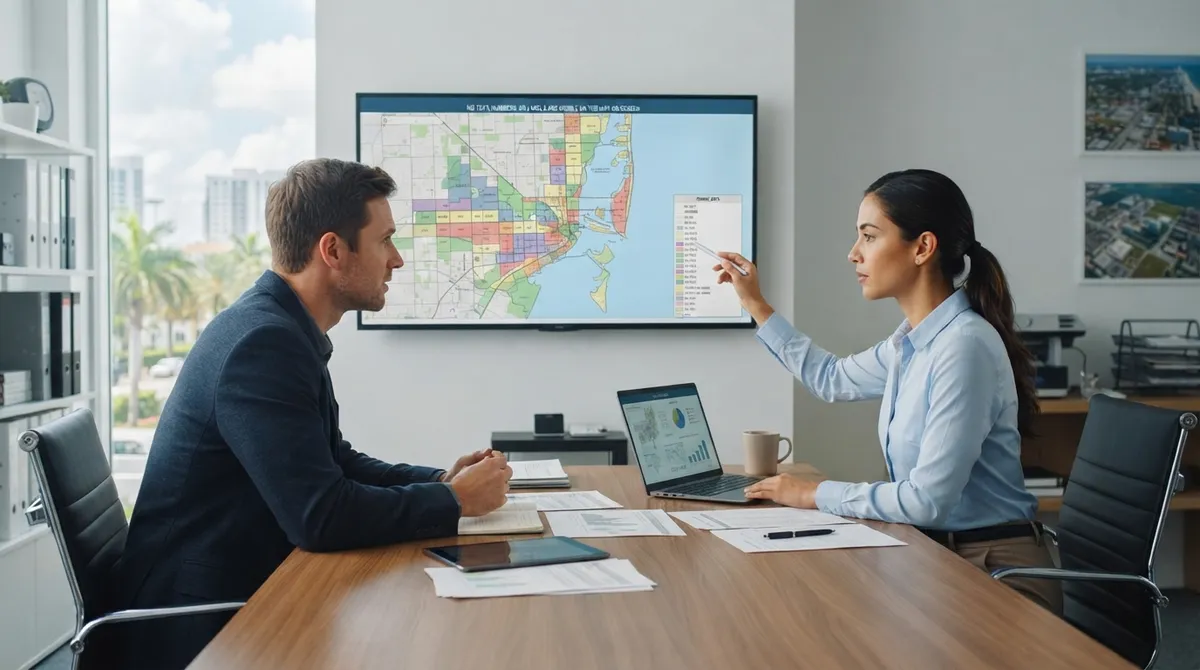
1. Confirm the Right Jurisdiction Before You Do Anything
This is the number one source of avoidable delay in Miami. The City of Miami and unincorporated Miami-Dade County use different portals, forms, and procedures. Many other municipalities in the county have their own rules too.
Miami-Dade County's solar guidance applies only where the county is the authority having jurisdiction. If you file in the wrong place, you lose days before anyone even looks at your plans. Property addresses near city lines can be genuinely confusing, so verify first. Our building department lookup tool can help, and our guide on which Florida jurisdiction reviews my project walks through the process.
2. Use Electronic Submission Every Time
Miami-Dade County submits solar PV applications electronically through its portal. According to the county's solar workshop presentation, paper plans that must be converted to electronic format may require an additional 24 to 48 hours. That is time you simply do not need to lose.
Build your internal workflow around clean, properly named PDF files from the start. Your team will thank you later.
3. Understand Concurrent Plans and Processing (CPP)
In Miami-Dade County, solar PV applications route through Concurrent Plans and Processing, often shortened to CPP. Instead of reviews happening one after another, relevant disciplines can review at the same time once a complete application is received.
That is a real advantage, but only if your package is complete. A missing document can hold up the whole concurrent process. The county notes this speeds review but does not guarantee a specific approval time, so treat it as a tool rather than a promise.
4. Ask About Green Building Expedited Review
Here is one many solar companies overlook. Miami-Dade County says solar and other renewable-energy projects are eligible for Green Building Expedited Review under County Code Section 8-6. Applicants request it through the Sustainable Buildings Program's New Project Form.
Eligibility and processing should always be confirmed directly with the county, and no guaranteed review duration is stated in the available source. Still, it is absolutely worth asking about on every eligible job.
5. Submit a Complete Application Package on the First Try
First-pass completeness is the single biggest lever you control. A typical county submission generally includes:
- A signed and notarized building permit application
- A contractor-signed electrical fee sheet with Electrical Category 34 (Solar Photovoltaic) completed
- Electronically submitted PDF plans and supporting documents
- Electronic signatures and seals on any documents requiring professional certification
Missing even one of these can trigger a rejection. Build a checklist and make someone on your team accountable for it before every filing.
6. Quick Reference: What Reviewers Look For
Here is a simple table to keep your submissions organized. Always verify current requirements with the authority having jurisdiction.
| Document or Detail | Why It Matters | Common Mistake |
|---|---|---|
| Notarized permit application | Required starting point for review | Missing signature or notary stamp |
| Electrical fee sheet (Category 34) | Routes the solar PV permit correctly | Category left blank or unsigned by contractor |
| Rooftop layout plan | Shows array location, area, and clearances | Roof dimensions or features omitted |
| Wind zone and pressure data | Confirms ASCE 7 compliance | Wrong zone or missing pressure values |
| PV electrical diagram | Demonstrates NEC Article 690 compliance | Incomplete equipment or system details |
| FSEC certification form | Confirms PV system approval | Form omitted from the package |
| Owner solar-system disclosure | Required county disclosure | Forgotten at submission |
7. Draw Rooftop Plans That Answer Every Question
Reviewers shouldn't have to guess. County rooftop plans should clearly show roof dimensions and features, array location and area, roof type and deck, ASCE 7 wind zones and pressures, perimeter widths, clearances, and roof-penetration flashing details.
When a plan is vague, you get a comment. When you get a comment, you lose a review cycle. Detailed, well-labeled drawings are the cheapest way to avoid that. Our plans and engineering team prepares exactly this kind of documentation.
8. Address Structure and Wind Loads Up Front
Miami sits in a high-wind environment, so structural documentation gets close attention. Your package must address wind loads, attachment framing, and the building's capacity for any added dead load where applicable.
Do not leave this for the reviewer to request. Including the structural narrative or an engineer letter from the start prevents a very common rejection. Having structural engineering handled in house, with sealed drawings produced by the same team that files the permit, keeps fixes fast when comments do arrive.
9. Get the Electrical Diagram Right
Your electrical plans should include a complete PV diagram designed to applicable National Electrical Code Article 690 requirements, plus equipment locations and system details. County guidance also calls for the Florida Solar Energy Center (FSEC) PV system certification approval form and the owner's solar-system disclosure form.
These forms are small, but forgetting them is surprisingly common. Add both to your standard submission template. Our MEP engineering team can prepare compliant electrical sheets when you need extra bandwidth.
10. Verify Whether You Need a Separate Roofing Permit
This one trips up even experienced installers because the rule differs by jurisdiction. Miami-Dade County guidance says new roofs and re-roofs require a separate roof permit, and adhered photovoltaic laminate modules require one too. The City of Miami's residential solar page says a separate roofing permit is not needed for residential projects, while commercial projects need a separate stand-alone roofing permit.
Confirm the rule with the authority having jurisdiction before filing. If you are combining a re-roof with solar, our roof permit services can keep both tracks aligned.
11. Compare Your Filing Options at a Glance
Different situations call for different approaches. This table summarizes the main differences between Miami-Dade County and the City of Miami based on the guidance available.
| Factor | Miami-Dade County (Unincorporated) | City of Miami |
|---|---|---|
| Submission method | Electronic through county portal | Separate city process and forms |
| Review approach | Concurrent Plans and Processing (CPP) | Verify with the City |
| Expedited option | Green Building Expedited Review (Section 8-6) | Confirm availability with the City |
| Separate roof permit | Required for new roofs, re-roofs, and adhered PV laminate | Not needed for residential; required for commercial |
| Plan preparer note | Sealed documents as applicable | Projects under $50,000 may be prepared by a qualifying EC or CVC licensed contractor (confirm current rules) |
For a deeper look at local specifics, see our page on Miami-Dade County and our Miami permitting resources.
12. Respond to Reviewer Comments Immediately
Even great packages sometimes get comments. What separates fast companies from slow ones is response time. Treat every comment like a ticking clock.
Here is a simple process that works:
- Read the comment carefully and identify which discipline issued it.
- Decide whether it needs a drafting fix, an engineering fix, or just a clarification.
- Correct the documents and re-seal anything that requires it.
- Resubmit electronically the same day if possible.
- Track the resubmittal until the status changes.
Our revisions and resubmittals service and plan review coordination exist for exactly this reason. When your drafting and sealed engineering sit under one roof, a reviewer comment becomes a same-day fix rather than a week of phone tag.
13. Consider a Permitting Partner for High Volume
If you file dozens of solar permits a month, your team's time becomes the bottleneck. A dedicated permitting partner can handle filing, tracking, comment responses, and closeout while your crews keep installing.
At 1 Contractor Solutions, we act as an outsourced permitting department for solar contractors, with in-house sealed drawings, permit facilitation and filing, and same-day response. We are also a licensed private provider, which can matter when county queues get long. For more on this, read our breakdown of Florida solar permit timelines and our piece on speeding up solar permit expediting in Florida.
What Slows Solar Permits Down Most
To make this concrete, here are the delays we see most often:
- Filing with the wrong jurisdiction or portal
- Paper submissions that need electronic conversion
- Missing Category 34 fee sheet or FSEC form
- Vague roof plans without wind zone data
- Unclear structural load documentation
- Assuming a roof permit rule that does not apply locally
- Slow responses to reviewer comments
Fix those seven items and you will likely beat most of your competition to approval. Nothing here is complicated. It just takes discipline and a repeatable process.
Ready to Move Faster?
Speed in Miami solar permitting is built, not found. File with the right authority, lean on CPP and expedited review where eligible, submit complete electronic packages, and answer comments the same day. Do those things consistently and your approvals will come sooner.
If you would rather hand the paperwork to a team that does this every day, we would love to help. Get a free quote and tell us about your next Miami project. You can also see what our customers say when you visit us on Google — 1 Contractor Solutions, and stay connected by choosing to follow us on LinkedIn or follow us on Facebook. For official county guidance, the Miami-Dade County solar PV permit page is a great reference to keep bookmarked.
FAQs
How long does it take to get a solar permit in Miami?
There is no single guaranteed timeline, and the official sources we reviewed do not state a standard turnaround. Timing depends on your jurisdiction, how complete your application is, any reviewer comments, and whether you qualify for expedited review. A clean, complete electronic submission gives you the best shot at a smooth review.
Does Miami-Dade offer expedited solar permit review?
Yes, it can. Miami-Dade County says solar and other renewable-energy projects are eligible for Green Building Expedited Review under County Code Section 8-6, requested through the Sustainable Buildings Program's New Project Form. Always confirm eligibility and processing details with the county before you file.
Do I need a separate roofing permit to install solar panels in Miami?
It depends on where the property sits. Miami-Dade County requires a separate roof permit for new roofs, re-roofs, and adhered photovoltaic laminate modules, while the City of Miami says residential solar does not need one but commercial projects do. Check with the authority having jurisdiction first.
What documents are required for a solar panel permit in Miami-Dade County?
A complete submission generally includes a signed and notarized permit application, a contractor-signed electrical fee sheet with Category 34 completed, and electronic PDF plans with any required seals. You will also want the FSEC certification form and the owner's solar-system disclosure form, plus structural and electrical documentation.
How can a permitting service reduce solar permit delays in Miami?
A good permitting partner confirms the correct jurisdiction, assembles a complete package, and tracks the application through review. When drafting and sealed engineering are handled in house, reviewer comments can be corrected and resubmitted quickly, which keeps your install schedule on track.
We do this work every day across all 67 Florida counties. Call (866) 314-6931 and we will tell you what your situation actually requires — including when you do not need us.
Related services
Permit Facilitation & Filing
You have a crew scheduled, a client asking for dates, and a permit sitting somewhere in a queue you cannot see. We file it, w…
See the servicePlan Review Coordination
A permit in plan review is not one queue. On a commercial project it can be six queues, each with its own reviewer, its own c…
See the serviceReady to get your permit moving?
One call tells you which jurisdiction controls your project, what it will take, and what it will cost. Most of the time we can scope it on the phone.