
Blog
10 Facts: Is a Retroactive Permit an After-the-Fact Permit?
Is a retroactive building permit the same as an after-the-fact permit in Florida? Learn 10 key facts about terms, fees, inspections, and next steps.
Key Takeaways
-
In Florida, 'retroactive building permit' is mostly informal, while 'after-the-fact permit' is the official term local governments use; both describe permitting work already started or completed.
-
Getting a permit later does not erase the violation: Florida Statutes §553.79 generally requires the proper permit before covered work begins, and late permits can bring higher fees and extra review.
-
Reviewers may require concealed work to be exposed for inspection, plus engineering reports or certifications; work that can't be shown to comply may need correction or removal.
-
Fees and penalties are set locally, not statewide; for example, St. Lucie County charges double and Palm Beach County charges four times the standard permit fee, so check your jurisdiction's schedule.
-
Some jurisdictions, such as Pembroke Pines, require a licensed contractor for after-the-fact permits rather than allowing owner-builder permits, so confirm local rules before applying.
-
An after-the-fact permit does not automatically close a code-enforcement case; you may still need to meet notice deadlines, pass inspections, and obtain final approvals.
Let's start with a little reassurance: if you've landed here because you're wondering whether a "retroactive building permit" is the same thing as an "after-the-fact permit" in Florida, you're in very good company. This question comes up all the time, and the confusion is completely understandable.
Homeowners hear one phrase from a neighbor. Contractors hear another from a building clerk. Realtors see a third on an inspection report. So here is the short answer up front: in everyday Florida permitting practice, is retroactive building permit the same as after the fact in Florida? Yes, for the most part. Both phrases describe applying for a permit after regulated work has already started or been finished without one.
But there is a catch, and it matters. Getting the permit later does not erase the fact that the work was done first. Your local building department can still ask for plans, inspections, fees, and even corrections.
In this friendly guide, we'll walk through 10 facts that clear up the terminology, the process, and the surprises so you can move forward with confidence. Local rules vary, so always confirm details with your own city or county.
1. Yes, the Two Terms Mean Essentially the Same Thing
In Florida, "retroactive permit" is mostly an informal label. "After-the-fact permit" is the wording you will usually see on city and county permit pages. Both describe the same situation: work that needed a permit was done before the permit was issued.
Some departments use other names too, such as "violation permit," "permit for work without permit," or "permit after construction." The label changes by jurisdiction, but the underlying idea stays the same.
| Term You Might Hear | What It Usually Means | Where You'll See It |
|---|---|---|
| Retroactive building permit | Informal phrase for a permit obtained after work began or finished | Conversations, real estate talk, online searches |
| After-the-fact permit | The common official term for the same situation | City and county permit pages |
| Violation permit | Permit tied to work done without approval, often with higher fees | Some county fee schedules |
| Expired permit | A permit that existed but lapsed, which is a different problem | Open permit searches, closings |
That last row is worth remembering. An expired permit and an after-the-fact permit are cousins, not twins. If you're not sure which one you have, our team at 1 Contractor Solutions can sort it out through after-the-fact and expired permit services.
2. A Later Permit Does Not Erase the Original Problem
Here's the part many people miss. Florida Statutes §553.79 generally requires you to obtain the proper permit before covered construction, alteration, repair, or demolition begins. Getting a permit later is a path to compliance, not a time machine.
Think of it like turning in homework late. You can still turn it in, and it still counts, but the teacher may note it was late. In permitting terms, that "note" can show up as higher fees, extra review, or additional inspections.
3. The Review Is Usually Just as Thorough (Sometimes More)
An after-the-fact application typically goes through the same core steps as a regular permit. Expect a few familiar pieces:
- A permit application
- Plans or supporting documents showing what was built
- Zoning and code review
- Fees
- Required inspections
The twist is that the work already exists. That means reviewers may ask for extra documentation because they can't watch it being built. If you'd like help assembling a clean packet, our permit facilitation and filing team handles the paperwork from start to finish.
4. Concealed Work May Need to Be Exposed
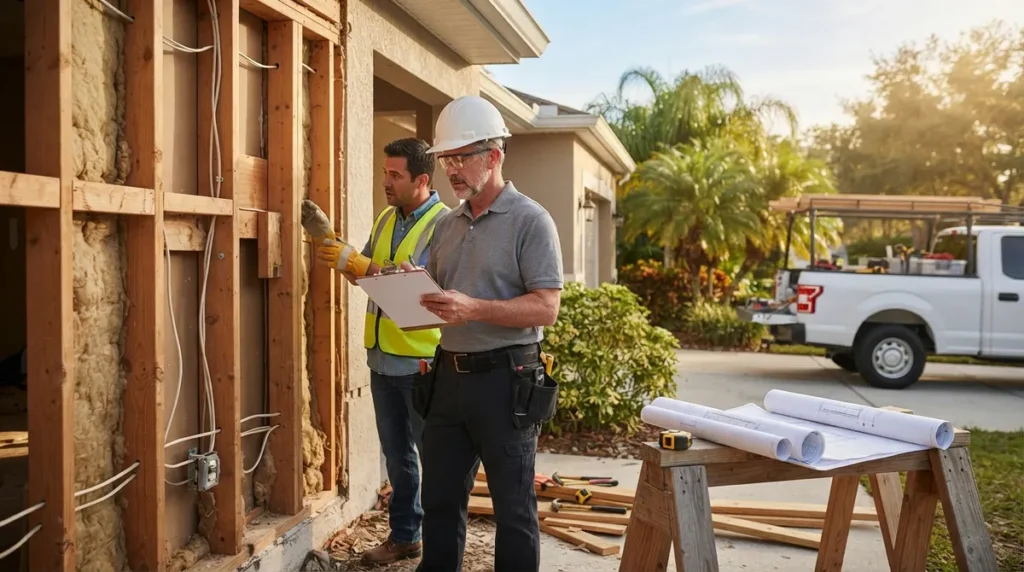
This is the fact that makes homeowners wince, so let's be gentle about it. When work is finished and covered up, an inspector can't see what's behind the drywall, under the tile, or inside the ceiling.
The building official may require portions of completed work to be exposed for inspection. They can also ask for reports, calculations, or certifications from a Florida-licensed design professional to show the work meets code.
If it can't be shown to comply, correction, removal, or reconstruction may be required. The good news? Many projects pass with minimal opening-up, especially when good documentation is ready.
5. Fees and Penalties Are Set Locally, Not Statewide
There is no single Florida-wide price tag for an after-the-fact permit. Each local building department sets or administers its own fee approach. A few real examples show how much it can vary:
| Jurisdiction | Stated Approach | Important Note |
|---|---|---|
| St. Lucie County | After-the-fact permit fee is double | Local example only |
| Palm Beach County | Violation permit fees computed at four times standard permit fees | Local example only |
| Pinellas County | Penalties waived through June 30, 2026 for eligible after-the-fact storm permits; standard fees still apply | Limited by location and scope; check current status |
These are examples, not a statewide rule. For a deeper look at budgeting, see our guide to after-the-fact permit costs in Florida.
6. Professional Drawings Often Make the Difference
Since the work is already built, plans for an after-the-fact permit usually need to show what actually exists, not what someone wishes had been built. That's where as-built drawings and engineering come in.
Depending on the project, a reviewer may want:
- As-built floor plans and site plans
- Structural verification for additions, roofs, or enclosures
- Electrical, plumbing, or mechanical documentation
- A sealed engineer letter confirming code compliance
Because our drafting and engineering are done in house, we can prepare as-built drawings and engineer letters without waiting on an outside consultant to call someone back. If a reviewer flags a comment, we can fix it quickly.
7. Owner-Builder Rules Can Get Strict
Many Florida homeowners assume they can simply pull an after-the-fact permit themselves as an owner-builder. Sometimes that's not allowed.
Pembroke Pines, for example, says a licensed contractor is required for after-the-fact permits and does not allow them as owner-builder permits, with a stated exception for qualifying owners who bought a property with the work already in place. Other jurisdictions may handle it differently.
If you're considering this route, it helps to understand the basics of owner-builder permits and then confirm your local department's exact rules before you apply.
8. A Permit Does Not Automatically Close a Code-Enforcement Case
This one surprises people. If you received a notice from code enforcement, applying for an after-the-fact permit is an important step, but it may not resolve the case on its own.
You may also need to:
- Meet any deadlines stated in the notice
- Pass all required inspections
- Obtain final approvals or a closeout
- Satisfy any separate order from the code-enforcement authority
If you're juggling a notice and a permit at the same time, our code compliance violation help can keep both tracks moving together. And if the situation feels urgent, our urgent permit rescue service is built for stop work orders, denials, and held-up closings.
9. Real Estate Deals Often Bring This Issue to the Surface
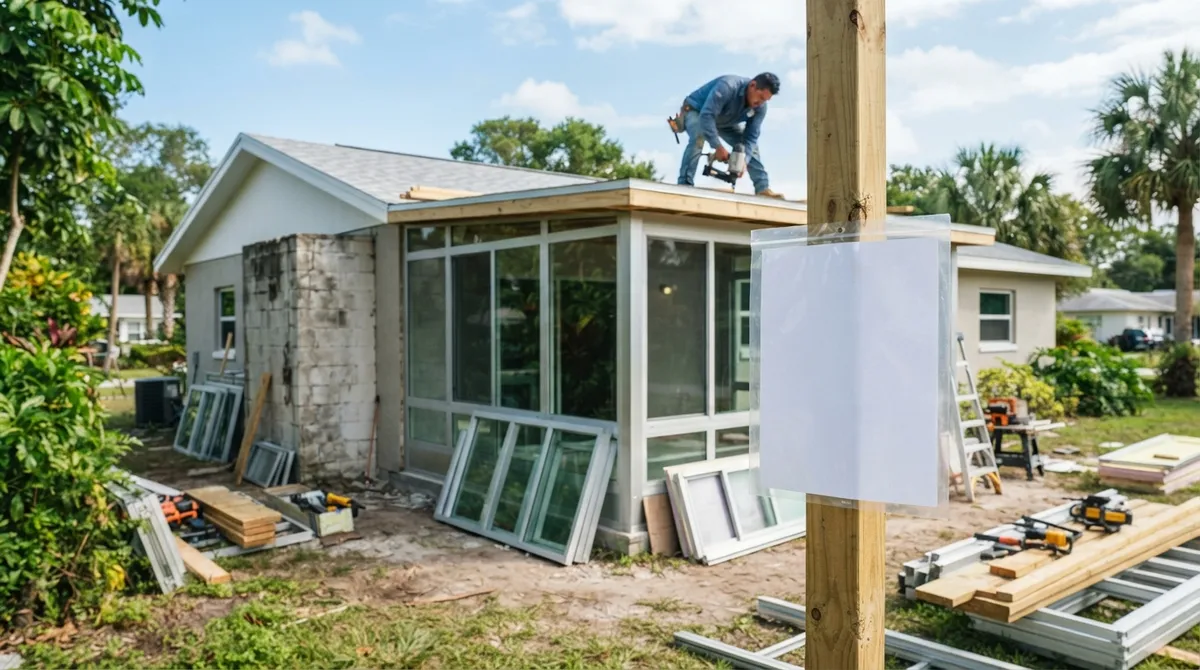
For realtors, investors, and buyers, after-the-fact permitting often shows up at the worst possible moment: during an inspection, appraisal, or closing. A prior owner's unpermitted patio enclosure or kitchen remodel can suddenly become everyone's problem.
The encouraging part is that these issues are often fixable. The earlier you identify the work, the more options you tend to have. Running an open permit search is a smart first step, and our realtor and closing support can help keep a deal on track.
10. Your Jurisdiction Controls the Details
If there's one takeaway to remember, it's this: the property's city or county decides how after-the-fact permitting works. Eligibility, plans, inspections, fees, penalties, and professional certification requirements all depend on where you are and what you built.
It can even be tricky to know which department actually controls your address near city lines. Our building department lookup tool is a helpful starting point, and our team works across all 67 Florida counties, including Hillsborough County, Miami-Dade County, and Broward County.
A Simple Game Plan If You're Facing This Now
Feeling a little overwhelmed? Totally normal. Here's a calm, step-by-step way to approach it:
- Identify what was built. List the work, the dates if known, and who did it.
- Check for open permits or notices. Look for any existing permit history or code-enforcement paperwork.
- Confirm your permitting authority. Is it the city or the county?
- Ask about eligibility and requirements. Plans, inspections, fees, and who may apply.
- Gather documentation. As-builts, photos, receipts, and any engineering needed.
- File, track, and respond. Work every reviewer comment until approval and final inspection.
You don't have to do it alone. Based in Florida and answering around the clock, 1 Contractor Solutions acts as your outsourced permitting department, handling the filing, tracking, plan review coordination, and revisions so your project keeps moving. You can also Visit us on Google — 1 Contractor Solutions to see how we've helped other Florida property owners.
Who This Matters To (and Why)
Different readers feel this issue in different ways, so here's a quick snapshot of what each group tends to care about most:
- General contractors: Clean documentation and fast, accurate filing across jurisdictions.
- Solar companies: Code-compliant structural and electrical paperwork when an install was done before approval.
- Realtors and investors: Clearing holds so closings stay on schedule.
- Homeowners: Understanding costs, timelines, and whether walls might need to be opened.
- Design and trade professionals: Dependable drafting and engineering without building an in-house team.
Wrapping Up: Same Idea, Different Labels
So, is a retroactive building permit the same as an after-the-fact permit in Florida? In practice, yes. They describe the same situation, and "after-the-fact" is simply the term local governments tend to use. What really matters is what comes next: the review, the inspections, the fees, and the paperwork that prove the work is safe and compliant.
With the right plans and a steady guide, this process is very manageable. You can also follow follow us on LinkedIn and follow us on Facebook for ongoing Florida permitting tips, and you can review the state's rules directly in Florida Statutes §553.79.
Ready to get your project legal and moving again? Reach out today and get a free quote. We respond within 30 minutes, day or night, and se habla español.
FAQs
Is a retroactive building permit the same as an after-the-fact permit in Florida?
In everyday practice, yes. Both terms describe applying for a permit after regulated work has already started or been completed. "After-the-fact" is the wording most local governments use, but the exact name and process can vary by city or county.
Can I get a permit in Florida after construction is already complete?
Often you can, though it depends on your local building department and the type of work. Expect to provide plans or as-built drawings, pay fees, and pass inspections. Some work may need to be exposed or corrected so the inspector can confirm it meets code.
How much does an after-the-fact permit cost in Florida?
There's no single statewide price, because fees are set locally. St. Lucie County, for example, states a double fee, while Palm Beach County computes violation permit fees at four times the standard amount. Check with your own jurisdiction for the current schedule.
Does getting an after-the-fact permit clear a code-enforcement violation?
Not automatically. A permit is an important step, but you may also need to meet deadlines, pass inspections, and satisfy any separate order from code enforcement. It's best to work on both at the same time.
We do this work every day across all 67 Florida counties. Call (866) 314-6931 and we will tell you what your situation actually requires — including when you do not need us.
Related services
Permit Facilitation & Filing
You have a crew scheduled, a client asking for dates, and a permit sitting somewhere in a queue you cannot see. We file it, w…
See the servicePlan Review Coordination
A permit in plan review is not one queue. On a commercial project it can be six queues, each with its own reviewer, its own c…
See the serviceReady to get your permit moving?
One call tells you which jurisdiction controls your project, what it will take, and what it will cost. Most of the time we can scope it on the phone.