
Blog
Why Is My Unpermitted Florida Interior Remodel a Problem?
Remodeled your Florida home without a permit? Learn the risks, fines, and practical steps to legalize unpermitted interior work with confidence.
Key Takeaways
-
Florida Statute §553.79 generally requires a permit before altering or repairing a building, and interior work that changes structure, electrical, plumbing, or HVAC often qualifies even when it is hidden inside.
-
Florida has no single statewide after-the-fact permit process, so your local city or county building department decides what documents, inspections, and corrections are required to legalize completed work.
-
Under §162.09, general code-enforcement fines can reach $250 per day for a first violation and $500 per day for a repeat, with up to $5,000 for irreparable violations, and unpaid fines may become liens.
-
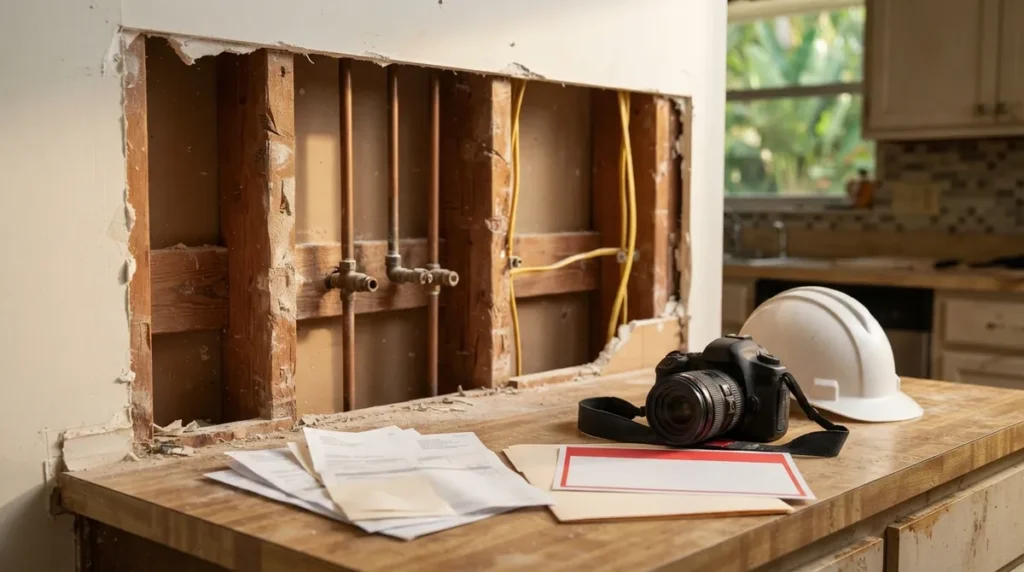
Gather photos, invoices, receipts, and contractor information from the project now, since this documentation can help reviewers verify concealed work and may reduce how much must be opened for inspection.
-
Research the property's permit history early, especially before a sale or refinance, because buyers, lenders, and appraisers often flag unpermitted work during due diligence and it can delay closing.
-
Before starting any interior project, call the building department to confirm permit requirements, verify your contractor's license, and be wary of anyone suggesting you skip the permit to save money.
You finished the remodel. The kitchen looks fantastic, the new bathroom layout feels like a spa, and your friends keep asking who did the work. Then a buyer's inspector asks one simple question: "Where are the permits?" Suddenly that beautiful space feels a lot less relaxing.
If that scenario sounds familiar, take a deep breath. You are far from alone, and there is almost always a path forward. An interior remodel unpermitted in Florida is one of the most common issues we see across the state, and it shows up for homeowners, investors, agents, and contractors alike.
The good news is that unpermitted work does not have to become a permanent headache. In this guide, we will walk through when interior work needs a permit, what can happen if it was skipped, and how owners typically bring a remodel into compliance. We will keep it friendly, practical, and focused on next steps. At 1 Contractor Solutions, we help people sort this out every day.
Does an Interior Remodel Really Need a Permit in Florida?
Many owners assume that "inside the house" means "no permit needed." That assumption is where trouble often starts. Florida Statute §553.79 generally requires a permit from the local enforcing agency before a building is constructed, altered, modified, repaired, or demolished.
Whether your specific project needs one depends on the scope of work and your local rules. Cosmetic updates are often treated differently than work that touches structure or building systems. Your city or county building department makes the final call.
Work That Commonly Triggers a Permit
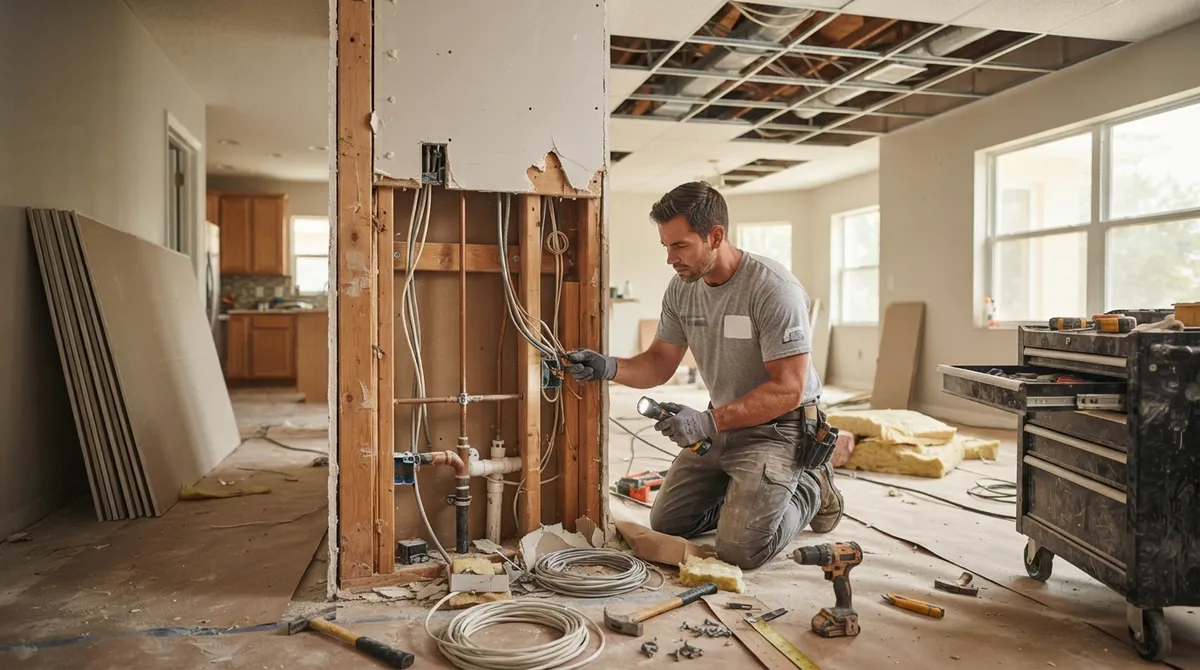
Interior work that changes structural components or affects regulated systems may require permits and inspections. Common examples include:
- Removing or relocating walls, especially load-bearing walls
- Adding or moving electrical circuits, panels, or outlets
- Relocating plumbing fixtures, drains, or supply lines
- Changing HVAC ductwork or installing new mechanical equipment
- Converting a garage, adding a bathroom, or creating a new bedroom
- Framing new openings for doors or windows
Work That May Not Need a Permit
Purely cosmetic work is often treated differently. Painting, replacing flooring, and swapping cabinet doors typically do not involve regulated systems. However, rules vary by jurisdiction, so never assume. A quick call to your local building department can save you real money later.
| Type of Interior Work | Permit Likely Needed? | Why It Matters |
|---|---|---|
| Painting and trim | Usually no | Cosmetic only |
| Replacing flooring | Usually no | No system changes |
| Moving or removing walls | Often yes | May affect structure |
| New or relocated electrical | Often yes | Fire and safety review |
| Moving plumbing | Often yes | Drainage and venting rules |
| HVAC changes | Often yes | Mechanical code compliance |
Always confirm with the local department. Our building department lookup tool can help you find the right office.
What Happens If You Remodel Without a Permit in Florida?
Let us be honest about the risks, but also keep perspective. Unpermitted work does not automatically mean disaster. It does mean you should address it thoughtfully rather than hope nobody notices.
Possible Consequences
Unpermitted work can lead to several outcomes, depending on how it is discovered and how your local jurisdiction handles it:
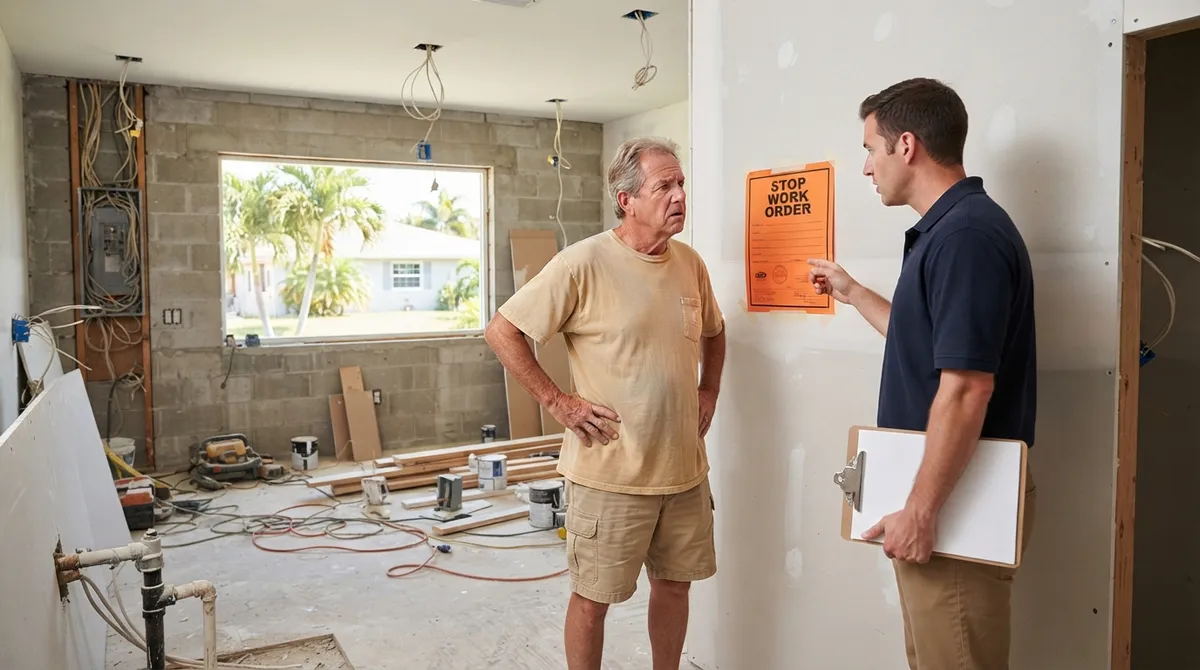
- Stop-work or code-enforcement action if a neighbor complaint or inspector visit flags the project.
- Required corrections or removal of work that does not meet the Florida Building Code.
- Additional permit and inspection costs to bring the work into compliance.
- Project delays while documents, inspections, and corrections are completed.
- Sale or financing complications when a buyer, lender, or appraiser spots the issue.
Fines and Liens Explained
Florida Statute §162.09 authorizes code-enforcement fines after the applicable enforcement procedures are followed. The general statutory limits include up to $250 per day for a first violation and up to $500 per day for a repeat violation. An irreparable or irreversible violation may carry a fine of up to $5,000. Other provisions and local procedures can affect the actual limits in your area.
Under §162.09, qualifying code-enforcement fines may also be recorded as liens against the property. That is why responding quickly to any notice matters so much. If you are unsure whether a lien exists, check public records and contact the relevant local authority. For a deeper look, see our guide on the penalty for building without a permit in Florida.
| Violation Type | General Fine Limit (§162.09) |
|---|---|
| First violation | Up to $250 per day |
| Repeat violation | Up to $500 per day |
| Irreparable or irreversible violation | Up to $5,000 |
These are general statutory limits. Local procedures and other statutory provisions may change what applies to your situation.
How Do You Fix an Unpermitted Interior Remodel in Florida?
Here is something many owners find surprising: Florida does not have one statewide, automatic "after-the-fact" permit process that guarantees approval. Each local building department decides what application, documentation, inspections, and corrective work it needs. That means your path depends on your city or county.
Still, most successful cases follow a similar rhythm. Think of it as a calm, step-by-step cleanup rather than a crisis.
A Practical Step-by-Step Approach
- Identify the permitting jurisdiction. This is not always obvious near city lines. The wrong office wastes weeks.
- Gather your records. Collect plans, contractor information, invoices, receipts, and photos taken before, during, and after the work.
- Check for open permits or past records. Our open permit search tool is a good starting point.
- Request written instructions from the building department. Ask what they require for work already completed.
- Prepare documentation. This may include as-built drawings, engineer letters, or plans for the existing conditions.
- Submit the application and respond to review comments. Reviewers may request revisions.
- Complete inspections and corrections. Close out the permit to finish the process.
If you want a closer look at the process, our article on how to legalize unpermitted work in Florida goes deeper, and our after-the-fact and expired permits page explains how we handle these files.
Will the Building Department Make Me Open Walls?
This is the question that makes most owners nervous, and it is a fair one. For concealed work, officials may require finishes or other construction to be opened so inspectors can verify compliance. The exact process depends on the jurisdiction and the project.
It does not always mean tearing out your whole kitchen. Sometimes a small inspection opening is enough. Other times, documentation from a licensed professional helps the reviewer feel confident without demolition.
Ways to Reduce Surprises
- Photos taken during construction are extremely valuable for concealed work.
- Invoices and material receipts help show what was installed.
- A Florida-licensed design professional can document existing conditions.
- An engineer letter may support structural questions about modified walls.
- A licensed contractor can complete corrections found during inspection.
Requirements vary by scope and locality, so ask your building department what they expect. If structural questions are involved, engineer letters and as-built drawings are often part of the solution.
Who Is Affected by Unpermitted Interior Work?
The impact looks a little different depending on who you are. Here is how it commonly plays out for different readers.
| Who You Are | Common Concern | Helpful First Step |
|---|---|---|
| Homeowner | Planning to sell or refinance | Research permit history and contact the building department |
| Real estate agent or investor | Unpermitted work found during due diligence | Order permit research before closing |
| General contractor | Inherited or incomplete project | Verify permit status and licensing requirements |
| Design or trade professional | Need documentation for existing work | Outsource drafting or engineering support |
Homeowners and Residential Property Owners
You may have bought a home where a prior owner did the remodel. That still becomes your responsibility once the deed transfers. Do not panic. Start by researching the permit history and talking to the building department about options.
Real Estate Professionals
Unpermitted work can delay or derail a closing. Appraisers, inspectors, lenders, and insurers may all raise questions. Early permit research helps you set expectations with buyers and sellers. Our realtor and closing support is built for exactly these situations.
Contractors and Design Professionals
If you are a general contractor, you know that unclear permit status can stall a job. Missing paperwork, vanished prior contractors, and unclear scope all create friction. Outsourcing drafting, engineering, and permit administration lets you keep projects moving without adding overhead. See how we support general contractors across Florida.
Can Unpermitted Remodeling Affect Selling or Insuring a Home?
It can. Buyers and their inspectors increasingly look for permit history. Lenders may ask questions, and insurers can raise concerns when work affects electrical, plumbing, or structural components. The exact impact depends on the situation, but surprises during a closing are stressful for everyone.
Resolving the issue before listing is usually smoother than scrambling mid-transaction. If a buyer has already flagged the problem, speed and clear communication matter. A permit hold or open permit found at closing can be resolved, but it takes coordination. Our article on an open permit found at closing explains what to expect.
When Should You Bring in Professional Help?
Some owners handle the research themselves, and that is perfectly reasonable. But bringing in help makes sense when:
- You are unsure which jurisdiction controls your property
- The building department has requested plans or engineering documents
- A closing deadline is approaching
- You received a code-enforcement notice
- The work involves structural changes or concealed systems
- You are managing multiple properties or projects
A good permitting partner can determine the right jurisdiction, prepare or review plans, file the application, track it, and work through reviewer comments. At 1 Contractor Solutions, our drafting and engineering are in house, and our own engineer signs and seals the work. That means when a reviewer flags something, we can fix it without waiting on an outside consultant.
If you have already received a notice, our code compliance violations service and our urgent permit rescue team are designed for exactly that moment. You can also see what customers say by reading 1 Contractor Solutions reviews on Google.
How to Avoid This Problem on Your Next Remodel
A little planning goes a long way. Before you start any interior project, follow these simple habits:
- Call the building department and describe your planned scope of work.
- Ask whether a permit is required and what documents they need.
- Verify that your contractor is properly licensed for the work.
- Confirm who is pulling the permit and get a copy for your records.
- Schedule and pass every required inspection.
- Keep your final approval documents in a safe place for future sales.
Be cautious if a contractor suggests skipping the permit to save time or money. The short-term savings can become a long-term cost. If you plan to act as your own builder, learn about owner-builder permits first.
Take the Next Step With Confidence
An unpermitted interior remodel in Florida is stressful, but it is a solvable problem. The key is to act early, gather your records, talk to the right building department, and prepare clear documentation. Every county and city handles things a little differently, so local guidance matters.
You do not have to figure it out alone. Whether you are a homeowner preparing to sell, an agent protecting a closing, or a contractor cleaning up an inherited job, we are happy to help. We work across all 67 Florida counties, respond quickly, and keep you updated every step of the way. When you are ready, get a free quote and let us help turn that unpermitted remodel into a fully documented, compliant one. You can also follow us on LinkedIn or follow us on Facebook for more Florida permitting tips. For the statute itself, you can read Florida Statute §553.79 on the Florida Senate website.
FAQs
Do I need a permit for an interior remodel in Florida?
Often, yes. Florida Statute §553.79 generally requires a permit before a building is altered, modified, or repaired, and interior work that changes structure, electrical, plumbing, or mechanical systems commonly qualifies. Purely cosmetic work may be treated differently, so a quick call to your local building department is always a smart first step.
Can I get an after-the-fact building permit in Florida?
Many jurisdictions offer a way to address work that is already complete, but Florida has no single statewide process that guarantees approval. Your local building department decides what applications, documents, inspections, and corrections are needed, so the path varies by city and county.
How much are fines for unpermitted construction in Florida?
Under Florida Statute §162.09, general code-enforcement limits are up to $250 per day for a first violation and $500 per day for a repeat violation. An irreparable or irreversible violation may carry a fine of up to $5,000, and local procedures can affect what applies to your case.
Will the building department make me open walls for an inspection?
Possibly. For concealed work, officials may ask that finishes be opened so inspectors can verify code compliance. Photos, invoices, and documentation from a licensed professional can sometimes reduce how much needs to be opened, but the process depends on your jurisdiction and project.
How do I find out whether a Florida remodel had permits?
Start by identifying the correct city or county building department, then search their permit records for the property address. Tools like an open permit search can help point you in the right direction, and the department can confirm what is on file in writing.
We do this work every day across all 67 Florida counties. Call (866) 314-6931 and we will tell you what your situation actually requires — including when you do not need us.
Related services
Permit Facilitation & Filing
You have a crew scheduled, a client asking for dates, and a permit sitting somewhere in a queue you cannot see. We file it, w…
See the servicePlan Review Coordination
A permit in plan review is not one queue. On a commercial project it can be six queues, each with its own reviewer, its own c…
See the serviceReady to get your permit moving?
One call tells you which jurisdiction controls your project, what it will take, and what it will cost. Most of the time we can scope it on the phone.