
Blog
Pool Permit Tampa FL: 2026 Guide to Getting Approved
Planning a pool in Tampa? Learn jurisdiction rules, the March 2026 application change, required plans, safety barriers, and how to avoid delays.
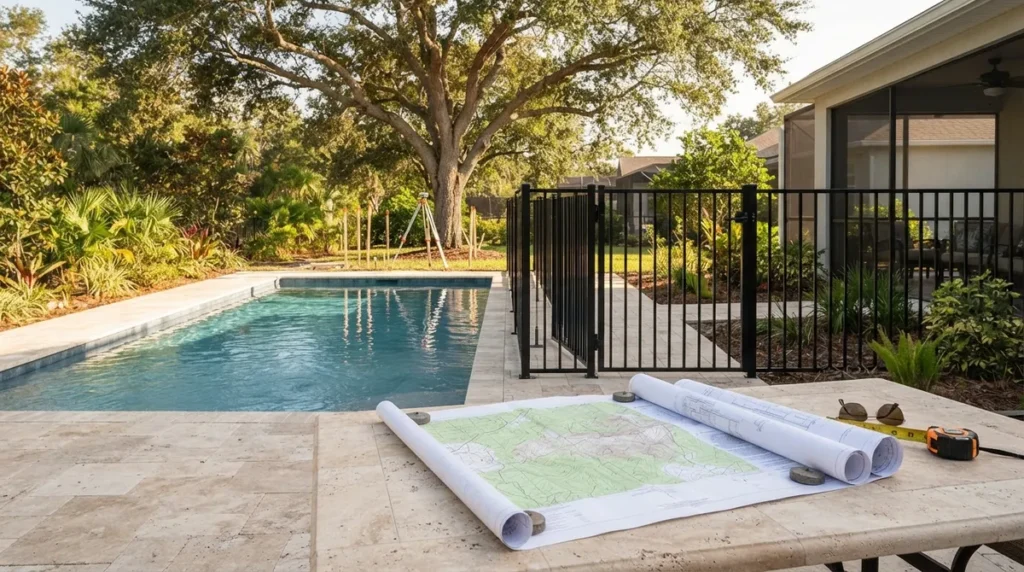
Key Takeaways
-
Tampa pool permits require the dedicated Pool Permit application, effective March 3, 2026; the old Miscellaneous application route can get your submission delayed or sent back.
-
A Tampa mailing address does not guarantee City of Tampa jurisdiction; confirm whether your property falls under City of Tampa, unincorporated Hillsborough County, or another city before applying.
-
A signed and sealed topographic survey by a Florida-licensed surveyor is required when the pool includes 1,000 sq ft or more of decking.
-
Protective distances apply to trees: at least 15 feet from specimen trees (24" DBH) and 20 feet from grand trees (32" DBH or larger), so check trees and easements before finalizing layout.
-
Pool safety barriers must be at least 4 feet high, and gates must open outward, self-close, self-latch, with releases on the pool side out of young children's reach under Florida Statute 515.29.
Dreaming of a backyard pool in Tampa? Honestly, who wouldn't be? With our summers, a pool is practically a second living room. But before the excavator rolls in and the fun begins, there's one very unglamorous step standing between you and that first cannonball: the permit.
Getting a pool permit in Tampa, FL isn't impossible, but it does have moving parts. You need the right agency, the right drawings, a survey in some cases, tree and easement checks, and a safety barrier plan that satisfies Florida law. And as of March 3, 2026, the City of Tampa changed how pool applications are submitted, which has tripped up more than a few folks this year.
The good news? Once you know the roadmap, the process gets a lot less intimidating. Whether you're a homeowner planning your first pool, a general contractor juggling several builds, or a realtor helping a buyer evaluate a property, this guide walks you through each step in plain English. Let's dive in (pun fully intended).
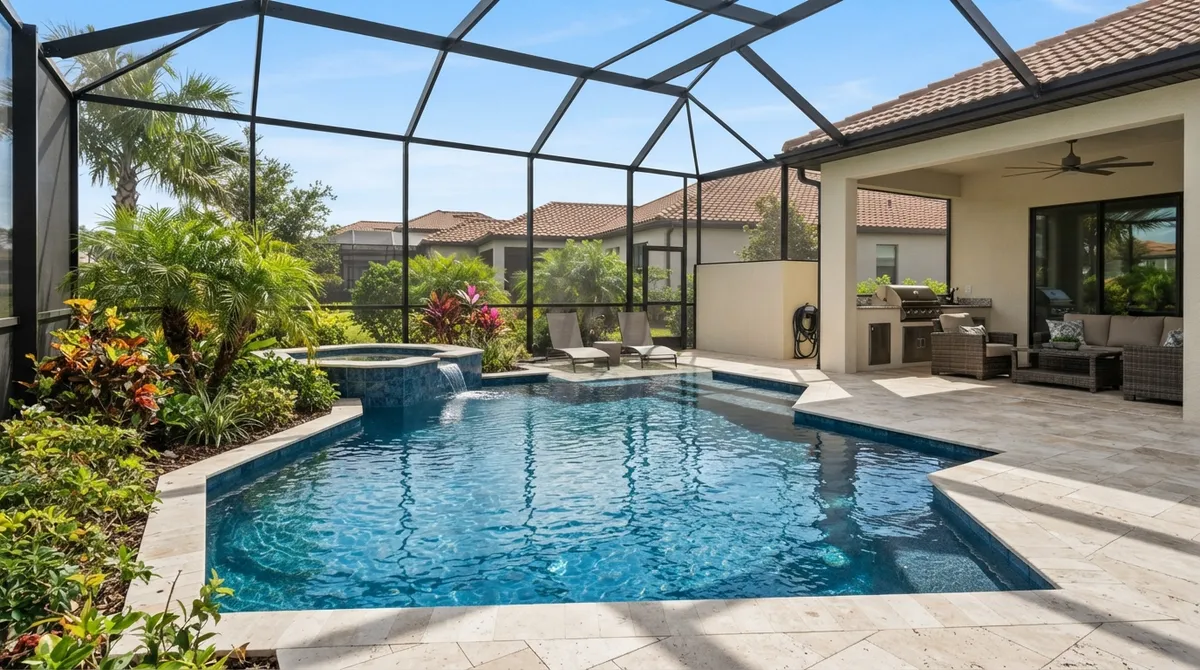
Do You Need a Pool Permit in Tampa, Florida?
Yes. Installing an in-ground swimming pool in Tampa requires a permit, along with plan review and inspections. This applies to new construction and generally to major pool work, too. Skipping the permit might feel like a shortcut, but it can create real headaches later, from stop work orders to closing delays when you sell.
If you've already built a pool without approval, take a breath. There are paths forward, and our guide on 8 Steps to Legalize After the Fact Pools in Florida (2026) explains how it works.

Step One: Confirm Who Actually Issues Your Permit
Here's a surprise that catches many people: a Tampa mailing address does not guarantee City of Tampa jurisdiction. Plenty of properties with a Tampa address actually sit in unincorporated Hillsborough County or inside another municipality, such as Temple Terrace.
Why does this matter? Because each authority has its own application, fees, and review process. Filing with the wrong one wastes weeks.
| If Your Property Is In... | Likely Permitting Authority | What to Do |
|---|---|---|
| City of Tampa limits | City of Tampa Construction Services | Use the City's Pool Permit application |
| Unincorporated Hillsborough County (Tampa mailing address) | Hillsborough County | Follow county pool permit procedures |
| Another municipality (for example, Temple Terrace) | That city's building department | Check that city's requirements |
Not sure which one applies? We help owners and contractors sort this out all the time. You can also explore our Tampa permitting services page for local details.
The March 2026 Change: Use the Pool Permit Application
This is the update to remember. Per the City of Tampa's residential in-ground pool guidance, effective March 3, 2026, pool projects must be submitted using the dedicated Pool Permit application rather than a Miscellaneous application.
If you or your contractor used the old route out of habit, your submission could get delayed or sent back. It's a small detail with a big impact on your timeline.
What You Need to Submit for a Tampa Pool Permit
Think of your application as telling the reviewer a clear story: where the pool goes, how it's built, and how it stays safe. Tampa's application guide calls for a thorough package.
Your Site Plan
The site plan is the heart of the submission. It should show:
- The pool's location and dimensions
- Property lines
- All structures on the property
- Power lines near the work area
- Elevations
- Trees near the work
- Public and private easements
A site plan that's missing even one of these items is a common reason for a correction notice. If you need help preparing one, our site plan drafting service handles exactly this.
Project-Specific Documents
Beyond the site plan, the City also looks for project-specific documentation, such as structural plans and plumbing information. Where required, building plans must be signed and sealed by a Florida-licensed architect or engineer. If you're wondering who stamps what, our article on who seals structural drawings for Florida permits breaks it down.
Elevations and the Topographic Survey
Tampa plan review may ask for existing and proposed site elevations on a 25-foot grid that extends 10 feet beyond adjacent property lines. And here's a threshold worth circling:
- If your proposed pool includes 1,000 square feet or more of decking, a signed and sealed topographic survey is required.
- Surveys must be signed and sealed by a Florida-licensed surveyor.
Requirements can vary with site conditions and project scope, so always confirm with the reviewing office.
Quick Reference: Tampa Pool Permit Documents
| Document | When It's Needed | Who Prepares It |
|---|---|---|
| Pool Permit application | All residential pool projects (effective March 3, 2026) | Owner, contractor, or permit facilitator |
| Site plan | All projects | Drafter, designer, or engineer |
| Structural plans | Typically required; sealed where required | Florida-licensed engineer or architect |
| Plumbing information | Project-specific | Pool contractor or engineer |
| Topographic survey | Pool includes 1,000+ sq ft of decking | Florida-licensed surveyor |
| Tree and arborist information | If work encroaches on protected trees | Certified arborist |
Trees and Easements: The Sneaky Delay Makers
Many Tampa lots have gorgeous mature trees, and the City takes them seriously. Plan review looks at protective distances around larger trees:
- At least 15 feet for specimen trees (24 inches DBH)
- At least 20 feet for grand trees (32 inches DBH or larger)
If your pool design encroaches into these zones, expect additional review or an arborist certification. Easements work similarly. A utility or drainage easement running through your backyard can restrict where the pool can sit.
The takeaway? Walk your yard before you finalize the layout. Moving a pool a few feet on paper is far easier than redesigning after a rejection.
Florida Pool Safety Barrier Rules
Safety isn't optional, and it's one of the main things inspectors look for. Under Florida's Residential Swimming Pool Safety Act (Florida Statutes §515.29), residential pools need a barrier designed to keep young children out. Key requirements include:
- A barrier at least 4 feet high
- A design that prevents a young child from crawling under, squeezing through, or climbing over
- Pool-access gates that open outward, self-close, and self-latch
- Gate release mechanisms placed on the pool side and out of a young child's reach
Approved barrier options and applicable Florida Building Code provisions should be confirmed with your permitting authority. If you're comparing options, you can review the state's guidance directly through the Florida Senate's Chapter 515 text.
Step-by-Step: How the Tampa Pool Permit Process Works
Here's the typical flow from idea to swim-ready:
- Verify jurisdiction. Confirm whether your property falls under the City of Tampa, Hillsborough County, or another city.
- Gather property information. Collect your survey, deed, and any HOA approvals.
- Prepare the site plan and engineering. Include all required site features, plus structural and plumbing documentation.
- Submit the Pool Permit application. Use the dedicated Pool Permit application for City of Tampa projects.
- Respond to review comments. Reviewers may request corrections. Answer them completely and promptly.
- Pay fees and receive the permit. Confirm current fees with the relevant office.
- Schedule inspections during construction. Inspections happen at key stages as the pool is built.
- Pass final inspection, including the barrier. Your safety barrier must be in place and compliant.
Got a denial or a stack of correction comments? Don't panic. Our article on who can rescue a denied building permit in Florida shows how these are typically resolved.
What Does a Tampa Pool Permit Cost?
Costs vary by project value and scope, so it's smart to verify the current City of Tampa fee schedule before budgeting. One detail worth knowing: the fee schedule references a Florida building permit surcharge of 2.5% of permit value, or a $4 minimum, and notes that it isn't included in the listed permit fees. Always confirm the current schedule and whether the surcharge applies before quoting a total.
Other costs to plan for include:
- Engineering and sealed drawings
- A topographic survey, when required
- Arborist certification, if trees are affected
- Revision or resubmittal time if the first package is incomplete
How Long Does Review Take?
Timelines depend on workload, completeness of your submission, and how quickly you answer comments. A clean, complete package moves faster than one that triggers back-and-forth. Delays almost always trace back to the same culprits:
- Wrong application type
- Missing site plan elements
- Unaddressed trees or easements
- Unsealed documents where seals are required
For more on keeping your documents review-ready, check out how to get permit-ready plans Florida officials approve.
Can You Use a Private Provider in Tampa?
Florida law allows private providers to perform plan review and inspections in many situations, which can speed things up when the building department is backed up. Whether it fits your pool project depends on the scope and the authority's procedures. We're a licensed private provider ourselves, so we can explain your options. Our post on how to use private provider plan review in Tampa is a helpful starting point.
Who This Guide Is For: Tailored Tips
Homeowners
Start with jurisdiction, then your site plan. Talk to your pool builder early about who handles the permit, and ask for a copy of everything submitted. Also check your HOA rules, since approvals there are separate from the city.
General Contractors and Pool Builders
Standardize your submission checklist around the March 2026 application change. Build tree and easement checks into your pre-design routine, and keep a sealed-document workflow ready so deck-heavy projects don't stall on a missing survey.
Realtors and Property Buyers
Evaluating a home with an existing pool? Ask for permit records and the final inspection. An unpermitted pool can complicate a sale, so see our guide on how to sell a Florida house with unpermitted additions.
Designers and Trade Professionals
If you're outsourcing drafting or engineering, define who seals what and when surveys are triggered. Clear handoffs keep reviewers happy and projects moving.
Common Mistakes That Slow Down Pool Permits
- Using the Miscellaneous application instead of the Pool Permit application
- Assuming a Tampa mailing address means City of Tampa jurisdiction
- Leaving easements or power lines off the site plan
- Ignoring tree protection distances
- Forgetting the topographic survey on large deck projects
- Overlooking gate self-closing and self-latching requirements
A little prep work upfront saves you from rounds of corrections later.
Let Us Handle the Paperwork
At 1 Contractor Solutions, we act as Florida's outsourced permitting department. Our in-house drafting and engineering team prepares site plans and sealed drawings, files your application, tracks it, and works every reviewer comment through approval, with same-day response. We'd love to hear how your project goes, and you can visit us on Google — 1 Contractor Solutions to see what customers say about working with us. For tips and updates, follow us on LinkedIn or follow us on Facebook, and for marketing help, Brain Buzz Marketing supports our digital presence.
Conclusion: Your Backyard Oasis Is Closer Than You Think
A pool permit in Tampa comes down to a few smart moves: confirm your jurisdiction, use the correct Pool Permit application, submit a complete site plan with the right engineering, respect trees and easements, and design a barrier that meets Florida's safety rules. Get those right, and the process becomes far more predictable.
You don't have to figure it all out alone. Ready to get your project moving? Get a free quote and let our team take the permit off your plate so you can focus on the fun part.
FAQs
Do I need a permit to install a swimming pool in Tampa, Florida?
Yes, you do! In-ground pool projects in Tampa require a permit, plan review, and inspections. Skipping it can lead to stop work orders and trouble when you sell, so it's always worth doing right the first time.
Which agency issues a pool permit for my Tampa-area property?
It depends on where your property actually sits. Properties inside City of Tampa limits go through City of Tampa Construction Services, while others may fall under Hillsborough County or another municipality even with a Tampa mailing address. Confirm your jurisdiction before you apply so you don't lose weeks.
What documents are required for a Tampa residential pool permit?
You'll need the Pool Permit application, a detailed site plan, and project-specific documents like structural plans and plumbing information. A signed and sealed topographic survey is also required when the pool includes 1,000 square feet or more of decking.
What are Florida's pool safety barrier requirements?
Residential pool barriers must be at least 4 feet high and designed so a young child can't crawl under, squeeze through, or climb over. Pool-access gates must open outward, self-close, and self-latch, with the release on the pool side and out of a young child's reach.
Can I use a private provider for pool plan review or inspections in Tampa?
Often, yes. Florida allows private providers to handle plan review and inspections in many cases, which can help when the building department is busy. Eligibility depends on your project and the authority's procedures, so check before you commit.
We do this work every day across all 67 Florida counties. Call (866) 314-6931 and we will tell you what your situation actually requires — including when you do not need us.
Related services
Permit Facilitation & Filing
You have a crew scheduled, a client asking for dates, and a permit sitting somewhere in a queue you cannot see. We file it, w…
See the servicePlan Review Coordination
A permit in plan review is not one queue. On a commercial project it can be six queues, each with its own reviewer, its own c…
See the serviceReady to get your permit moving?
One call tells you which jurisdiction controls your project, what it will take, and what it will cost. Most of the time we can scope it on the phone.