
Blog
Permit Rescue vs. Going Solo: Fixing a Miami Stop Work Order?
Stop-work order in Miami? Compare going solo with hiring a permit rescue service, plus what to check before you choose the right help.

Key Takeaways
-
Only the government building department or enforcement authority that issued a stop-work order can formally clear it; no private company can remove it, and continuing work risks additional penalties and legal consequences.
-
Before hiring any service, confirm the exact issuing agency (City of Miami, Miami-Dade County, or other municipality) and carefully read all deadlines on the notice, as appeal windows are short (often 10-20 days) and vary by jurisdiction.
-
A permit rescue service cannot guarantee approval or waive code requirements, but can coordinate licensed professionals, prepare applications with plans and engineering, manage revisions, and arrange inspections—significantly reducing rejection risk and timeline delays.
-
Resolution typically requires obtaining permits, as-built drawings, engineer letters, inspection documentation, and corrective work; clean, complete submittals move faster through review than incomplete packets that bounce back multiple times.
-
Hiring professional help pays off when cases are complex, deadlines are tight, or crews and closings are waiting, since the service handles legwork and coordination while you avoid costly delays from learning the process yourself.
-
Your first moves are critical: stop work immediately, photograph the notice and site, identify the issuing agency, note every deadline, gather all permits and plans, and get a written list of requirements from the department before spending money on corrections.
Few things stop a project cold like a bright notice taped to your job site. One minute your crew is framing, the next everyone is standing around, the schedule is slipping, and you are asking yourself a very reasonable question: now what?
If you are weighing your options, you are in good company. Contractors, solar installers, investors, and homeowners all land in this spot, and most of them face the same fork in the road. You can try to work through the city or county process yourself, or you can bring in help. Finding the best permit rescue service for stop work orders in Miami comes down to understanding what each path really involves.
In this friendly guide, we compare the do-it-yourself route with hiring a permit rescue team. We cover what a stop-work order actually is, who has the power to clear it, what a rescue service can and cannot do, and how to choose a provider you can trust. Think of it as a calm, practical conversation over coffee, because a stop-work order is stressful enough already.
What a Stop-Work Order Really Is (and Who Can Clear It)
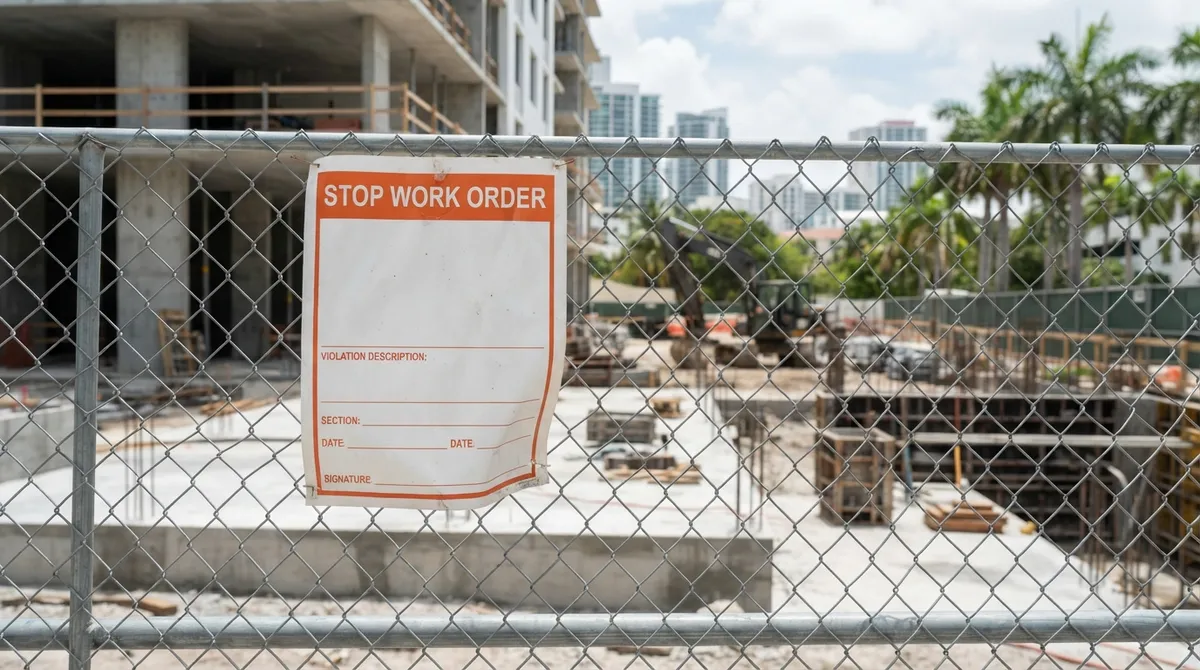
Let's start with the most important fact, because it saves people a lot of heartache. A stop-work order is an enforcement action. It is not a permit, and no private company can remove it. Only the government authority that issued it can formally clear it.
That means work should stay stopped until the building department or enforcement office confirms the order is lifted. Continuing to work can bring additional penalties and real safety risks. It is never worth it.
The next question is who issued the order. In the Miami area, that depends on where the property sits:
- City of Miami: The City has its own Building Department and digital permitting systems. Its inspectors may issue stop-work orders for ongoing construction.
- Miami-Dade County: The County enforces building-code matters in unincorporated areas. It lists work without permits, expired permits, and unsafe structures among common enforcement matters.
- Other municipalities: Many cities inside the county run their own departments and processes.
Before you hire anyone, confirm the property address and the issuing agency printed on the notice. You can start with our building department lookup tool to see which office controls your address. This sounds basic, but near city lines it is not always obvious.

Option One: Going Solo
Handling a stop-work order yourself is possible, and some people do it successfully. If you are a contractor with strong relationships at the department, or the issue is simple, you may be able to work through it directly. Here is what that path typically involves.
- Read the notice carefully. Note the issuing agency, the violation cited, the deadlines, and any appeal window.
- Keep all work stopped. Secure the site and protect the property from weather and safety hazards.
- Gather your records. Pull permits, approved plans, inspection records, contracts, and photos.
- Contact the issuing office. Ask what is required to resolve the order and get the answer in writing.
- Prepare and submit the fix. This may mean applications, revised plans, engineering documents, or an after-the-fact permit.
- Respond to review comments and schedule inspections.
- Wait for written confirmation that the order is cleared.
The upside of going solo is cost and control. The downside is time and risk. Each step has a learning curve, and mistakes tend to cause rejections, resubmittals, and weeks of delay while your crew sits idle.
Option Two: Hiring a Permit Rescue Service
A permit rescue or expediting firm handles the administrative and technical coordination so you are not figuring it out alone. Think of it as an outsourced permitting department that steps in when things get urgent.
A capable team can typically help you:
- Confirm the issuing agency and the exact notice requirements
- Organize records and build a clear compliance plan
- Coordinate licensed design professionals and engineers
- Prepare and submit applications and plan sets
- Manage plan-review comments and revisions
- Arrange inspections and track everything to closeout
Just as important is what a rescue service cannot do. It cannot guarantee approval, waive code requirements, or clear the order on its own authority. It also does not replace a contractor, engineer, architect, or attorney where those professionals are required. If anyone promises a guaranteed approval or a guaranteed clearance date, treat that claim with caution. Government review and correction work are outside any expeditor's control.
Our urgent permit rescue service is built for exactly this situation, covering denials, stop-work orders, and closings held up by permit problems.
Side-by-Side: DIY vs. Permit Rescue
Here is a quick comparison to help you see the tradeoffs at a glance.
| Factor | Going Solo | Permit Rescue Service |
|---|---|---|
| Upfront cost | Lower out-of-pocket | Professional fees apply |
| Time commitment | High, often many hours per week | Low, the team does the legwork |
| Jurisdiction knowledge | Learn as you go | Experience with local processes |
| Plans and engineering | You hire and coordinate separately | Can be handled in house |
| Risk of rejections | Higher for first-timers | Lower with experienced preparation |
| Approval guarantee | None | None (be wary of anyone who claims one) |
| Best for | Simple issues, experienced pros | Complex cases, tight deadlines |
Neither option comes with a guarantee, and that is okay. What changes is how smoothly you move through a process that is already full of moving parts.
What Resolving a Stop-Work Order Usually Requires
Every case is different, but resolution often involves a few common ingredients. Miami-Dade County notes that fixing a violation may require obtaining permits, completing compliant work, scheduling inspections, and correcting unsafe conditions. Enforcement can escalate to notices, citations, fines, liens, or legal proceedings if things are ignored.
If the work was done without a permit, the authority may require an after-the-fact permit with supporting plans or inspections. The exact requirements depend on the scope of work, the applicable code, the property conditions, and the issuing jurisdiction. Filing an application alone does not clear the order. You need the department to confirm it in writing.
Documents that commonly come into play include:
- The stop-work notice itself
- Existing permits and approved drawings
- As-built drawings of what was actually constructed
- Engineer letters or sealed structural and MEP documents
- Contractor license and registration information
- Inspection history and photos of the work
This is where having engineering and drafting under one roof pays off. When a reviewer flags an issue, the fix does not stall while you wait for an outside consultant to call back. Our after-the-fact and expired permit services and code compliance violation support are designed for this kind of cleanup.
How Long Does It Take?
Everybody asks this one, and the honest answer is: it depends. Miami-Dade County says resolution timelines vary by violation complexity and required permitting. Some cases may take a few weeks, while others take longer.
A few things drive the timeline:
- How complex the violation is and how much work needs documenting
- Whether engineered drawings or inspections are required
- How quickly the department reviews submittals
- How many rounds of comments and revisions come back
Speed also depends on preparation. Clean, complete submittals tend to move faster than packets that bounce back with missing items. If you are curious about general timing, our guide on how long a building permit takes in Florida gives helpful context.
Do Not Miss Your Appeal Window
One detail catches people off guard: deadlines. Appeal windows are short, and they vary by notice type. For example, Miami-Dade Clerk guidance says appeals of certain uniform civil violations and continuing-penalty assessments generally must be filed within 20 days. The City of Miami's Unsafe Structures page says certain listed violations may be appealed within 10 days of the violation date.
Those are specific processes, not universal rules for every stop-work order. The deadline that matters is the one printed on your notice. Read it the day you receive it, and verify the applicable procedure with the issuing agency. If a deadline is close, that alone can be a good reason to get professional help quickly.
How to Choose the Best Permit Rescue Service in Miami
Now for the heart of the matter. Not every provider is the right fit for every case, so here is what to compare. A little homework up front goes a long way.
| What to Check | Why It Matters |
|---|---|
| Experience with your jurisdiction | City of Miami, Miami-Dade County, and other municipalities each have their own processes |
| Experience with your violation type | Stop-work, expired permit, and unpermitted work cases are handled differently |
| Written scope and fees | Clear pricing prevents surprises mid-project |
| In-house drafting and engineering | Faster fixes when reviewers ask for changes |
| Communication practices | Fast, regular updates keep you informed and your crew scheduled |
| Licensing and references | Verify professional licensing where applicable and ask for references |
Beyond that table, listen for what a provider does not promise. Honest firms explain that the department decides, not them. They talk about process, documentation, and realistic timelines instead of guarantees.
That is the approach we take at 1 Contractor Solutions. We are Florida's outsourced permitting department, serving all 67 counties, with drafting and engineering in house and our own engineer signing and sealing the work. We are not a construction contractor. We are the team contractors call when the permit is the thing standing between them and a scheduled crew. You can see what customers say by checking out our Google profile for 1 Contractor Solutions, or read more on our reviews page.
Who Benefits Most From Hiring Help?
Different readers have different needs, so here is how the decision tends to shake out.
- General contractors: Every day of delay costs crew time and client trust. A rescue team keeps filings, revisions, and tracking moving while you stay on site. See our page for general contractors.
- Solar companies: Code-compliant structural and electrical documentation matters, and so does speed. Learn more for solar contractors.
- Realtors and investors: A stop-work order or open violation can derail a closing. Our realtor and closing support helps clear the path.
- Homeowners: You should not need to become a permitting expert overnight. We explain each step plainly. Visit our homeowner page.
- Design trade professionals: If you already have your own engineer, our drafting-only service draws the permit set and stops there. Your seal, your project, your client.
Your First Moves After a Stop-Work Order
Whether you go solo or call in help, the first steps are the same. Here is a simple checklist.
- Stop all work immediately. Do not try to quietly finish just one more task.
- Photograph the notice and the site. Keep a clear record of conditions.
- Identify the issuing agency. Confirm whether it is the City of Miami, Miami-Dade County, or another municipality.
- Note every deadline. Mark any appeal window on your calendar today.
- Gather your documents. Permits, plans, contracts, and inspection records all help.
- Get a written compliance plan. Know exactly what the department requires before spending money.
If you want a head start, our open permit search tool can help you see where a property stands. Our local Miami permitting page and Miami-Dade County page also outline what to expect in your area. For a closely related walkthrough, see stop-work order after-the-fact help in Florida.
Official Resources Worth Bookmarking
It never hurts to go straight to the source. The Miami-Dade County Building Code Enforcement page explains common enforcement matters and the resolution process. For work inside city limits, the City of Miami Building Department is the place to start. Reading these pages alongside your notice helps you ask smarter questions of whoever you hire. And if you like staying connected, you can follow us on LinkedIn for Florida permitting updates.
So, Which Path Wins?
If your issue is simple and you have time, going solo can work. If your case is complex, your deadline is tight, or a crew and a closing are waiting on the outcome, a permit rescue service usually pays for itself in saved time and fewer rejected submittals.
Either way, remember the golden rules. Keep work stopped, confirm the issuing agency, watch your deadlines, and be skeptical of guarantees. The right partner explains the process honestly and then does the heavy lifting.
We would love to help you get moving again. When you are ready, get a free quote and tell us your address and what is going on. We answer 24/7, respond within 30 minutes day or night, and se habla español. Permits approved. Projects moving.
FAQs
Can a permit rescue service remove a stop-work order in Miami?
Not on its own, and that's an important thing to know. Only the building department or enforcement authority that issued the order can formally clear it. A good permit rescue team prepares the paperwork, plans, and inspections that help you earn that clearance.
What should I do first after getting a stop-work order in Miami-Dade?
Stop all work right away and keep the site safe. Then confirm which agency issued the notice, mark every deadline, gather your permits and plans, and ask the issuing office for a written list of what's required to resolve it.
How long does it take to resolve a stop-work order in Miami?
It really depends on the case. Miami-Dade County says some violations resolve in a few weeks while more complex ones take longer, depending on required permitting, engineering, and review times. Complete, well-prepared submittals usually move faster.
How do I get an after-the-fact permit for unpermitted work in Miami?
The authority may require an application with supporting plans, as-built documentation, engineering, and inspections, depending on the scope and applicable code. Requirements vary by jurisdiction, and filing alone doesn't clear the order, so confirm the exact steps with the issuing department.
What happens if I keep working after a stop-work order is issued?
Continuing work can trigger additional penalties and create real safety risks. Enforcement can escalate to citations, fines, liens, or legal proceedings, so it's always best to pause and resolve the order first.
We do this work every day across all 67 Florida counties. Call (866) 314-6931 and we will tell you what your situation actually requires — including when you do not need us.
Related services
Permit Facilitation & Filing
You have a crew scheduled, a client asking for dates, and a permit sitting somewhere in a queue you cannot see. We file it, w…
See the servicePlan Review Coordination
A permit in plan review is not one queue. On a commercial project it can be six queues, each with its own reviewer, its own c…
See the serviceReady to get your permit moving?
One call tells you which jurisdiction controls your project, what it will take, and what it will cost. Most of the time we can scope it on the phone.