
Blog
How to Handle an After-the-Fact Permit in Florida
Learn what an after the fact building permit means in Florida, how the review process works, typical fees, and how to legalize unpermitted work.
Key Takeaways
-
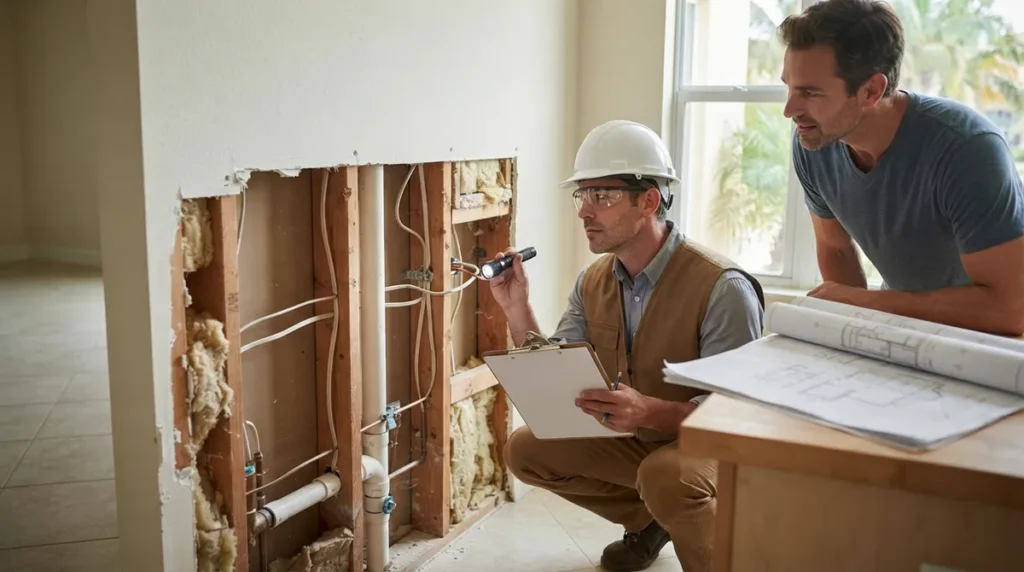
After-the-fact permits are not automatic approval — the building department must review plans, inspect work, and confirm code compliance, sometimes requiring walls or ceilings to be opened to verify concealed construction.
-
Rules and fees vary significantly by jurisdiction; some counties like Seminole and St. Lucie charge double the standard permit fee as a penalty, so always confirm with your specific local building department before assuming costs or timelines.
-
Ignoring unpermitted work creates serious problems at the worst times — violations, liens, and fines can resurface during sales, refinances, insurance claims, or inspections, making proactive resolution far cheaper than waiting.
-
Being upfront and disclosing work accurately when submitting an after-the-fact application actually speeds up the process, while surprises discovered during review tend to delay everything significantly.
-
Licensed contractors or credentialed professionals are often required to sign off on after-the-fact permits, especially for structural, electrical, or plumbing systems under Florida Statutes §489.127.
-
Unpermitted work cannot be automatically grandfathered in just because time has passed — each situation is evaluated individually by the enforcing agency, which decides what documentation, inspections, or corrections are needed.
So here's a situation we hear about almost every single day: someone bought a house with a screened patio nobody permitted, or a contractor's crew got a little ahead of the paperwork on a kitchen remodel, and now everyone is scrambling. Sound familiar? You're definitely not alone, and honestly, this happens far more often than you'd think across every corner of the Sunshine State. That's exactly why understanding what is an after the fact building permit matters so much, whether you're a general contractor closing out a job, a solar installer racing to hit an interconnection deadline, a realtor trying to save a closing, or a homeowner who just found out grandma's old sunroom was never officially approved.
The good news? This is fixable in almost every case, and we're going to walk through exactly how it works, what it costs, and what you can expect along the way. Grab a coffee, and let's make sense of this together.
What Is an After the Fact Building Permit in Florida?
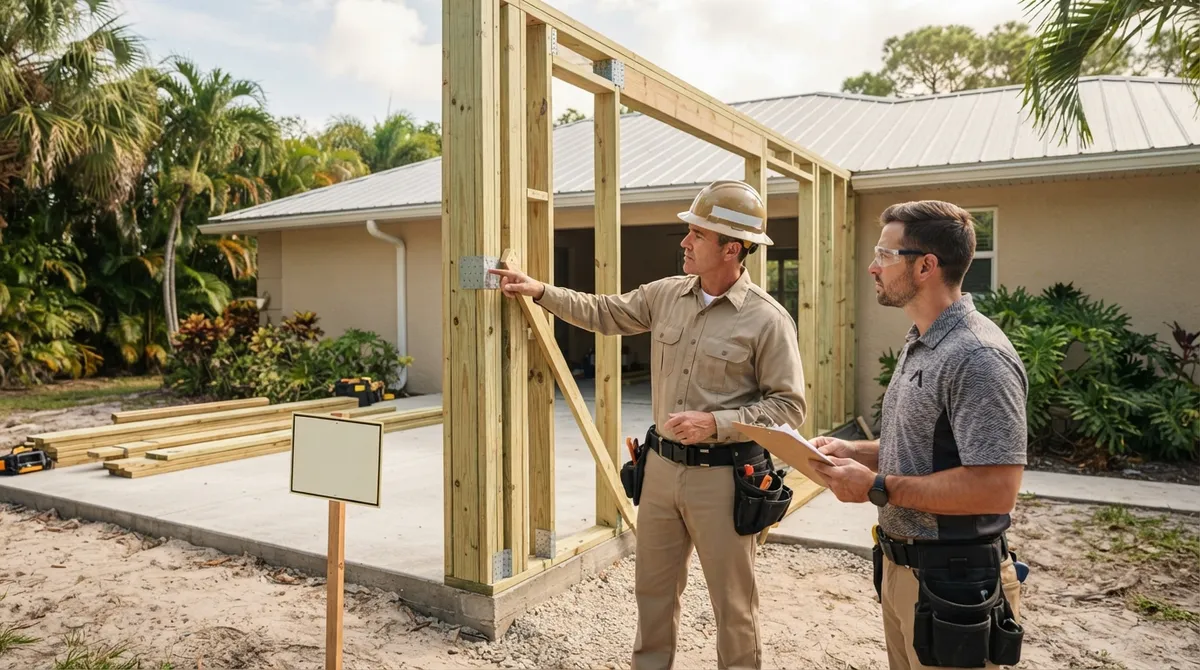
An after-the-fact building permit is simply a permit application you file after construction, alteration, repair, or demolition has already started or finished — without the permit that should have come first. Think of it as asking the local building department, "Hey, I know this should have happened in a different order, but can you please come review what's already built?"
Here's the part that surprises people: this isn't automatic amnesty. Submitting the paperwork doesn't magically legalize anything. The enforcing agency still has to review plans, inspect the work, and confirm everything meets code — sometimes even requiring you to open up walls or ceilings so they can see what's hiding behind the finishes. Under Florida Statutes §553.79, a permit is generally required before covered work begins, and the local city or county enforcing agency is the one that decides how the after-the-fact process runs in your area.
Why Jurisdiction Matters So Much
One of the biggest "aha" moments for our clients is realizing that the rules genuinely change depending on where the property sits. A process that works smoothly in Pinellas County might look completely different in Miami Dade County or Broward County. Some counties near city boundaries add another wrinkle, since you might assume you're in one jurisdiction when you're actually governed by another. That's why we always recommend confirming with the correct enforcing agency before assuming anything about fees, timelines, or required documents.
How After-the-Fact Permits Differ From Standard Permits
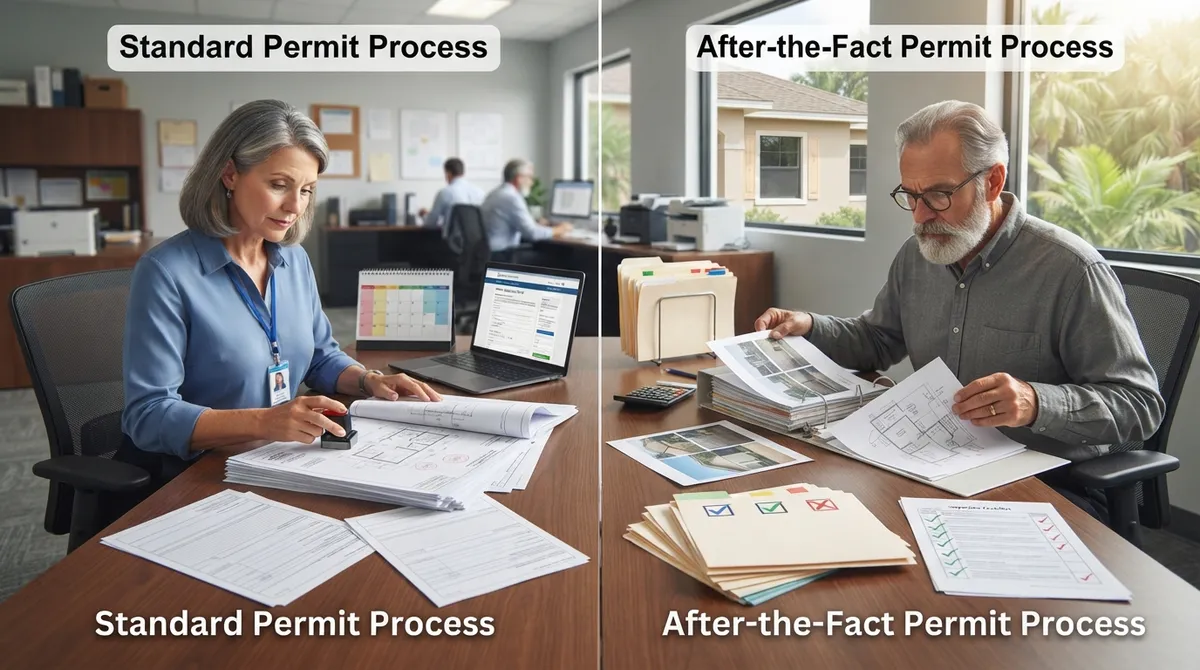
Let's break this down side by side, because seeing it laid out really helps.
| Aspect | Standard Permit | After-the-Fact Permit |
|---|---|---|
| Timing | Filed before work begins | Filed after work has started or finished |
| Fees | Standard permit fee | Standard fee plus a penalty, often double in some counties |
| Inspections | Scheduled at each construction stage | May require opening walls or ceilings to verify concealed work |
| Documentation | Plans submitted before construction | Plans, plus possibly engineering analysis or as-built drawings |
| Outcome | Approval typically follows normal review | Approval, correction orders, or removal, depending on findings |
Notice that last row. Unlike a routine permit, an after-the-fact application can end with the department requiring corrections, additional engineering, or in rare cases, removal of the work entirely. That's not meant to scare you — it's meant to set realistic expectations so you can plan accordingly.
Common Reasons Property Owners End Up Needing One
You'd be amazed how many perfectly reasonable people end up in this spot. Here are the situations we see constantly:
- A previous owner did renovations years ago and never told anyone, let alone pulled a permit
- A contractor started work assuming a permit was "in process" when it wasn't actually filed
- A homeowner did a small addition themselves, not realizing it needed a permit
- A solar installation moved forward before the interconnection and permitting paperwork caught up
- An inspector or code enforcement officer discovered unpermitted work during an unrelated visit
- A real estate transaction uncovered open or missing permits during a title search
If any of these sound like your situation, take a breath. This is genuinely one of the most common calls we get, and there's almost always a path forward.
Step-by-Step: How the After-the-Fact Process Typically Works
- Contact the enforcing agency. Reach out to the building department for the jurisdiction where the property sits and explain what was built and when.
- Disclose the work accurately. Being upfront actually helps move things faster — surprises later tend to slow everything down.
- Submit plans and supporting documents. This might include drawings, product approvals, contractor information, or engineering documentation depending on the scope.
- Schedule inspections. The department will look at what's visible and may ask for exposure of concealed elements like framing, wiring, or plumbing connections.
- Address any findings. If something doesn't meet code, you may need corrections, third-party engineering analysis, or in some cases removal of noncompliant elements.
- Pay applicable fees and penalties. Local after-the-fact fees vary — some counties charge double the standard permit fee.
- Receive final approval. Once everything checks out, the permit closes and the work is officially on record.
Every one of these steps can hit friction points, which is exactly where a permitting team earns its keep — coordinating plan review, managing revisions, and keeping the whole file moving instead of sitting in a queue.
What Fees and Penalties Look Like
We wish we could give you one flat number, but honestly, it depends entirely on your county. Here's a general snapshot based on published local guidance:
| County | Typical After-the-Fact Fee Structure | Additional Notes |
|---|---|---|
| Seminole County | Penalty of double the standard permit fee | May require third-party engineering analysis for concealed work |
| St. Lucie County | Double the regular permit fee | Concealed construction may need engineering verification |
| Other counties | Varies widely | Always confirm directly with the local building department |
On top of the base penalty, you might also see charges for additional inspections, engineering reports, or corrections — so it's smart to budget some flexibility into your plan rather than assuming a single fixed cost.
What Happens If You Ignore Unpermitted Work
We get it — dealing with this stuff isn't fun, and it's tempting to hope it just goes away. It won't, unfortunately. Miami-Dade County, for example, lists notices of violation, citations, fines, and liens as possible enforcement tools for unpermitted construction. Left unresolved, these issues tend to resurface at the worst possible moment: during a sale, a refinance, an insurance claim, or a routine inspection.
The smarter move is tackling it proactively. If you've discovered an open permit found at closing or you're staring down penalties for building without a permit in Florida, addressing it early almost always costs less time, money, and stress than waiting.
Will They Really Make You Open Up the Walls?
Sometimes, yes. If an inspector can't visually confirm that framing, electrical, plumbing, or structural connections meet code, they may require finishes to be removed so the work underneath is visible. It sounds intimidating, but it's really just the department's way of verifying safety when there's no earlier inspection record to rely on. In some cases, a licensed engineer can perform an analysis or provide documentation that satisfies the department without full demolition of finishes — which is where engineer letters and structural evaluations become incredibly valuable.
Can Unpermitted Work Just Be Grandfathered In?
This is one of the most common hopeful questions we hear, and unfortunately the honest answer is: not automatically. Florida's enforcing agencies don't have a blanket policy that lets older unpermitted work slide just because time has passed. Every situation gets evaluated individually, and the agency decides what documentation, inspections, or corrections are needed before signing off.
Do You Need a Licensed Contractor to Get One?
Requirements vary by scope and jurisdiction, but many after-the-fact applications do call for a licensed, registered contractor or an appropriately credentialed professional to sign off on the work — especially for structural, electrical, or plumbing systems. Florida Statutes §489.127 addresses unlicensed contracting activity, which is part of why proper registration and documentation matter so much in this process.
Why Working With a Permitting Specialist Makes This Easier
Here's the honest truth: after-the-fact permits are one of the trickier corners of Florida construction compliance, mostly because every jurisdiction handles them a little differently. That's exactly the kind of complexity 1 Contractor Solutions was built to handle. Our team works with after-the-fact and expired permits across all 67 counties, coordinating everything from plan review to sealed engineering drawings produced in house.
Whether you're a general contractor managing multiple open files, a solar company racing against installation deadlines, a realtor trying to protect a closing timeline, or a homeowner who just wants this handled correctly the first time, having someone who knows the local building department's expectations saves enormous amounts of back-and-forth. We also help with plan review coordination, revisions and resubmittals, and certificate of occupancy requirements that often tie directly into these cases.
A Quick Checklist Before You Start
- Confirm the correct enforcing agency for the property's exact location
- Gather any existing plans, permits, or renovation records you have
- Take photos of visible construction before any inspection
- Ask about required documentation for concealed work
- Budget for potential engineering analysis or correction costs
- Consider hiring a permitting professional if the project involves structural, electrical, or plumbing systems
For readers in specific regions, resources like our Hillsborough County and Manatee County pages break down local nuances even further, and our building department lookup tool helps you quickly confirm exactly who has jurisdiction over your property.
Bringing It All Together
Learning what is an after the fact building permit doesn't have to feel overwhelming, even though the process involves real scrutiny, real fees, and sometimes real corrections. The key takeaway is this: it's a review process, not automatic approval, and every county runs it a little differently. Being proactive, gathering documentation early, and disclosing the full scope of work honestly puts you in the best possible position for a smooth outcome.
If you're navigating this right now — whether it's a single-family home, a commercial property, or a solar installation waiting on final approval — you don't have to figure it out alone. Our team has spent 15+ years managing exactly these situations across Florida, and we'd genuinely love to help you get this resolved. Feel free to get a free quote and let's talk through your specific property and timeline.
Curious what real clients say about working with us? You can visit us on Google — 1 Contractor Solutions to read reviews from contractors, homeowners, and solar companies we've helped across the state. You can also follow us on LinkedIn or follow us on Facebook for ongoing updates on Florida permitting changes and helpful tips for property owners just like you.
FAQs
What does an after-the-fact building permit mean in Florida?
It's a permit application you submit after construction has already started or finished without the required permit. It gives the local building department a chance to review the work, but it doesn't automatically mean approval — that only happens once inspections and documentation confirm everything meets code.
Can I get a permit after construction is already complete in Florida?
Yes, you absolutely can, and this happens all the time. The building department will still need to review the work, which might include inspections, engineering analysis, or opening up finishes to check concealed construction like wiring or plumbing.
How much does an after-the-fact building permit cost in Florida?
Costs vary quite a bit by county — some, like Seminole and St. Lucie, charge double the standard permit fee as a penalty. On top of that, you might see additional costs for engineering reports, corrections, or extra inspections, so it's smart to build in some flexibility.
Will an inspector make me open walls for an after-the-fact permit?
It's possible, especially if the inspector can't otherwise verify that framing, electrical, or plumbing work meets code. Sometimes a licensed engineer can provide documentation or analysis that satisfies the requirement without full removal of finishes, which can save time and hassle.
Do I need a licensed contractor to obtain an after-the-fact permit in Florida?
In many cases, yes, particularly for structural, electrical, or plumbing work, since Florida law regulates who can perform and sign off on this type of construction. Working with a properly licensed professional or a permitting specialist helps make sure everything is documented correctly from the start.
We do this work every day across all 67 Florida counties. Call (866) 314-6931 and we will tell you what your situation actually requires — including when you do not need us.
Related services
Permit Facilitation & Filing
You have a crew scheduled, a client asking for dates, and a permit sitting somewhere in a queue you cannot see. We file it, w…
See the servicePlan Review Coordination
A permit in plan review is not one queue. On a commercial project it can be six queues, each with its own reviewer, its own c…
See the serviceReady to get your permit moving?
One call tells you which jurisdiction controls your project, what it will take, and what it will cost. Most of the time we can scope it on the phone.