
Blog
How to Get an After-the-Fact Roofing Permit in Florida
Roof done without a permit? Learn how after the fact roofing in Florida works, what documents you need, and how to get approved.
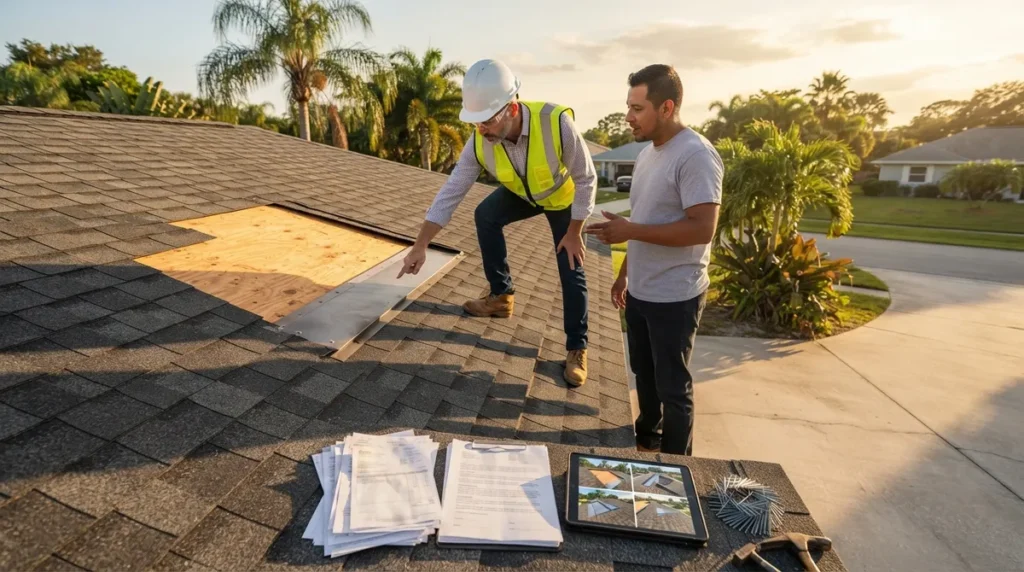
Key Takeaways
-
Getting an after-the-fact roofing permit doesn't guarantee compliance; it opens verification, and the building official still decides whether the roof meets the Florida Building Code.
-
There is no statewide fee schedule or form for after-the-fact roofing permits in Florida, so call your city or county building department first to confirm jurisdiction and requirements.
-
Gather photos taken during the work, contracts, material receipts, product approvals (Florida Product Approval or Miami-Dade NOA), and manufacturer installation instructions before applying.
-
Concealed components like decking, underlayment, and flashing may be verified through photos, affidavits, testing, or selective removal, so good upfront documentation can reduce invasive inspections.
-
Don't treat the 25-percent rule as a permit exemption; local guidance varies, and even small repairs may require a permit depending on jurisdiction and current code.
-
Acting early matters: delays make records harder to find, and open code-enforcement cases can add fees and complications, especially during real estate closings.
Here's a situation we hear about all the time: a homeowner buys a house, a roofer finishes a quick reroof, or a storm-repair crew wraps up in two days, and then someone says the words nobody wants to hear. "Wait, was this permitted?" If that's you, take a breath. You're in good company, and there's a clear path forward.
After the fact roofing in Florida simply means applying for a roofing permit after the work has already started or been finished. It's a real process, handled locally by your building department, and it's fixable far more often than people fear. The catch is that there's no single statewide form or fee schedule. Every city and county sets its own rules.
In this guide, we'll walk you through what an after-the-fact roofing permit really is, what the building department will likely ask for, how concealed work gets verified, and how to avoid the mistakes that slow things down. Whether you're a homeowner, a contractor, a real estate agent, or a solar company with a roof in the middle of your project, you'll leave with a practical plan.
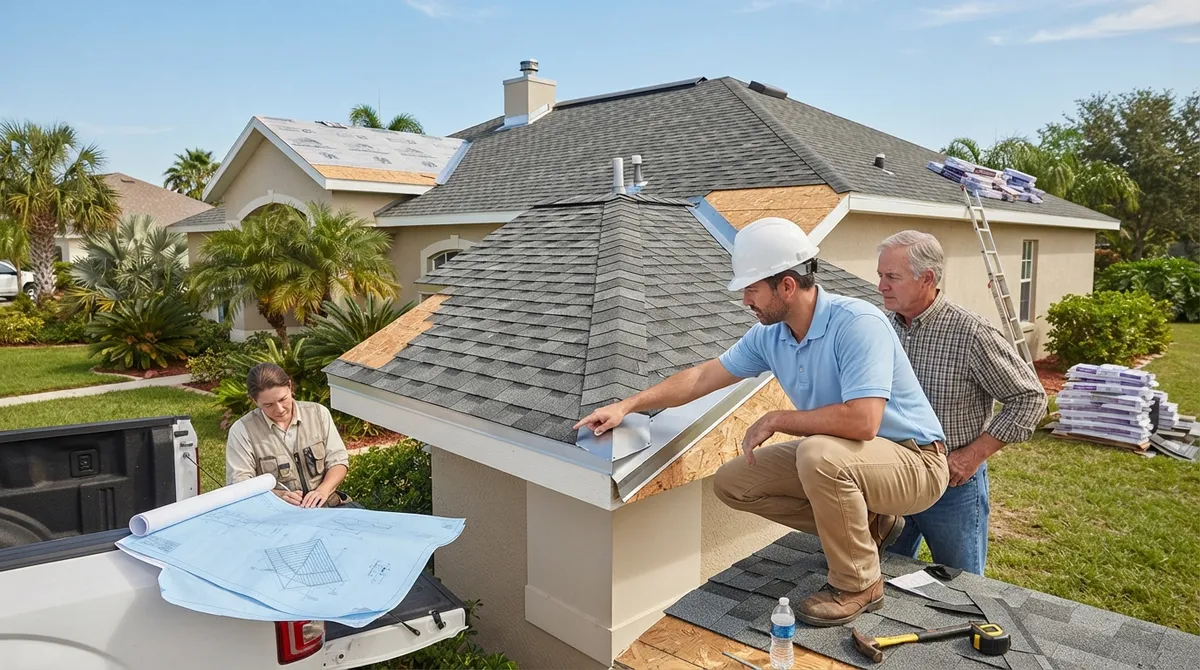
What After the Fact Roofing in Florida Actually Means
An after-the-fact (ATF) roofing permit is an application filed with the local enforcing agency once roof work has begun or been completed without the required permit. Under Florida Statute §553.79, local agencies can require an application and supporting documents to determine whether the unpermitted work complies with the Florida Building Code.
Here's the part that surprises people: getting a permit after the work is done does not automatically make the work compliant. It also doesn't automatically wipe out enforcement consequences. The permit opens the door to verification. The building official still decides whether the roof meets code.
That's why the first move is never to assume that a contractor's paperwork, a prior inspection, or a later permit settles everything. Contact the building department for your property's address and find out how they handle it.
Why Roofs Are a Special Case
Roofs are tricky because so much of the important stuff gets covered up. The deck, fasteners, underlayment, and flashing are hidden once shingles, tile, or metal go on. An inspector can't just walk up and eyeball compliance the way they might with a visible framing issue.
That's why roofing ATF permits often involve extra documentation, photos, or even selective removal of materials. We'll cover that in detail below.
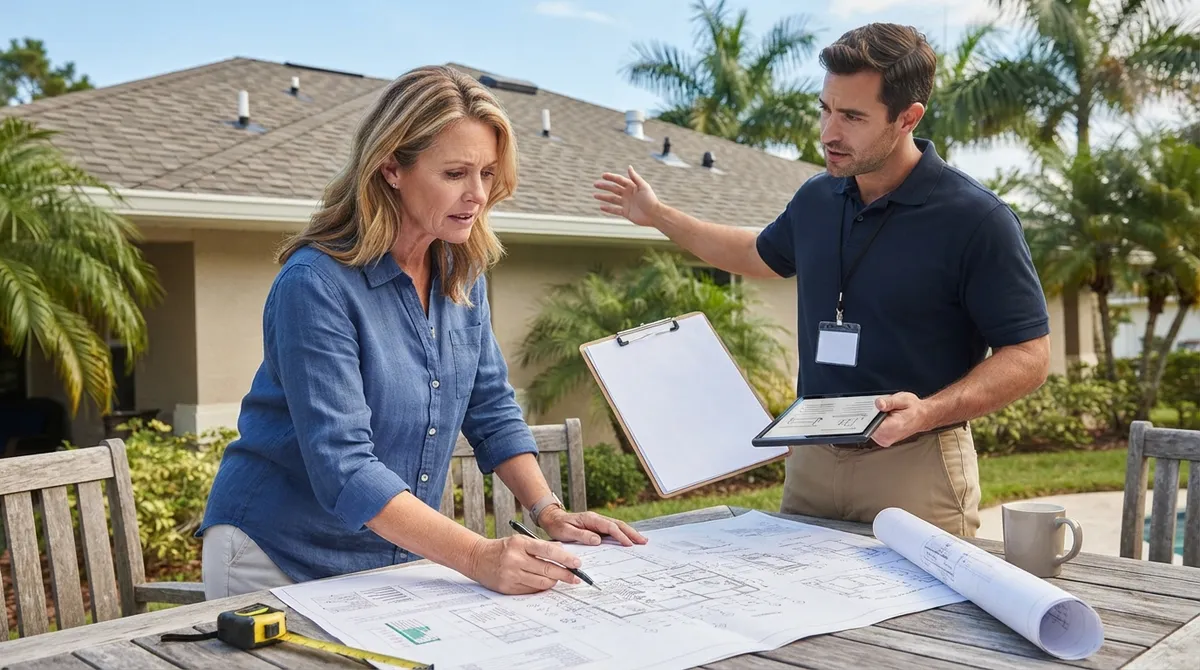
Who Needs to Worry About This (And Why)
Unpermitted roofing pops up in more situations than you'd think. Here are the most common ones:
- Homeowners who hired an unlicensed or careless roofer who never pulled a permit
- Buyers and sellers who discover an open or missing roof permit during an inspection or title review
- Real estate agents and investors trying to get a closing back on track
- General contractors who inherited a project where a subcontractor skipped the permit
- Solar companies who need a documented, code-compliant roof before installing panels
- Property owners dealing with insurance questions after a storm or claim
If any of those sound familiar, you can learn more about how we help each group on our pages for homeowners and roofing contractors.
How to Get an After-the-Fact Roofing Permit in Florida: Step by Step
The exact steps vary by jurisdiction, but this sequence works as a reliable roadmap. Think of it as your checklist.
- Identify the correct jurisdiction. Near city lines, it's not always obvious whether the city or the county controls your address. Our building department lookup tool can help you confirm.
- Contact the building department before doing anything else. Ask how they process after-the-fact roofing permits, what forms they use, and what they expect to see.
- Gather your documentation. Collect any contracts, invoices, material receipts, photos taken during the work, and product information.
- Determine the scope. Document what was done: full tear-off, overlay, partial repair, material type, and square footage.
- Prepare and submit the application. This usually includes the permit application, roof scope and material details, and product approval documentation.
- Schedule inspections as directed. The department tells you which inspections are needed and how concealed components will be verified.
- Correct any deficiencies. If the inspector finds problems, you'll fix them and request reinspection.
- Pass final inspection and close out the permit. Keep the final approval records for your files, your insurer, and any future sale.
That might sound like a lot, but each step is manageable when you know what's coming. And if you'd rather hand the whole thing off, our permit facilitation and filing team handles it end to end.
What Documents Will the Building Department Ask For?
Local checklists differ, but roofing ATF applications commonly require a similar set of items. Here's what to expect:
| Document | Why It's Requested |
|---|---|
| Permit application | Opens the official record for the roof work |
| Roof scope and material details | Shows what was installed and where |
| Florida Product Approval or Miami-Dade NOA | Confirms roofing products are approved for Florida use |
| Manufacturer installation instructions | Lets the inspector check the install against the maker's requirements |
| Photos of the work | Helps document concealed components like underlayment and flashing |
| Contractor information and license | Identifies who performed the work |
| Owner affidavits (where required) | Supports the account of what was done and when |
If you're in Miami-Dade or Broward, product approvals work a bit differently than elsewhere. Our guide on Miami-Dade NOA vs. Florida Product Approval breaks down the distinction.
How Concealed Roofing Work Gets Verified
This is the question we get most often: "Will they make me tear off my roof?" The honest answer is that it depends on your building department and the evidence you can provide.
Because roofing components are hidden after installation, the building official may require one or more of the following:
- Photographs taken during installation
- Written statements or affidavits from the installer or owner
- Testing or third-party evaluation
- Selective removal of roofing materials so the inspector can see the deck, fasteners, underlayment, or flashing
The local building department determines what's acceptable. Good documentation up front can reduce the chance of invasive verification, though it can't guarantee it. If you have in-progress photos, find them now. If your roofer took any, ask for them.
Inspections You May Encounter
Florida reroofing work must follow the applicable Florida Building Code provisions, whether that's the Existing Building, Building, or Residential volume, along with approved product requirements and manufacturer instructions. Local jurisdictions commonly use inspections such as decking, dry-in, in-progress, and final. For an ATF permit, the department decides how to adapt that sequence to a roof that's already finished.
Understanding the 25-Percent Rule (Without Getting Burned by It)
You may hear about a "25-percent rule" for roof repairs. Some local guidance, including St. Lucie County's, describes a threshold where repair or replacement of 25 percent or more of the roof area within a 12-month period triggers reroofing requirements.
Here's the important caution: don't treat this as a universal permit exemption. Whether a permit is needed depends on the work, the jurisdiction, and the current code text. A repair under 25 percent might still need a permit in your area, and local interpretation matters. Always verify with your building department.
| Common Assumption | Reality Check |
|---|---|
| "Small repairs never need a permit." | Permit rules and exceptions vary by jurisdiction and scope. |
| "25 percent is a statewide rule." | It appears in some local guidance; confirm the current code and local application. |
| "A late permit fixes everything." | The permit starts verification; it doesn't guarantee compliance. |
| "My roofer's paperwork is enough." | The building department decides what evidence is acceptable. |
What Does It Cost? What Are the Penalties?
We wish we could hand you a number, but we can't do it honestly. No statewide standard fee or penalty amount exists for an after-the-fact roofing permit. Fees, penalties, and enforcement outcomes are set or administered locally and depend on the circumstances.
Costs can include several moving pieces:
- The permit and inspection fees your jurisdiction charges, which may be higher for work done without a permit
- Any engineering or design professional involvement
- Corrective work if deficiencies turn up
- A separate code-enforcement case, if one has been opened
For a deeper look at the money side, check out our article on after-the-fact permit costs in Florida, and our guide to penalties for building without a permit.
When You Might Need an Engineer or Design Professional
Sometimes the building department wants more than photos. If the roof structure is in question, or if the inspector can't verify load path, fastening, or truss condition, a Florida-licensed design professional may need to evaluate the roof and issue a sealed letter.
That's where in-house engineering makes a real difference. Our team includes structural engineering and engineer letters support, so when a reviewer raises a concern, we can respond directly rather than waiting on an outside consultant.
If you're also dealing with other open problems, such as a notice from the city, our code compliance violations service can address the enforcement side at the same time.
Common Mistakes That Slow Down Roofing ATF Permits
After handling thousands of Florida permits, we see the same missteps again and again. Dodge these, and you'll save weeks.
- Applying to the wrong jurisdiction. City versus county confusion is surprisingly common.
- Waiting too long. Delays make it harder to find photos, contacts, and records.
- Assuming the roofer will handle it. If a contractor skipped the permit once, don't count on them to fix it.
- Missing product approvals. Without the right Florida Product Approval or NOA paperwork, reviews stall.
- Skipping the phone call. A five-minute conversation with the building department clears up a lot.
- Ignoring a code-enforcement notice. Open cases can add fees and complications.
Our article on unpermitted roofs in Florida goes deeper on what owners should watch for.
Real Estate Closings and Roofing ATF Permits
If you're an agent, investor, or buyer, an open or missing roof permit can derail a closing fast. Title companies, lenders, and insurers all care about permit history, and a hold can show up at the worst possible moment.
The good news is that many of these situations are resolvable on a closing timeline, especially with early action. Our realtor and closing support service exists for exactly this scenario, and you can run a quick check with our open permit search.
How 1 Contractor Solutions Can Help
Think of us as your outsourced permitting department. We're not a roofing contractor. We're the team that deals with the paperwork, the reviewers, and the inspection coordination so your project can keep moving. We work across all 67 Florida counties, with experience in more than 400 municipalities, and we respond within 30 minutes, day or night.
For roofing ATF situations, we can research your jurisdiction's requirements, prepare and file the application, coordinate documentation, bring in sealed engineering when needed, and track everything through final approval. Contractors can also explore our Roof Permit Partnership Program, and you can browse our full roof permit services. Want to see what other clients say? Visit us on Google — 1 Contractor Solutions to read reviews, and you can follow us on LinkedIn or follow us on Facebook for more Florida permitting tips.
Quick Reference: Your After-the-Fact Roofing Game Plan
| Stage | What to Do |
|---|---|
| Day 1 | Confirm your jurisdiction and call the building department |
| Week 1 | Gather photos, contracts, product info, and contractor details |
| Week 1-2 | Submit the ATF application with supporting documents |
| Review period | Respond to comments; add engineering if requested |
| Inspection | Complete the inspections the department requires |
| Closeout | Correct deficiencies, pass final, and file your approval records |
Timelines vary by jurisdiction, so treat this as a framework rather than a promise. For a sense of typical durations, see how long a building permit takes in Florida.
Ready to Get Your Roof Legal?
An unpermitted roof feels stressful, but it's a solvable problem. Start by calling your building department, gather every scrap of documentation you can find, and don't assume a late permit settles the question on its own. If you want an experienced team in your corner, get a free quote and tell us your address. We'll tell you which jurisdiction controls it, what it will take, and then we'll go do it. Permits approved. Projects moving.
FAQs
Can I get a roofing permit after the roof has already been installed in Florida?
Yes, in most jurisdictions you can apply for an after-the-fact roofing permit through your local building department. Just keep in mind that the permit starts the verification process; it doesn't automatically prove the work meets the Florida Building Code.
Will the building department make me remove roofing materials for an inspection?
Sometimes, but not always. Because roof components like the deck, underlayment, and flashing are concealed, the building official may accept photos or affidavits, or they may require selective removal or testing. Strong documentation up front can help, though the local department makes the final call.
How much does an after-the-fact roofing permit cost in Florida?
There's no statewide standard fee or penalty. Costs are set locally and can include permit and inspection fees, possible engineering, corrective work, and any code-enforcement charges. Call your building department for the current fee schedule.
Does the 25-percent reroofing rule mean small repairs don't need a permit?
Not necessarily. Some local guidance uses a 25-percent roof-area threshold over 12 months to decide when work must meet reroofing requirements, but it isn't a universal permit exemption. Always confirm the current code and your jurisdiction's interpretation before starting repairs.
What happens if I reroofed my Florida home without a permit?
You may need to apply for an after-the-fact permit, document the work, pass inspections, and correct any deficiencies. A separate code-enforcement case and added fees are possible depending on your jurisdiction, so acting early usually makes things smoother.
We do this work every day across all 67 Florida counties. Call (866) 314-6931 and we will tell you what your situation actually requires — including when you do not need us.
Related services
Permit Facilitation & Filing
You have a crew scheduled, a client asking for dates, and a permit sitting somewhere in a queue you cannot see. We file it, w…
See the servicePlan Review Coordination
A permit in plan review is not one queue. On a commercial project it can be six queues, each with its own reviewer, its own c…
See the serviceReady to get your permit moving?
One call tells you which jurisdiction controls your project, what it will take, and what it will cost. Most of the time we can scope it on the phone.