Blog
How Does Solar Permit Filing Work in Palm Beach County?
Learn how solar permit filing works in Palm Beach County, including SolarAPP+, ePZB submission, required documents, and jurisdiction rules.
Key Takeaways
-
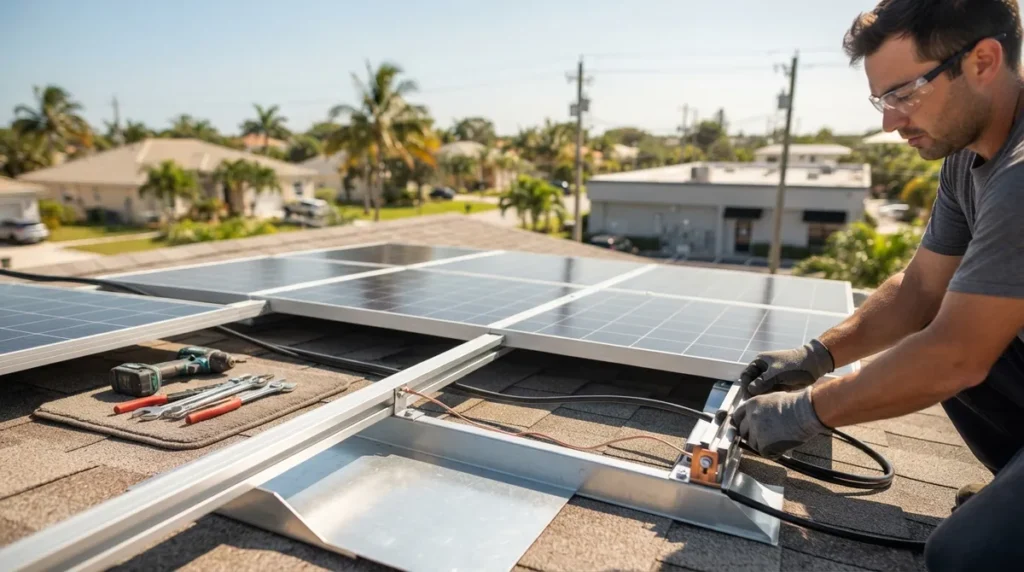
Palm Beach County solar permits require both building and electrical permits; building covers structural roof attachment and wind-load resistance, while electrical covers PV wiring, inverters, and utility interconnection—both are mandatory for rooftop installations.
-
SolarAPP+ expedited review only applies to qualifying residential projects on detached single-family homes up to 10 kW (FPL Tier 1); commercial, multifamily, ground-mounted, battery-paired, and carport systems require standard plan review instead.
-
Verify the correct permitting jurisdiction before filing, as solar projects in West Palm Beach, Boca Raton, Delray Beach, Jupiter, and Palm Beach Gardens go through city building departments, not unincorporated county—filing with the wrong authority causes significant delays.
-
Complete photographic documentation of installation phases (rack attachments, module mounting, bonding, connections) is required and is one of the most common reasons applications stall; missing photos can delay approval by weeks.
-
County permit approval does not equal permission to operate; after inspections pass, your system must complete separate utility interconnection approval with Florida Power & Light before energization, adding additional timeline beyond county processing.
-
Prepare a complete document package including building permit application, Solar PV worksheet, equipment certifications, electrical contractor subcontract, qualifier's certification, and installation photos to avoid application rejection and resubmission delays.
If you have ever tried to get a straight answer about solar permit filing in Palm Beach County, you know the feeling. One department tells you to use SolarAPP+, another mentions the ePZB portal, and somewhere in between you are wondering whether your project even qualifies for expedited review. Take a breath. You are not alone, and this is exactly the kind of puzzle we love solving.
Whether you are a solar company trying to keep installation crews on schedule, a general contractor juggling multiple trades, or a homeowner in West Palm Beach who just wants clean energy without the headache, understanding how solar permitting actually works in Palm Beach County will save you time, money, and more than a few gray hairs. Let's walk through it together, step by step, with the kind of friendly clarity you deserve.
What Solar Permit Filing in Palm Beach County Actually Involves
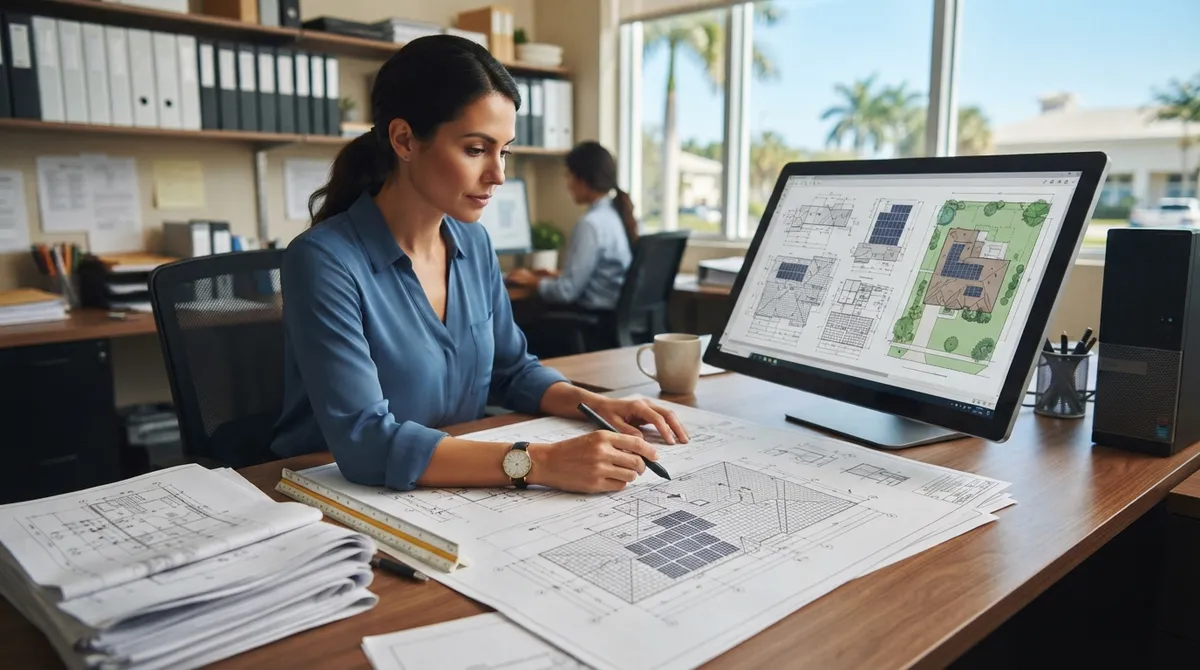
Solar permit filing in Palm Beach County is not a single form you fill out and forget. It is a coordinated process that typically covers two separate but related permit types: building and electrical. The building side addresses how your panels attach to the roof, the structural capacity of your rafters or trusses, wind-load resistance, and any roof penetrations. The electrical side covers PV wiring, inverters, disconnects, grounding, and the all-important utility interconnection point.
Palm Beach County's Building Division offers a genuinely helpful shortcut for qualifying residential projects: SolarAPP+. This expedited review tool lets eligible photovoltaic systems skip the traditional plan review queue and move straight toward permit issuance, provided the project meets specific criteria.
The SolarAPP+ and ePZB Process
Here is the basic sequence the county has laid out for applicants:
- Create or log into your SolarAPP+ account and submit your project details, including system specifications and site information.
- Receive SolarAPP+ approval, which generates an approval ID once your submission meets code requirements automatically checked by the platform.
- Upload your SolarAPP+ approval ID and approved plans into the county's ePZB online permitting portal to complete permit issuance.
It sounds simple on paper, and for the right project, it genuinely is fast. But eligibility matters a great deal, and that is where a lot of contractors and homeowners run into snags they did not expect.
Who Actually Qualifies for the Expedited Process
Palm Beach County's expedited SolarAPP+ pathway is primarily built for qualifying systems on existing detached, site-built single-family residences, or permitted residential accessory structures. The county's policy specifically references Florida Power & Light Tier 1 systems up to 10 kW as the sweet spot for this fast-track option.
If your project falls outside that description, you are likely looking at standard plan review instead. That includes:
- Commercial or multifamily solar installations
- Ground-mounted arrays rather than rooftop systems
- Systems paired with battery storage in certain configurations
- Projects requiring a main electrical panel upgrade or new service
- Solar carports or unconventional mounting structures
This is exactly the kind of nuance our team at 1 Contractor Solutions helps sort out before you file anything. We screen your project against county criteria first, so you are not surprised halfway through the process.
Required Documents for a Palm Beach County Solar Permit
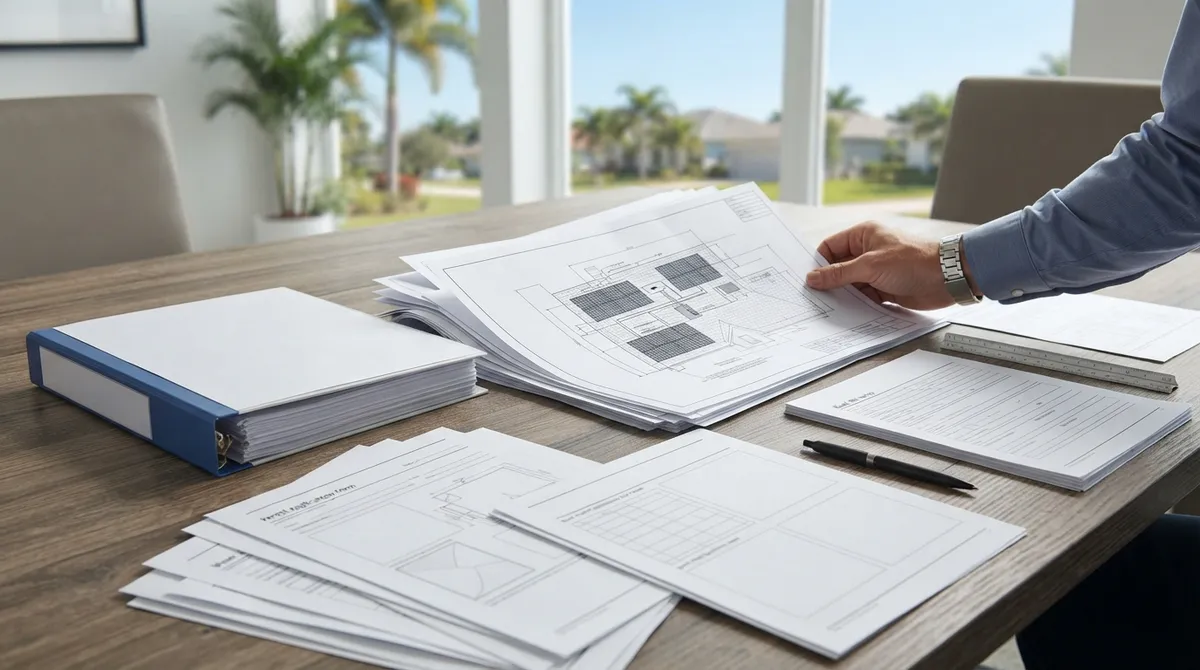
The county's expedited solar checklist calls for a specific package of documents. Missing even one piece can bounce your application back, costing you days or weeks. Here is what you will generally need:
| Document | Purpose |
|---|---|
| Building permit application | Formal request to the county for permit issuance |
| Solar PV worksheet | Details system size, equipment, and technical specs |
| Equipment certification or listing documentation | Confirms panels, inverters, and hardware are listed and labeled properly |
| Electrical-contractor subcontract (where applicable) | Establishes licensed responsibility for electrical work |
| Qualifier's certification of installation | Confirms the licensed qualifier oversees the installation |
| Site-specific installation photographs | Documents rack attachments, module mounting, bonding, and connections |
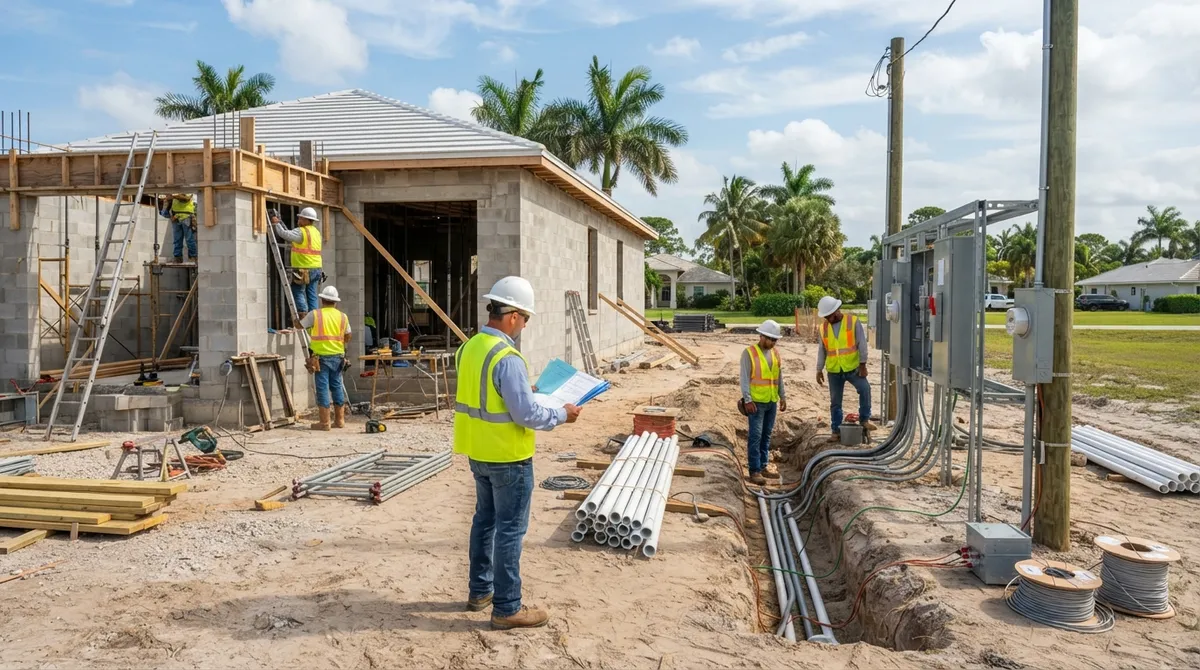
Photographic documentation is especially important. The county wants to see evidence of installation phases, including rack or bracket attachments, module attachments, bonding, and connections at equipment and utility-interconnection points. Skipping this step is one of the most common reasons applications stall.
Building vs. Electrical Permits: Why Both Matter
A lot of first-time filers assume solar is just an electrical project. It is not, at least not entirely. Rooftop solar installations trigger both building and electrical review because the structural attachment of panels to your roof is just as important as the wiring behind them.
Building Permit Considerations
The building permit portion evaluates whether your roof structure can handle the added weight and wind uplift forces from the panel array. Florida's wind-load standards are notoriously strict, and for good reason. Palm Beach County requires designs to comply with the applicable edition of the Florida Building Code, along with county-specific amendments.
Electrical Permit Considerations
The electrical permit covers the PV wiring, inverter placement, disconnect switches, grounding, and the interconnection point with the utility grid. This portion must also align with National Electrical Code requirements and utility-specific standards.
Our structural engineering and MEP engineering teams handle both sides in house, which means when a reviewer flags a structural or electrical detail, we fix it directly rather than waiting on an outside consultant to call back.
Jurisdiction Matters More Than You Think
Here is something that trips up even experienced solar companies: Palm Beach County is not one single permitting authority. Projects located in municipalities such as West Palm Beach, Boca Raton, Delray Beach, Jupiter, or Palm Beach Gardens are often handled by the applicable city building department rather than unincorporated Palm Beach County.
Before you ever prepare a filing, you need to confirm the authority having jurisdiction for that specific address. This single step prevents a world of frustration. Our building department lookup tool is designed exactly for this kind of jurisdiction confusion, and we always verify jurisdiction manually before filing anything on a client's behalf.
| Jurisdiction Type | Who Handles Permitting | Common Areas |
|---|---|---|
| Unincorporated Palm Beach County | County Building Division / ePZB | Areas outside incorporated city limits |
| Incorporated Municipalities | City Building Department | West Palm Beach, Boca Raton, Delray Beach, Jupiter, Palm Beach Gardens |
Timelines: What to Realistically Expect
Palm Beach County's original expedited-program goal aimed for three-day processing on qualifying projects, with an eventual target of next-day or walk-through turnaround. Real-world timing depends heavily on project eligibility, completeness of your submission, and current county workload.
Standard plan review, by contrast, can take considerably longer, especially for projects involving batteries, service upgrades, or structural complexities that require engineering sign-off. If you want a broader sense of how timelines vary across the state, our article on Florida solar permit timelines breaks down what different counties typically experience.
Beyond the Permit: Utility Interconnection Approval
Here is a detail that catches many homeowners and even some contractors off guard. Getting your county permit approved does not mean your system can legally operate or export electricity yet. SolarAPP+ is an expedited plan-review option, not a substitute for utility procedures.
After the county issues your permit and inspections are completed, your grid-connected system must also complete the utility's interconnection process, typically with Florida Power & Light. Only after that final approval can your system be energized and start sending power back to the grid.
Steps After Permit Issuance
- Schedule required building and electrical inspections through the county's automated or manual scheduling lines.
- Pass all inspections, addressing any corrections noted by the inspector.
- Submit interconnection paperwork to the utility provider.
- Receive utility approval before activating the system.
The county's Permit Center can be reached at 561-233-5120, automated inspection scheduling at 561-355-2222, and manual inspection scheduling at 561-233-5170. We always recommend double-checking these numbers before your filing, since county procedures and contacts can shift over time.
How a Florida Permitting Service Adds Real Value
Solar permit filing sounds straightforward until you are staring at a rejection notice because a photograph was missing or the wrong jurisdiction received your application. This is where working with an experienced solar contractor permitting partner genuinely pays off.
Here is what a dedicated permitting team typically handles on your behalf:
- Confirming the correct jurisdiction before any paperwork is filed
- Screening project eligibility for SolarAPP+ versus standard review
- Preparing a complete, code-compliant application package
- Coordinating structural and electrical documentation between contractors and engineers
- Tracking review status and responding quickly to reviewer comments
- Scheduling and coordinating required inspections
At 1 Contractor Solutions, our drafting and engineering departments are in house, and our own engineer signs and seals structural and electrical documentation. That means when a reviewer flags something, we resolve it directly instead of waiting on a third party. We also serve as a licensed private provider, which means we can perform your plan review ourselves rather than leaving you stuck in the county queue.
Our team supports solar companies, general contractors, and homeowners across Palm Beach County and throughout Florida, including Broward County and Miami-Dade County. If you want to see how we support the broader community, follow us on LinkedIn or follow us on Facebook for updates and permitting tips.
Common Mistakes That Slow Down Solar Permits
Over the years, we have seen the same handful of mistakes derail otherwise solid solar projects. Watch out for these:
- Assuming county-wide rules apply everywhere. Municipal jurisdictions often have their own requirements that differ from unincorporated county rules.
- Skipping photographic documentation. Missing installation photos are one of the most common reasons for delays.
- Filing battery or ground-mount systems through the standard residential expedited path. These often require additional review outside SolarAPP+.
- Forgetting the utility interconnection step. A county-approved permit is not the same as permission to operate the system.
- Incomplete structural documentation. Roof attachment and wind-load calculations need to be accurate and code-compliant from the start.
For larger or land-based solar facilities, Florida Statutes section 163.3205 also introduces additional considerations around agricultural-district setbacks and landscaping criteria, so it is worth reviewing whether your project falls into that category early on.
Real Estate and Property Considerations
If you are a realtor or investor evaluating a property with existing solar panels, it is worth confirming the system was permitted correctly in the first place. Unpermitted solar installations can create closing delays or insurance complications down the road. Our open permit search tool can help verify whether a property's solar system has a clean permitting history before you move forward with a transaction.
Curious about how our clients feel about working with us? You can visit us on Google — 1 Contractor Solutions to read reviews from contractors and homeowners across Palm Beach County who have gone through this exact process.
Bringing It All Together
Solar permit filing in Palm Beach County does not have to feel like navigating a maze blindfolded. Once you understand the SolarAPP+ and ePZB process, know which documents you need, and confirm the right jurisdiction, the path forward becomes a lot clearer. It is genuinely rewarding to watch a solar project move from paperwork to panels producing clean energy for a family or business.
If you are ready to skip the guesswork and get your project filed correctly the first time, our team would love to help. We handle everything from structural and electrical documentation to jurisdiction verification and inspection coordination, all under one roof. Get a free quote today and let's get your solar permit moving in the right direction.
FAQs
How do I file a solar permit in Palm Beach County?
You'll typically start by checking whether your project qualifies for SolarAPP+, then submit your project details there to get an approval ID. Once approved, you upload that approval along with your plans into the county's ePZB portal to complete permit issuance. If your project doesn't qualify for the expedited path, don't worry, standard review is still very doable with the right documentation.
Can a Florida permitting service submit my solar permit through SolarAPP+ and ePZB?
Absolutely, and honestly, this is one of the areas where a good permitting partner shines brightest. We handle the eligibility screening, document preparation, and portal submission so you can focus on installation scheduling instead of paperwork logistics.
What documents are required for a Palm Beach County residential solar permit?
You'll generally need a building permit application, a Solar PV worksheet, equipment certification documentation, an electrical-contractor subcontract where applicable, a qualifier's certification, and site-specific installation photographs. Missing photos are a surprisingly common holdup, so we always double-check that piece before submission.
Does Palm Beach County require separate building and electrical permits for solar panels?
Yes, rooftop solar typically involves both permit types since the building permit addresses structural attachment and wind resistance, while the electrical permit covers wiring, inverters, and grid interconnection. Both need to align with Florida Building Code and National Electrical Code standards.
What's the difference between county permit approval and utility interconnection approval?
Great question, and one we get often! County permit approval means your system meets building and electrical code requirements, but it doesn't automatically mean you can turn the system on. You'll still need separate approval from your utility provider, usually FPL, before the system can legally export electricity to the grid.
We do this work every day across all 67 Florida counties. Call (866) 314-6931 and we will tell you what your situation actually requires — including when you do not need us.
Related services
Permit Facilitation & Filing
You have a crew scheduled, a client asking for dates, and a permit sitting somewhere in a queue you cannot see. We file it, w…
See the servicePlan Review Coordination
A permit in plan review is not one queue. On a commercial project it can be six queues, each with its own reviewer, its own c…
See the serviceReady to get your permit moving?
One call tells you which jurisdiction controls your project, what it will take, and what it will cost. Most of the time we can scope it on the phone.