
Blog
Fixing Florida Code Violations Before You Sell
Learn how to resolve open permits, code violations, and liens before a Florida home sale, with a clear step-by-step plan.

Key Takeaways
-
Start permit and code violation research immediately when deciding to sell, not after a buyer's inspection surfaces issues, since early detection provides more resolution options and flexibility.
-
Open permits and code enforcement violations are separate issues handled by different departments with different rules—understand which one applies to your property before choosing your resolution strategy.
-
Request a complete permit history, code enforcement case status, and lien search from your local building department, since title companies will flag these during closing and they must be resolved beforehand.
-
Most unpermitted work can be resolved through after-the-fact permits requiring a licensed professional assessment, corrective work, and final inspection—it's common and manageable with proper guidance.
-
Code enforcement fines can accrue daily and create recorded liens against your property, so confirm the exact fine balance and lien release process with local authorities early in the sales process.
-
Hire a permitting coordinator or service familiar with your specific county's requirements rather than navigating multiple departments alone, as local rules vary significantly across Florida jurisdictions.
Selling a Florida home is exciting, but nothing slows down a closing faster than an open permit or a code enforcement letter you didn't see coming. Maybe your buyer's inspector flagged an unpermitted lanai. Maybe the title search turned up a permit from 2009 that never got closed out. Whatever the trigger, you're not alone, and this is far more common than most sellers expect. The good news? These issues are almost always solvable when you get the right help early enough.
This guide walks you through exactly how to find the best help for code compliance violations before a home sale in Florida, why these problems happen, and the practical steps that get you to a clean closing table. Whether you're a homeowner in Bradenton, a realtor in Tampa, or an investor flipping a property in Sarasota, the process follows the same general roadmap, even though every county handles it a little differently. Let's get you unstuck.
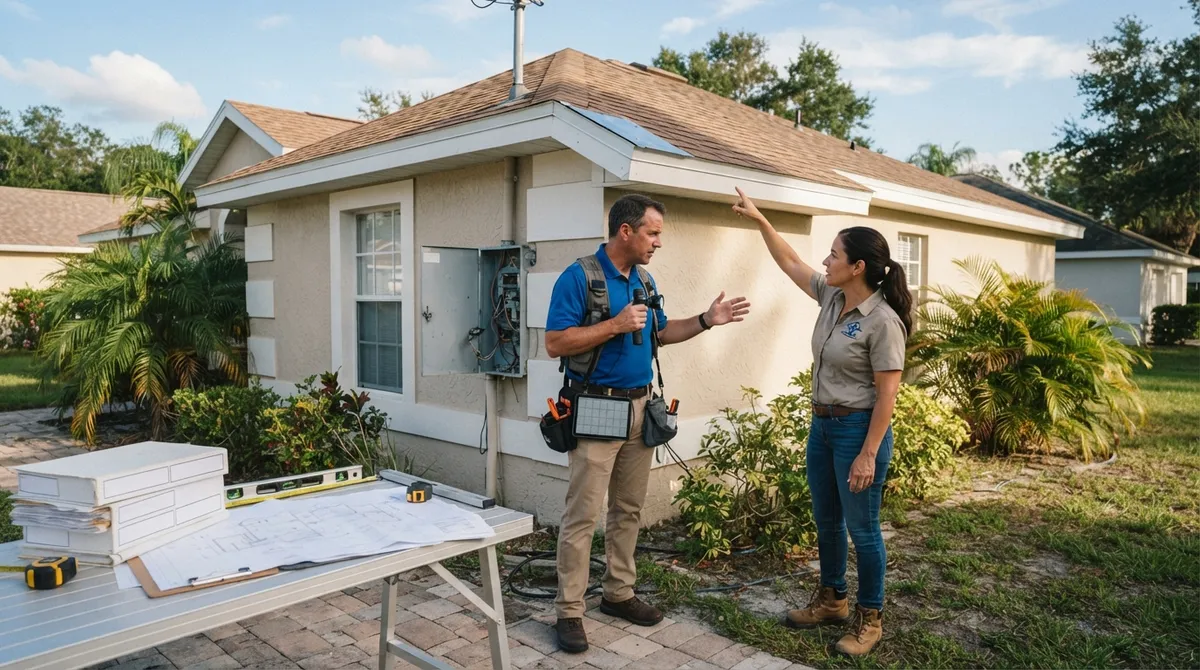
Why Code Violations and Open Permits Show Up Before a Sale
Here's something that surprises a lot of sellers: an open permit and a code enforcement case are actually two different animals. They can show up separately, together, or not at all, and they're handled by different departments with different rules.
- An open or expired permit usually means work was started, a permit was pulled, but the final inspection was never scheduled or passed.
- A code enforcement violation typically means the local government identified an issue, like unpermitted construction or an unsafe condition, and opened a formal case that can carry fines.
- A lien can be recorded against the property if fines go unpaid long enough, which absolutely will show up in a title search.
- Sometimes a property has all three. Sometimes it has none of these but still shows unpermitted work that a home inspector notices during the sale.
According to Florida Statutes Section 553.79, most construction, alteration, repair, or demolition work requires a permit before it begins. If that didn't happen, the work may need an after-the-fact permit, along with supporting documentation, corrections, and a final inspection before it's considered legal.
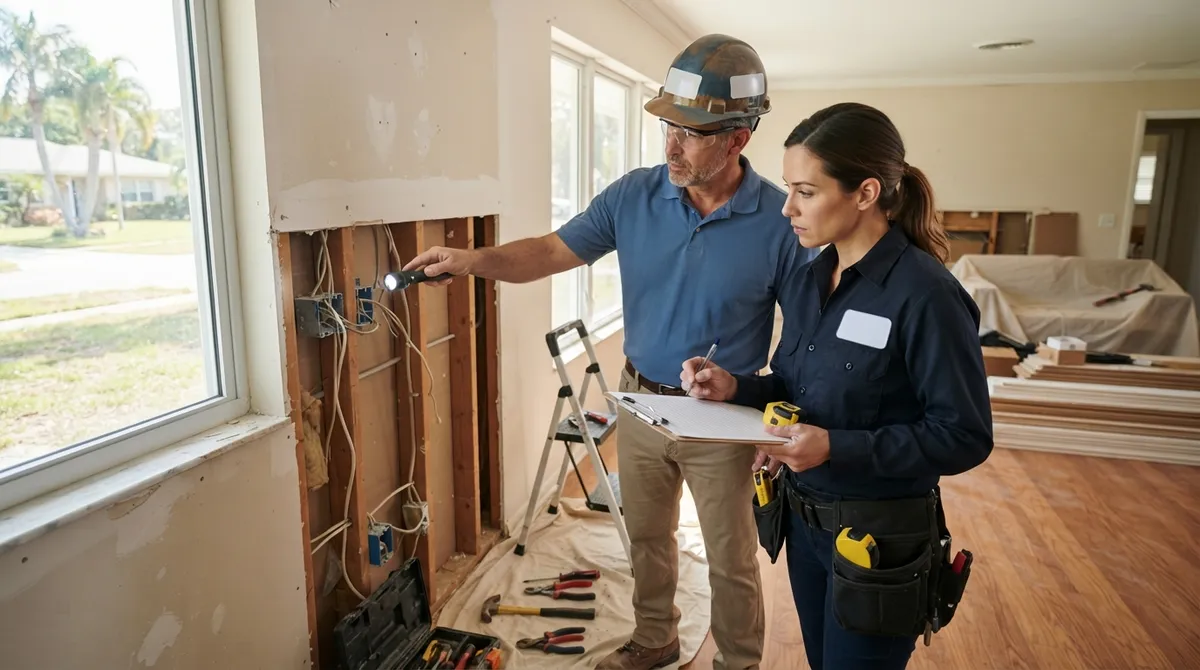
Step One: Find Out Exactly What You're Dealing With
You can't fix what you haven't identified. The very first move, before you call a contractor or panic-Google "how to sell a house with unpermitted work," is to get a full picture of your property's permit and code enforcement history.
- Request a permit history search from the building department in the city or county where the home sits.
- Ask specifically about code enforcement cases, since these are often tracked separately from permits.
- Check for recorded liens tied to unpaid fines, which your title company will also flag during closing.
- Request a compliance letter or estoppel letter if the jurisdiction offers one, since this becomes valuable documentation for your buyer and their lender.
Because Florida permitting is handled locally, the process looks different in every jurisdiction. A search in Hillsborough County follows different steps than one in Miami-Dade County or Pinellas County. This is exactly where a permitting service that already knows the local building departments saves you weeks of phone tag. Tools like an open permit search or a building department lookup can help you figure out who actually has jurisdiction over your address, which isn't always obvious near city lines.
Open Permit vs. Code Enforcement Case: What's the Real Difference?
| Factor | Open or Expired Permit | Code Enforcement Violation |
|---|---|---|
| What it means | Work was started but never finaled | A violation was identified and formally cited |
| Governed by | Florida Statutes §553.79 and local building code | Florida Statutes §162.09 and local ordinances |
| Typical fix | Reactivate permit, complete corrections, pass inspection | Correct the violation, request compliance hearing or letter |
| Financial risk | Delayed closing, possible re-permitting cost | Accruing daily fines and potential recorded lien |
| Handled by | Building department / permitting office | Code compliance or code enforcement division |
Notice that a property can have one of these without the other. An open permit doesn't automatically mean the work is unsafe, it may simply be missing a final sign-off. Meanwhile, a code violation notice doesn't always relate to a permit at all; it might be about overgrown landscaping or an unregistered rental. Understanding which one you're facing determines your entire strategy, and that's exactly the kind of triage our code compliance violations team handles every single day.
The Pre-Sale Resolution Workflow That Actually Works
Once you know what you're dealing with, here's the practical sequence most successful sellers follow. This isn't a rigid formula, since local rules vary, but it's a reliable framework.
- Pull your permit and violation history as early as possible, ideally the moment you decide to list the home.
- Gather supporting documents: old permits, plans, contractor invoices, and any inspection records you can find in a filing cabinet or email archive.
- Have a licensed professional assess the unpermitted or incomplete work, which may involve an engineer or architect providing a sealed evaluation.
- Submit the required application, whether that's reactivating an expired permit or filing a brand-new after-the-fact permit.
- Complete any physical corrections the building department requires, which sometimes means opening up walls or exposing concealed work.
- Schedule and pass final inspections.
- Obtain written proof of closure: a final approval, compliance letter, or lien satisfaction document your closing attorney or title company can rely on.
Florida law does offer some helpful paths for closing out old permits, including allowing the original licensed contractor, or in some cases a licensed engineer or architect, to inspect the work and provide a sealed affidavit. But eligibility depends on the specific statute and how the local building department chooses to apply it, so don't assume this option is automatic. A 2019 Florida Senate bill analysis outlines these statutory options in more detail, and it's worth having a professional confirm current acceptance in your specific jurisdiction before you count on this route.
What About Fines and Liens?
This is usually the part that makes sellers nervous, and understandably so. Under Florida Statutes Section 162.09, local governments can impose fines for code violations, and in certain circumstances, record a lien against the property. If that lien isn't addressed, it can absolutely complicate or delay your closing, since most title companies will require it be satisfied before insuring the transaction.
Here's what you'll want to confirm with the local authority and your closing team:
- The current status of the code enforcement case (open, in compliance, pending hearing)
- Whether corrective work is still required
- The exact fine balance, since these can accrue daily in some jurisdictions
- The process to obtain a lien release or satisfaction of lien once everything is resolved
Historical data illustrates how common these situations are. A 2015 news report out of the Gainesville area found 9,189 expired permits among 125,168 issued in unincorporated Alachua County since 1985. While that's local, historical data rather than a current statewide figure, it shows this isn't a rare or embarrassing situation, it's just part of owning property over time.
Who Should You Call First?
Knowing which professional to call can save you enormous time. Here's a quick breakdown of who typically handles what:
| Professional | Best For |
|---|---|
| Permitting service or consultant | Records research, application prep, filing, tracking, and communicating with the building department |
| Licensed engineer or architect | Sealed evaluations, affidavits, and engineering documentation for after-the-fact permits |
| Licensed contractor | Performing or correcting the physical construction work |
| Real estate attorney or title company | Reviewing lien status and structuring the closing around outstanding issues |
This is exactly where 1 Contractor Solutions fits in. We're not a construction contractor and we don't perform the physical repairs, but we coordinate the entire administrative process: researching permit and violation history, preparing applications, working with in-house sealed drawings when engineering documentation is required, and tracking your file through to final approval. Our after-the-fact expired permits team specifically takes on the files that other providers tend to decline, and our realtor closing support service exists precisely for situations where a sale is on the line.
Special Considerations for Different Sellers
Homeowners Selling Their Primary Residence
If you're a homeowner, your biggest asset is time. The earlier you start this process, the more options you have. Waiting until a buyer's inspection surfaces the issue puts you in a reactive position, often with a tighter contract deadline looming.
Real Estate Agents and Investors
If you work in real estate, you've probably seen a deal nearly collapse over an open permit discovered during due diligence. Building a relationship with a permitting team you can call on short notice, and pointing sellers toward proactive research using tools like an open permit search, protects your commission and your reputation with buyers.
General Contractors Brought in Mid-Sale
Sometimes a GC gets called in specifically to correct violations before closing. In these cases, having a partner who can handle plan review coordination and revisions and resubmittals keeps the project moving instead of stalling in a review queue.
Common Mistakes to Avoid
- Assuming an after-the-fact permit is guaranteed. It's not automatic, and the local building official ultimately decides the process.
- Believing a simple permit search alone clears the property. It doesn't; you also need to confirm code enforcement status and any liens.
- Waiting until the buyer's inspection to check for issues, which puts you on the clock with far less flexibility.
- Assuming every violation can be resolved administratively without opening up walls or exposing concealed work.
We serve sellers across the state, from Manatee County to Broward County, and the pattern is consistent: sellers who start early close on time, and sellers who wait usually end up asking for extensions. If you want to see how we've helped other Florida sellers and contractors navigate exactly this kind of situation, visit us on Google — 1 Contractor Solutions to read real experiences from people who've been where you are right now.
Ready to Clear Your Title Before Closing?
A code violation or open permit doesn't have to derail your sale. With the right records search, the right documentation, and a team that knows how your specific county actually operates, most of these issues can be resolved well before your closing date. Our in-house engineering and drafting team means we're not waiting on outside consultants to call us back, we handle the plan work, the filing, and the follow-through under one roof.
If you're facing an open permit, a code enforcement letter, or just want peace of mind before you list your home, our team is ready to help you map out a plan today. You can also follow us on LinkedIn or follow us on Facebook for ongoing updates on Florida permitting rules across all 67 counties. Ready to get your file moving? Request your free quote and let's get your sale back on track.
FAQs
How do I check for open permits or code violations before selling a home in Florida?
Start by contacting the building department and code enforcement office in the city or county where your home is located, since these are often two separate systems. You can also use tools like an open permit search to get a head start before you even list the home. It's genuinely one of the easiest ways to avoid last-minute surprises, so don't skip it!
Can I sell a Florida home with an open or expired building permit?
You can, but most buyers, lenders, and title companies will want it resolved before or shortly after closing, so it's smart to address it early. Many sellers successfully close out old permits by working with a licensed professional who can complete inspections and file the right documentation. The key is starting the process as soon as you decide to sell, not after an inspection flags it.
How do I get an after-the-fact permit for unpermitted work in Florida?
You'll typically need to submit an application to the local building department along with supporting plans or documentation, then complete any required corrections and inspections. Depending on your jurisdiction, a licensed engineer or architect may need to provide a sealed evaluation of the existing work. It sounds intimidating, but with the right guidance, it's a very manageable process.
What happens if a code enforcement lien is recorded against a Florida property?
A recorded lien needs to be satisfied or released before most closings can proceed cleanly, so it's worth confirming the exact balance and payoff process with the local authority right away. The good news is that once the underlying violation is corrected and fines are addressed, most jurisdictions have a clear path to releasing the lien. Just don't wait until the week of closing to find out you have one!
Who can help resolve code compliance violations before a home sale in Florida?
A Florida permitting service can research your property's history, prepare and file the necessary applications, and coordinate with in-house engineers when sealed drawings are required. They work alongside licensed contractors and closing professionals to keep everything moving toward your sale date. Think of it as having a knowledgeable friend who already knows exactly how your local building department operates.
We do this work every day across all 67 Florida counties. Call (866) 314-6931 and we will tell you what your situation actually requires — including when you do not need us.
Related services
Permit Facilitation & Filing
You have a crew scheduled, a client asking for dates, and a permit sitting somewhere in a queue you cannot see. We file it, w…
See the servicePlan Review Coordination
A permit in plan review is not one queue. On a commercial project it can be six queues, each with its own reviewer, its own c…
See the serviceReady to get your permit moving?
One call tells you which jurisdiction controls your project, what it will take, and what it will cost. Most of the time we can scope it on the phone.